
Property Questions
Why Is My Backyard Wet After Rain?
A wet backyard is a symptom to observe over time. Where water comes from, how it travels and what interrupts its route matter more than naming a drain at the start.
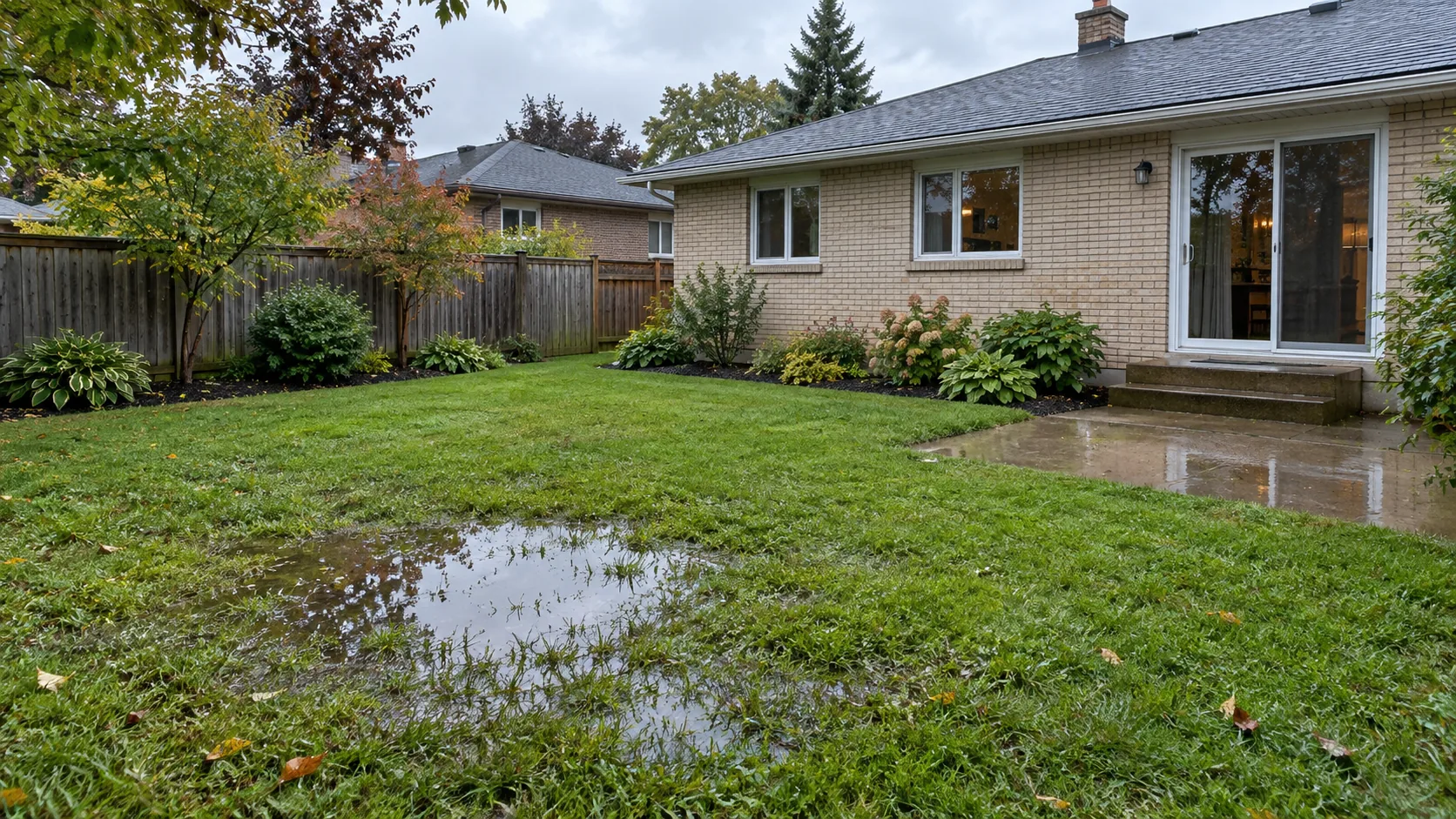
A backyard can be wet after rain because water arrives faster than it can leave or soak into the available ground. A low patch, concentrated roof discharge, an interrupted surface route, compacted soil or several conditions together may be involved. The wettest point is not necessarily the original source.
The first useful task is to record what happens during a rain event and as the yard dries. That information helps distinguish a brief puddle from a recurring problem and gives a site assessment more to work with. It does not require digging a test hole, changing a shared drainage route or choosing a buried drainage product.
Notice when the wet area appears
Ask whether the patch becomes wet early in a light shower, only during a prolonged storm or after several wet days. A small area directly beside a downspout may behave differently from the whole lower lawn. If you normally notice the yard only the next morning, say so; the beginning of the event may simply be unobserved.
Then note what happens after rain stops. Does standing water disappear while the soil remains soft? Does a narrow strip stay wet after the open lawn has firmed up? Is water still arriving from a roof outlet or another visible source? The timing helps explain the problem without pretending that a particular number of hours is a universal pass or fail test.
Include the wider conditions in the record. Recent irrigation, repeated rainfall, snowmelt, deep shade and ordinary use can change the drying pattern. A single photograph in one season does not describe every condition. Conversely, a long history of the same trouble is valuable even if the yard happens to be dry when an assessor arrives.
Trace the source and the surface route
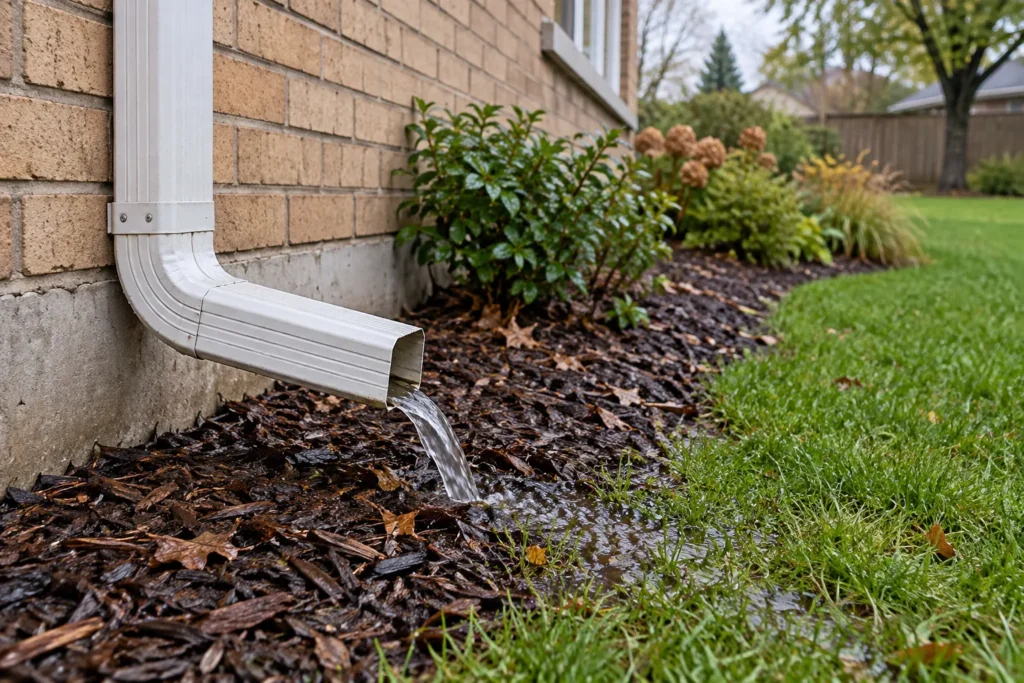
Begin at the house and look for visible roof-water discharge. Watch from a safe place during ordinary rain to see whether a downspout pours into a bed, splashes back toward the wall or flows across a patio. A photograph taken after the rain may show the puddle while completely missing the active discharge that helped form it.
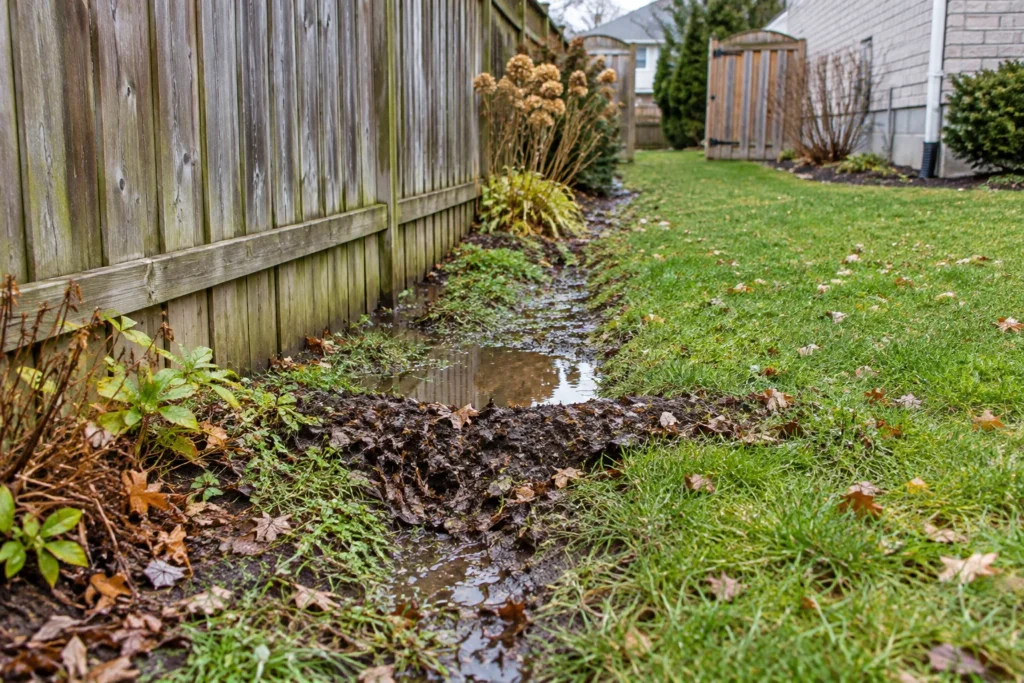
Look along the ground beyond the outlet. Water may follow the edge of paving, travel through a low lawn strip or collect where a raised border crosses its path. A shed base, compacted access lane or soil added along a fence can change the surface route. Describe these connections rather than viewing each wet spot as an isolated defect.
A shallow swale can be easy to overlook in summer grass. Filling it to make the lawn look flat may remove the route that carries water onward. Do not assume the fence is the drainage divide or that water can simply be sent into the next lot. Existing grading information and property relationships may be needed to understand the intended path.
Keep the distinction between source, route and destination clear. An extension may move water away from one patch while creating a problem at another. A collection point also needs a suitable discharge arrangement. The observation stage should reveal those questions before a proposed improvement is reduced to “put a drain here.”
Describe the symptom without over-diagnosing it
| What you notice | Useful follow-up observation | Avoid assuming |
|---|---|---|
| A wet patch below a downspout | Does visible discharge reach the patch during rain, and where does it travel next? | That moving the outlet anywhere farther away resolves the whole problem. |
| Water backing up along a fence | Is there a low route with a mound, edging or stored material across it? | That cutting a gap through the boundary is an acceptable outlet. |
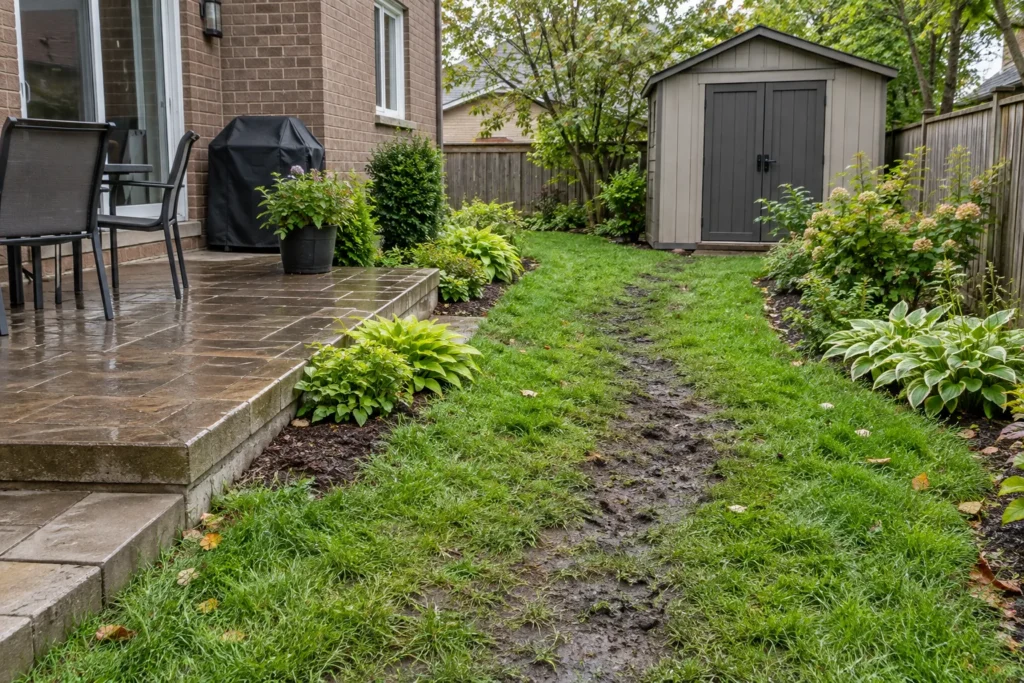
| A soft worn path across the lawn | Does foot or equipment traffic repeatedly use that strip, and is it shaded? | That fresh turf alone changes the soil or traffic condition. |
| A broad low area | How does it connect to the rest of the lot and fixed structures? | That filling it is harmless to neighbouring drainage. |
| Water beside a basement opening | Is water entering the building or associated with a separate drainage or plumbing fault? | That every building-water issue is routine landscaping. |
A low spot and slow infiltration are different questions
A bowl-shaped surface gives water somewhere to gather. The underlying ground also determines how readily water can move through it. Those are related but separate conditions. Raising the surface may change collection while leaving the receiving route unresolved; improving the soil in one planting bed may not alter water arriving from the rest of the yard.
Compaction can be associated with repeated walking, construction access or machinery on wet ground. A worn strip that stays soft may need its use and soil condition assessed together. Aeration or soil improvement can be relevant to some lawn conditions, but it should not be presented as a universal answer to standing water or a substitute for a workable grade.
Do not infer the soil beneath your property from a neighbourhood name. Even nearby lots can have different fill histories, excavation and surface arrangements. The visible texture at a garden edge also does not describe the entire soil profile. A site review can determine whether further investigation is needed before selecting infiltration-based work.
Traffic and shade can make the same wetness more noticeable
A strip beside a patio may be the daily route to a shed, gate or play area. Repeated use concentrates wear where grass is already slow to recover. Shade reduces drying opportunities, while the house or fence can shelter the surface from wind. The practical issue may combine wet ground with an unsuitable route for regular traffic.
Record the use honestly. Include where pets run, where bins move and where deliveries or maintenance equipment cross. A new lawn in the same narrow route may repeat the same struggle if the movement pattern remains unchanged. Sometimes the assessment needs to consider a durable path alongside water and soil conditions, rather than treating the lawn as the only part that failed.
Keep seasonal differences in mind. A leafless spring garden, a fully shaded summer garden and a thawing winter route do not behave identically. You do not have to wait through every season before making a request, but explaining when the issue is worst helps separate occasional wetness from a persistent limitation on using the yard.
Build a simple rain-event record
Choose a safe viewpoint
Use the house, patio or another stable position. Do not walk into deep water or unstable ground to take a close-up. If weather is hazardous, remain indoors and record only what can safely be seen.
Show the whole relationship
Photograph the wet area with the house, nearby paving or fence in view. Add a separate outlet photograph if water is visibly arriving there. A rough sketch can name locations without claiming measured levels.
Return to the same view
Take another photograph after the rain stops and note the approximate time. Explain continuing irrigation or rainfall. Comparable views make change easier to understand than unrelated close-ups.
Add the history
Describe when the trouble began, any paving or soil changes, previous attempts and whether building water has occurred. Include available approved grading information without assuming it describes every later alteration.
Check proposed changes against the property context
Burlington regulates filling, grading and excavation through its site alteration process; a proposed correction may need screening before work. Halton also provides separate information on basement flooding and property flood risk. An observation of wet lawn does not establish a permit outcome or identify a building-water remedy.
Information reviewed:
Turn the observations into an assessment request
Describe the affected use: a lawn that cannot be walked on, a gate route that stays muddy or water collecting beside a patio. State the part of the property, the observed timing and the visible sources. Include access information so the assessment considers how any eventual work could be carried out without unnecessary disturbance.
The Burlington yard-drainage guide covers the broader planning choices, boundaries and potential approaches. Wet-yard assessment focuses on the site problem, while landscape drainage work addresses suitable surface-water measures once the conditions are understood. The observation record supports those decisions without selecting them prematurely.
Explain changes even when they seem unrelated
A water problem may become noticeable after a nearby task that was not described as drainage work. A raised bed, new paved edge, shed, fence base or delivery route can change how a small area behaves. Note the timing and location of such changes. Do not assume that the most recent work is the cause, but do not leave it out of the history either.
Similarly, describe unsuccessful attempts such as adding soil, moving an outlet or laying fresh grass. State where the material went and what changed afterward. That information can prevent the next assessment from repeating a measure that already failed under the same conditions. It also helps reveal whether the wet area moved rather than disappeared, which is easy to miss when attention stays fixed on the original patch.
Questions about a backyard that stays wet
Is a puddle after rain always a defect?
Not necessarily. Its location, persistence, frequency and effect on buildings or ordinary use matter. A small temporary puddle away from sensitive areas is a different concern from repeated water beside a doorway or a route that remains unusable. Describe the pattern rather than applying one universal drying deadline.
Will adding topsoil fix it?
It might alter the surface but can also block an existing route or redirect water. The effect depends on the wider levels and receiving area. Do not fill a low strip simply because it is inconvenient until its role in the property drainage is understood.
Should I install a French drain?
A buried collection system is one possible approach for some conditions, not a diagnosis. It needs suitable location, construction, discharge and maintenance access. Establish the water source, levels and destination before choosing a product or trench route.
What if water is entering the basement?
Explain that immediately and seek the appropriate building, plumbing or emergency assistance for the situation. A landscape request should identify the concern, but surface landscaping is not a substitute for assessing the actual route into the building. Do not delay an urgent response while collecting a perfect set of yard photographs.
Published