
Skip to content

Explore services

Request an Estimate
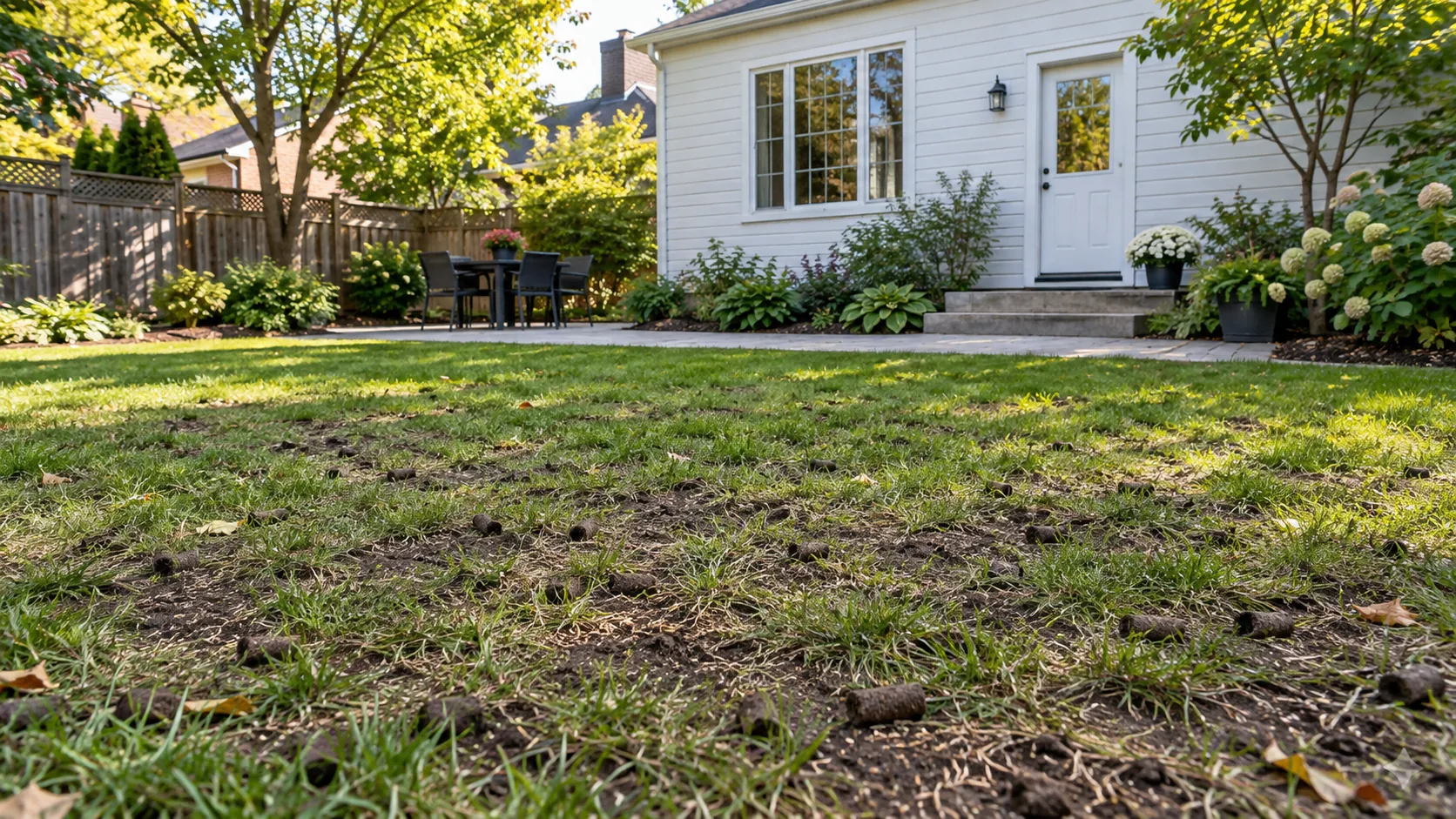
Thin backyard lawn with exposed soil and scattered aeration plugs beside a white-sided house

Lawn Aeration & Overseeding in Burlington

Lawn Aeration & Overseeding

Renovate a lawn that still has useful grass by addressing compaction and establishment conditions before adding seed to thin areas.

A thin lawn does not always need to be removed. Where enough healthy grass remains and the site can support improvement, aeration and overseeding may help strengthen the existing lawn. The useful question is why the grass is thin and whether the cause can be managed, not simply which seed bag produces the fastest-looking result.

Aeration and overseeding are related but different tasks. Core aeration removes small plugs of soil to open the surface and address compaction. Overseeding adds grass seed to the existing lawn. The work still depends on appropriate preparation, seed-to-soil contact, moisture and time with reduced wear. No treatment can guarantee complete recovery where the growing conditions remain unsuitable.

Read the thin areas before choosing the treatment

Map where grass is weak and compare it with healthy sections nearby. Compacted shortcuts, dry edges, dense shade and persistent wet spots have different causes. Look at the pattern after mowing and after rain. A single close-up of bare soil may hide the important relationship with a downspout, tree canopy or heavily used gate.

Core aeration is most relevant where compaction limits the existing soil surface. It is not the same as simply poking narrow holes, and it cannot replace major soil rebuilding where rubble or severe disturbance lies beneath the lawn. Ground moisture and equipment access affect whether the work can be completed usefully without creating damage.

Existing grass remains part of the plan. A lawn with a useful base of healthy turf may be a good renovation candidate, while a largely failed surface may need more extensive preparation. The decision should account for weeds, unevenness, usable soil and the owner’s ability to manage establishment, rather than making aeration an automatic answer to every sparse lawn.

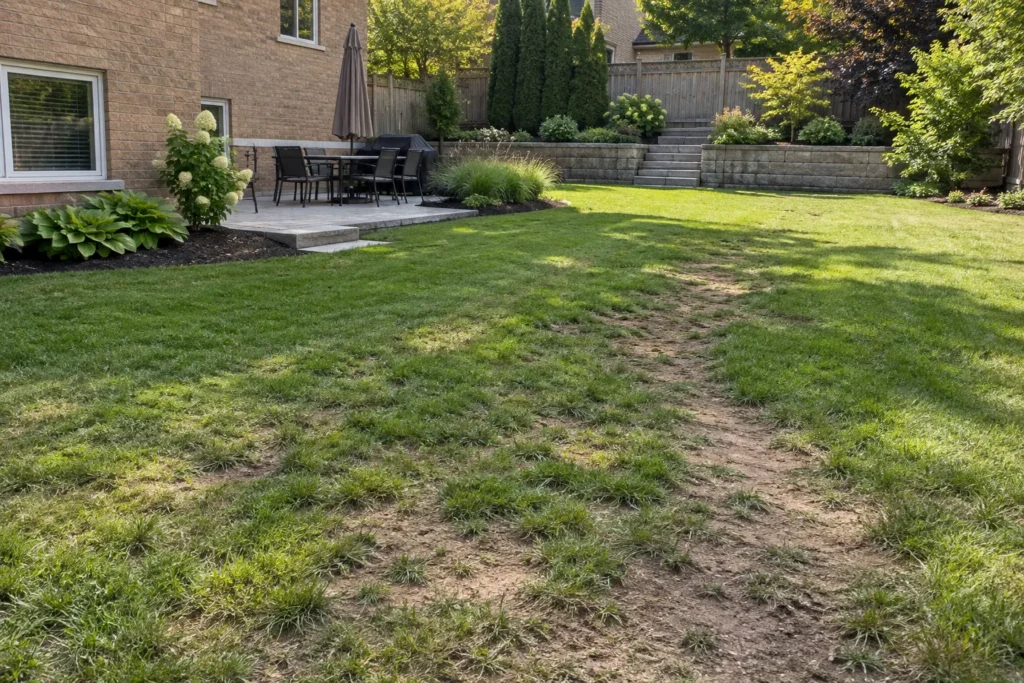
Compacted thin lawn with bare patches beside a tan-brick house and garden terrace
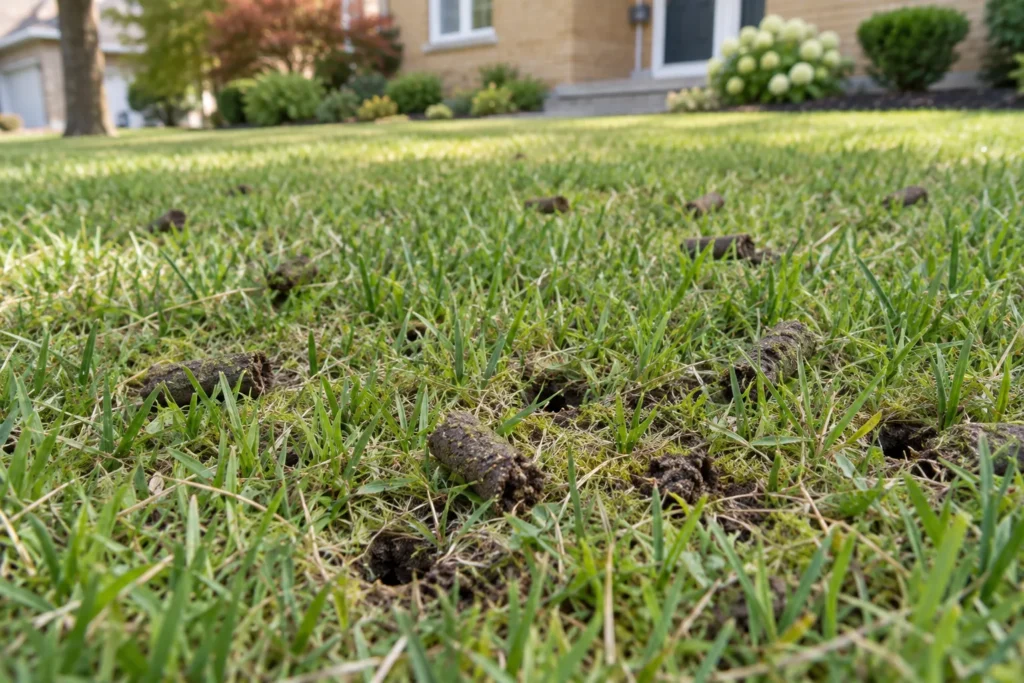
Core-aerated lawn showing small soil plugs and matching holes among grass blades

Match the visible problem to the next question

Match the visible problem to the next question
Pattern in the lawnWhat to investigatePossible direction
Thin along a regular shortcutConcentrated traffic and soil compaction.Reduce wear and assess aeration with seed.
Weak beneath dense treesAvailable light, roots and dry shade.Adjust expectations or consider another ground treatment.
Bare beside a wet low areaRunoff source, duration and outlet.Resolve landscape drainage before renovation.
Patchy but otherwise vigorous grassSeed contact, mowing and moisture coverage.Prepare thin areas and plan consistent establishment care.
Extensive failure and poor levelsUnderlying soil, debris and grade.Compare renovation with sod preparation and installation.

Seed-to-soil contact is the central detail

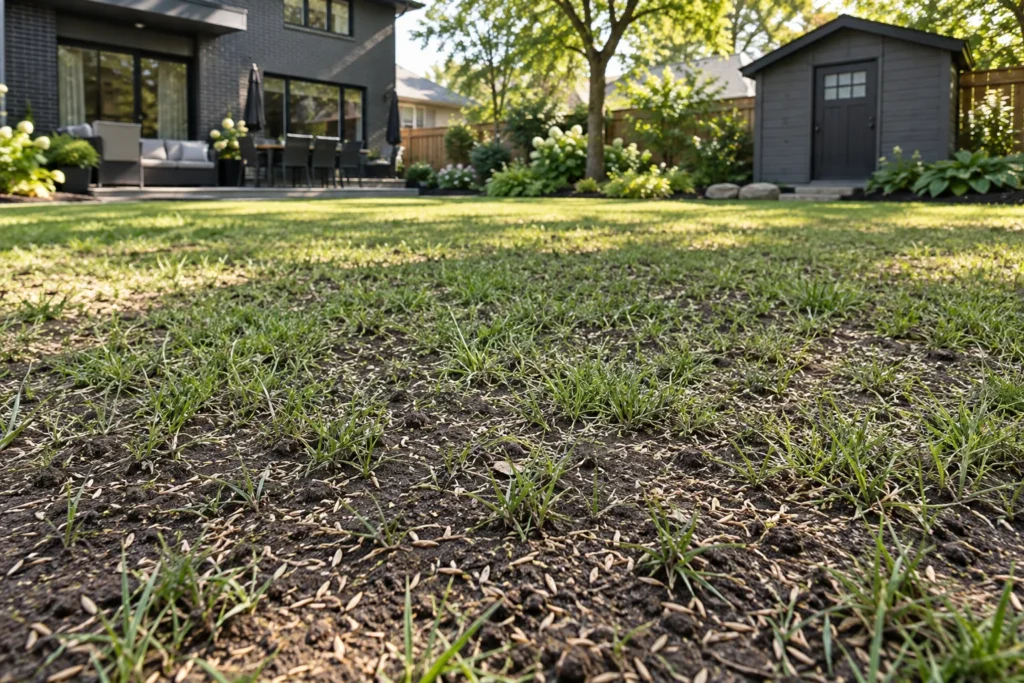
Scattering seed onto a dense layer of debris does not create a prepared growing surface. Successful establishment depends on contact with suitable soil and conditions that allow the seedling to continue growing.

Surface preparation

Remove or manage material that prevents seed reaching the soil. Thin patches may need targeted preparation rather than identical treatment across the whole lawn. Heavy thatch, buried construction material and severe unevenness should be identified before deciding the work.
Appropriate seed

Choose seed for the actual light, intended use and growing environment. A sunny open patch and a shaded side strip may need different expectations. Product selection cannot overcome a location where the grass receives inadequate light or unrelenting wear.

Consistent moisture

Plan coverage for small corners and edges as well as the centre. Germinating seed and young roots are vulnerable to uneven drying, while flooding can move material or leave unsuitable conditions. Assess the watering method and availability before the seed is placed.

Room to establish

New grass needs a period of reduced traffic. Repeated footsteps, pet activity and movable furniture can interrupt recovery. Temporary changes to household routes may be part of a practical renovation plan, particularly where the weakest area is also the busiest.

Choose timing for conditions and aftercare

A useful renovation window combines suitable soil and weather with a household schedule that supports watering and reduced use. A calendar label alone does not establish readiness. Very dry ground, prolonged saturation or an upcoming event on the lawn can make a proposed date impractical even when the owner is keen to start.

Coordinate mowing with preparation and establishment. The existing grass should be manageable for the work, and later cutting should respond to the condition of the new growth. Ask how routine lawn maintenance will be adjusted while seedlings develop. Maintaining the old grass at the expense of the new seed can undermine the renovation.

Tell us about recent lawn products or planned treatments. Some products have restrictions affecting seed establishment, and the actual product label matters. Do not assume all weed-control or lawn-care applications can be combined without timing considerations. Keep the renovation scope distinct from any separately provided chemical treatment.

Preparation continues after the seed is down

Overseeding is not finished when the spreader leaves the lawn. Watch for dry edges, runoff channels, bird disturbance and worn shortcuts so small problems can be addressed early. Moisture coverage should match the shape of the area, including the strip beside a warm patio or the corner shielded from the main sprinkler.

Aeration plugs can be visible after the work. They are part of core aeration, rather than evidence that the lawn has been damaged by random excavation. Discuss the intended finish and subsequent care so the temporary appearance is understood. Avoid immediately covering or compacting the treated surface with unrelated landscape deliveries.

Expect uneven areas to develop differently. Shade, existing grass density, moisture and traffic vary across a property. Assessment should focus on the actual pattern of establishment rather than a promise that every seed will germinate together. If a patch repeatedly fails, revisit its conditions before simply applying more seed.

Grass seed in contact with lightly prepared soil between thin lawn tufts
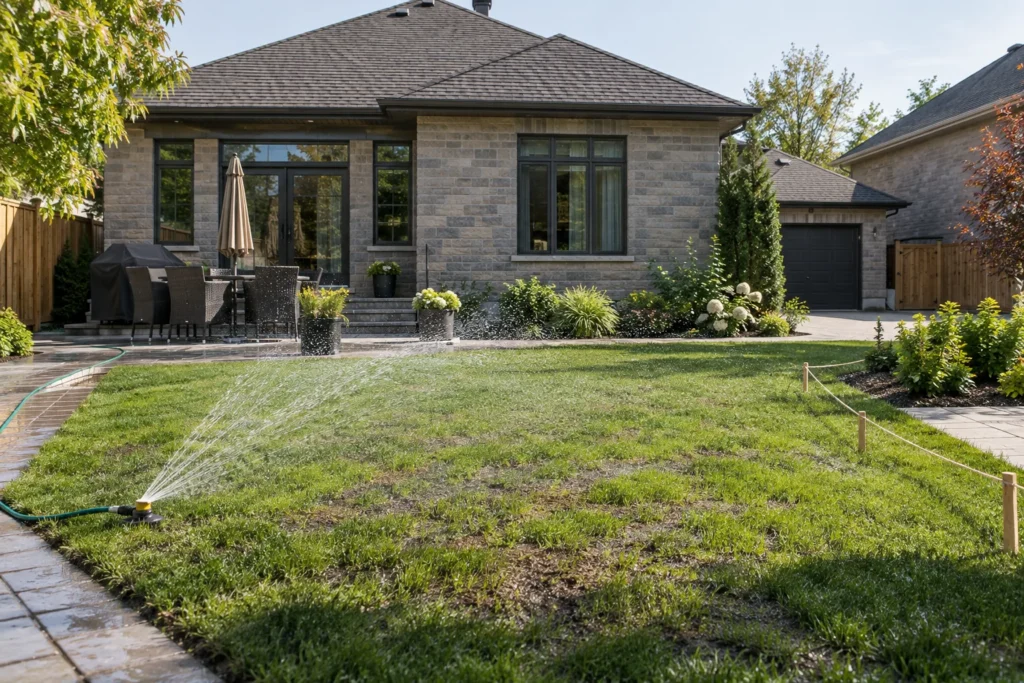
Gentle sprinkler watering on a recovering lawn with a low cord along its edge

Build a lawn-renovation plan around the cause

  1. Assess existing grass and site conditions

    Identify thin and compacted areas, shade, water and repeated wear. Confirm the useful grass that can be retained and whether the lawn is suitable for a renovation approach. Record irrigation and access limitations that influence the practical scope.

  2. Define preparation and treatment areas

    Specify where aeration, surface preparation and overseeding are appropriate. Distinguish local patches from whole-lawn work. Clarify whether topdressing or other soil work is included, with material and purpose suited to the existing conditions rather than an automatic package.

  3. Coordinate timing and household access

    Select a suitable work window and confirm watering responsibilities. Mark vulnerable features and identify private irrigation or other shallow installations. Arrange temporary routes for pets and frequent access so newly treated areas have a reasonable opportunity to establish.

  4. Observe recovery and adjust continuing care

    Review moisture coverage, emerging grass and continuing causes of wear. Resume normal use and cutting according to conditions. Where recovery remains limited, consider whether the site needs a different layout or more extensive soil, drainage or turf work.

Compare renovation with replacement honestly

Renovation retains the existing lawn and can be useful when its underlying conditions are workable. It also requires patience while new grass develops among older plants. Sod offers a more immediate continuous surface over properly prepared ground, but it has its own establishment requirements and does not correct unsuitable shade, water or traffic by itself.

A lawn that is extremely uneven or mostly failed may need a broader preparation scope before either option makes sense. Conversely, removing healthy grass simply to get a uniform appearance can be unnecessary. The sod, overseeding and artificial turf guide compares these options at the planning level without treating one finish as universally superior.

For an estimate, useful details include the area, extent of thinning, gate access, watering availability and household use. Ask what preparation is included, whether the treatment is targeted or whole-lawn and how aftercare is explained. A seed quantity alone does not describe a complete renovation plan.

Aeration and overseeding questions

Are aeration and overseeding always needed together?

No. They address different parts of the condition. Compaction, existing grass, surface preparation and the desired improvement should determine the scope. Adding both tasks automatically does not ensure that the actual reason for thinning has been addressed.

Can it restore grass under dense shade?

Only within the limits of the growing environment. Seed choice can account for lower light, but no mix removes the need for adequate conditions. Where shade and roots consistently prevent useful grass, a different planting or surface layout may be more practical.

Does core aeration level a bumpy yard?

It should not be treated as a grading service. Significant unevenness, buried debris or poor levels need their own assessment. Aeration can form part of lawn renovation, but it does not establish a new grade or correct a drainage route.

Will every bare patch disappear?

No complete recovery or germination guarantee should be assumed. Preparation, moisture, light, existing competition and wear affect the result. Discuss realistic improvement and the factors the household can control during establishment.

Can the lawn be used normally straight away?

Plan reduced use while seed establishes. The necessary arrangement depends on the site and household activity. A temporary dog route or alternate path to a shed may be more useful than trying to renovate a strip that continues to receive concentrated traffic.

Lawn Aeration & Overseeding Gallery

Assess the thin lawn before adding seed

Share the full lawn and the areas that struggle most. Explain when the problem appears and how the area is used so the enquiry can focus on the cause and a realistic recovery plan.

  • Overall lawn and close views of thin patches
  • Sun, shade, wet areas and traffic routes
  • Approximate area and gate access
  • Watering availability and recent lawn treatments

Tell us what you would like to change, repair or maintain around your property.