
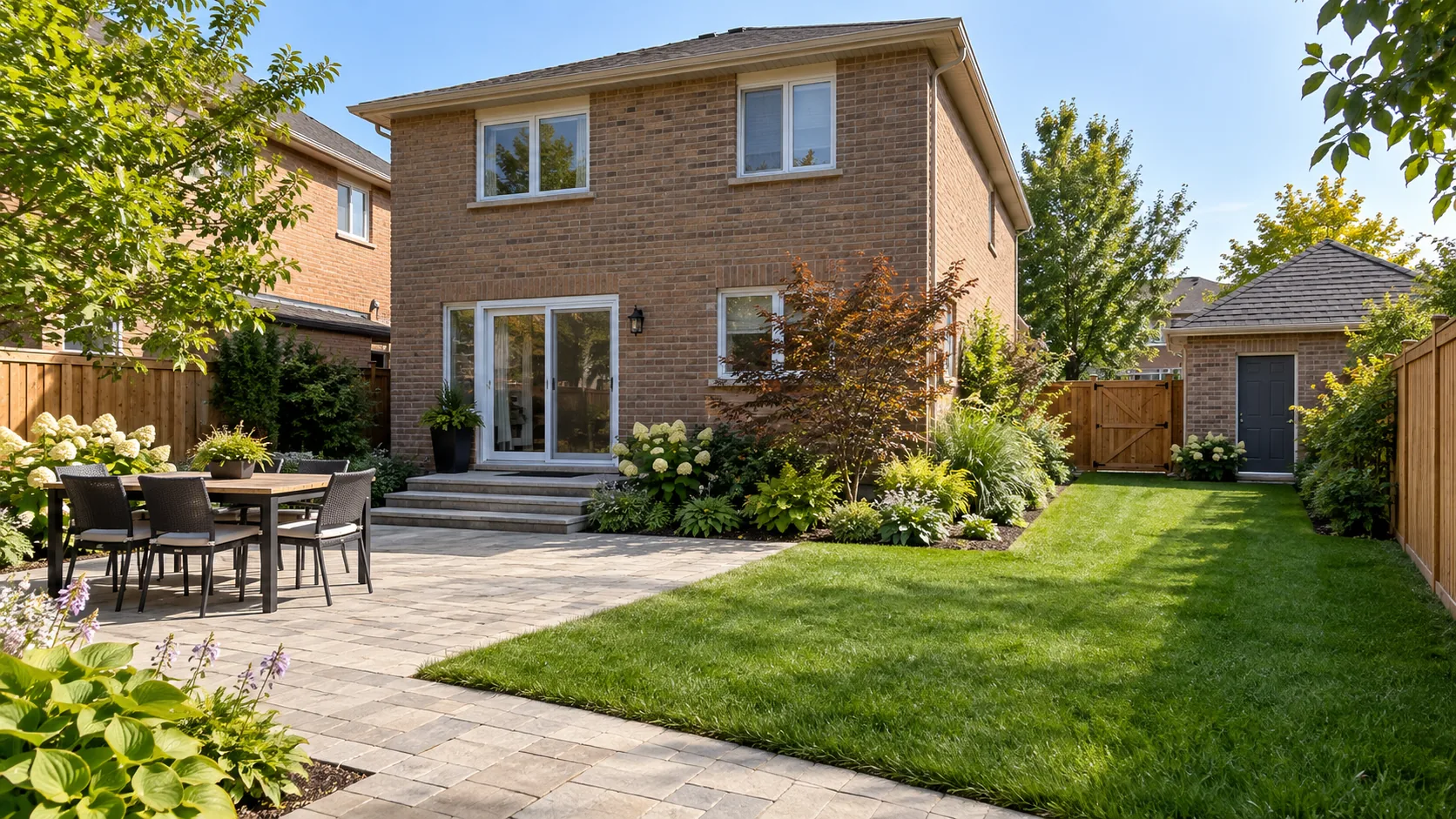
Landscaping Planning
Landscaping Planning Guides
Make informed landscape decisions with practical guides to scope, layout, water, materials, approvals and the care a finished property will need.
A landscape plan becomes more useful when it answers the questions that can change the work. How will the yard be used? What must be retained? Where does water travel? Can equipment reach the work area? Which decisions need confirmation before materials are ordered? These guides help organize those questions into an understandable project brief.
You do not need a complete design before reading. Start with the problem you can describe: a cramped patio, a difficult front entrance, a wet lawn, tired paving or too much recurring upkeep. Then follow the guides that explain the decisions behind that problem. The aim is a better conversation about your own property, rather than choosing an attractive surface without understanding what it needs underneath.
Choose a starting point that fits the decision
If the whole yard feels unresolved, begin with backyard planning or front-yard planning. These guides connect activities and routes before separate features compete for space. A dining area, lawn, entrance walk and storage route may all work individually yet interfere when brought together.
If you already know the desired layout, move to its construction or property constraints. The interlock driveway guide considers vehicles, garage levels and surface choices. The patio guide considers doors, furniture, shade and lawn connections. Each explains what information matters before a surface is selected.
Budget uncertainty calls for a different starting point. Read what shapes landscaping cost to separate work area from access, demolition, concealed preparation and restoration. Then use the quote-comparison guide when written proposals arrive. A lower total tells little if the two scopes leave different work for later.
Look at the relationships between features
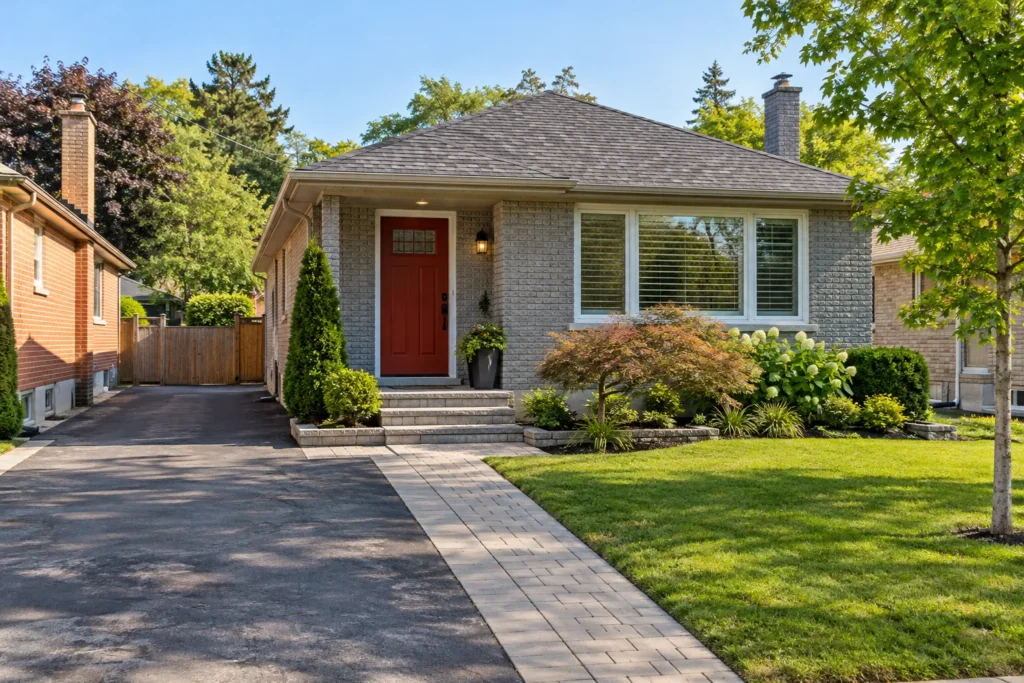
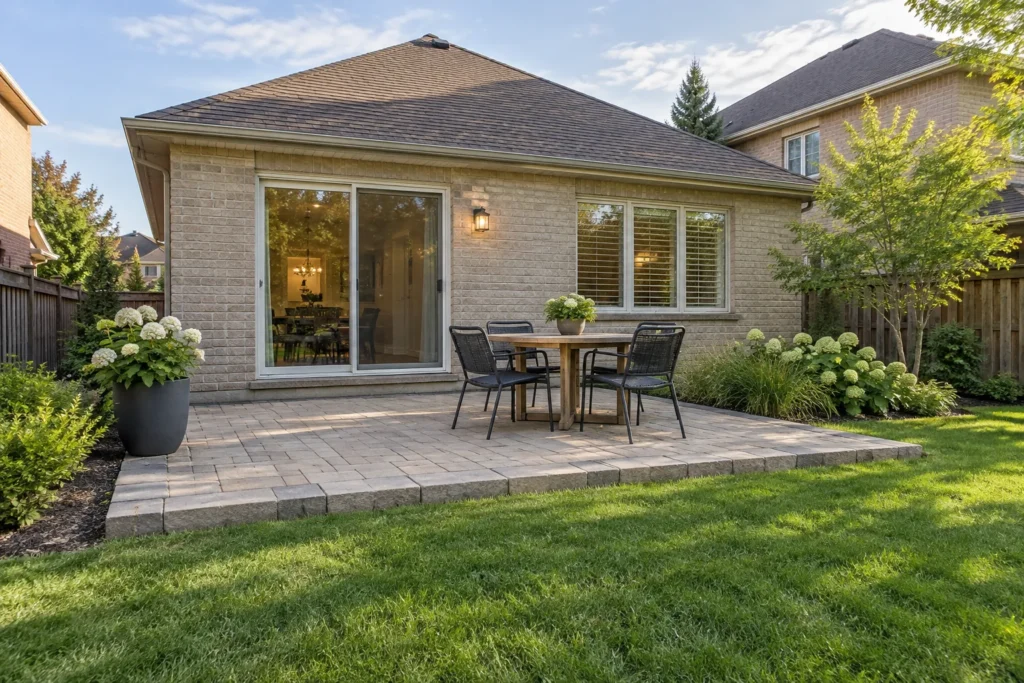
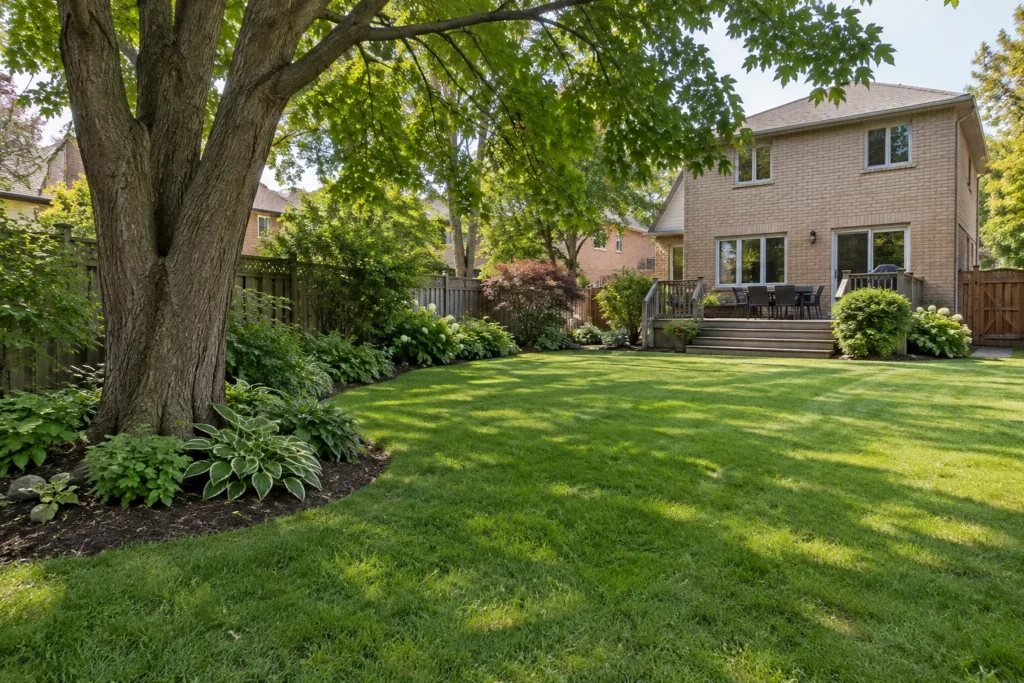
A front walk shares space with a driveway, planting and snow storage. A backyard patio shares levels with the door, lawn and roof-water route. Moving one edge may affect several other decisions. Use wide photographs and a simple sketch to explain those relationships; a close-up of the preferred paver cannot show them.
Record the features that already work. Keeping a useful tree, sound entrance landing or functional lawn may make the project more focused. Retention still needs a working-area plan: a feature can be damaged by excavation or storage even when it is marked to remain. Guides are most helpful when they help protect something valuable as well as identify what should change.
Distinguish an uncomfortable layout from an undersized property. Sometimes furniture rearrangement, a direct route or a consolidated bed resolves the problem without expanding every hard surface. Where a larger footprint is justified, make its purpose clear enough to test against the property's other uses.
Match the question to the resource
| Your main question | Start here | Bring these observations |
|---|---|---|
| How much work should happen together? | Cost, whole-yard planning and quote comparison. | Desired uses, retained features, access and a list of possible later phases. |
| Can this paving or structure fit here? | Driveway, patio, deck/fence or pool planning. | House connections, property information, trees and adjacent land. |
| Why is the yard difficult after rain? | Grade and drainage guides. | Timing, water source, route, low areas and photographs after rainfall. |
| Which green surface is practical? | Sod, overseeding and artificial turf comparison. | Sunlight, wear, existing soil conditions, watering and ongoing care. |
| What should happen around existing trees? | Trees and landscaping planning. | Tree location, proposed excavation, staging and equipment route. |
Read the water and grade guides before covering the problem
Water can be the reason a landscape is being changed or a constraint on an otherwise straightforward project. A patio that appears flat, a newly raised bed or a solid fence base may alter a route that currently carries runoff. Follow the Burlington yard drainage guide to organize the source, route, obstruction and potential outlet questions.
Use the yard-grade guide when the project raises, lowers or reshapes land. A smooth lawn is not the same thing as a level lawn, and importing soil is not a universal cure for wet ground. Existing elevations, neighbouring context and any required professional plans can affect the possible solution.
Record what happens during ordinary rainfall rather than relying only on a dry-day inspection. Note downspouts, visible swales, water near buildings and areas that stay wet longest. Do not enter unsafe water or disturb drainage connections to gather evidence. The observations help define the next assessment without pretending to diagnose every cause from a photograph.
Plan retained trees and future upkeep early
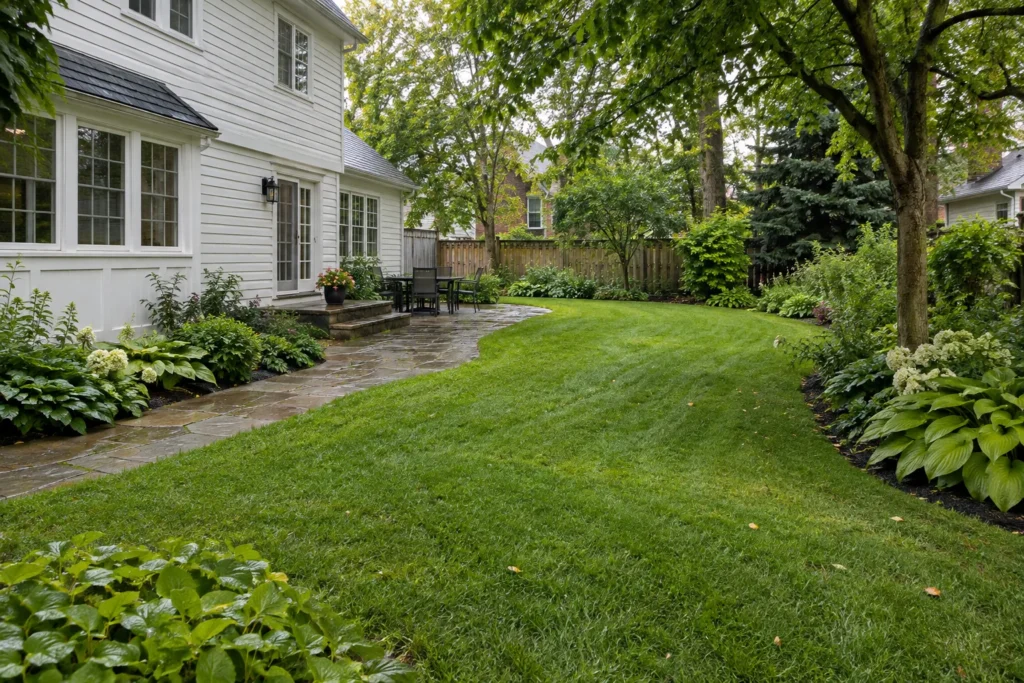
A mature tree affects more than the final planting picture. Its working area can constrain a patio excavation, a fence-post line or access for equipment. Landscaping around mature trees explains why roots, grade and material storage belong in the early layout discussion rather than after the paving is chosen.
Care is also a design decision. The low-maintenance guide helps compare practical surfaces, edges and planting arrangements. It does not assume that replacing everything green with paving removes work. Cleaning, joint care, drainage, pruning, irrigation and seasonal access remain relevant in different ways.
Think about the person who will use a mower, move bins or carry a hose through the finished landscape. A decorative feature that blocks a recurring task creates work every week. Space that looks generous before plants mature may be difficult to maintain later. Include realistic mature size and a usable route around furniture, beds and gates.
Property checks and design choices answer different questions
The Landscaping and Property Planning hub organizes the site controls that may shape a proposal. This guide library explains broader decisions about use, scope, materials and sequence. Read both when a project changes a footprint, grade, structure or sensitive working area.
For driveway widening, use the Burlington driveway-extension guide rather than assuming a replacement surface and a larger parking footprint are the same application. For a structure or enclosed pool area, use the deck and fence guide and pool landscaping guide alongside the actual proposed work.
Some addresses also need screening against Conservation Halton or Niagara Escarpment requirements. The agency planning guide explains that address-and-activity question without treating every Burlington property alike. A general guide cannot establish a specific lot's permissions; source links help you find the appropriate current process.
Keep a short record of what you learned rather than collecting disconnected inspiration. Note the question, the relevant guide and the decision still needed for your property. For example, a preferred dining layout may be clear while the doorway level needs measurement; a driveway finish may be chosen while its footprint needs review. That distinction makes the next conversation focused and prevents an unresolved condition from being mistaken for an approved choice. Bring the record with your photographs when requesting help.
Turn reading into a useful brief
Write the purpose
Describe the change in everyday terms: seating more comfortably, keeping an entry clear, improving a worn surface or making care manageable. Rank the uses rather than presenting every possible feature as essential.
Collect the evidence
Take wide views from the house and yard, show door and gate connections, and record existing problems. Include available surveys, previous drawings and relevant authority correspondence without assuming they describe every present condition.
Make a decision list
Separate choices you can make now from matters needing measurement, professional advice or authority confirmation. A preferred colour can wait if the footprint or finished level is unsettled.
Ask for a defined scope
Use the brief when discussing landscape design and construction or a focused service. Explain which features remain, what restoration is expected and whether work will be phased.
Questions to settle before the layout is fixed
Should I read every guide before requesting an estimate?
No. Start with the guide that matches the main difficulty, then follow the few related topics that could change its scope. A short written list of unresolved decisions is more useful than delaying contact until every detail seems settled.
Can a guide confirm what is allowed on my property?
A guide can identify the questions and official processes, but the answer depends on the address, proposed activity and current requirements. Bring reliable property information and confirm material approval questions before committing to construction.
Where are the actual landscaping services?
Use the landscaping services hub for project and hiring scope. Guides explain planning choices; the relevant service explains the type of work to discuss. Reading a guide does not require choosing a complete yard rebuild.
Bring the important decisions together
Describe the property, the change you want and the decisions that still feel uncertain. Wide photographs and a few clear priorities provide a useful start.
- Burlington property location
- Main difficulty and desired uses
- Features to retain and likely later phases
- Available photographs, surveys or drawings
Tell us what you would like to change, repair or maintain around your property.