
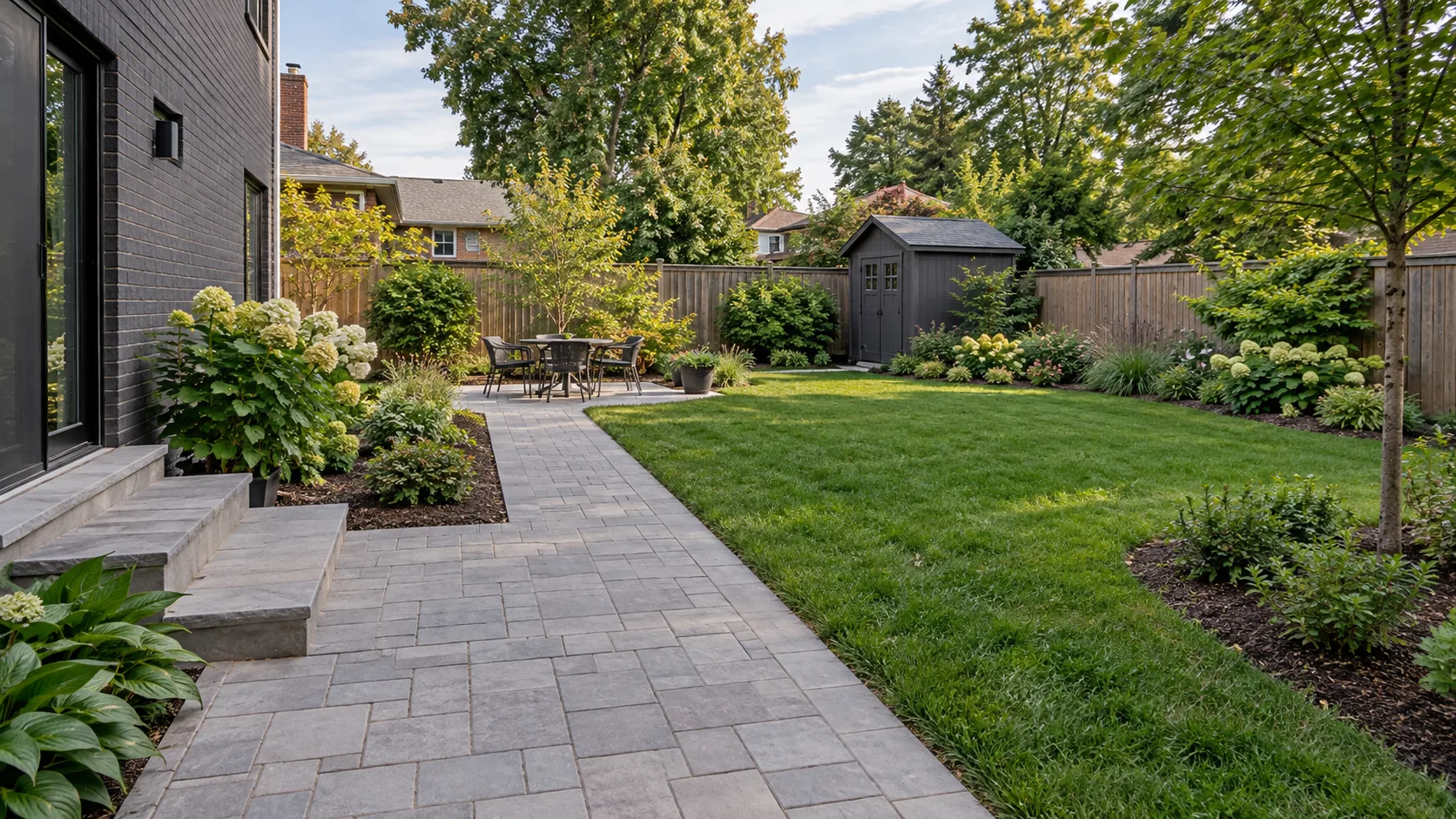
Burlington Landscaping
Low-Maintenance Landscaping Guide
Plan a manageable yard around mature plant sizes, useful lawn, accessible beds, durable surfaces and care tasks that fit your household.
Low-maintenance landscaping starts by deciding which work you want to reduce. Some households enjoy pruning and planting but dislike mowing awkward strips. Others want fewer spring cleanups, simpler watering or a yard that can be maintained without lifting heavy equipment through a narrow gate. Those are different design briefs.
The aim is a landscape with a sensible workload, not a promise that living plants and outdoor surfaces will look after themselves. A simpler layout can reduce repeated tasks, but every material has a care cycle. Begin with your actual routine and make choices that remain manageable as the garden matures.
Write a maintenance brief before a plant list
List the tasks that currently take effort and the reasons they are difficult. A bed may be manageable in size but hard to reach behind a hedge. A lawn may take little time to mow except for the narrow pieces around posts and stepping stones. Record the points of friction rather than describing the entire property as too much work.
Decide what you are willing to keep doing. Seasonal weeding, watering during establishment, selective pruning, leaf removal and surface cleaning are distinct responsibilities. If some will be delegated, identify those tasks and the access needed to perform them. The design should fit the care arrangement rather than assuming unlimited time or recurring visits.
Keep the desired use visible too. Reducing lawn area is not automatically an improvement if the remaining shape no longer supports play or comfortable circulation. A larger simple lawn can sometimes be easier to manage than several small fragments. Explain which spaces matter to daily life before choosing a supposedly easy material.
Give plants their mature space
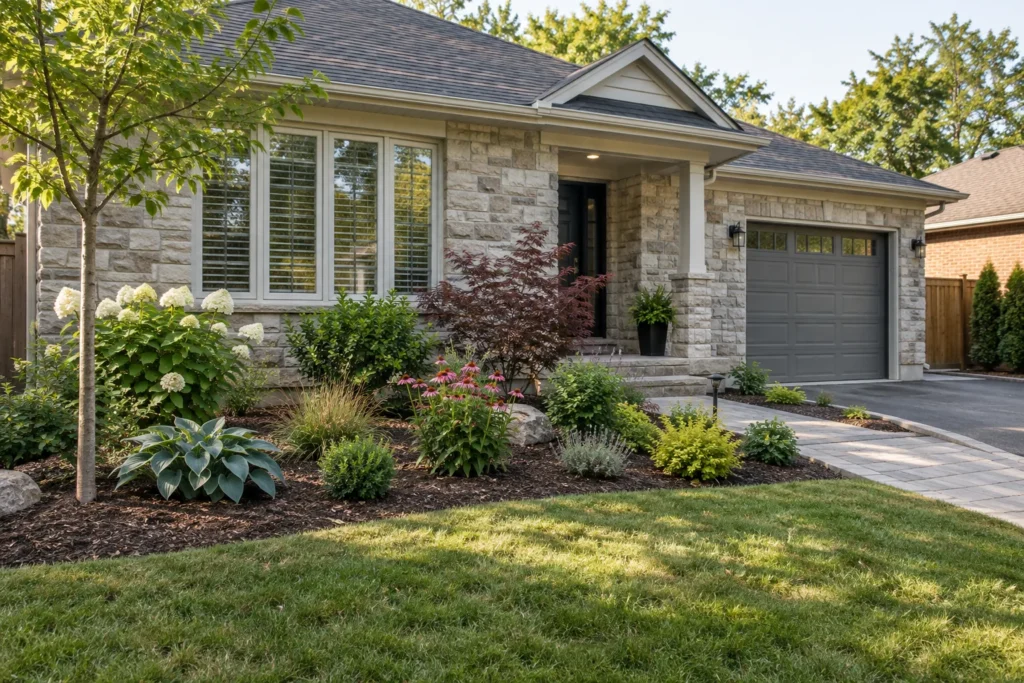
A new garden can look open because young plants have not reached their expected width. Filling every gap for an immediate dense appearance can create future crowding, obstructed windows and repeated pruning. Review mature dimensions in relation to the actual bed, not only the size of a container at planting.
Choose plants for the light, moisture and exposure where they will grow. A plant that repeatedly struggles in the wrong location can generate more work than a less dramatic choice that fits the site. Do not assume a whole property has one growing condition. A sunny patio edge and a shaded fence corner may need different approaches.
Use repetition deliberately without creating an inflexible monoculture. A limited, coherent palette can simplify identification and care, while suitable variety can spread seasonal interest and avoid relying on one plant everywhere. Confirm specific selections and expected care with the garden design discussion. No single plant label makes an unsuitable site maintenance-free.
Make the lawn easier to use and cut
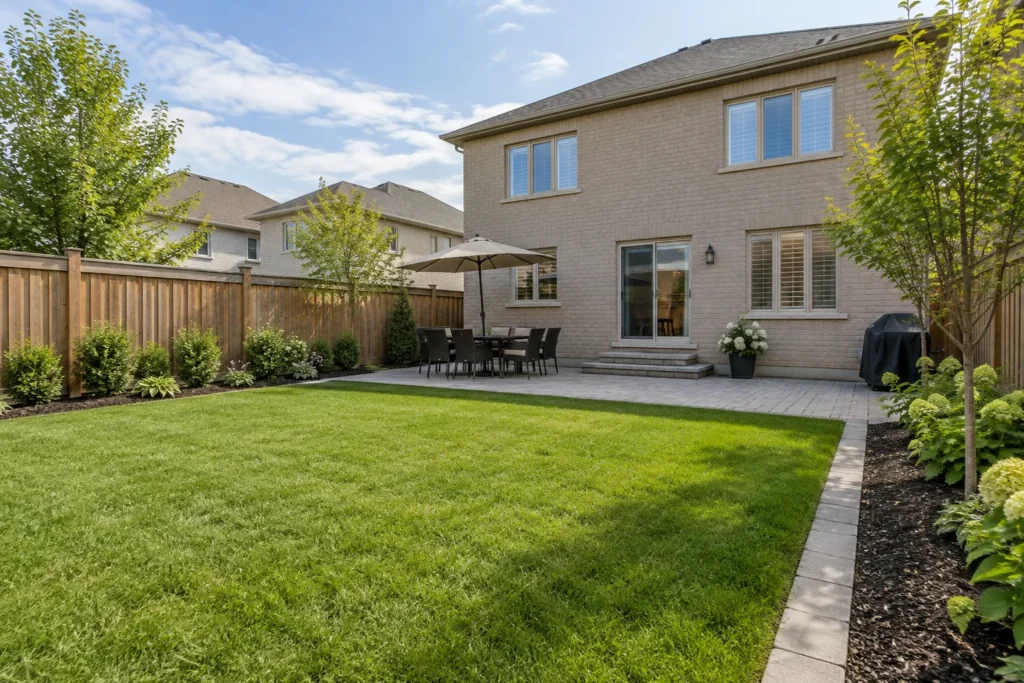
Look for small islands, tight internal corners and narrow strips that require repeated manoeuvring. A cleaner lawn outline may reduce trimming and make mowing more direct. Beds, paths and paved areas should meet in a way that gives tools and people a practical route without forcing them through planting.
Retain lawn where it serves a purpose and can grow well. In heavily shaded or repeatedly worn locations, discuss whether a path, suitable planting or another surface is a better response. Replacing poor grass again without changing the underlying use may simply repeat the same maintenance cycle.
A simple edge still needs attention. Choose transitions that make the boundary easy to identify and maintain, and avoid raising soil or mulch over a useful drainage line. If lawn renewal is part of the project, include establishment care in the plan. Lower future mowing effort does not remove the initial work needed to establish a living surface.
Access is part of an easy garden
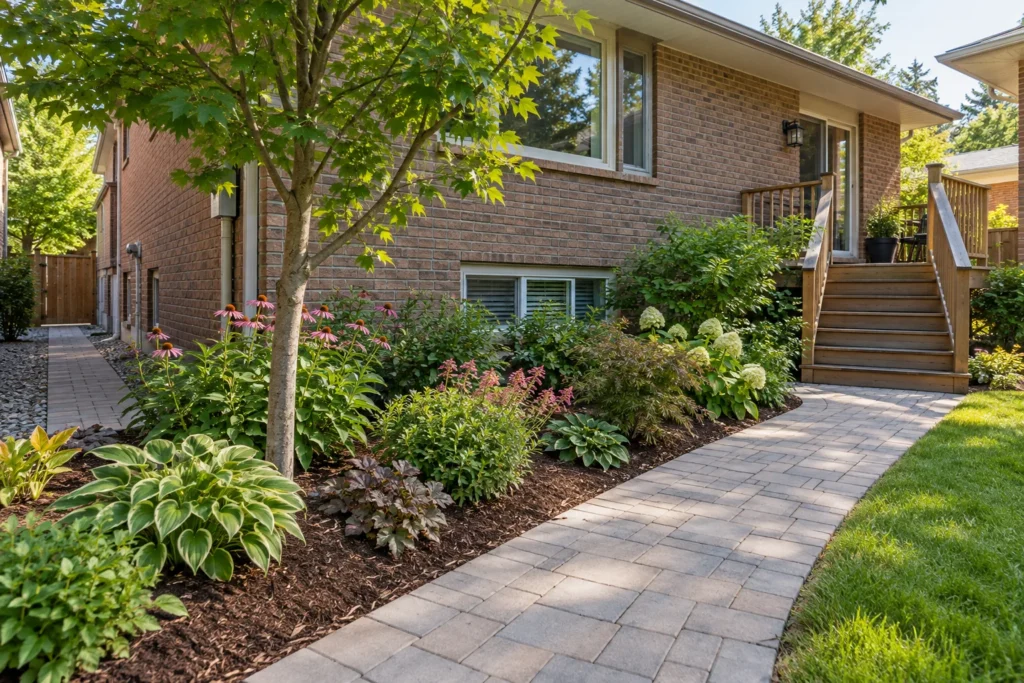
A bed is easier to maintain when a person can reach the plants without stepping on crowns or balancing along a narrow edge. Plan the route for watering, hand weeding and selective pruning. Leave working space around meters, equipment, gates and drainage features so routine care does not require dismantling the garden.
The path itself should have a clear purpose. It might link a door to a shed, provide access to a rear bed or protect the route used for bins. A decorative strip that ends in dense planting may add another edge to maintain without improving access. Match the route and surface to the way it will actually be used.
Storage and seasonal movement also matter. Identify where hoses, tools, furniture and bins belong. Repeatedly dragging them across a delicate border can undo the intended simplicity. A manageable yard combines planted space with the ordinary logistics of living on the property.
Materials change the tasks rather than removing them
| Choice | Potential advantage | Work to plan for |
|---|---|---|
| Organic mulch | Covers exposed soil and creates a forgiving bed finish. | Weeding, edge upkeep and replenishment as it decomposes. |
| Decorative stone | Can suit a deliberate non-planted or sparsely planted treatment. | Leaf and debris removal, weed control and difficult later changes. |
| Paving | Creates a durable route or usable sitting area. | Joint care, cleaning and observation for movement or drainage issues. |
| Living lawn | Provides flexible open space in suitable conditions. | Mowing, edge work, seasonal care and response to wear. |
| Planted ground layer | Can suit areas where lawn struggles and the site fits the plants. | Establishment watering, selective weeding and plant management. |
Use stone and mulch where they make sense
Neither stone nor mulch stops every weed. Wind-blown seed, decaying leaves and soil accumulation can create growing conditions on top of a bed finish. The maintenance plan should explain how debris will be removed and how weeds will be dealt with while they are small.
Stone can be difficult to separate from soil during future changes, and it may complicate moving or dividing plants. Organic mulch needs replenishment but can be easier to work through in a changing garden. Consider the amount of leaf drop and how much the planting is likely to evolve before choosing between them.
Keep finishes away from plant crowns and avoid piling material against trunks. A thick-looking decorative edge is not a substitute for suitable bed levels or tree protection. The mulch and decorative stone service can be scoped around the actual area, preparation and future care instead of a universal low-work claim.
Reduce complications before adding automatic systems
An irrigation system or a new landscape product may be useful, but it cannot make an unsuitable arrangement self-managing. First consider whether the bed is too crowded, whether the lawn has unnecessary fragments and whether plants match the site. Simplifying those conditions can reduce ongoing effort without adding another system to inspect.
Where irrigation exists, understand which areas it serves and how changing planting or paving affects it. Avoid covering heads or assuming the original watering pattern suits the new layout. Any system needs adjustment and observation as plants develop and weather changes. Water should not repeatedly land on an entrance or feed a low area.
Keep the care plan understandable to someone other than the person who designed it. A plant list, clear bed boundaries and sensible access make seasonal help easier to arrange. The garden maintenance service can then be discussed in specific tasks rather than the vague expectation of keeping everything perfect.
Phase the work without creating extra upkeep
Begin with the changes that remove recurring difficulty: a failing route, an overgrown boundary or a bed that blocks access. Preserve useful areas while the plan develops. Removing every plant at once can create a large exposed area that needs temporary stabilization and weed management before the next phase is ready.
Coordinate future construction before finishing delicate planting. If a fence, patio or utility route will need the same access, leave that route available and agree on the temporary finish. A phased project should have clear endpoints, with each completed area usable and maintainable on its own.
Review the result after a full pattern of use and seasonal care. Notice which tasks became easier and which still need a design response. The low-maintenance landscaping service turns those decisions into a construction and planting scope, while this guide helps define the workload you want the landscape to support.
Practical expectations
Can I have a yard with no maintenance?
Outdoor spaces need observation and care. A realistic plan reduces awkward or frequent tasks and makes remaining work accessible. Ask which tasks will remain for every material and plant choice.
Does replacing all grass with stone simplify everything?
It changes the work, but leaves, weeds, heat, drainage, planting changes and edge care still need consideration. Compare the site and use rather than assuming one surface suits the whole property.
Continue planning
Bring the property conditions into the conversation
Tell us what you would like to change, repair or maintain around your property.