
Burlington · Property context · Address-specific planning
Burlington Service Area
Explore Burlington property contexts and prepare an enquiry about landscaping, hardscaping, maintenance or winter service for your address.
The address starts the conversation; the site shapes the work
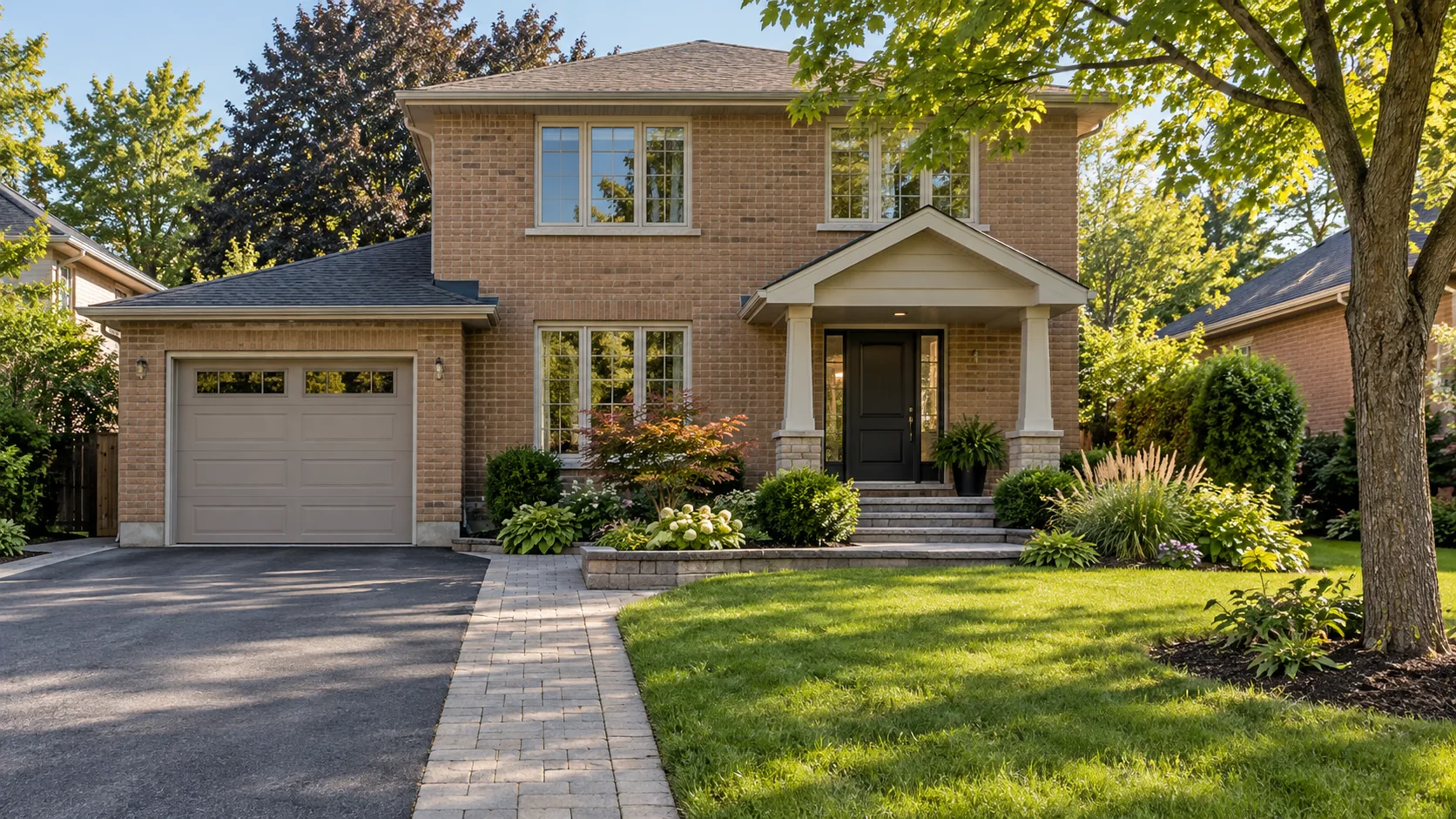
Burlington includes established detached properties, compact private gardens, townhouse settings, low-rise commercial grounds and shared residential landscapes. The useful question is not simply which neighbourhood a property is in. It is how that particular site is used, what needs attention, who controls the work area and whether the proposed scope is suitable for its conditions.
Use this page to prepare an enquiry about a Burlington address. Describe the work you are considering and the type of property involved so service availability and scope can be confirmed. A project request does not establish a booking or a fixed service route. Recurring maintenance and snow service need their own area definitions and practical access discussion, while construction begins with the proposed change and the conditions around it.
A photograph of a beautiful yard elsewhere is useful for discussing preferences, but it cannot establish what fits your lot. A narrow gate, a mature tree, a shared boundary or a change in level may have more influence than the apparent size of the lawn. Begin with those existing features rather than assuming that a familiar neighbourhood name determines the design.
Different properties need different starting questions
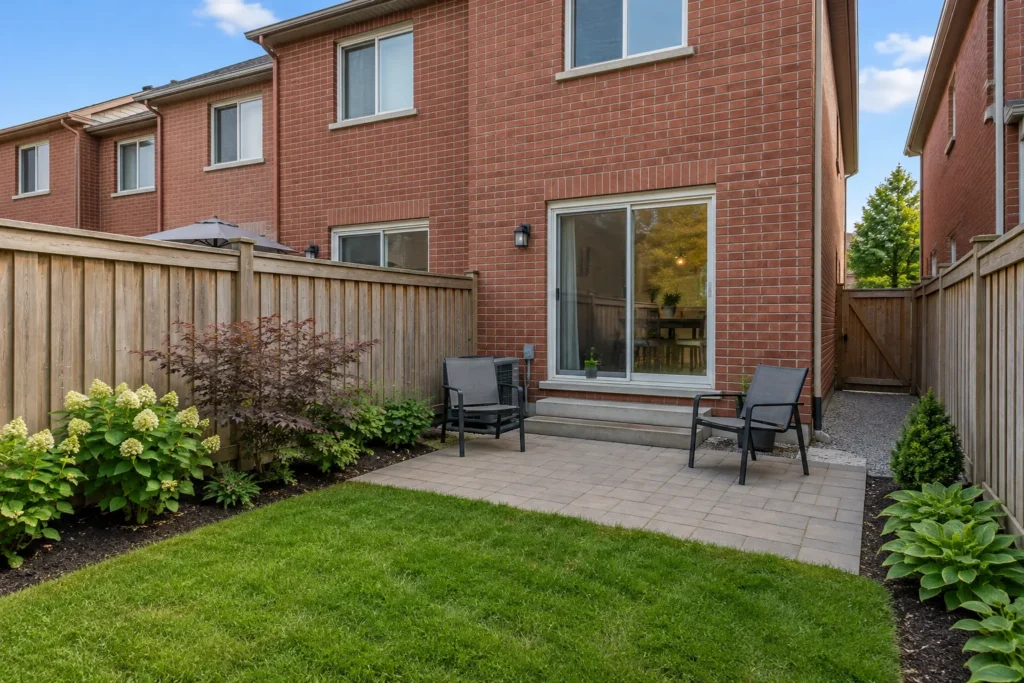
A townhouse garden may have a small private terrace but depend on a shared access route. Confirm which area belongs to the owner, which elements are common and who can authorize changes. Materials still need a practical way in and removed material a way out. Furniture, gates and storage can occupy much of a compact space, so useful circulation matters as much as total area.
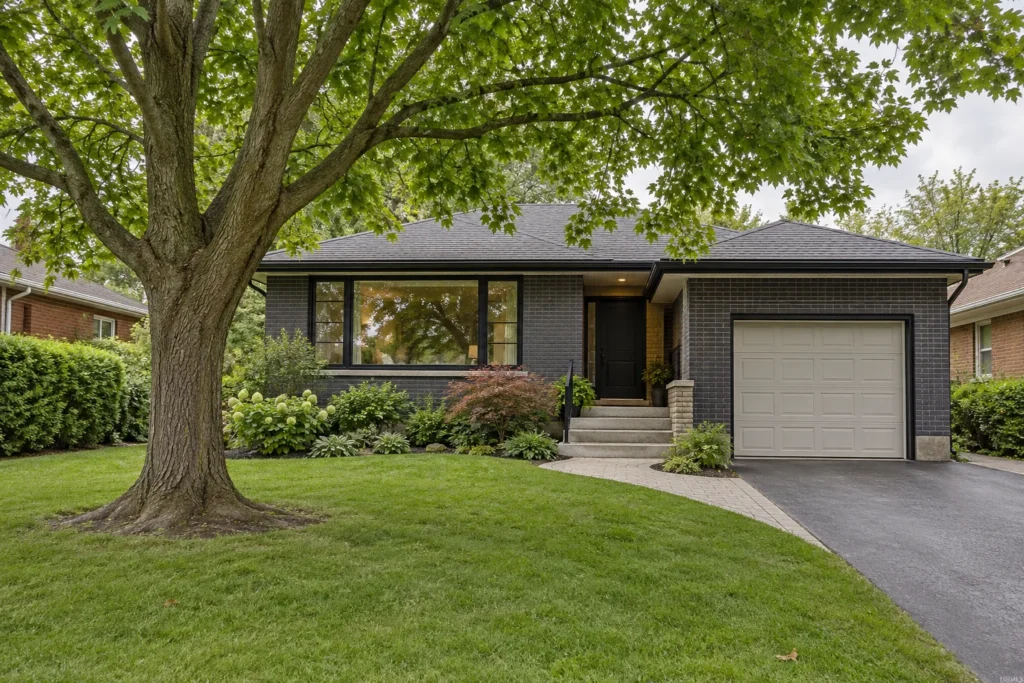
A detached property with mature trees raises another set of questions. The trunk may sit well outside a proposed patio while roots and the working area still matter. Existing shade affects planting choices; a long side yard may be the main route for future care. Identify what should be retained and what needs review before fixing the extent of new paving, grade changes or excavation.
Neighbourhood context without assumptions about your lot
Enquiries may refer to Aldershot, Downtown/Brant, Roseland, Shoreacres or Elizabeth Gardens. Other owners may describe a property in Mountainside, Brant Hills, Headon Forest or Palmer. Tyandaga, Millcroft, The Orchard and Alton Village are also useful location references. Include the address itself when discussing availability and site conditions; the neighbourhood label alone is not precise enough to establish an access arrangement, applicable review or maintenance route.
Those names do not establish one soil type, one drainage condition or one set of dimensions. Properties on the same street can differ in construction history, changes to grade, tree cover, neighbouring surfaces and available access. A corner lot may need closer attention to its road-facing edges; a long yard may have a constrained entrance; an apparently level lawn may still carry a useful water route. These are property questions to investigate, not neighbourhood-wide conclusions.
If the work involves the frontage, include the driveway, entrance walk, boulevard and any public sidewalk in the photographs. For the backyard, show how the space connects to the house and side access. For a shared or commercial site, mark which areas are included in the request and who can make scope decisions. This information helps keep the first discussion tied to the actual place.
Include conditions that may affect an assessment or future work: a locked shared gate, a route through an occupied building, an area used for deliveries or a portion of the property that must remain open. If those arrangements are uncertain, say so. There is no need to clear or alter the site just to make an initial enquiry. An accurate description of its present use is more valuable than a photograph that hides the practical constraints.
Shared and commercial grounds have operational edges
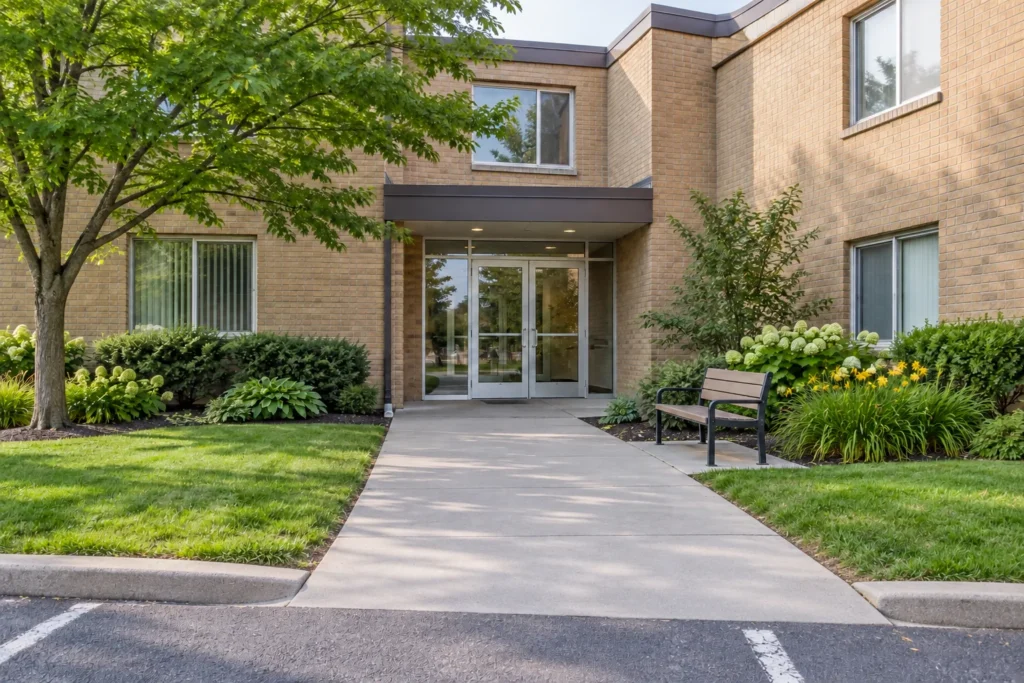
A low-rise entrance, condominium landscape or commercial frontage needs to keep working while it is cared for or changed. Identify visitor routes, loading, waste collection, accessible entrances, parking and service areas. A planting renewal beside an entrance can involve very different access and communication from work in an unused rear bed.
For recurring service, distinguish private landscape areas from public or separately maintained surfaces. Name the lawn and bed zones, the entrances that need attention and any restrictions on access or material placement. Winter enquiries should identify the routes and storage areas being considered, rather than assume that every hard surface receives the same treatment. Confirm the proposed service and its terms for the address before relying on it.
Match the request to the property
| Property context | Useful information for the first enquiry |
|---|---|
| Detached home | The area to change, existing water or access concerns, retained trees and structures, and photographs connecting the work to the house. |
| Townhouse or shared residential site | Private and common-area boundaries, authorization, shared routes and any requirements governing materials or work access. |
| Commercial or multi-residential grounds | Site decision-maker, included landscape zones, entrances, operating constraints and whether the request is construction or recurring care. |
| Winter access | The address, requested drive or pedestrian areas, existing obstacles and potential snow storage. Availability, scope and service terms require confirmation. |
Local planning is specific to the address
A landscaping service area is not a permission boundary. The proposed work may need municipal or other review depending on the property and scope. Do not assume that a building-permit exemption answers a tree, grade, driveway or right-of-way question. Establish the property limits and the responsibilities for obtaining the necessary information before committing to construction.
The property planning hub brings these relationships together. It is useful when a project crosses several areas, such as a driveway, entrance walk, retained tree and new garden bed. Where a specific technical or regulatory question needs professional or municipal confirmation, general landscaping guidance should support that conversation rather than settle it.
Questions about location and availability
Does a Burlington address guarantee that every service is available?
No. Describe the address, property and requested work so availability and suitability can be confirmed. A recurring route, one-time construction project and shared-site contract involve different practical questions. This page explains the area context without setting a booking, schedule or operational promise.
Should I choose a service before asking about my property?
You can begin with the problem. Describe where it occurs and what you want to improve. The landscaping services overview can help name the work, while property maintenance and snow removal explain recurring and seasonal scopes. A clear description is more useful than selecting a service label that does not quite fit.
What if the property has shared access or an uncertain boundary?
Mention that early and explain who controls the area. Do not assume permission to use a neighbour’s land, a common route or the boulevard for construction. Gather relevant owner or site-management information and arrange qualified boundary advice where necessary. The work area and the route to it both need a clear basis.
Check the actual property and proposed work
Burlington’s zoning, site-alteration and tree information address different parts of a proposal. Review the applicable process for the address and the activity. The property’s current conditions and any agency or shared-ownership requirements still need to be established.
Information reviewed:
Tell Us About the Burlington Property
Send the address, property type and the area or service you want to discuss. Include photographs of the work area and its access route where practical.
- Property address and type
- Construction, repair, maintenance or winter request
- Work-area and access photographs
- Desired timing, with availability to be confirmed
Tell us what you would like to change, repair or maintain around your property.