
Skip to content

Explore services

Request an Estimate
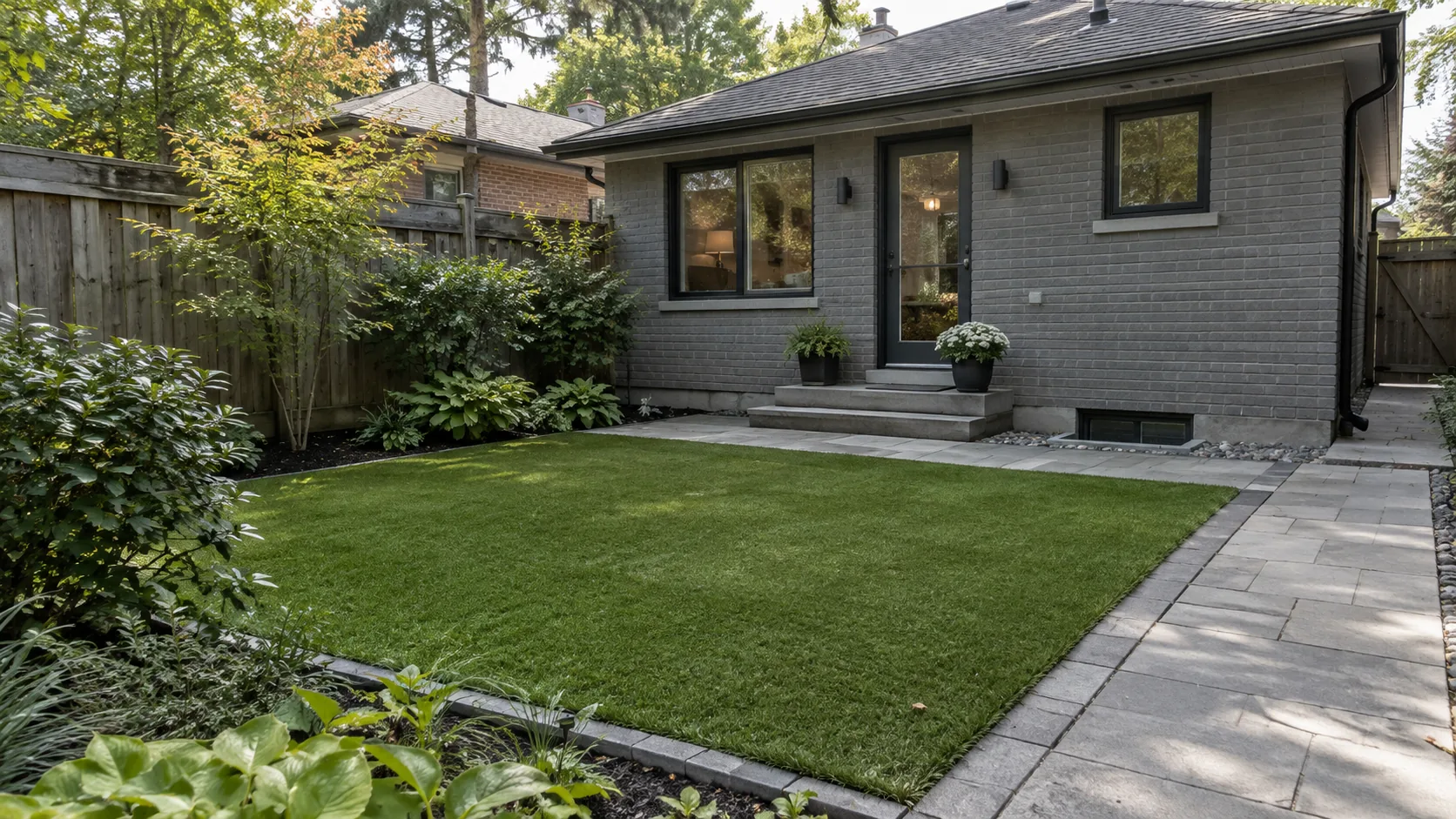
Compact synthetic lawn bordered by a stone path and garden at a grey-brick bungalow

Artificial Turf in Burlington

Artificial Turf

Consider artificial turf where its use and upkeep suit the property, with the base, water route, edges and cleaning access planned before the surface.

Artificial turf can be useful in a small yard or a concentrated-use area where maintaining natural grass is difficult. It can also create new compromises involving heat, drainage, cleaning and the feel of the surface. The decision should begin with how the space is used and why the existing lawn struggles, rather than the promise of a permanently effortless green yard.

A Burlington artificial turf project is an installation system, not simply a roll laid over soil. The supporting formation, water route, seams and perimeter determine how the surface fits the landscape. Pets, play equipment, shade and access to a hose all influence the scope. Natural grass, planting and hardscape remain alternatives worth comparing before the footprint is fixed.

Use the space to test suitability

Use the space to test suitability
Proposed usePotential benefitTrade-off to plan
Small enclosed yardA consistent surface where mowing access is awkward.Heat, debris removal and a practical cleaning route.
Dog-use areaA defined surface for concentrated daily use.Waste removal, odour management and compatible cleaning.
Shaded side yardA finish that does not depend on grass receiving light.Leaves, damp debris and the actual drainage conditions.
High-traffic routeA surface that avoids repeated natural grass wear.Whether a path would serve circulation more directly.
Play spaceA defined usable area with fewer bare-soil patches.Product suitability, surface temperature and any required play safety system.

The base and the seam are part of the finished lawn

Start by understanding existing soil, levels and water. Organic material and unstable ground should not be left to deform beneath the new surface. The preparation needs to establish a suitable, consistently supported formation while retaining the planned drainage route. A free-draining aggregate layer is not a complete answer if the water below it has nowhere suitable to go.

Finished levels must meet patios, paths, thresholds and garden edges deliberately. Allow for the actual turf system rather than raising the ground until the roll appears flush. Keep relevant building clearances and drainage features effective. The edges should hold the surface securely without exposing sharp fixings or leaving loose corners that can curl under repeated use.

Seams and pile direction affect appearance and serviceability. Plan roll layout around the shape and important viewing directions, and assess how joints will be formed and supported. A narrow remnant at a gate or a poorly arranged seam across a busy route can be more noticeable than the difference between two similar turf colours.

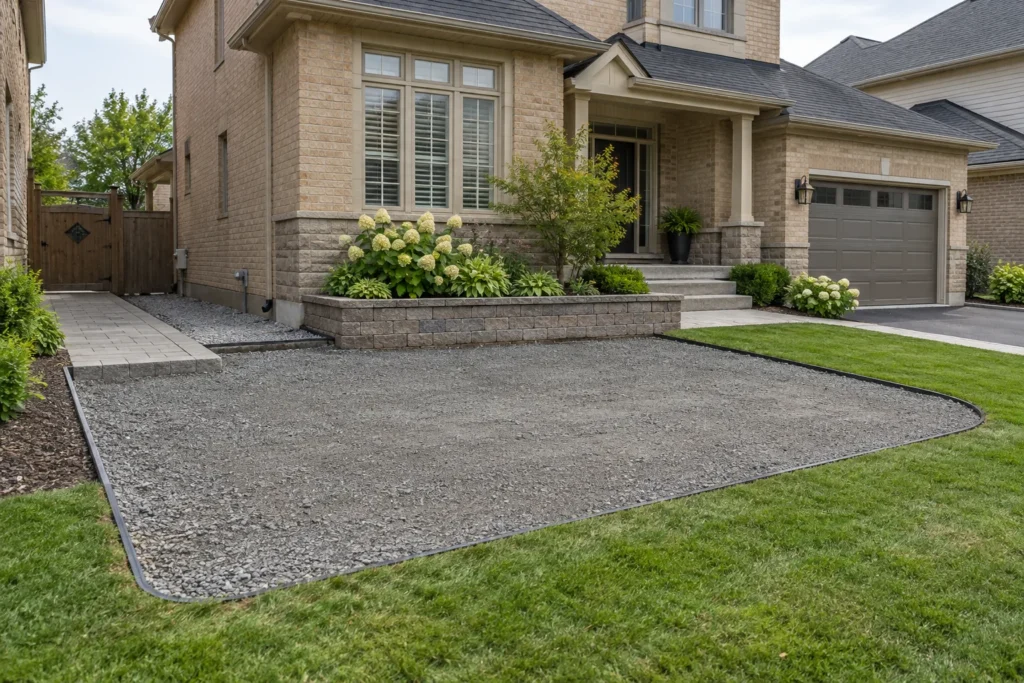
Prepared aggregate formation within a defined future turf area
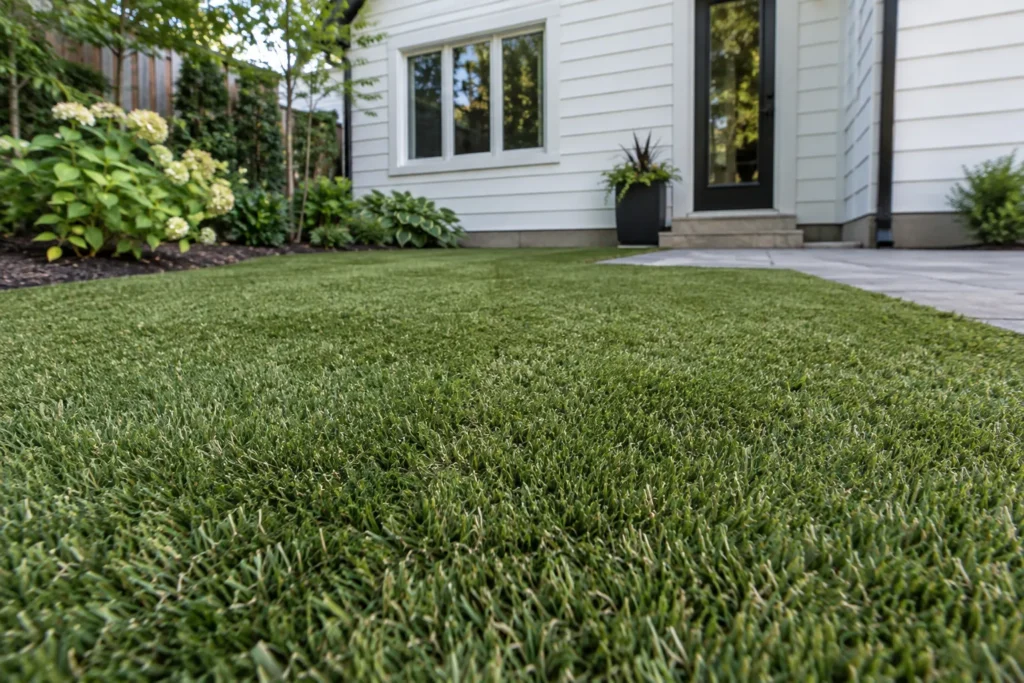
Short artificial turf pile with a discreet level joint beside a garden

Water still needs a destination

Perforated turf and permeable support can allow water through the system, but they do not make the entire property self-draining. Ground conditions, surrounding runoff and a suitable destination remain important.

Existing wet areas

Identify puddles, soft ground and recurring water before removal. A turf installation should not conceal a continuing problem. Landscape drainage may be a separate preliminary scope where the water source, route or outlet is unresolved.
Water arriving from outside

A downspout or sloping patio can send more water toward the area than ordinary rainfall alone. Consider those contributions and preserve relevant surface routes. Raising the perimeter should not turn the new turf footprint into a contained basin.

Cleaning water

Pet areas and dusty surfaces need accessible cleaning. Decide where rinse water can appropriately travel and how the selected system is maintained. A hose that cannot reach the far corner makes a proposed pet surface less practical, even if the installation itself fits.

Drain access and edges

Keep drains, inspection points and other service features accessible. Avoid burying removable covers beneath a permanent finish. Coordinate the turf edge with planting and paving so debris can be removed without loosening the surface.

Pet use needs its own cleaning plan

Tell us how many animals use the area, whether it is their main outdoor toilet space and how often the surface can be cleaned. Solid waste still needs prompt removal. Urine, organic debris and warm conditions can create odour if the system and ongoing care are unsuitable. Artificial turf should never be sold as a way to avoid those responsibilities.

Review the proposed turf, infill where used, base and manufacturer’s care instructions as a compatible system. Cleaning products and tools should suit those materials. A small high-use pet corner may need a different maintenance approach from a decorative strip rarely walked on. Keep clean access to the gate and hose so care remains possible during ordinary daily use.

Consider whether a defined pet area can sit beside retained natural lawn or planting rather than replacing every green surface. This can preserve flexibility in the yard. Low-maintenance landscaping focuses on reducing awkward tasks through the whole layout; artificial turf is one possible material within that wider decision.

Plan for heat, leaves and ordinary yard use

Synthetic surfaces can become hot in strong sun. Consider exposure, footwear, pets and the times of day the yard is used when comparing options. Shade changes that experience but brings its own leaf and moisture management. Do not assume a surface that looks soft in a photograph will be comfortable for every use in every condition.

Artificial turf still collects leaves, seed pods, dust and organic debris. Regular removal helps avoid material building up in the pile or around edges. Brushing, rinsing and any infill attention should follow the selected product’s guidance. Furniture and equipment can compress or mark the surface, so discuss intended placement and movement rather than treating the yard as an unlimited hard-working floor.

For play use, identify the actual activities and equipment. Ordinary landscaping turf should not be presented as certified impact protection beneath climbing equipment. Any required safety system needs its own appropriate design and product specification. Likewise, a decorative lawn finish is not automatically a sports surface or a vehicle-supporting pavement.

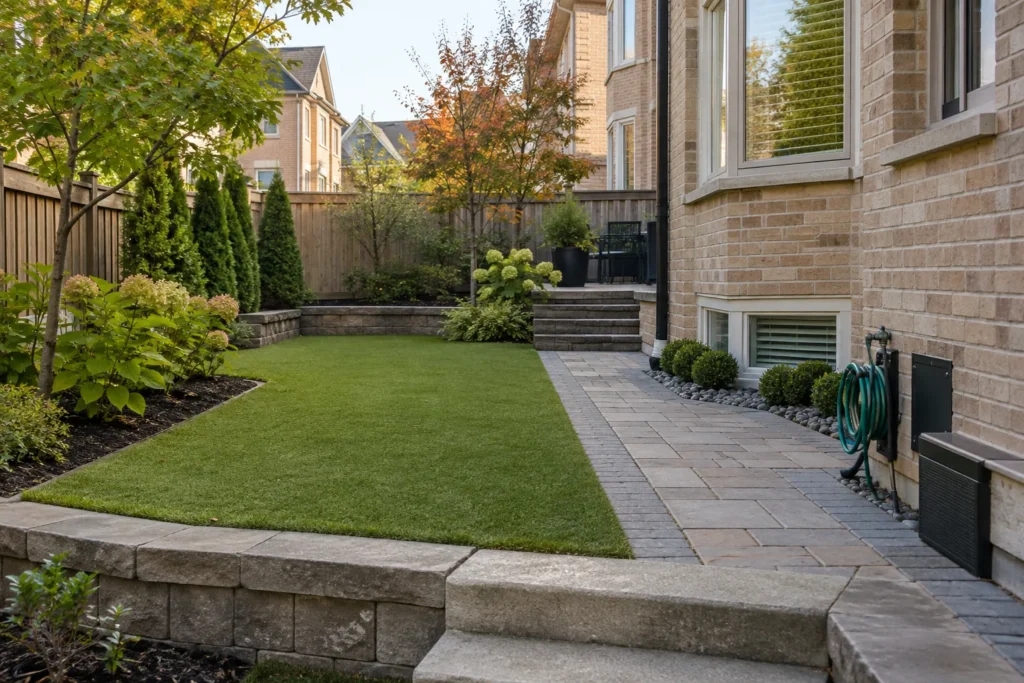
Synthetic pet-use lawn beside a clear paver path and hose point
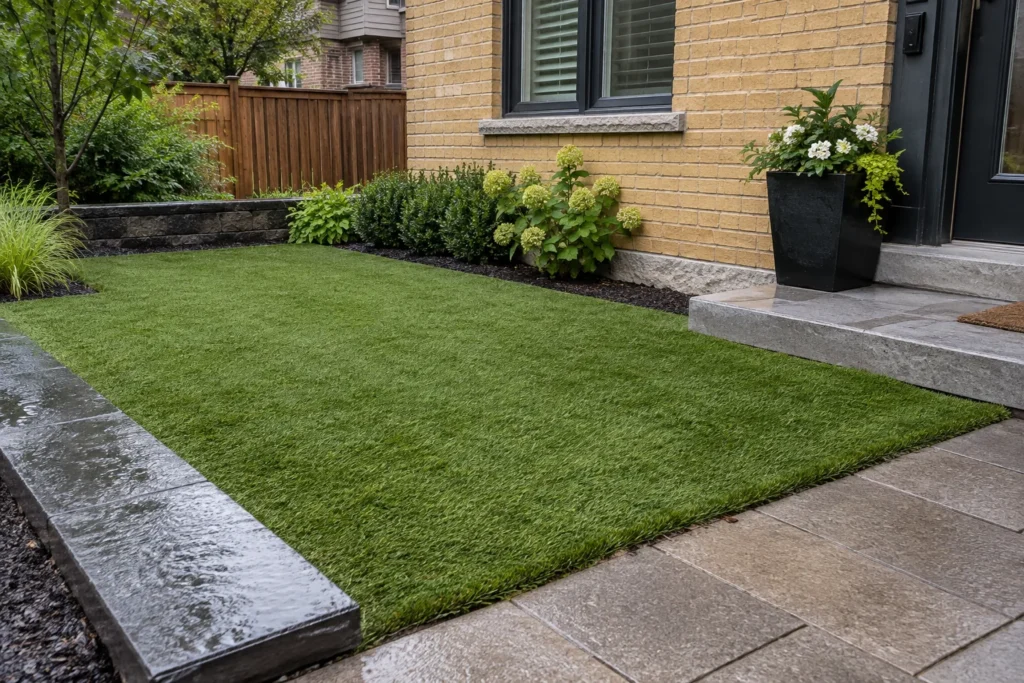
Rain-damp artificial lawn meeting a stone path at a yellow-brick home

Make the installation scope specific to the yard

  1. Review the reason for changing the surface

    Record failed natural grass, traffic, pets, shade and maintenance difficulties. Compare whether altered planting or a dedicated path would solve the problem with fewer compromises. Define the actual turf footprint instead of assuming the whole yard should be covered.

  2. Resolve access, levels and water

    Measure gates, turns and fixed edges. Assess existing soil and drainage, identify services and discuss surrounding protection. Specify the prepared support and where water can appropriately go before confirming the final product and finish height.

  3. Select a compatible turf system

    Review texture, pile, backing, infill where applicable and product guidance for the intended use. Plan seam positions, direction, perimeter restraint and interfaces with covers or drains. Appearance matters, but it should be evaluated alongside cleaning and exposure.

  4. Install and explain continuing care

    Prepare the area and fit the agreed system with secure edges and coherent transitions. Discuss debris removal, cleaning, heat and furniture use. Keep product details available so future maintenance follows the actual installed materials rather than generic advice.

Compare artificial turf with other workable finishes

A yard with suitable light and soil may support new sod after proper preparation. A mostly healthy lawn may benefit from renovation. A persistently worn shortcut may work better as a path, while a shaded boundary could become a planting bed. The best option follows the function and conditions of that part of the property.

The sod, overseeding and artificial turf guide provides a broader comparison. Consider both installation and continuing care, including water use for establishment or cleaning, debris, repairs and the eventual need to renew the surface. Reduced mowing does not mean that all outdoor maintenance disappears.

When reviewing estimates, compare removal, disposal, ground preparation, drainage scope, turf product, seams, infill, edging and restoration around the work. Limited access or an irregular shape can influence the scope substantially. Clarify what is included if poor ground is exposed and whether existing drainage concerns need separate investigation before installation.

Artificial turf questions

Is artificial turf maintenance-free?

No. Leaves, dirt and pet waste still need removal, and the product may need brushing, rinsing or infill attention. The appropriate care depends on the installed system and use. Plan realistic access and follow its manufacturer’s guidance.

Can it be installed over a lawn that stays wet?

The water problem should be assessed first. Removing grass and adding a permeable-looking surface does not create a suitable outlet. Preparation and drainage must work as a complete system, with water directed appropriately for the property.

Is it always a good choice for dogs?

It depends on use, cleaning, drainage and the selected materials. A heavily used pet area needs a clear waste and rinse routine. Discuss odour, access and care expectations before choosing a surface rather than assuming synthetic grass solves every pet-yard problem.

Will seams be invisible?

Seam planning and workmanship can improve the result, but appearance also depends on the product, pile direction, light and layout. Review realistic expectations and the proposed roll arrangement. A guarantee of invisibility from every angle should not be assumed.

Can it be used under play equipment?

Only with the appropriate complete surface system for the specific equipment and use. Ordinary landscape turf is not automatically an impact-attenuating safety surface. Identify that requirement early so it can be assessed and specified separately.

Artificial Turf Gallery

Decide whether turf fits the way you use the yard

Show the area, its edges and any current lawn or water problems. Tell us about pets, play, shade and cleaning access so the material choice starts with daily use.

  • Overall area, edges and gate access
  • Pets, traffic and intended activities
  • Sun, shade and existing water concerns
  • Hose reach and practical cleaning arrangements

Tell us what you would like to change, repair or maintain around your property.