
Burlington Landscaping
Hedge & Privacy Planting
Build a living boundary around the view you want to soften, the space available and the care you can sustain as the plants mature.
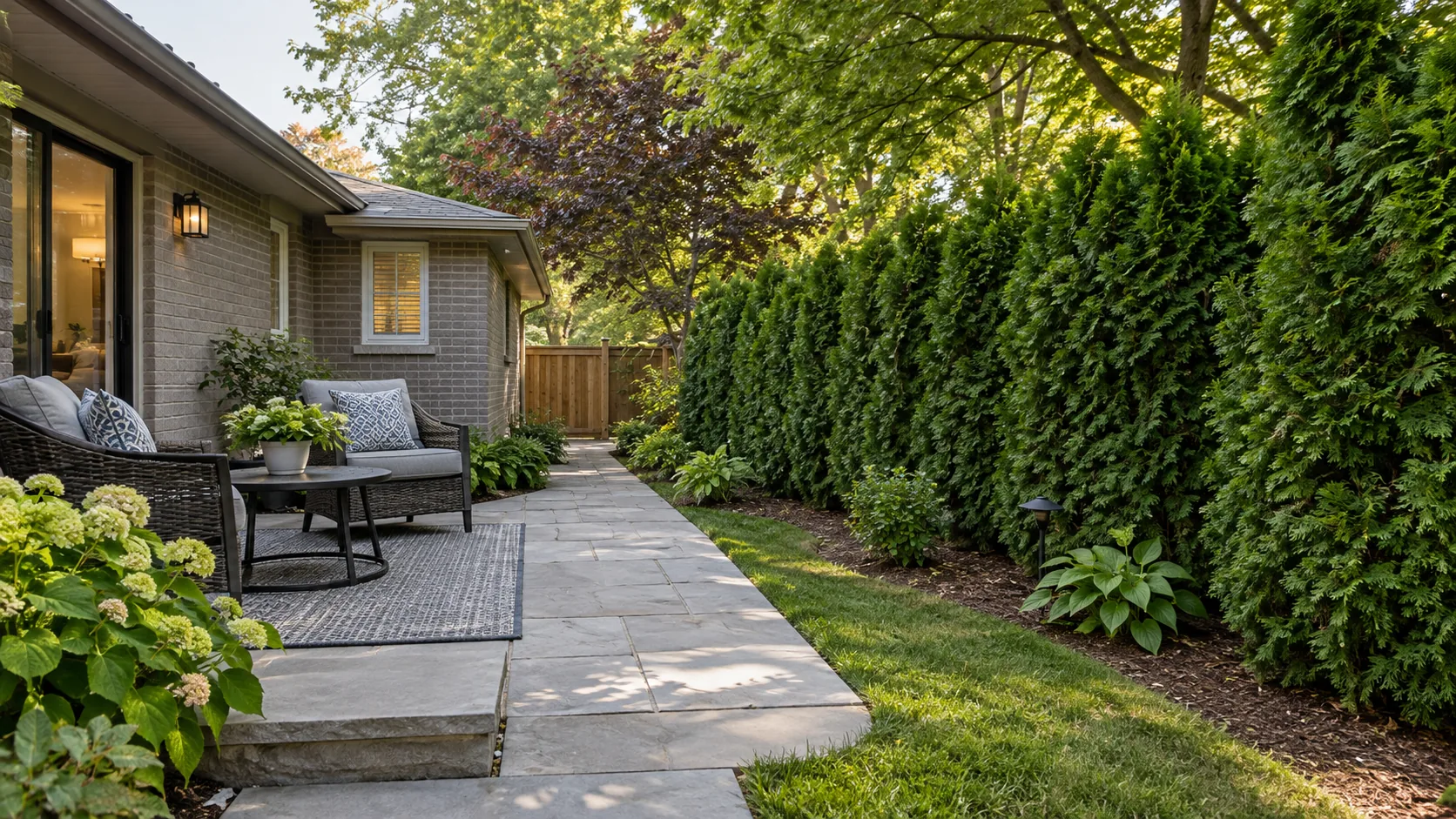
Privacy planting works best when it begins with a specific view. Sitting at a patio table, standing at a kitchen window and using a side-yard path create different sightlines. A hedge that screens one of them may do little for the others. Before choosing plants or a row length, identify where privacy is needed and from which position it matters.
A planted boundary also changes over time. Supplied height, mature width, seasonal foliage and maintenance all influence the result. Explain whether you want an informal layered border or a more closely managed hedge. For an enquiry involving screens, fences or several landscape features, privacy landscaping can coordinate the complete arrangement. This service focuses on installing the living part of that boundary.
Place planting at the sightline rather than filling every boundary
View the space from the place you actually use. A short planting group near a seating area may be more useful than a long row at the back fence, while a taller distant view may need a different approach. Photographs taken at standing height alone can miss what a seated person sees. Include views from both positions when explaining the concern.
Room for mature width is often the deciding constraint. Plants placed too close to a fence, walk or patio can occupy circulation space as they develop. Leave room for their intended form and for the person who will maintain them. Avoid relying on repeated severe trimming to keep a naturally broad plant inside a narrow leftover strip.
Check both sides of the proposed row without assuming access across the property line. Ownership, boundaries, existing fences and neighbouring vegetation affect the layout. Planting should not depend on the neighbour allowing pruning or watering from their side. A boundary that cannot be reached for care can become difficult to manage even when the initial spacing looks tidy.
Compare the kind of living boundary you want
| Approach | Useful fit | Care and timing trade-off |
|---|---|---|
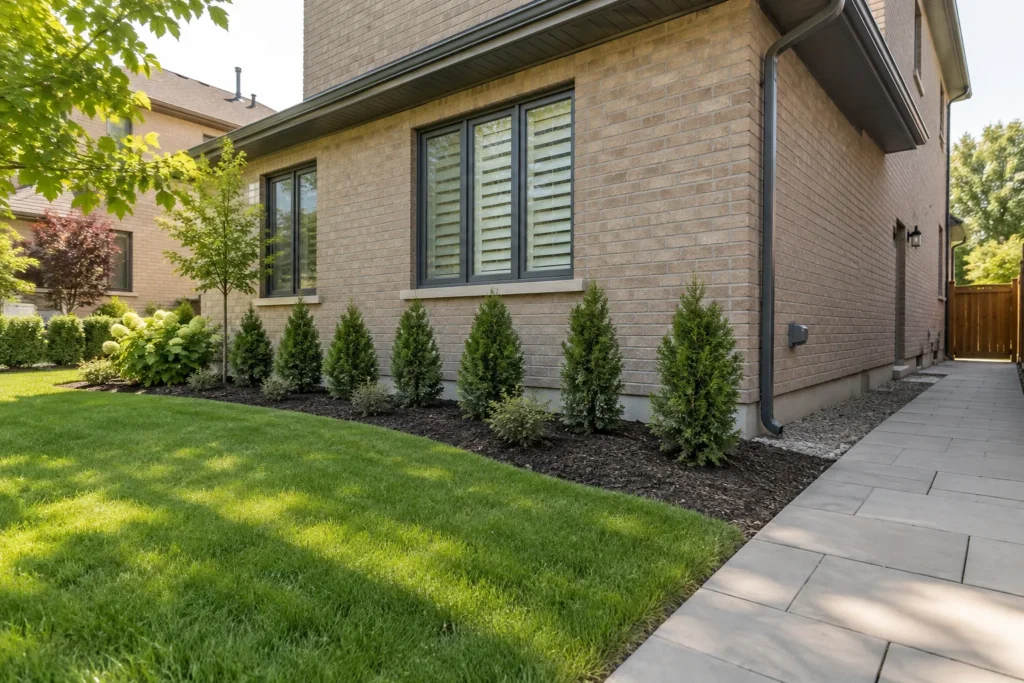
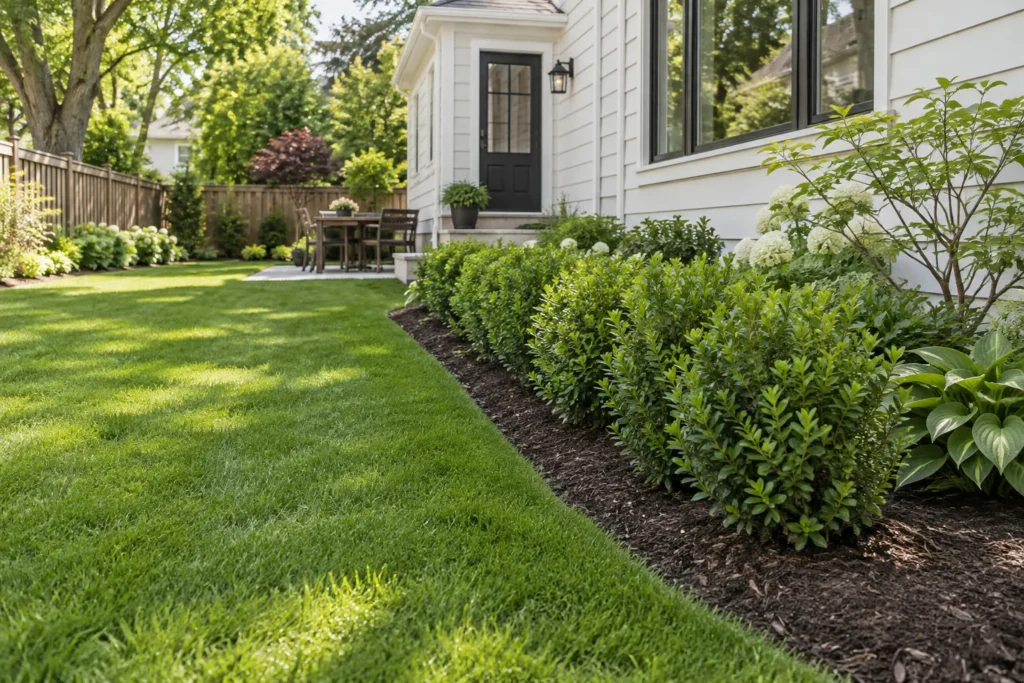
| Managed hedge | A defined continuous boundary where a consistent form is desired. | Appropriate repeated pruning and access are part of maintaining the intended shape; selection must suit the available width. |
| Informal shrub border | A softer edge with varied flowering, foliage and texture. | Plants retain more of their natural form, but mature spread and seasonal gaps need planning. |
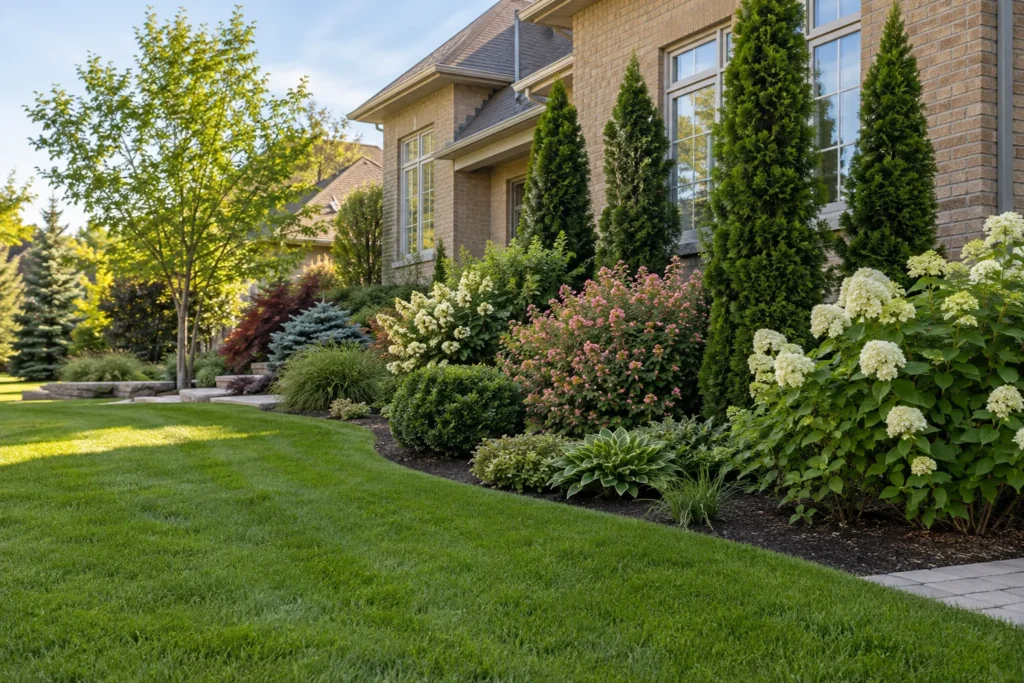
| Layered tree and shrub planting | A wider area where different heights can address more than one view. | It needs enough ground space and a considered layout so plants do not compete or block access. |
| Planting with a built screen | A focused immediate screen with a living setting around it. | The built feature has its own layout and approval questions; planting still needs establishment care. |
Seasonal coverage should be discussed before the plants arrive
Deciduous foliage can provide substantial summer screening while allowing a more open winter view. Evergreen material can offer a different pattern of coverage, but plant form, density, exposure and health still matter. Do not choose solely from a photo taken at the fullest point of the growing season if privacy is important through winter.
Supplied plants are not the mature hedge. Ask what the initial arrangement will look like and where gaps will remain while it establishes. Larger plants can change the first impression, but they also change delivery, handling and watering needs. No planting plan should promise a fixed date for complete screening or a guaranteed annual growth amount.
Light and moisture can vary along a single boundary. A shaded stretch beside a garage may not support the same material as the sunny rear corner. Uniformity may require changing the layout or selecting a different plant strategy rather than forcing one species across every condition. Bring those variations into the scope before treating a row as one simple length.
Prepare a continuous growing area with a workable finish
The ground between plants matters as much as the individual holes. Existing turf, persistent weeds, compacted soil and buried construction material affect preparation. Consider how roots can develop along the planting area and whether the proposed row interrupts a useful surface-water route. New soil or dense planting should not block a swale along the property edge.
Edging and mulch can make the row easier to care for. A defined bed keeps mowing away from stems and makes weeds more visible. Organic mulch needs sensible placement around the plants and later replenishment as it breaks down. Decorative stone has different cleanup and heat considerations; choose the finish for the planting environment rather than assuming every low-maintenance-looking surface is equivalent.
Watering access must work along the full row, including the least convenient end. Discuss how new material will be checked and watered, and who will do it. A row can contain several moisture conditions even when the plants are identical. Note persistent wetness, repeated drying or plants leaning after installation so the cause can be considered instead of treating all decline as a need for more water.
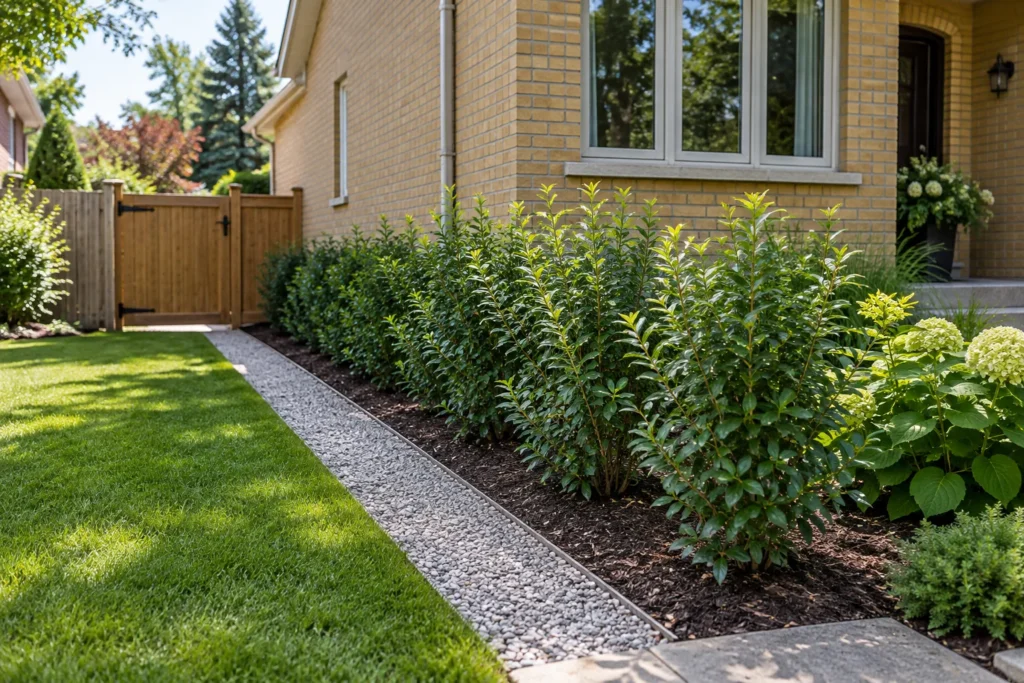
Turn a privacy concern into a planting scope
Show the view
Photograph the unwanted view from the patio, room or path concerned. Describe whether the issue is seasonal, at ground level or from an upper window. Mark where people need to continue walking or opening gates.
Measure usable planting space
Identify the boundary, existing fence and the width available on your property. Include maintenance access and nearby services. A measured planting strip is more useful than a general request for the tallest possible hedge.
Agree on coverage and care
Compare supplied appearance with the mature arrangement and discuss seasonal foliage. Confirm the plant selection, size, quantity and finish. Decide whether a formal clipped shape or a looser natural border fits the household’s care preferences.
Coordinate the surrounding work
Finish relevant fence, access and water-path decisions before planting blocks the working route. Fence installation and new planting need a shared layout where they occupy the same boundary. Confirm establishment responsibilities and later maintenance needs.
A privacy planting is also a maintenance commitment
Dense planting needs room to remain healthy and reachable. Pruning methods and timing depend on the plant and the shape being maintained. Do not assume every hedge can be cut back hard in the same way or kept indefinitely at any height. Selection should match the desired result so regular care supports the plant rather than repeatedly correcting a poor fit.
If you want ongoing help, describe the desired appearance and include the whole row in the maintenance discussion. Garden maintenance can address appropriate pruning, weeds and bed upkeep within an agreed scope. Where the boundary includes substantial trees or a suspected tree-health problem, qualified tree advice may be needed; hedge installation does not establish an arborist service.
Decide what stays visible through the planted boundary
Privacy does not require hiding every part of the property. A deliberate opening can preserve a view from the house or keep the garden from feeling enclosed. Mark the views you value as well as the ones you want screened. That gives the planting arrangement a more useful shape than a continuous row chosen only because a boundary exists.
Check utility and maintenance access along the proposed hedge. Service equipment, taps and gates may need working room that is easy to overlook when plants arrive in small containers. Keep those openings in the layout rather than expecting repeated trimming to provide access later. The same consideration applies to reaching the back of the hedge for appropriate pruning.
Hedge and privacy planting questions
How quickly will the hedge provide complete privacy?
There is no reliable universal timetable. Supplied size, spacing, species, exposure, soil and care influence development. Discuss the initial gaps and the mature layout clearly. If privacy is needed immediately in a precise location, a coordinated built screen may be worth considering alongside planting rather than relying on a guaranteed growth date.
Should I choose the tallest plant available?
Height alone does not establish a good fit. The mature width, lower branching, seasonal coverage and ability to establish in the available soil matter too. Larger supplied material can also require different access and care. Begin with the sightline and usable bed space, then compare appropriate planting options.
Can a hedge sit directly against the fence?
A fence is a useful boundary reference, but the plants need their own growing space and maintenance access. Consider mature spread and avoid depending on access from the neighbouring property. Existing posts, footings and utilities can constrain preparation. Check the proposed position on the ground before ordering a continuous row.
Can a mixed border provide privacy?
Yes, where there is enough room and the layout addresses the relevant view. A mixture can provide different heights and seasonal interest, but it needs careful spacing and may have seasonal openings. A mixed border is a different maintenance and appearance choice from a tightly managed uniform hedge.
What helps you assess a privacy planting enquiry?
Send the view you want to screen, broad photographs of the boundary and approximate length and width. Include gate locations, nearby trees, light conditions and known wet areas. Explain how much coverage you need initially and whether you prefer a clipped hedge or a more informal planted edge.
Hedge & Privacy Planting Gallery
Show us the view you want to soften
A photograph from the seating area or window is especially useful. Include the available planting width and the boundary so the privacy goal can be matched to a maintainable living arrangement.
- Burlington address and the view needing privacy
- Approximate row length and usable bed width
- Seasonal coverage and preferred hedge form
- Boundary, access, light and watering conditions
Tell us what you would like to change, repair or maintain around your property.