
Skip to content

Explore services

Request an Estimate
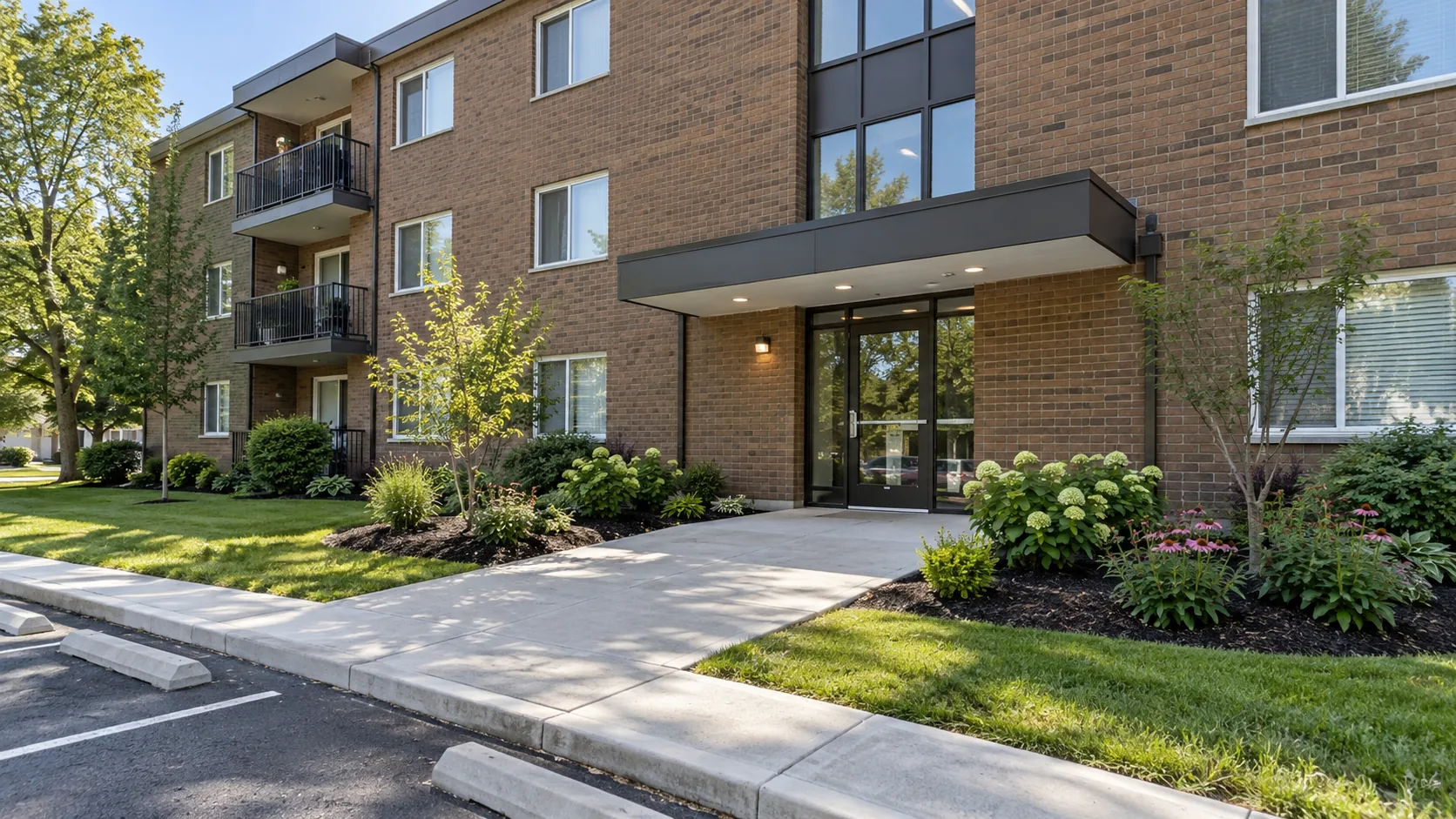
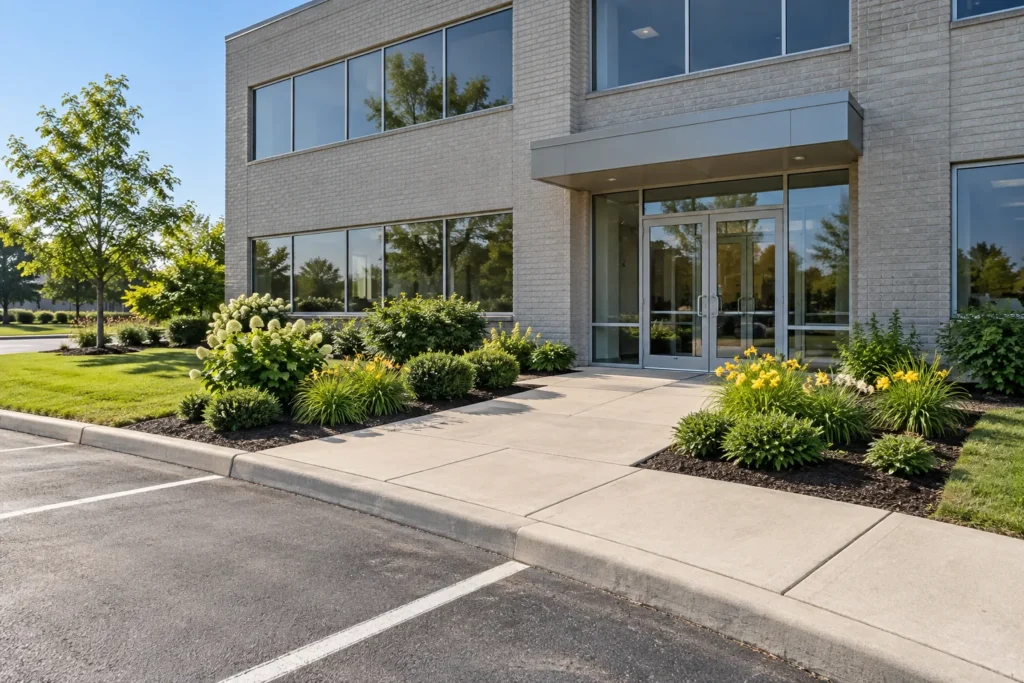
Refreshed planting beds beside a wide concrete entrance walk at a low-rise apartment building.

Site First. Finish Second.

Commercial Landscape Enhancements

Improve selected parts of an established commercial landscape through clearly authorized projects. Target worn entrances, tired beds, damaged lawn, local hardscape defects and assessed water issues while preserving useful grounds.

An established commercial property may need a focused improvement rather than complete reconstruction. A damaged entrance bed, worn lawn or settled walk can undermine an otherwise useful site. Commercial enhancements give those changes a defined project scope, separate from routine grounds care and tied to the cause of the problem.

Start With a Specific Location and Outcome

Describe what is failing and what the improvement should achieve. A bare lawn beside a busy entrance may need a better walking connection, while a tired bed may have outgrown its available space. Repeating the original finish without checking the cause can repeat the maintenance problem. Pair a close photograph with a wider view showing the building, routes and neighbouring surfaces.

Inspect how the area is used during normal operations. People may queue, cut across a corner or move deliveries through a location that looked suitable for planting on a plan. Identify the route and work with the authorized property contact before changing it. A small improvement should still respect accessible approaches, sightlines, utility access and loading activity.

Then define what can remain. Healthy planting, sound pavers and useful lawn can be retained when their condition and relationship to the change support it. Record protection and reinstatement so the work does not damage adjacent areas that were meant to stay. Recurring commercial maintenance can identify the need, but it should not silently authorize the enhancement.

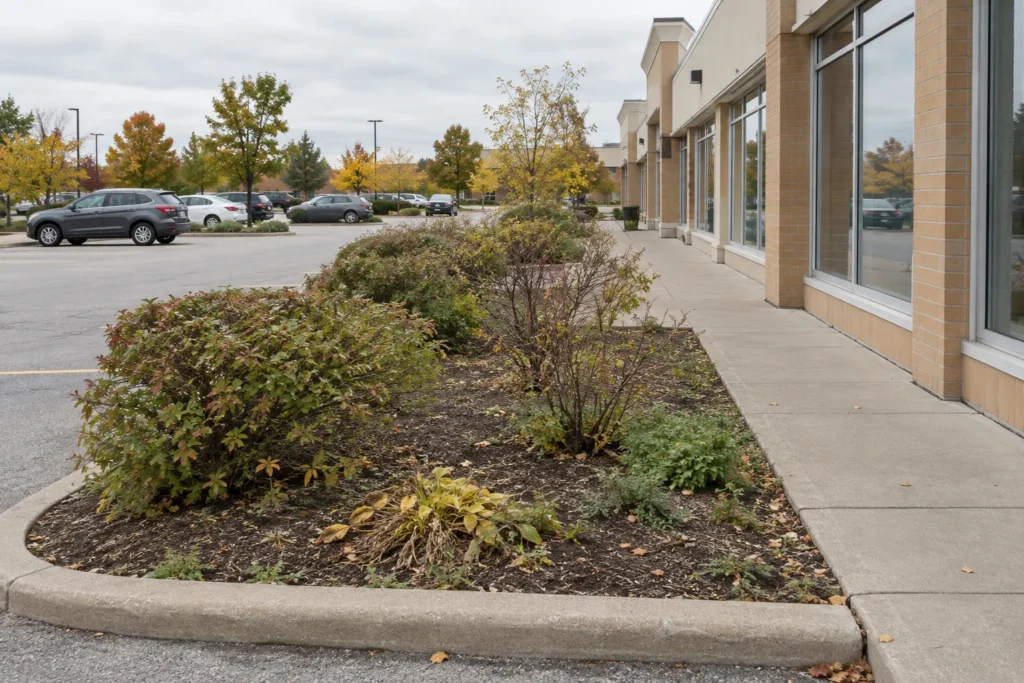
Sparse older planting and patchy mulch beside a clear retail-plaza pedestrian walk.
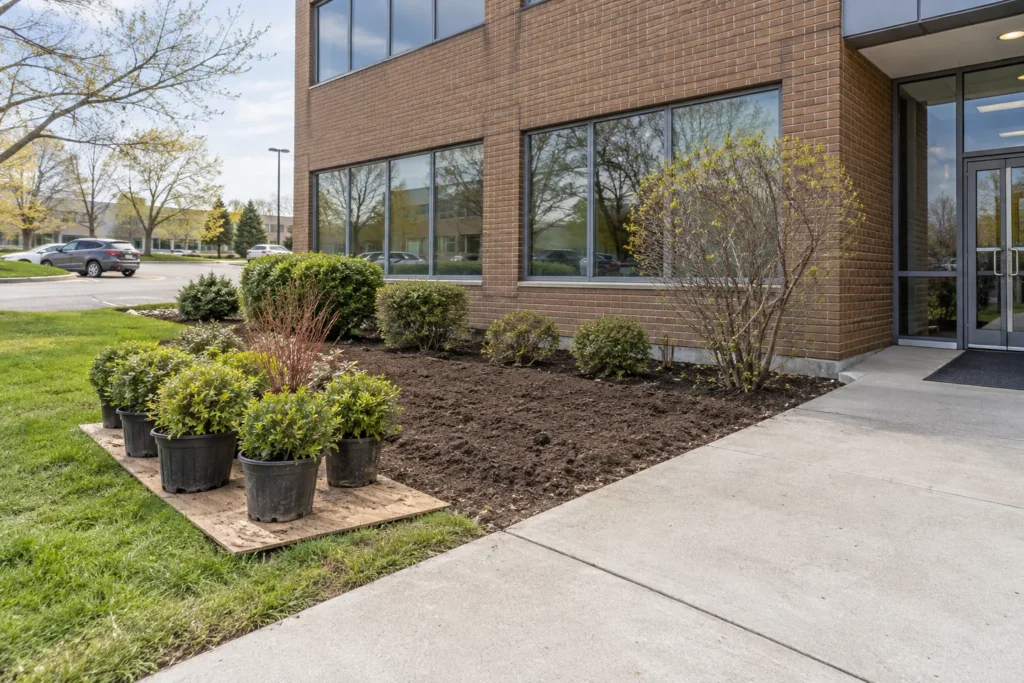
Prepared soil and potted shrubs staged beside a clear office entrance walkway.

Match the Improvement to the Cause

Match the Improvement to the Cause
Observed conditionQuestion before replacementPossible defined scope
Sparse entrance plantingIs light, soil, exposure or mature spacing the issue?Bed preparation and selected replacement planting
Worn lawn cornerAre people using an informal route?A revised connection or lawn repair suited to use
Tired bed edgeIs the edge sound and practical to maintain?Edge correction, preparation and appropriate mulch
Settled pavingIs the defect local or does the base need broader work?Assessed lifting, base correction and reinstatement
Water collecting at a routeWhere does water originate and where can it go?Assessed surface-water correction with required design
Winter-damaged plantingWas it inside a necessary snow-storage area?A revised bed or storage arrangement before replanting

Coordinate Materials With Future Care

Planting and mulch should fit the maintenance arrangement as well as the entrance photograph. Consider mature spread, access for weeding, soil conditions and watering responsibility. New shrubs that close over a narrow walk or bury a utility cabinet create another problem for the property. Identify suitable spacing and keep the completed work reachable.

Sod or lawn repair needs a cause-based plan. Check wear, shade, moisture and the area’s relationship to pedestrian movement. Prepare the growing area after heavy work and define who will water and protect it during establishment. A routine visit schedule may not provide all early care, so the handover must state what the owner or another provider needs to do.

Hardscape repairs require a clear boundary and a realistic match. Existing pavers can vary in wear, colour and availability, and lifting one area may reveal a broader defect. State the proposed repair area, preparation assumptions and how concealed conditions will be handled. Interlock repair should address support and transitions as well as the visible surface.

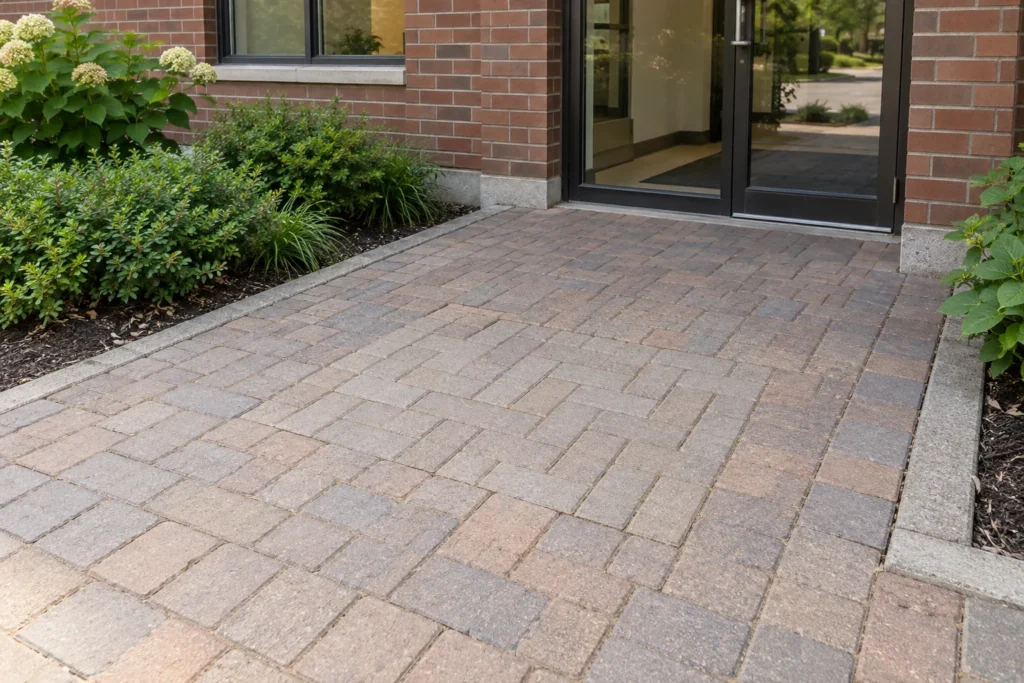
Reset interlock paving creates a flush approach to a small commercial entrance.
Low planting preserves a broad clear approach to a small office entrance.

Authorize the Project Before It Becomes Extra Work

Enhancements are separate changes to the grounds. A concise proposal can still identify location, removals, preparation, materials, installation and reinstatement. The authorized approver should understand both the desired finish and the work needed beneath it.

Scope and change control

Mark the work area and the condition to be addressed. Identify exclusions and how changes discovered during removal will be proposed. A request from a tenant or onsite user is not automatically approval from the person responsible for the property budget.

Occupied-site access

Agree work areas, staging and the routes that must remain available. Identify who communicates temporary changes to tenants or building users. Even a small bed replacement can need coordination if it occupies an entrance or delivery path.

Utilities, water and approvals

Arrange appropriate checks before excavation. Private lighting and irrigation may not be covered by ordinary utility information. Drainage work and changes to grade need proper assessment and an appropriate outlet rather than an assumed quick trench.

Completion and maintenance

State disposal, final cleanup and reinstatement, then define watering and early care. Update the recurring maintenance instructions to reflect the completed work. An enhancement should not leave new plants, edges or surfaces outside every provider’s responsibility.

Keep the Improvement Focused

  1. Document the need

    Provide the location, current photos and any relevant site plan. Explain whether the priority is appearance, access, water, wear or maintenance effort. Record what has already been attempted and which features should be retained.

  2. Review a targeted option

    Compare a defined repair or replacement with any broader work needed to address the cause. Identify operating constraints and required approvals. Larger reconfiguration can be assessed through commercial landscaping rather than forcing it into a small repair description.

  3. Approve, complete and hand over

    Confirm the authorized scope and how changes are handled. At completion, identify the new care requirements and any restrictions during establishment. Share the updated layout with the maintenance contact so the improvement can be preserved.

Screen Changes That Affect Grade or Trees

A small visible enhancement can still involve excavation, filling or work near protected trees. Confirm Burlington’s applicable site-alteration and tree requirements for the proposed activity and location before proceeding. Where specialist plans or assessment are needed, identify them in the project responsibilities; ordinary maintenance and landscape alterations do not all follow the same process.

Information reviewed:

Prioritize Improvements Across a Managed Property

A manager may have several worthwhile projects competing for attention. Record each location, its condition and the consequence of waiting. A route defect, recurring water issue and tired planting bed need different kinds of assessment; they should not be grouped only by visual impact. Separate necessary corrective work from optional finish upgrades so approval decisions are easier to explain.

Phasing should account for shared access and dependencies. Complete excavation or base work before installing vulnerable plants and lawn, and avoid rebuilding an area that must be crossed for a later stage. Property-manager landscape coordination can connect approved improvements with maintenance responsibilities across the site without turning every observation into a new project.

Make the Result Easy to Maintain

A successful improvement should be understandable to the people caring for it afterwards. Keep bed boundaries readable, avoid unnecessary fragments of lawn and retain room to reach fixtures and utility equipment. If decorative stone is proposed, discuss debris collection and the transition to adjacent mowing areas rather than treating it as maintenance-free. If planting changes, explain the intended mature shape and any special establishment needs. Those practical details help prevent an upgrade from creating recurring access or upkeep problems.

Questions About the Service

Is enhancement work included in routine maintenance?

It should be separately identified and authorized unless the agreement expressly includes that exact work. New planting, sod, mulch additions and repairs can vary in preparation and materials. A recurring maintenance visit is not general approval to change the landscape.

Can an enhancement focus on one small area?

Yes, a defined area can be assessed on its own when the cause and transitions are understood. Include a wider view so access, grade, water and nearby retained features are visible. A small surface defect can sometimes reveal a larger problem that needs another scope.

Can existing materials be matched?

Matching depends on availability and the condition of retained materials. Existing pavers and surfaces may be weathered or discontinued. Review realistic options before approval and state the replacement area rather than promising an invisible match that has not been verified.

Who approves changes found during the work?

Identify the authorized property contact before work begins and agree a change process. Concealed base damage, private utilities or unsuitable soil can alter the proposed work. Additional scope should be described for approval rather than assumed from the original enhancement request.

How is new planting handed to the maintenance provider?

Confirm plant locations, establishment care, watering responsibility and any use restrictions. Update the site’s maintenance instructions and tell the appropriate contact. Routine care may need adjustment, and initial establishment attention should not be presumed covered by an existing visit schedule.

Commercial Landscape Enhancements Gallery

Identify the Improvement Worth Making

Send the location and current condition, the outcome you want and the person authorized to approve the work.

  • Address, marked location and wide plus close photographs
  • Known cause, previous repairs and features to retain
  • Operational constraints and approval contact

Tell us what you would like to change, repair or maintain around your property.