
Burlington Landscaping
Landscape & Outdoor Property Gallery
Explore landscape arrangements, hardscape, planting, outdoor living and winter property access, then follow the subjects that matter to your property.
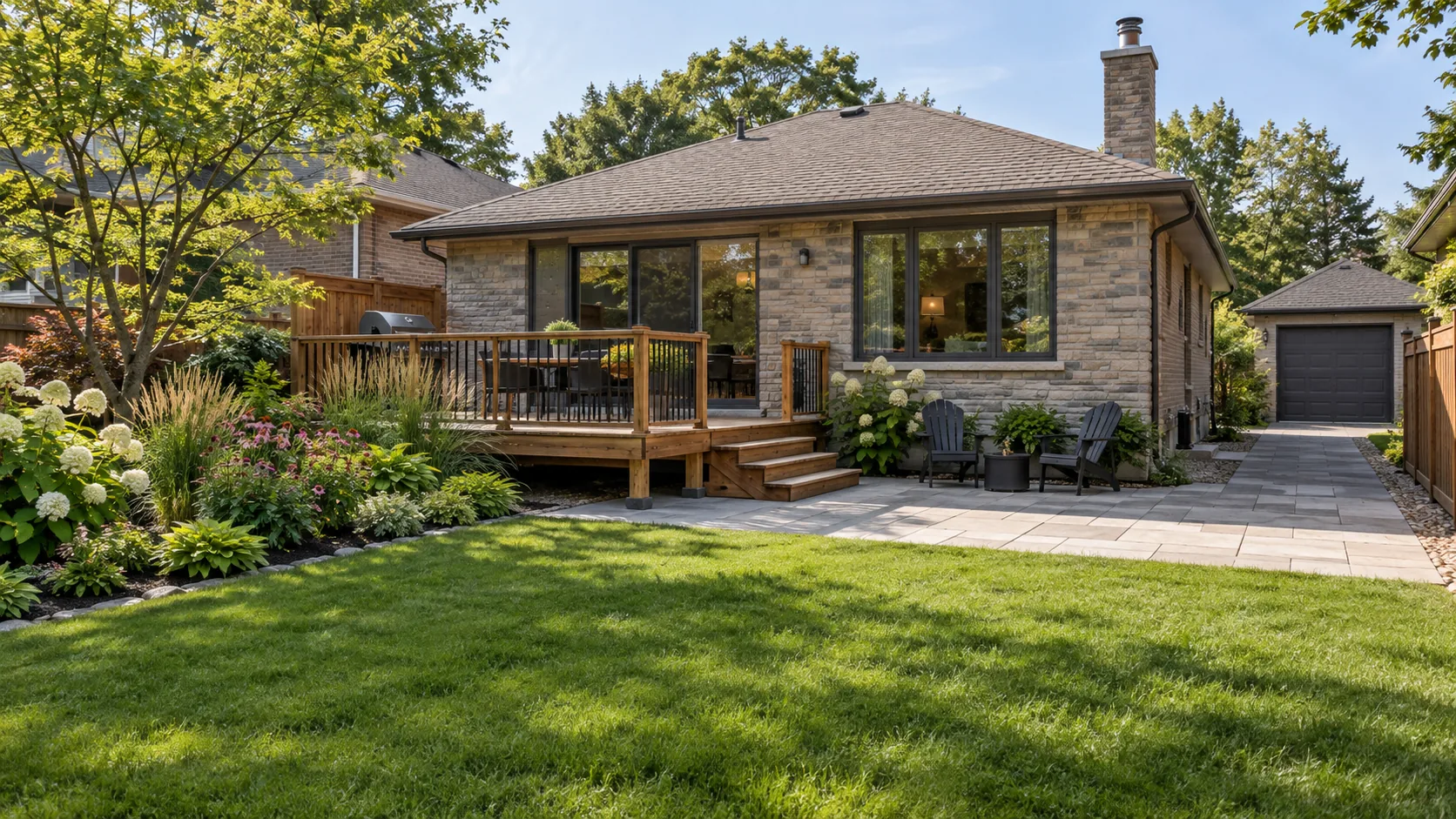
Explore the collection by property area or type of work. Each photograph belongs to this gallery and helps show a different arrangement of surfaces, planting or access.
Look at how the property works together
A useful landscape photograph shows more than a finish. Look for the relationship between the door, the route across the property and the place where someone will sit, park or work. A patio can appear generous while leaving an awkward passage beside a chair. A neat front lawn can still need a clearer connection from the driveway to the entrance. The strongest visual references help you explain those relationships.
Use the collection to compare arrangements rather than search for a layout to copy exactly. Your boundary, grade, house openings, access and intended use will differ. Notice the retained lawn, planting space and practical routes around a feature as well as the feature itself. The property-planning resources help turn those observations into questions for the actual site.
Choose a subject, then look for the useful connection
| Subject | What to notice |
|---|---|
| Front yards and driveways | Follow the route from street to parking, then from a parked vehicle to the entry. Look for room around steps, low planting near sightlines and a practical winter arrangement. |
| Patios, decks and outdoor living | Check the door connection, furniture space, shade, steps and a route through the yard. The sitting area should not block the only way to a gate or lawn. |
| Lawns, gardens and drainage | Look at edges and transitions. Planting, turf and paths meet real water routes and retained trees; a surface finish cannot resolve every underlying condition. |
| Commercial and winter properties | Notice pedestrian routes, shared access and snow-placement areas. An image does not define a maintenance frequency, clearing trigger or agreed service limit. |
Turn a visual preference into a clear brief
Save a few observations about what you like: the direct entrance route, the restrained planting beside a path, the amount of open lawn, or the way a low deck meets a terrace. Then identify what is difficult at your own property. That combination is more useful than asking for an identical patio without knowing the levels, access or required preparation.
A reference can also clarify what you want to avoid. Perhaps too many separate beds would be difficult to maintain, a large terrace would leave too little grass, or a new fence line would complicate side access. Those are legitimate design decisions. Explain who will use the space, how it will be cared for and whether future work needs a route through it.
For a whole-property change, begin with landscape design and build. For a defined surface, use the interlocking and hardscaping services. Decks, privacy and sitting areas connect through outdoor living. The related planning guides can help organize dimensions, questions and site photographs before an estimate discussion.
Read photographs with the site in mind
Photographs do not establish approved dimensions, property boundaries, structural details or permit status. Lighting can change the appearance of a material, and a single view cannot show every drainage or access condition. Use the visual arrangement to start the discussion, then confirm the design and scope for your address.
The subject filters can overlap because a useful outdoor space often combines several kinds of work. A front-yard photograph may belong under driveways, walkways and planting; a backyard may connect a deck, patio and lawn. Select a subject to narrow the collection, open a photograph for a larger view, and return to the full set when comparing how the parts connect.
Consider the space between the features
When comparing two arrangements, look at the work required to keep each one useful. A simple lawn edge may be easier to reach with a mower than several small pockets of grass. A broad planted border can allow plants to mature, while a tight strip beside a walk may require repeated pruning to preserve the route. The amount of detail you enjoy looking at should relate to the care you want to provide.
Seasonal use changes the same connections. A front path that feels comfortable in summer still needs room for clearing and an appropriate place for snow. A shaded rear sitting area may offer relief from afternoon sun while changing the planting choices nearby. The winter subjects show private access and shared commercial routes, which have different responsibilities. Describe your normal routines and any winter difficulty when explaining a visual preference; those details help keep the proposed space practical beyond the day it is finished.
Landscape & Outdoor Property Gallery
32 photos shown
Tell us which connections matter at your property
Share the area you want to change, the arrangement that interests you and what is difficult about the current property. Include a wide photograph and the relevant access route when practical.
- Burlington address and property type
- The service or outdoor area being considered
- Existing access, grade, water or maintenance concerns
- A few useful visual preferences, with your own site photographs
Tell us what you would like to change, repair or maintain around your property.