
Burlington Landscaping
Downspout & Surface Water Management
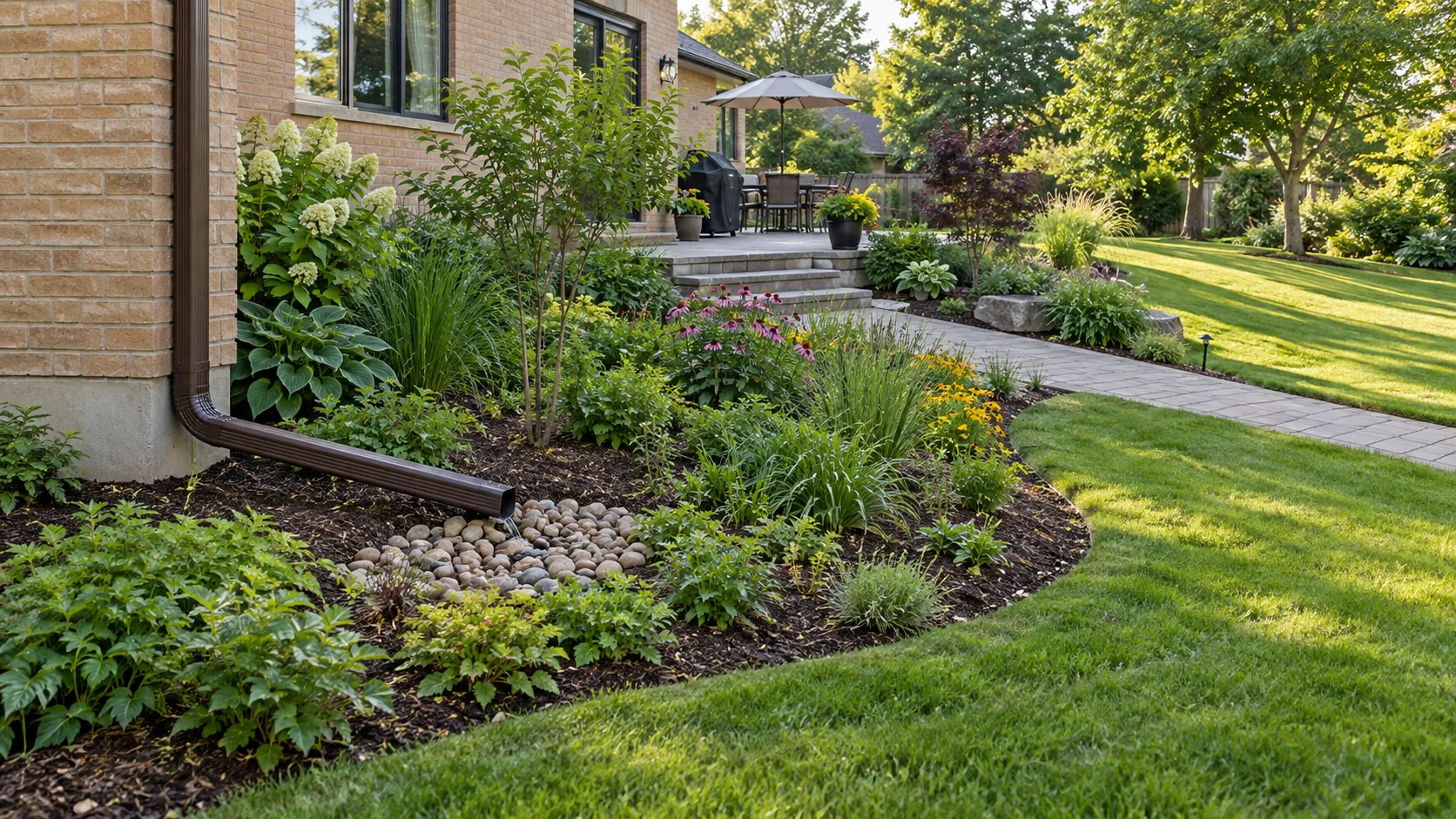
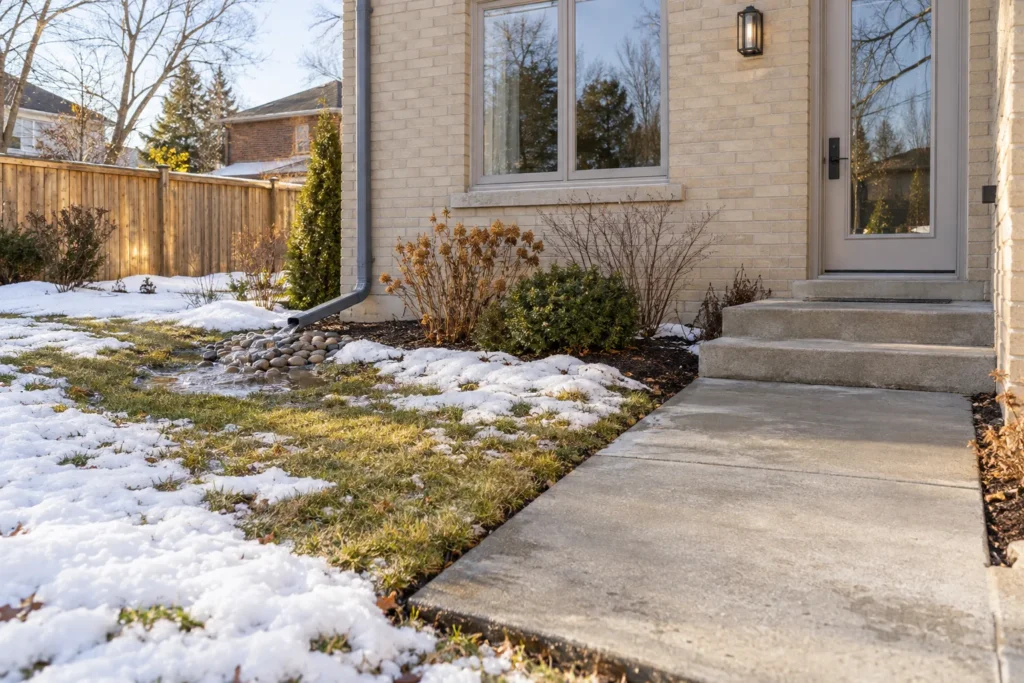
Follow roof runoff from the downspout across the property, including the splash area, garden, walking surfaces and the route it takes in winter.
A downspout can be working as a roof-water outlet while sending that water into an awkward place in the landscape. The discharge may erode a bed, soak a narrow lawn strip, cross the front walk or collect beside a patio. A useful plan follows the full route from termination to the area where the water can appropriately travel or disperse.
This crossover service considers roof runoff alongside surface grades, lawn, garden and hardscape. It does not assume every roof-water problem can be corrected through landscaping. Damaged gutters, roof drainage capacity, building connections, foundation symptoms and sewer questions may require the relevant qualified trade or authority. Show those conditions as part of the enquiry so the landscape scope has a clear purpose and boundary.
Start at the termination and look beyond the splash area
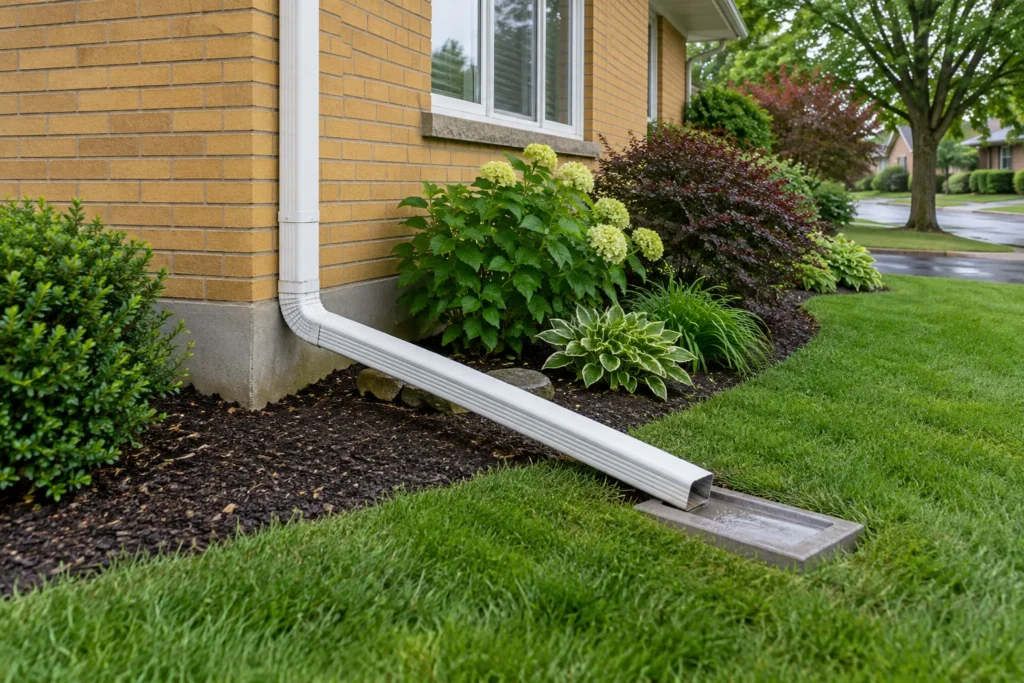
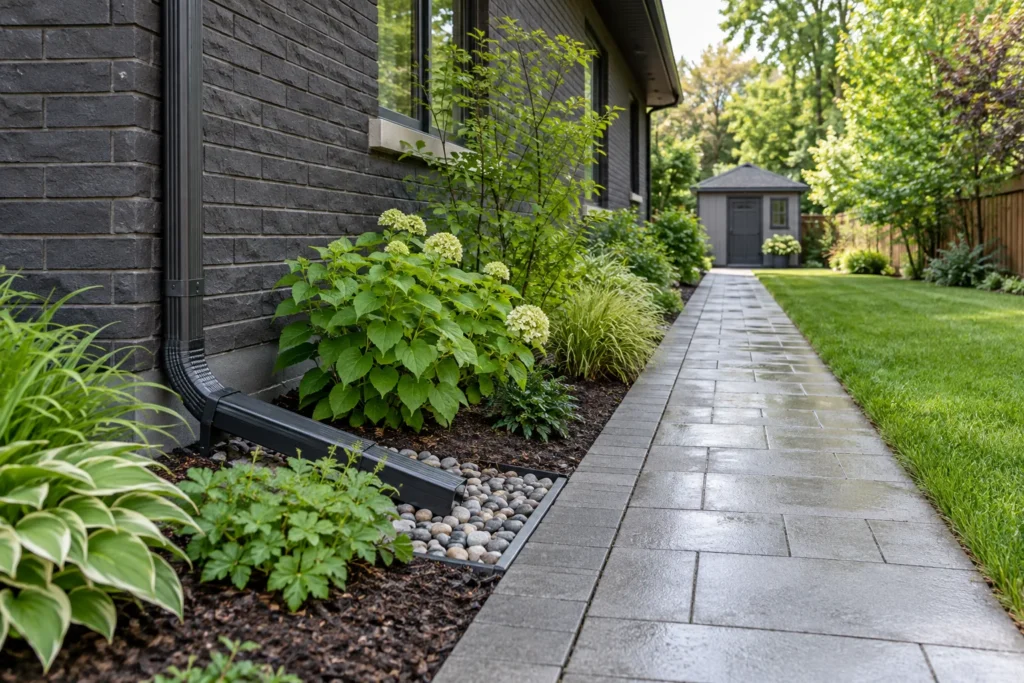
Photograph where water leaves each downspout and what sits immediately below it. Is there exposed soil, a paved path, a depressed garden or a lawn area already wet from another source? The outlet height and surrounding surfaces affect splash and the direction of initial flow. A small close-up is useful, but include the wider yard so the next part of the route is visible.
Look at what happens during rain. Water can follow a paving joint, run along a bed edge or collect behind raised edging. A loose extension may have shifted, disconnected or become buried by plants. These observations help identify the landscape interface, but a failing gutter or downspout connection should not be disguised as a garden problem.
Consider all roof-water outlets together. Moving one discharge can add water to an area already receiving another downspout or patio runoff. Mark the outlets around the home and explain which ones cause visible trouble. The landscape drainage discussion should address the combined routes rather than improve one corner by overloading another.
Check every surface the water crosses
| Surface or location | Question to resolve |
|---|---|
| Splash area | Can the discharge meet a stable surface without eroding soil or scattering the bed finish? |
| Lawn | Does the ground provide a suitable route, or does water remain in a depression? |
| Garden | Will concentrated flow bury, wash out or repeatedly saturate the planting? |
| Walkway or driveway | Does water cross a necessary route or collect where people enter and park? |
| Boundary | Where are the property line, existing drainage route and neighbouring surfaces? |
| Winter route | Can meltwater or discharge create ice across the walk, steps or driveway? |
A longer extension is not a complete discharge strategy
An extension can move the first splash away from one spot while leaving the overall route unresolved. Follow the water to its next low point. If it lands on a path, stops in a narrow strip or runs toward a neighbouring building, the destination still needs attention. The useful measure is the full surface relationship, not simply the length of the outlet.
Extensions also have to coexist with ordinary access. A pipe across a walkway, gate opening or mowing route creates an obstruction and may be moved out of the way repeatedly. Discuss how the household uses the area and whether a more deliberate landscape arrangement is needed. Keeping a route usable matters alongside water movement.
Where a proposed solution involves burial, collection, infiltration or a connection, establish its suitability and requirements before excavation. Soil, levels, utilities and authority boundaries all matter. Do not assume there is an available approved storm connection merely because a pipe could be installed. Some proposals need professional planning beyond a simple surface landscaping scope.
Make lawn and garden levels work with the water route
A shallow depression at the end of the discharge can leave grass soft or garden soil saturated. The answer may involve a planned surface adjustment, a changed termination or a broader drainage measure. Yard grading and leveling should consider surrounding surfaces and retained drainage routes; adding soil locally without that context can shift the problem toward the house or boundary.
Keep planting and finish details subordinate to the route. A raised garden edge, fresh mulch or decorative stone can interrupt or conceal flow if placed without checking levels. Plants need suitable moisture, but a concentrated roof-water stream is not the same as dependable irrigation. Protect bed soil from erosion and leave the discharge area inspectable.
Persistent water after rain may have more than one contributor. If the area also receives uphill surface runoff or irrigation, moving the downspout alone may not resolve it. Wet yard and standing water solutions starts with the timing and pattern of the whole condition. Record those observations so the estimate addresses the relevant sources instead of treating one visible outlet as the entire diagnosis.
Plan for snowmelt and refreeze at the same time
Roof runoff can affect access when temperatures change. A route that is merely damp in warm weather may create ice where it crosses a shaded walk or a driveway depression. Include known winter refreeze locations in the enquiry even if the ground is dry during the visit. Photographs from the previous season can show an important condition that is otherwise invisible.
Snow storage can also obstruct a discharge route or direct later meltwater back across a path. Look at where cleared snow sits, how it thaws and whether the downspout end remains visible and accessible. The landscape arrangement should account for the winter use of the entrance rather than stop at summer appearance.
This does not establish a promised winter service or guarantee an ice-free surface. It identifies a warm-weather layout decision that can affect later conditions. Keep clearing and ice-treatment responsibilities separate from the drainage construction scope, and discuss any recurring access concern directly.
Keep private drainage and approval responsibilities clear
Burlington’s site-alteration information applies to proposed filling, grading and excavation and should be used to screen the actual work. Halton also identifies private-property drainage and downspout responsibilities within its flood-preparedness guidance. A surface-water proposal should not presume permission to send runoff onto adjacent land, into wastewater or through an unauthorized connection. The Burlington yard drainage guide provides the wider planning context; the appropriate authority and qualified scope must be confirmed where connections or more substantial drainage works are involved.
Information reviewed:
Prepare a downspout and surface-water enquiry
Map the outlets
Show the downspouts around the home, their termination points and any existing extensions. Include the roof-water areas that appear to behave normally so the relationship between outlets is understood.
Record the movement
Take broad photos during or after rain from a safe location. Show splash, erosion, pooling and the route toward lawn, paving or boundaries. Explain any winter ice pattern and how the area is used.
Separate the relevant scopes
Identify damaged gutters, suspected building leakage or unknown underground connections. Clarify what landscape work is proposed and whether a roof-water trade, authority or drainage professional needs to address a separate part first.
Confirm the finish and maintenance access
Agree on the termination and route being addressed, restored surfaces and how the area can be inspected. Keep outlets, grates and surface paths accessible. Review the later performance through actual rain and seasonal conditions.
Downspout and surface-water questions
Can every downspout simply be extended onto the lawn?
No universal arrangement fits every property. The lawn’s grade, soil, nearby structures, boundaries and available water route matter. An extension that ends in a depression or crosses a path may create another problem. Consider the destination and overflow behaviour, not just the point where the pipe stops.
Does decorative stone under the outlet solve drainage?
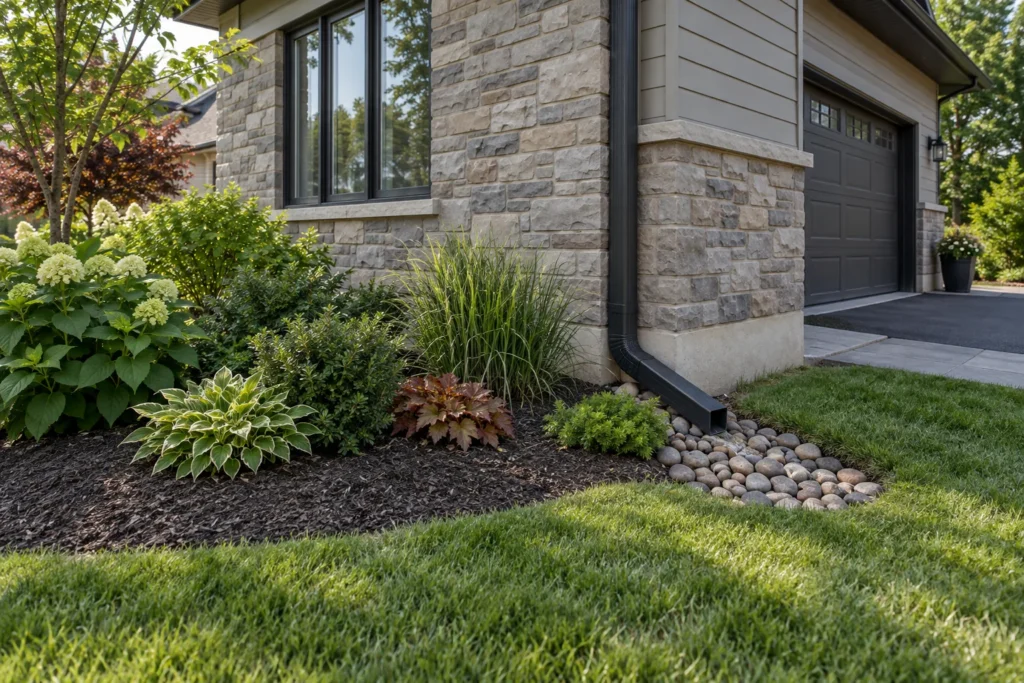
A stable splash area can be part of a useful detail, but stone alone does not establish where the water travels next. Pooling, saturation and boundary impacts can remain below or beyond the surface. Assess the route and levels before treating a decorative finish as a drainage solution.
Can you repair gutters as part of this service?
Do not assume roofing, eavestrough repair or building connections are included in a landscape scope. Show the condition so the relevant work can be identified. A sound roof-water system and a suitable landscape termination are connected decisions, but they may require different qualified services.
What if the outlet causes ice across the front walk?
Include photographs and the conditions when ice appears. The termination, surface depression, shading and snow-storage pattern may all contribute. A landscape change should address its defined part of the route, while clearing and ice treatment remain separate responsibilities rather than an implied guarantee from drainage work.
Can roof water connect to an existing underground pipe?
The pipe’s identity, condition, destination and connection permission need establishing before that can be considered. Do not assume an unknown buried line is an available storm outlet. Qualified trade or professional input and authority confirmation may be necessary; surface landscaping alone does not resolve those questions.
Downspout & Surface Water Management Gallery
Show us where the roof water goes after it leaves the downspout
Send photographs of the outlet and the full route across your property. Include pooling, erosion or winter ice, along with any building or underground-connection concerns that may need a separate scope.
- Burlington address and each relevant downspout outlet
- Rain-time route, splash, erosion and pooling photographs
- Walks, garden edges, boundaries and known winter ice
- Access, existing pipes and any roof-system concerns
Tell us what you would like to change, repair or maintain around your property.