
Skip to content

Explore services

Request an Estimate
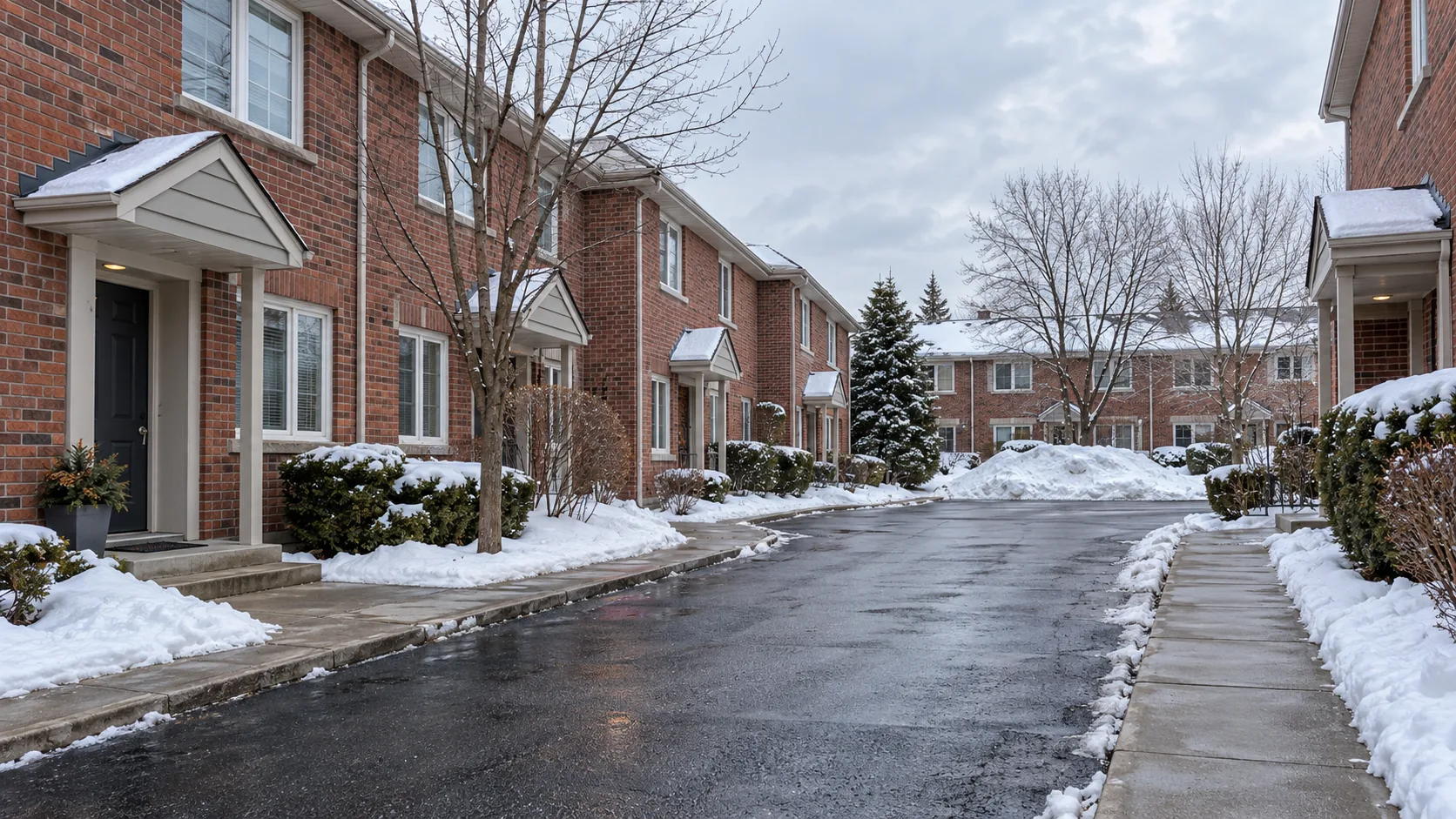
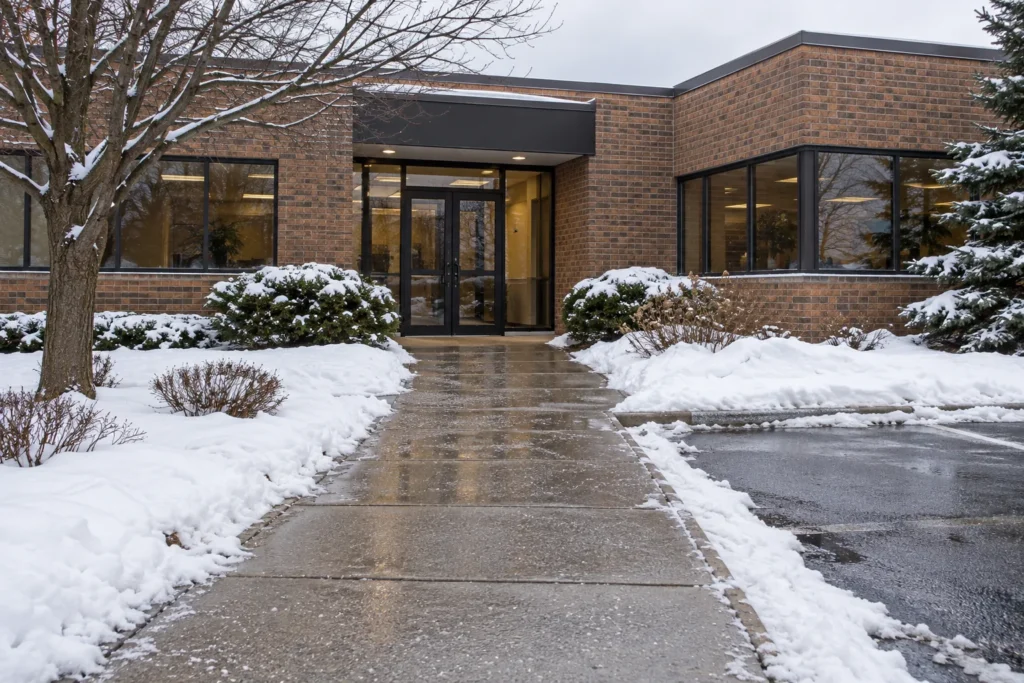
Managed townhouse property with cleared common drive, paths and sensible snow storage

Property Manager Snow Service in Burlington

Property Manager Snow Service

Connect each managed property’s winter work to clear contacts, area priorities, authorisation and communication through changing conditions.

Property managers need winter arrangements that remain understandable when several people and sites are involved. An on-site contact may report a blocked route, a tenant may ask for a return visit and the manager may hold authority for additional charges. Without a clear process, a useful concern can become an unclear instruction or an unresolved responsibility.

Property manager snow service in Burlington focuses on coordinating those decisions around the actual work. Each location needs included areas, priorities, storage and confirmed terms for clearing and any ice treatment. A shared administrative approach can help across a portfolio, while the physical scope still reflects each property’s layout and operation.

Give each site a practical winter identity

Use the property address and a site identifier on plans, requests and photographs. Mark vehicle lanes, entrances, pedestrian routes, loading and waste access. Identify public and private boundaries, tenant-controlled sections and exclusions. A request for the rear entrance is more useful when everyone can identify the same door on the same plan.

Record the snow-storage areas and constraints before accumulation hides them. Banks should not consume required access, obscure visibility or block drains needed for meltwater. Several properties under one manager may have very different storage capacity. Limited space should be assessed as a scope issue rather than left to be solved informally during a large event.

Contacts should distinguish day-to-day coordination from spending authority. Identify who can report a condition, approve extra work and receive completion information. Include a route for contact changes and access restrictions. The arrangement should reflect the actual availability of people and services rather than imply round-the-clock access that has not been confirmed.

Shared drive and pedestrian priority zones visible together
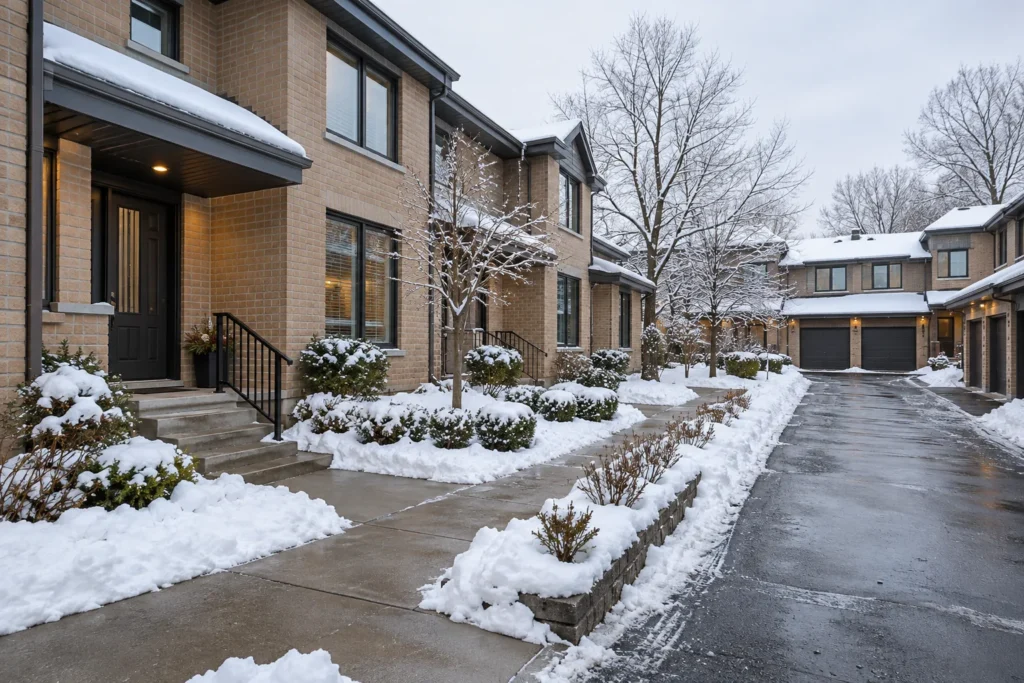
Snow storage area separated from tenant parking and exits

Make the coordination questions explicit

Make the coordination questions explicit
DecisionInformation to agreeAvoided uncertainty
Included workSite map, surfaces, exclusions and priorities.Assuming every common area is covered by the service name.
Service initiationActual trigger, request route and timing terms.Using municipal thresholds or another property’s terms.
Additional workAuthorised contact, approval process and charge basis.Treating any tenant request as approved spending.
Changing accessVehicle, gate and operating-hour arrangements.Expecting blocked areas to be fully serviced.
Records and updatesRequired information and available reporting format.Assuming a portal, inspection frequency or continuous monitoring.

Coordinate the agreement, the site contact and the field conditions

The winter plan should make it clear what is routine, what needs a decision and how that decision reaches the correct person. Administrative consistency is useful only when it supports the actual site.

Triggers and priorities

Confirm the conditions that initiate clearing or treatment and the priority order for each location. A portfolio-wide preference does not make every site identical. Record critical doors, access routes and operating periods that affect the proposed arrangement.
Prolonged events and return visits

Clarify how continuing snow, later accumulation, municipal windrows or refreeze are handled. Identify included returns and additional requests. An initial pass should not be described as a guarantee that every surface stays clear throughout the event.

Approvals and fees

Confirm which additional services may require authorisation and how the manager reviews them. Seasonal, event-based or other arrangements must follow the actual proposal. No standard fee, unlimited visit allowance or off-site removal should be assumed.

Communication and records

Agree the useful content of updates, such as site, area, observed condition and work completed. Confirm the format available and the recipients authorised to receive it. Records should reflect actual work and limitations rather than imply a liability guarantee.

Keep clearing and ice work connected without merging their scope

Commercial snow removal addresses the physical clearing of the included areas. Commercial salting and ice management addresses a separate treatment scope. A manager needs the boundaries to align, particularly between parking, a common walk and the entrance.

Identify recurring meltwater and refreeze locations and clarify how a report initiates assessment or further work. The presence of treatment material is not proof that conditions remain unchanged. Continuous monitoring, repeated applications and specific response times are service terms to confirm, not default features of a management arrangement.

Private service should also be distinguished from Burlington’s municipal roads and sidewalks. City operating priorities do not set the private provider’s trigger or timing. On mixed-responsibility sites, identify the boundary and who is responsible for raising concerns about a public route or another owner’s area.

Manage access and changing conditions through the same plan

A service entrance, waste enclosure or loading route can become inaccessible when vehicles or stored items change position. Agree how the site contact prepares those areas and reports a restriction. If clearing cannot be completed, the communication should identify the affected area and the next decision needed rather than leave the manager to infer full completion.

Resident and tenant requests should use the agreed route. A report can be useful even when the person making it cannot authorise work. Distinguish reporting, assessment and approval so concerns are considered without silently expanding the contract. This is particularly important where several building representatives share responsibility.

Update the plan when piles grow, operating hours change or an approved property alteration affects access. A new gate, planter or parking arrangement can change what was practical at the start of the season. The area map should remain useful through the winter rather than become a document nobody revisits after signing.

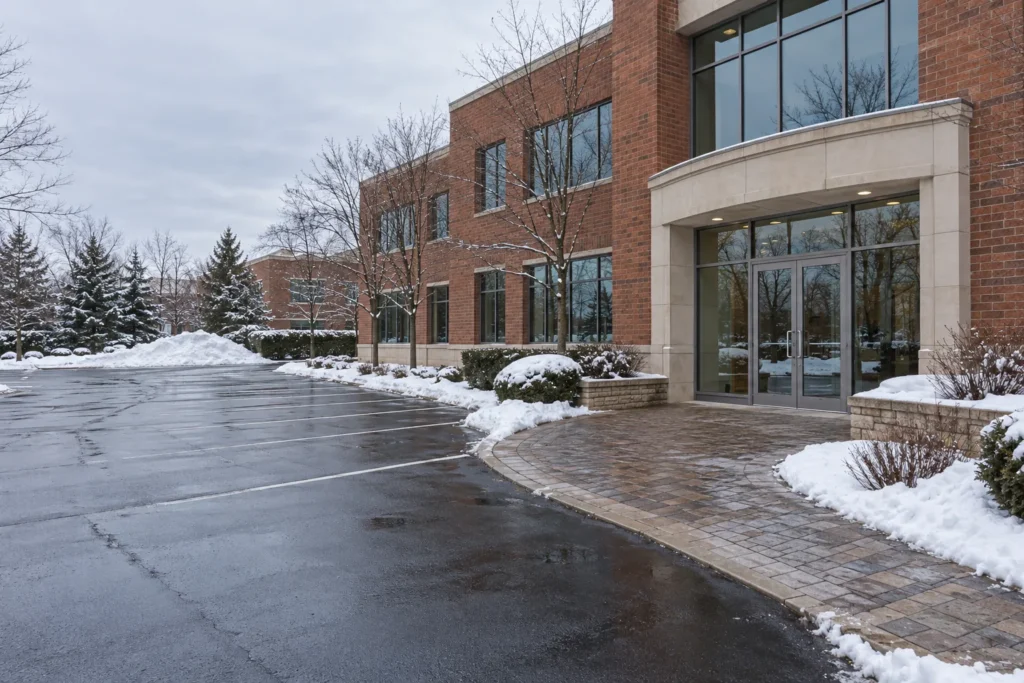
Managed-site access route kept clear near service entrance
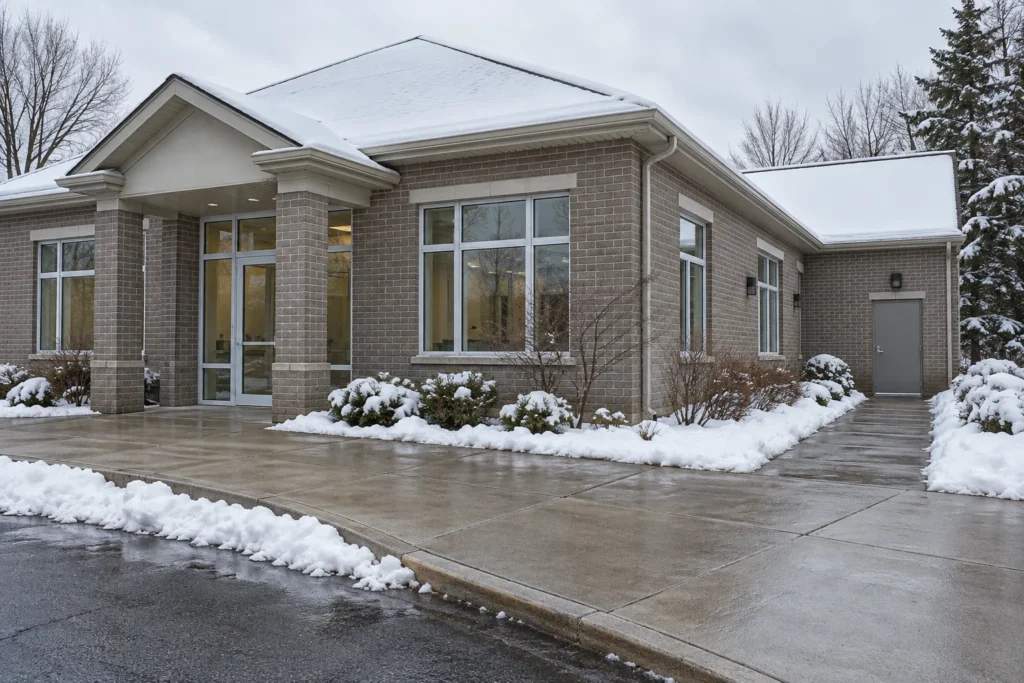
Cleared and treated common walk during changing winter conditions

Set up managed winter coordination

  1. Collect one site brief per property

    Provide addresses, marked areas, operating hours, access instructions and known concerns. Identify the manager, site contact and authorised approver. Keep each location distinct even if one proposal or billing contact covers the portfolio.

  2. Review the physical service scope

    Confirm clearing areas, pedestrian connections, storage and any ice-treatment zones. Record existing defects, sensitive features and limits caused by vehicles or gates. Resolve uncertainty about common, tenant and municipal responsibility before service begins.

  3. Agree terms and the request process

    Clarify triggers, timing, prolonged events, return work, additional fees and documentation. Establish who can report a condition and who can authorise changes. The approved arrangement should be concrete enough for the manager and site contact to use.

  4. Maintain current information and seasonal handover

    Update contacts and site restrictions during winter. Record recurring storage, water or surface issues for later review. Coordinate the transition to grounds care so outstanding concerns do not disappear when the snow melts.

Use winter observations to improve the wider property

Repeated conflicts can identify a layout or maintenance problem. A narrow common walk beside a large storage bank, a downspout crossing a doorway or an island that prevents useful clearing may deserve a separate project assessment. Winter service cannot reasonably substitute for every permanent repair.

Landscaping for property managers provides the broader coordination route for recurring grounds care, deficiencies and approved improvements. Condo and multi-residential landscaping focuses on resident use and shared outdoor areas. Carry the relevant area information into the next season while keeping its tasks and authorisation distinct.

When comparing winter proposals, review each property’s scope and assumptions as well as the administrative terms. A lower total is not directly comparable if one arrangement excludes walks, treatment or return work that another includes. Clear records of what is offered support a better decision than a general promise to handle everything.

Managed-property winter questions

Can several sites share one management contact?

Yes, identify the shared contact while providing a separate plan and scope for each location. Access, priorities, storage and operating hours can differ. A common contact structure should not erase those property-specific requirements.

Can tenants request another visit?

They can report a concern through the agreed route. Confirm who may authorise additional work and charges, and how the request is assessed. Reporting a condition and approving extra service should be clear, separate responsibilities.

Are salting and monitoring automatically included?

No. Confirm the treatment areas, triggers, repeat work and any observation or reporting service in the agreement. Continuous monitoring, a specific response time or unlimited applications should not be assumed from a general snow-service arrangement.

What records can management receive?

Discuss the information required and the format available, such as work summaries, photographs or area-specific observations. Confirm recipients and reporting expectations. Do not assume a particular software platform or documentation package without agreement.

How should an access problem be handled?

The plan should identify the site contact, the affected area and how changed access is communicated. Parked vehicles, locked gates or stored items can limit work. Agree the approach to later access and any additional visit before assuming it is included.

What should be sent for an initial proposal?

Provide the property list, area maps, critical routes, operating hours, storage options and contacts. Include the service terms and reporting needs you want reviewed, with any current deficiencies that affect winter work.

Property Manager Snow Service Gallery

Coordinate the sites and the people before winter

Share the locations, winter priorities and approval structure. Include the physical constraints at each site so the proposed coordination supports the actual work.

  • Site list and marked winter work areas
  • Manager, site contact and approval authority
  • Storage, access and treatment needs
  • Trigger, return-visit and reporting requirements

Tell us what you would like to change, repair or maintain around your property.