
Burlington Landscaping
Privacy Landscaping
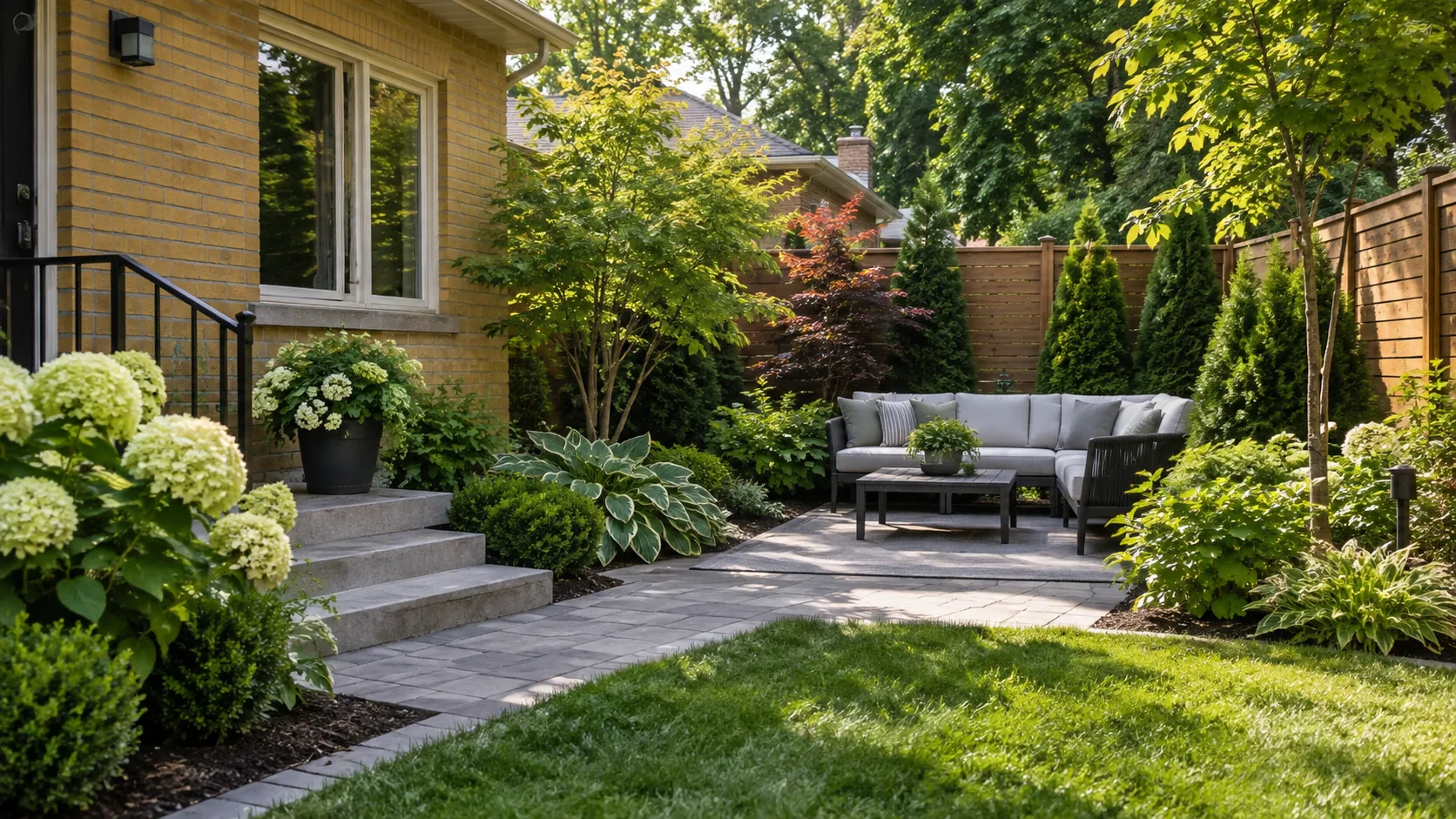
Create more comfortable outdoor space by screening the sightlines that matter with planting, fences and thoughtfully positioned features.
Privacy is usually about a particular view: a dining seat overlooked from next door, a busy side path or a patio visible through a gate. Treating every boundary the same can consume useful space and make a small yard feel enclosed without improving the place where you actually sit.
Burlington Landscaping considers the viewing point, the space to screen and the seasons when it is used. Planting, fences, screens and the position of furniture can each contribute. The right combination distinguishes useful coverage now from the appearance that develops as plants mature, while preserving light, circulation and room to care for the landscape.
Separate immediate coverage from future growth
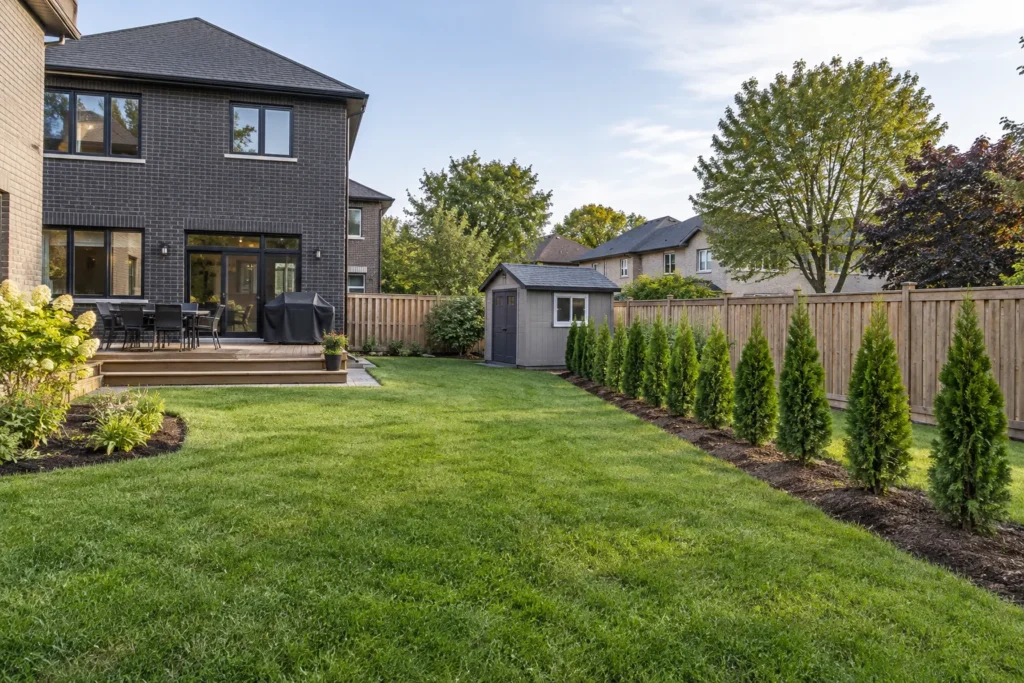
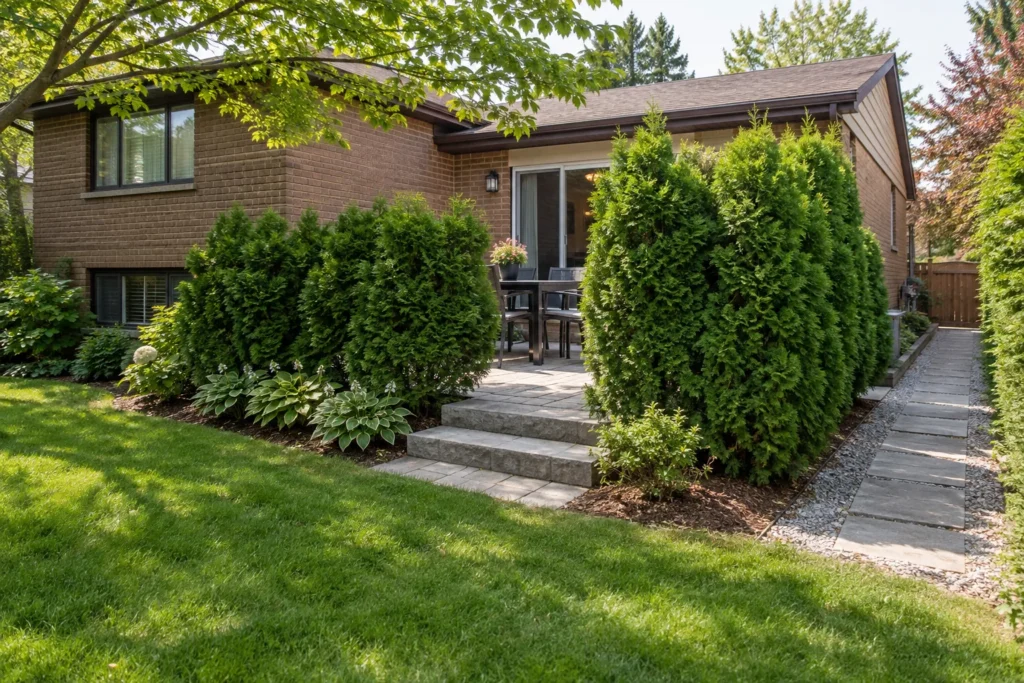
Young planting provides honest, limited screening. Hedges and trees need appropriate spacing, establishment care and time to develop; installing them too close together to look solid on day one can create congestion later. The starting size, expected mature width and available root space all belong in the choice.
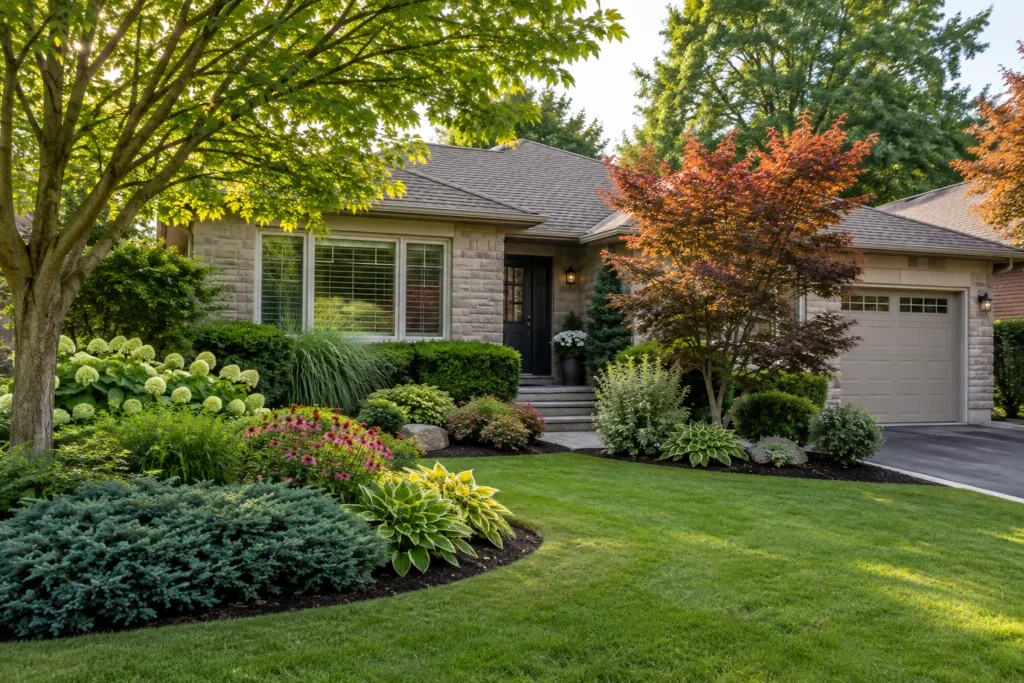
Evergreens may contribute year-round cover, but their eventual spread, light needs and response to the site still matter. Deciduous plants offer a different seasonal result: useful foliage in summer, more open views in winter and potentially valuable light. A mixed border can spread the visual interest and reduce dependence on one continuous row.
Ask where coverage is needed immediately. A well-positioned fence or screen may address a seated view while planting develops around it. That does not mean every gap needs a tall structure. A small shift in the patio or furniture can reduce an exposed angle without using more of the property edge.
For a predominantly planted boundary, hedge and privacy planting addresses the plant-led scope. A wider privacy landscape coordinates that planting with the use of the whole yard. It should explain both the initial result and the maintenance required to reach and retain the intended coverage.
Match the treatment to the view
| Situation | Possible combination | Trade-off to consider |
|---|---|---|
| A ground-level view into a dining area | A focused screen with lower planting around the seating zone. | Immediate coverage can be compact, but screen location and wind exposure need review. |
| A long boundary beside a lawn | Appropriately spaced hedge or mixed shrubs with a care route. | Planted depth uses lawn space and requires establishment and ongoing pruning. |
| A neighbouring upper-storey window | Repositioned seating, a suitable overhead feature or layered canopy where feasible. | A taller boundary fence may not intercept the view and may be unsuitable for the property. |
| A garden valued in several seasons | A mixture of evergreen structure and deciduous planting. | Winter coverage will differ from summer; choose the balance deliberately. |
Measure the sightline from where people sit
View the yard from the chair, table, deck and main doorway, rather than judging privacy only while standing at the property line. A screen close to the activity can intercept a view with a different height and footprint from planting at the far boundary. It can also provide a better backdrop without surrounding the whole yard.
Higher neighbouring windows are a separate problem from a pedestrian looking through a fence. Identify the actual angle before selecting a response. A pergola or gazebo may change the sense of enclosure and shade, but an open pergola does not automatically block an overhead view. The structure, intended screening and plant growth must be considered together.
Preserve useful daylight and airflow. Dense coverage can shade an existing lawn, make a narrow route feel tighter or leave a seating area damp. The comfortable result is specific to the property orientation and use; maximum height and density are not universal measures of success.
Keep gates, boundaries and working space clear
A privacy border should not conceal the route into the yard. Leave room to open the gate fully, move bins or equipment and carry furniture through without pushing branches aside. Mature width should be measured against the clear route, not only the bed edge at installation.
Confirm reliable property boundaries before fixing a fence or committing to a long planting line. Existing fences, hedges and paving are useful observations but may not establish the legal line. Shared access, easements and condominium arrangements can affect what is appropriate. Discuss those constraints before the layout becomes a material order.
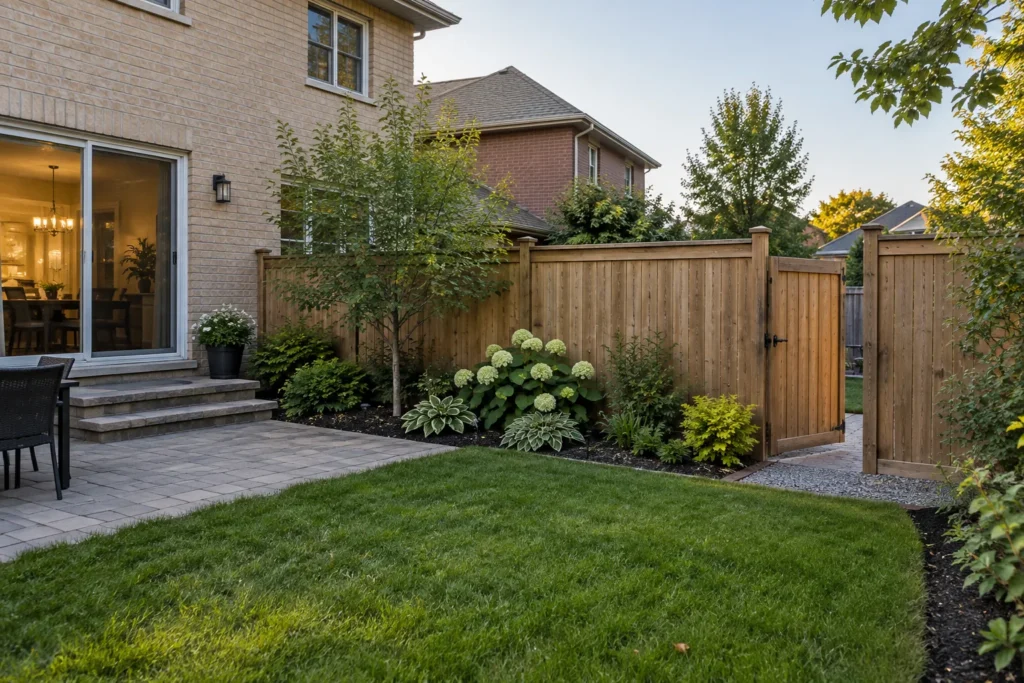
Coordinate fence installation and privacy screens with roots, utilities, grade and structural support. Posts require planned locations and sound installation; a screen should not be treated as decorative planting with no construction demands. Check how the proposed feature meets a deck, wall or existing fence.
The garden still needs access after it grows. Leave a way to prune, inspect fence panels and remove debris behind the planting where needed. Tree and shrub planting should suit the available soil and future canopy space. Avoid creating an inaccessible pocket between dense shrubs and a structure that becomes difficult to maintain.
Confirm the rules for the actual privacy feature
A fence, privacy screen and pool enclosure can have different requirements. In Burlington, the applicable zoning regime, street relationship, grade and corner visibility can influence a proposal. Do not choose a boundary height from a general photograph or assume that a screen attached to a structure is treated like a hedge.
Check the address, proposed location and feature type with the City before building. Where excavation or planting affects regulated trees, tree-protection review can also matter. These checks should guide the design without turning the garden into a collection of generic permit assumptions.
- City of Burlington: Zoning
- City of Burlington: Do I Need a Building Permit?
- City of Burlington: Forest Protection and Tree Permits
Information reviewed:
Build a privacy plan around the place you use
Identify the exposed view
Photograph the seating area and describe the direction of the unwanted view. Include an upper window or gate opening where relevant, without needing photographs inside neighbouring properties.
Test the footprint
Review possible screen positions and planting depth against furniture, lawn, paths and retained trees. Consider how the coverage changes while seated, standing and moving through the yard.
Choose the timing of coverage
Decide which views need an immediate structural response and which can be softened by growing plants. Compare initial plant size, mature spacing, seasonal coverage and establishment care honestly.
Coordinate construction and care
Confirm boundaries, applicable requirements, post or planting locations and any qualified input. Complete disruptive construction before final planting, then establish a watering and pruning routine that fits the chosen treatment.
Questions about outdoor privacy
Will a hedge provide full privacy immediately?
That depends on its starting size, spacing and the view being screened. Young plants usually leave gaps, and those gaps should not be hidden by an unrealistic growth promise. Discuss the appearance at installation, the expected mature shape and whether a temporary or permanent structure is needed for immediate coverage.
Can privacy landscaping block an upstairs window view?
Sometimes a targeted arrangement can improve the seating area, but the viewing angle needs assessment. A taller fence at the property edge may still leave the patio exposed from above. Furniture position, canopy planting or a suitable overhead feature may be more effective, subject to space and requirements.
Are evergreens always the best choice?
They can offer useful winter structure, but light, soil, exposure and mature size determine whether they fit. A single-species row can also create a uniform maintenance demand. Mixed planting may produce a more varied landscape; its winter and summer coverage should be explained clearly before selection.
Can a small yard have privacy without losing all its lawn?
Yes, if the plan focuses on the important sightline. A modest screen near a seating area or a carefully positioned bed may use less space than a continuous deep border. Check clear routes, gate operation and room to maintain the feature before deciding the layout.
What ongoing care should I expect?
New planting needs establishment watering and observation, followed by appropriate pruning and seasonal care. Structures need inspection and upkeep for their material and fixing details. Leave access for those tasks. Privacy that depends on repeated trimming should fit the time or maintenance service you are willing to arrange.
What should I include in an enquiry?
Send a wide yard view, the space where you want more comfort and the direction of the view you want to soften. Mention desired winter coverage, how soon you need screening, known boundaries, retained plants and access limitations. Describe the desired experience instead of choosing a height before the site is reviewed.
Privacy Landscaping Gallery
Make the space you use feel more private
Show us the patio, deck or garden area that feels exposed and explain when you use it. A focused brief helps compare planting, screens and layout changes while preserving the useful parts of your Burlington yard.
- Area and sightline you want to screen
- Immediate versus future coverage needs
- Seasonal use, shade and retained planting
- Boundary information, gate routes and property photographs
Tell us what you would like to change, repair or maintain around your property.