

Skip to content

Explore services

Request an Estimate
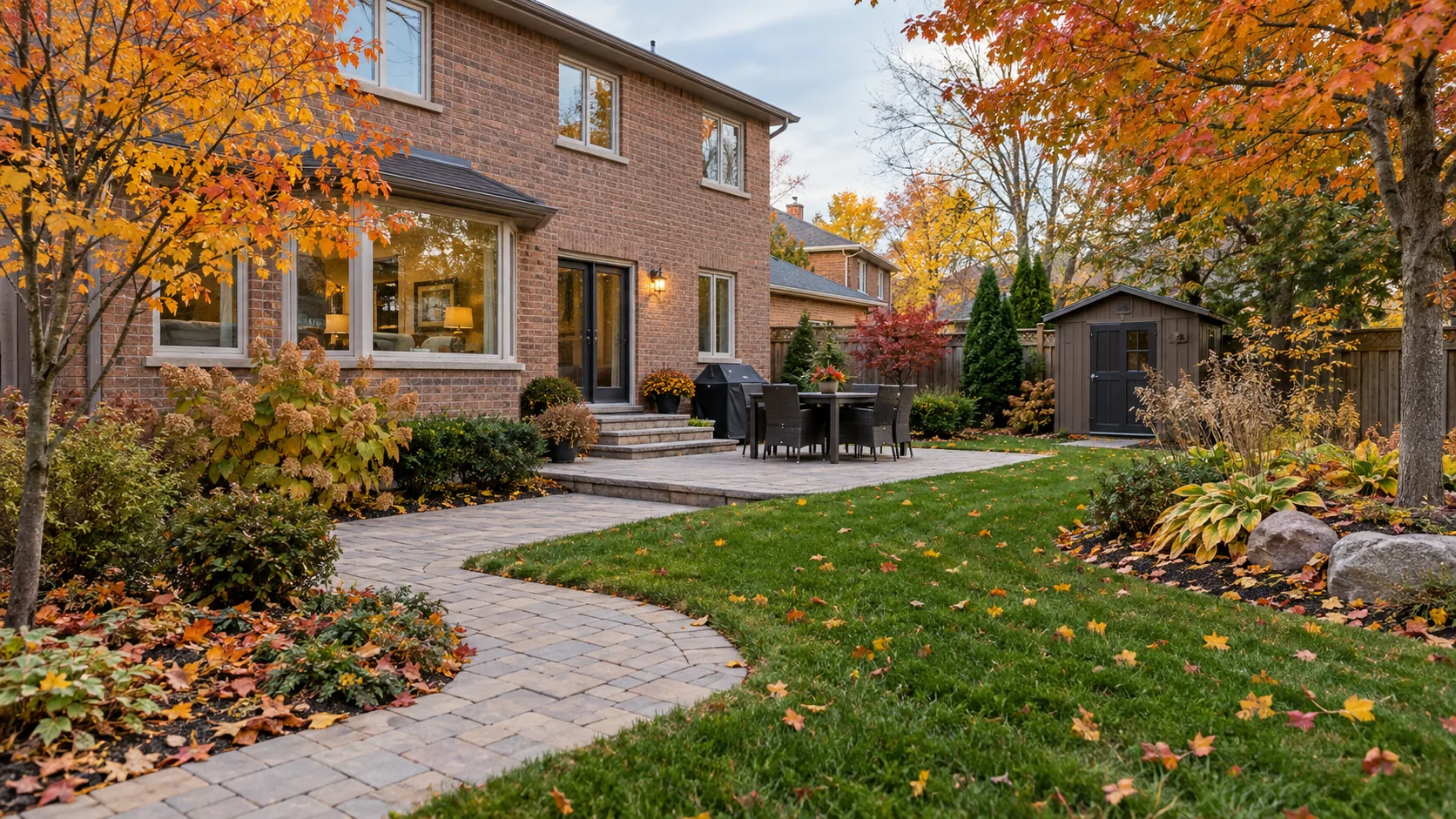
Residential autumn yard with clear entrance, tidy lawn and selectively maintained planted borders

Site First. Finish Second.

Fall Yard Cleanup

Manage leaves and seasonal debris while preparing the private routes you will use in winter. Keep useful garden structure, lawn condition, surface-water paths and snow-clearing access in the plan.

Fall cleanup should leave the property ready for the way it will be used through winter. Leaves and seasonal debris need attention, but the best scope also considers lawns, retained plants, accessible drainage routes and the entrances that must remain usable. It is a seasonal handoff rather than an instruction to empty every garden.

Plan for Leaf Drop Across the Whole Property

Leaves rarely fall evenly across a yard or arrive in one neat event. A front lawn may be clear while a sheltered rear corner continues collecting material. Nearby retained trees, fences and wind patterns can influence where leaves accumulate without making the whole property need the same treatment. Describe the areas that matter and whether one visit or a separately agreed sequence is being requested.

Dense, wet leaf accumulation can mat over grass and make paths slippery. Remove the agreed buildup without tearing soft turf or repeatedly driving over wet ground. The lawn’s condition, access and available staging area affect the practical method. A compact townhouse yard with stairs may require different handling from an open detached property even when the visible leaf volume is similar.

Clarify where collected material goes. Onsite handling, removal and any permitted collection arrangement need to be stated; ordinary cleanup does not imply that every unwanted household or construction item will be taken away. Keep piles off neighbour land and out of routes used by pedestrians, drainage or later snow clearing. Material handling belongs in the original estimate, not as a last-minute assumption.

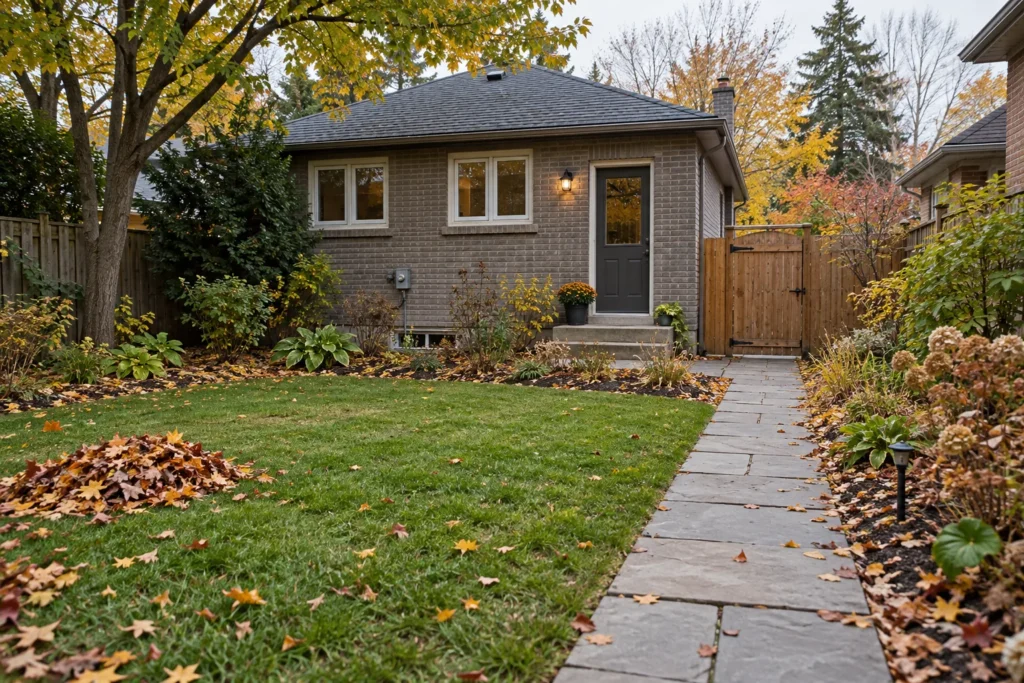
Autumn leaf pile beside a cleared rear lawn and flagstone path, with leaf cover retained in planted beds.
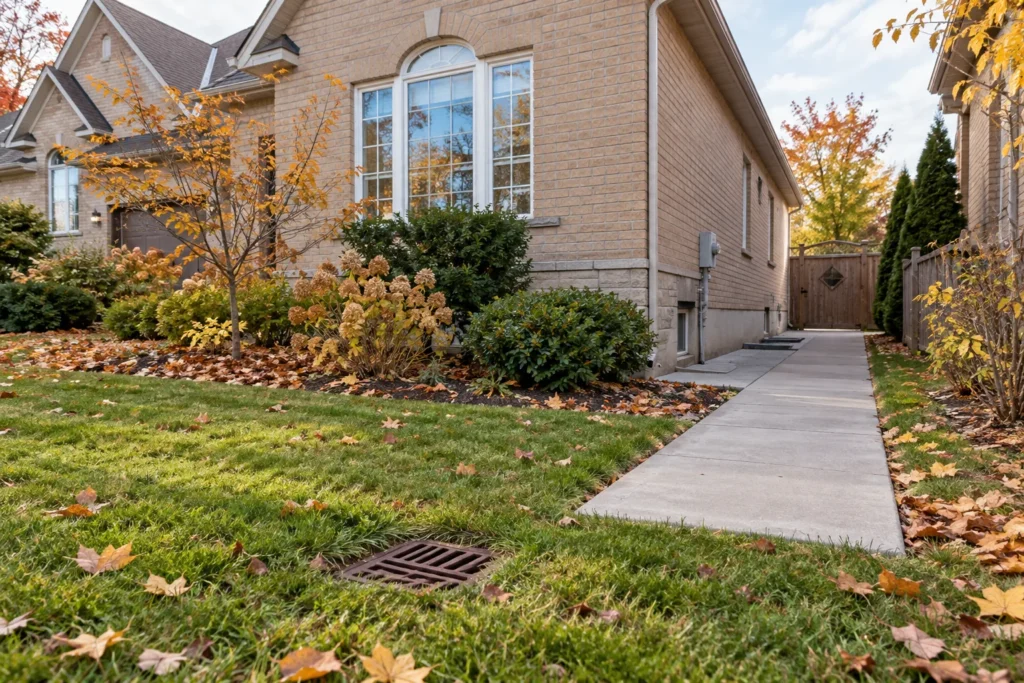
Clear lawn drainage grate beside a beige-brick house and unobstructed concrete side path in autumn.

Prepare Different Areas for Different Winter Demands

Prepare Different Areas for Different Winter Demands
AreaFall attention to discussCondition to retain or flag
LawnRemove agreed matted leaves and loose debrisAvoid rutting soft areas; identify existing low spots
Garden bedSelective cutback and unwanted debris removalKeep agreed seed heads, stems and protective leaf areas
Front entranceClear loose material from the private approachNote steps, railings, low fixtures and trip edges
Side pathKeep gate operation and passage clearAvoid covering outlets or narrow working space
Surface-water routeRemove accessible loose obstruction within scopeDo not change levels or assume buried drains are sound
Winter work zoneMark vulnerable edges and intended snow storageKeep doors, equipment and visibility needs in view

Leave the Garden With a Deliberate Plan

Fall garden work depends on the plants and the owner’s priorities. Some perennials can retain seed heads or stems, and some leaf material can remain intentionally in planting areas. Other growth may be damaged, diseased or obstructing a route and need selective attention. Identify those differences rather than cutting every plant to the same height or exposing every bed to bare soil.

Shrubs and trees also need plant-specific decisions. Routine cleanup is not a substitute for major pruning or a tree-risk assessment, and fall is not a universal instruction to reduce all woody plants. If broken limbs, unstable trees or protected-tree concerns are visible, seek the appropriate specialist review. Do not make excavation, root cutting or grade changes an incidental part of tidying around a trunk.

For beds beside cleared winter paths, note edging and small fixtures that snow may hide. Mark vulnerable corners and discuss where displaced snow can sit without burying equipment or blocking doors. The same bed that looks generous in summer can leave too little room when a driveway and walk must be cleared. Residential snow planning should use the actual fall condition of the property.

Clear front walk and driveway beside an open autumn lawn and white-sided house.
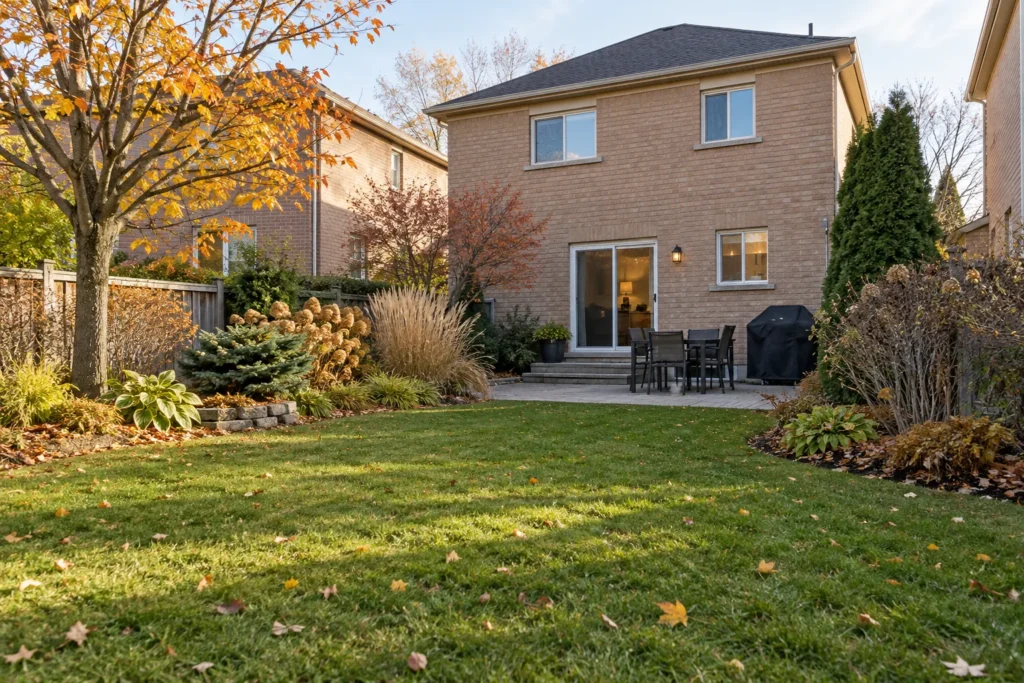
Clean rear lawn framed by shrubs, standing grasses and autumn seed heads beside a tan-brick house.

Look Beyond Leaves Before Winter

A cleaned yard can reveal conditions that deserve a separate decision before freezing weather. The purpose is to recognize and communicate them, not to imply that an ordinary seasonal visit inspects every structure or guarantees winter safety.

Paths and steps

Record uneven paving, a loose edge or damaged step where seen. Sweeping leaves off a surface does not repair it. If work is needed, define the repair and access requirements so the proposed improvement can be assessed on its own merits.

Water and melt routes

Keep agreed accessible surface routes free of loose debris, and observe places where water already collects. Cleaning a visible outlet does not prove that a buried system works. Drainage repair or redirection needs its own assessment and suitable discharge plan.

Winter equipment access

Identify the actual private routes and surfaces intended for snow service. A narrow gate, low light, planter or decorative stone edge can change the working space. Record what should be marked or moved by the owner before winter service begins.

Items outside seasonal care

Irrigation winterization, electrical repairs, roof and gutter work, large tree work and structural repairs should be discussed with appropriate providers. They are not automatic fall-cleanup inclusions simply because the work occurs outdoors.

Make the Seasonal Handoff Clear

  1. Describe leaves and retained areas

    Share photos of current accumulation and the broader tree and garden context. Mark beds to retain, plants requiring special treatment and the areas the household will continue to manage. Mention any access restrictions before a visit is planned.

  2. Agree visits and removal

    Confirm the intended coverage and whether later leaf fall requires another separately arranged visit. State how material is handled and what happens if access or wet conditions prevent the expected work. Avoid relying on an undefined end-of-season promise.

  3. Record winter priorities

    Use the cleaned layout to identify entrance routes, low features, parked-vehicle constraints and potential snow-storage space. An independent winter service agreement should define coverage, ice treatment and operating terms rather than inherit assumptions from summer care.

Connect Fall Work With Next Season’s Care

Cleanup can make recurring weaknesses easier to see. A lawn that stays soft, a bed that continually spills material onto a path or leaves that repeatedly block one narrow outlet may need a more useful layout or a separate repair. Record those locations while the conditions are visible. Do not cover an unresolved problem with fresh material just to finish the visit.

The following spring may still need its own reset after winter debris and changing ground conditions. Garden maintenance and lawn maintenance can be coordinated through the broader residential property-care scope. Each task should remain identifiable so the owner knows what is being provided and what needs another quotation.

Record Features Before Snow Covers Them

Photographs taken after cleanup can be useful for the household and any winter provider. Show the edges of private paths, steps, lights, low borders and equipment access points while they remain visible. Include the wider approach so a close picture has a clear location. These records support a winter planning discussion but do not replace an agreed route map or winter service terms. Keep them current if planters, vehicles or other obstacles are moved before the snow season.

Questions About the Service

Is one fall cleanup enough?

That depends on the property, leaf drop and desired finish. Material can arrive after a visit, particularly near retained trees or wind-catching fences. Discuss the expected coverage and whether additional visits are requested; do not assume one visit keeps the yard clear for the entire season.

Do all leaves need to be removed from garden beds?

No single treatment suits every bed. Some retained leaf material can be intentional, while thick unwanted accumulation or obstructed paths needs attention. Clarify plant needs, habitat preferences and appearance priorities so the scope identifies what stays and what is collected.

Is snow service included in fall cleanup?

Snow removal and ice treatment require a separate agreed scope. Fall work can help identify routes and vulnerable features, but it does not establish a trigger, response time or winter contract. List the private driveway, walks and steps you want considered.

Can cleanup include clearing drains?

Accessible loose material at an agreed surface route or visible outlet can be discussed. Investigation of buried piping, repairs or water redirection is different work. Mention water history and provide photos so the request can be assessed without assuming that cleaning one visible point resolves the system.

What should be ready before the visit?

Provide practical access and identify pets, locked gates, personal items and areas to avoid. Discuss material staging and removal. If winter routes are part of the planning discussion, point out lights, edges and equipment that may disappear under snow.

Fall Yard Cleanup Gallery

Arrange a Useful Fall Reset

Tell us where leaves collect, what garden growth should stay and which private routes need winter preparation.

  • Address and current lawn, bed and leaf-accumulation photographs
  • Access and debris-removal requirements
  • Retained planting and winter-route priorities

Tell us what you would like to change, repair or maintain around your property.