
Burlington Landscaping
Mulch & Decorative Stone
Choose a garden-bed finish for the planting, water conditions and upkeep it will need, then prepare and contain it properly.
Mulch and decorative stone can give a bed a clearer finish, but they do different jobs in the garden. Organic mulch gradually breaks down and needs renewal. Stone remains as a mineral surface, while leaves, weeds and moved pieces still need attention. The right choice depends on the plants, the location and how you want to maintain the space.
Begin with the existing bed rather than a colour sample. Weeds, old material, tired edging and the height of the soil affect the installation. A refresh may be straightforward where the bed is sound; a thick new layer can conceal a problem where the preparation is not. Send photographs of the whole area, including the lawn, house and paths around it, so the finish can be discussed in context.
Mulch and stone have different ongoing demands
| Consideration | Organic mulch | Decorative stone |
|---|---|---|
| Changing the planting | Can generally be moved aside when adding or dividing plants. | Moving stone and separating it from soil can make later changes more involved. |
| Surface renewal | Breaks down and may need replenishment as part of bed care. | Does not break down in the same way, but debris and displaced pieces need attention. |
| Weed expectations | Helps cover exposed soil; weeds can still establish and need removal. | Is not weed-proof; windblown material can collect between stones. |
| Plant surroundings | Needs sensible placement clear of trunks and crowns. | Heat, moisture and the suitability for the selected plants need consideration. |
| Containment | A defined edge helps keep the finish inside the bed. | A sound edge is especially useful beside lawn and paved walking areas. |
| Water | Cannot correct an unsuitable grade or blocked surface route. | A stone surface does not by itself establish an approved or effective drainage system. |
Prepare the bed before covering the soil
Identify whether the work is a top-up, a change of material or a new bed finish. Existing mulch may have decomposed unevenly, migrated into the lawn or been piled repeatedly around plants. Inspect what is already there so the new installation does not simply add depth to an accumulated layer. Old stone mixed through soil presents a different removal and preparation task.
Address weeds and unwanted growth before covering them. A fresh finish can make a bed look clean without resolving persistent roots or an overgrown edge. Explain whether existing plants will remain, whether the bed is being reshaped and what should happen to removed material. A finish-only estimate should not silently assume extensive plant removal or soil reconstruction.
Check the bed level at walls, paths and lawn edges. The finish should not bury important clearances, hide plant crowns or spill onto a walkway. Where major preparation or new planting is needed, coordinate the work with garden installation so soil and planting decisions are made before the final surface is delivered.
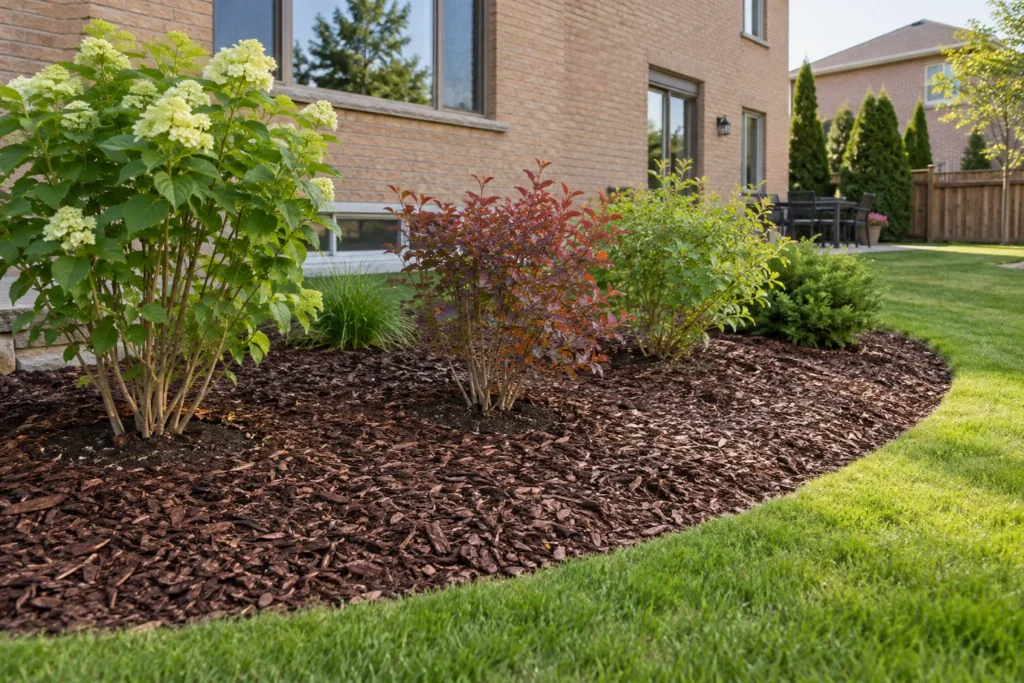
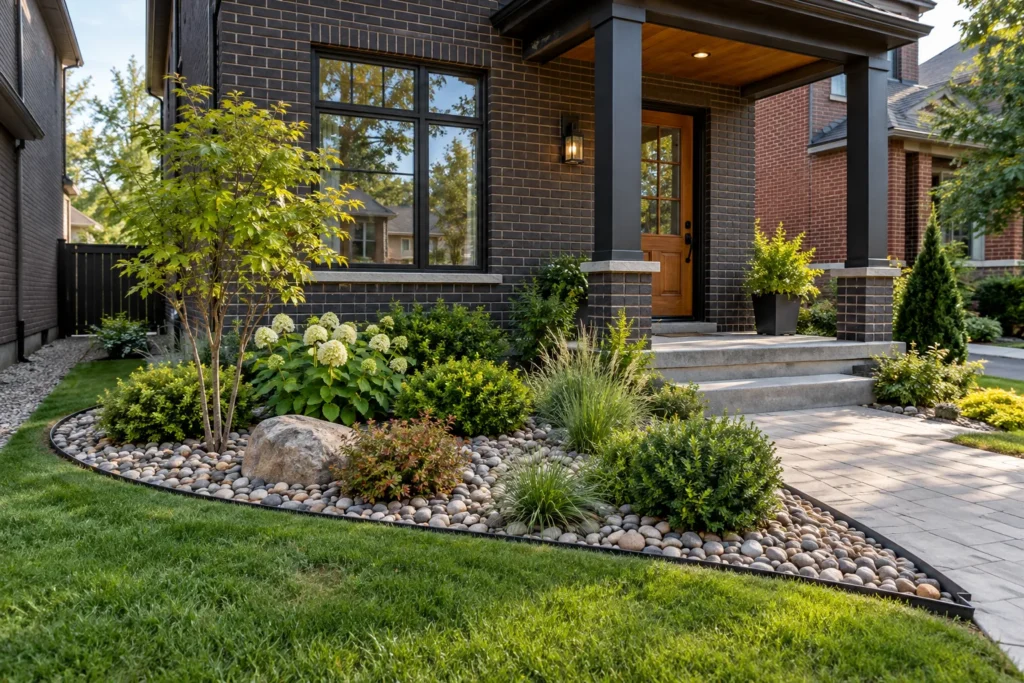
A clean edge controls movement and makes maintenance clearer
Edging creates a practical boundary between the bed and adjoining surfaces. Its form should suit the garden shape and the way the space is used. A lawn edge needs to allow mowing and trimming; an edge beside a path should not become an awkward trip point or funnel loose material onto the walking surface.
Decorative stone can migrate when people walk through the bed, pets cross it or maintenance pushes pieces into the grass. Show shortcuts and narrow access areas before choosing the material. A surface that looks tidy in a broad border may be frustrating in a narrow strip beside a frequently used gate.
Keep water routes in mind when containing a bed. A continuous raised edge can obstruct shallow runoff if installed across an existing drainage path. Look at the wider surface grades rather than treating the border as an isolated decorative line. Landscape drainage should be considered where pooling or runoff is already a concern.
Match the finished surface to plants and ordinary use
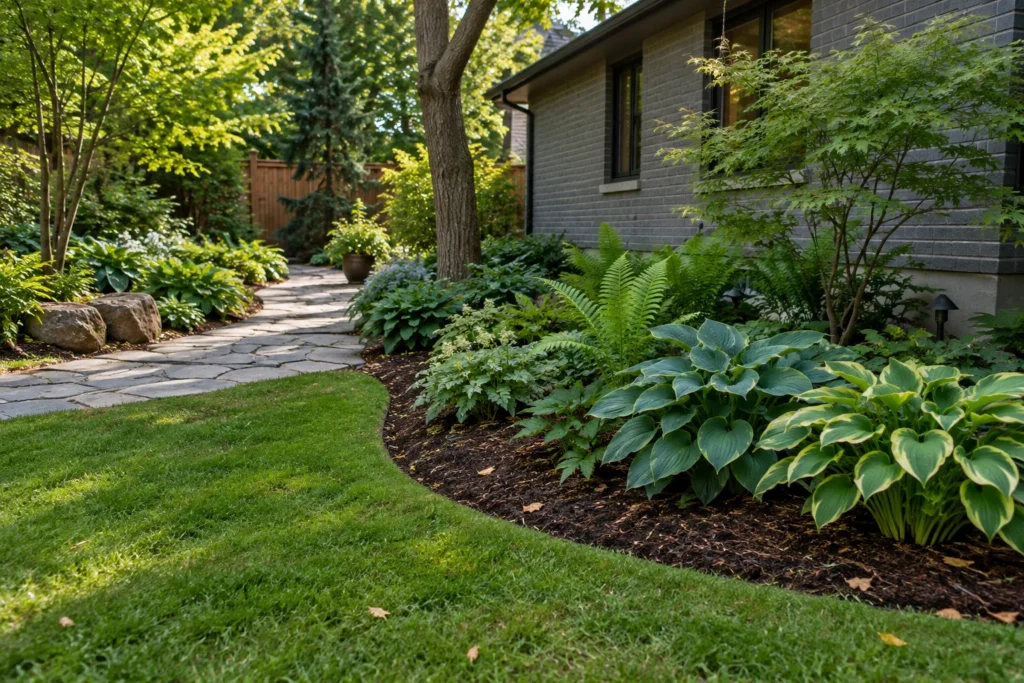
Organic mulch can provide a consistent surface around mixed planting, but placement still matters. Keep it away from trunks and crowns and leave the plant structure visible. Material pressed against bark or covering low-growing foliage is not a better finish simply because the bed appears fully coated. The aim is a useful garden surface around living plants.
Stone can suit certain dry decorative areas or a deliberate mineral planting scheme. It also changes how heat, fallen leaves and future planting work are managed. Discuss the exposure and the plants that will occupy the area. Do not assume an attractive stone swatch makes the same choice suitable around every shrub, along every wall or beneath a tree shedding fine debris.
Texture and colour should support the surrounding materials without creating needless visual clutter. Compare the finish with the house, paving and retained stonework. The quantity and access route also matter: moving material through a narrow gate or over a finished patio can shape the work. Send wide photos so these relationships can be considered instead of selecting solely from a close-up reference.
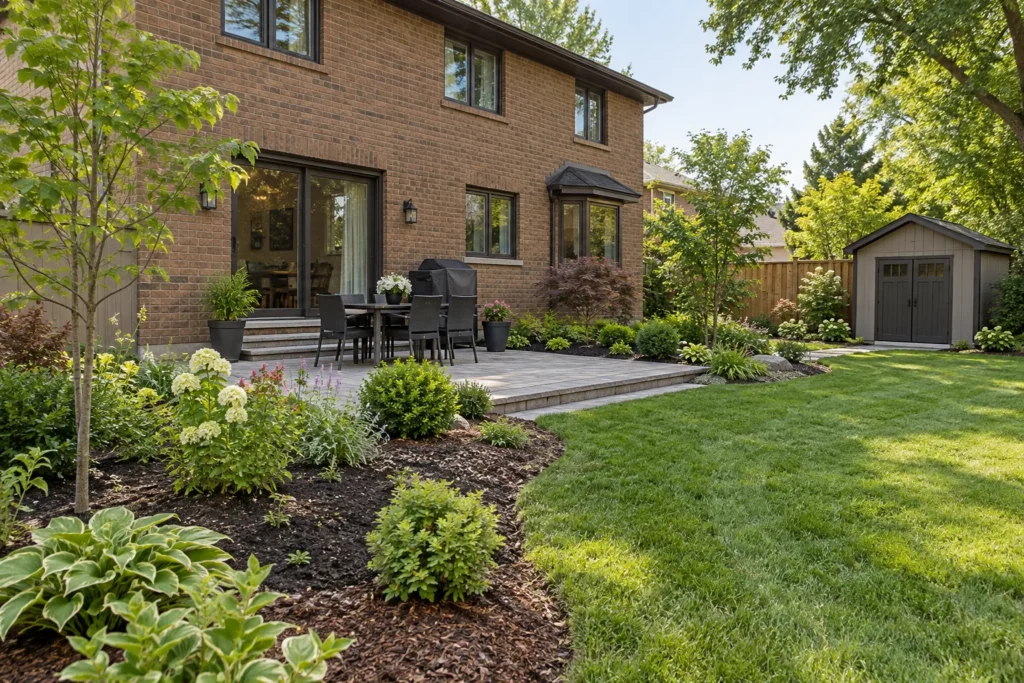
A useful bed-finish project has four clear decisions
Record the starting condition
Photograph the present material, edging, plants and weed growth. Explain whether you want a tidy refresh, a different finish or a reworked bed. Mention any soil or water concern that the surface currently hides.
Choose the finish for its location
Discuss organic mulch or stone alongside plant needs, exposure and future changes. If reducing care is the goal, low-maintenance landscaping can help weigh the wider trade-offs instead of assigning all the work to one material.
Settle preparation and containment
Agree on removal, weed preparation, bed levels and edges. Identify where new material can be delivered and how it reaches the garden. Keep access to gates, drains, utilities and planting areas clear in the final arrangement.
Plan future upkeep
Clarify how leaves, weeds and moved material will be managed. Organic mulch needs assessment before replenishment; stone needs cleaning and containment. Garden maintenance can be discussed separately where continuing bed care is wanted.
Do not confuse decorative stone with a drainage design
A stone-covered strip can hide puddling without explaining where the water goes. If water arrives from a downspout or accumulates along the house, understand the source, slope and available discharge path before covering the area. Decorative stone, drainage aggregate and a designed drainage measure are not interchangeable descriptions of one service.
Likewise, the presence of a fabric layer does not make a bed permanently free of weeds or solve every soil condition. Clarify any proposed separation material and its purpose, particularly where future planting or soil work is expected. A useful estimate describes the bed preparation and finish rather than promising that one hidden layer will eliminate all maintenance.
Consider the next garden change before selecting the finish
A garden that is still being planted may benefit from a finish that can be moved aside without mixing a large amount of stone into the soil. If you expect to divide perennials, replace shrubs or expand the bed, say so before the material is selected. Future flexibility is part of the maintenance discussion, even where the immediate aim is a crisp finished appearance.
Leaf fall also changes the practical choice. Fine debris can be difficult to separate from small stone, while broad leaves may be easier to collect where there is clear access. Look at the nearby trees and the shape of the bed rather than assuming the same cleanup effort everywhere. A shaded narrow strip and an open decorative island have different conditions.
Where finishes meet, identify which material belongs on each side. A small hard edge or deliberate transition can make later cleanup more straightforward. Avoid unnecessary mixed layers that are difficult to separate if the planting or bed level needs attention.
Mulch and decorative stone questions
Which finish needs less maintenance?
The work changes rather than disappearing. Mulch breaks down and needs periodic assessment and renewal. Stone stays in place longer as a material but can collect debris, grow weeds and migrate outside the bed. The planting, nearby trees and access habits affect which tasks are likely to be more practical for your property.
Can stone be placed over an existing weedy bed?
Covering visible weeds does not establish good preparation. Identify the unwanted growth, existing material and future planting before selecting the approach. Persistent roots and an unclear edge can remain problems beneath a fresh surface. The installation scope should state what preparation is included rather than treating stone as an automatic weed solution.
Does old mulch always need to be removed?
Not always. Its condition, accumulated depth, weeds and the levels around plants and hardscape should guide the decision. Repeatedly adding material without checking can bury plant crowns or create an excessive mound. Send close photographs as well as a broad bed view so the existing layer is visible.
Can mulch or stone solve pooling at the foundation?
Neither finish alone resolves the cause of pooling. Roof runoff, surface grades and blocked routes need assessment, and some building or underground-water issues require a different qualified scope. Keep the water concern visible in the enquiry rather than covering it and assuming the appearance of a dry surface means the problem is solved.
What affects the scope of a finish refresh?
Bed area, existing material, weeds, access, edging and the plants to protect all matter. Changing from stone to mulch or removing mixed material can be more involved than a simple top-up. Identify the desired finish and the preparation you expect so those tasks can be reviewed together.
Mulch & Decorative Stone Gallery
Show us the beds you want to finish or refresh
Include the current surface, edges and adjacent lawn or paving. Tell us whether the goal is a material change, a seasonal refresh or a finish for newly installed planting.
- Burlington address and bed photographs
- Approximate areas and present mulch or stone
- Desired finish, retained planting and edge work
- Delivery access, weed growth and known water concerns
Tell us what you would like to change, repair or maintain around your property.