Skip to content

Explore services

Request an Estimate
Residential side-yard grass route beside a house

Burlington Landscaping

Landscape Drainage

Understand where water enters the landscape, how it travels and where it can leave before choosing a drain, swale or grade correction.

Water collecting in a yard is a symptom, not a complete description of the problem. A low lawn area, a downspout aimed at a path and a patio that sheds water into a narrow side yard require different responses. The sensible starting point is to follow the water through the property.

Burlington Landscaping considers landscape drainage with the lawn, garden and hardscape around it. Site First. Finish Second. means tracing the source, route, destination and overflow before selecting a visible grate or covering the ground with new sod. The right scope should explain what it addresses, which property conditions it depends on and how the finished route will remain accessible for maintenance.

Four questions come before a drainage product

Follow the water from its first visible input to the point where it leaves the affected area. Each part of that route helps define the next decision. Collection, conveyance and discharge need to work together; solving the wettest spot in isolation can leave a missing connection elsewhere in the landscape.

Source: where does the water arrive?

Separate roof runoff, water from paved surfaces and water already travelling through the lot. Note whether the condition follows ordinary rain, prolonged rain or snowmelt. A concentrated downspout flow may need a different response from a broad low lawn area.
Path: what does it cross?

Trace the current route past patio edges, garden borders, side gates and swales. A raised edge or accumulated soil may be blocking an otherwise useful surface path. The route should be considered continuously, not only at the wettest spot.

Outlet: where can it go?

Establish an appropriate permitted destination before proposing collection. A drain is not complete simply because water disappears below a grate. The discharge must suit the site and any required design or approvals without transferring the problem to neighbouring land.

Overflow: what happens beyond normal conditions?

Consider the surface route if a grate is obstructed or rainfall exceeds what the planned feature can handle. Avoid concentrating excess water toward a door, garage or window well. A landscape correction cannot guarantee protection from every severe storm.

Observe the water before changing the landscape

Photograph the yard from the same safe vantage points during and after rainfall. Include the wider surroundings, the wet area and where the water appears to move next. Note how long it remains and whether the soil stays soft after the surface dries. These observations help distinguish a temporary puddle from a repeating problem that affects use of the yard.

Check obvious inputs without assuming they are the only cause. Gutters and downspouts can concentrate roof water. A driveway, patio or path may send runoff toward a lawn edge. A garden renovation can cover a shallow swale, while soil around a new structure may settle. Explain any recent changes and whether the issue existed before them.

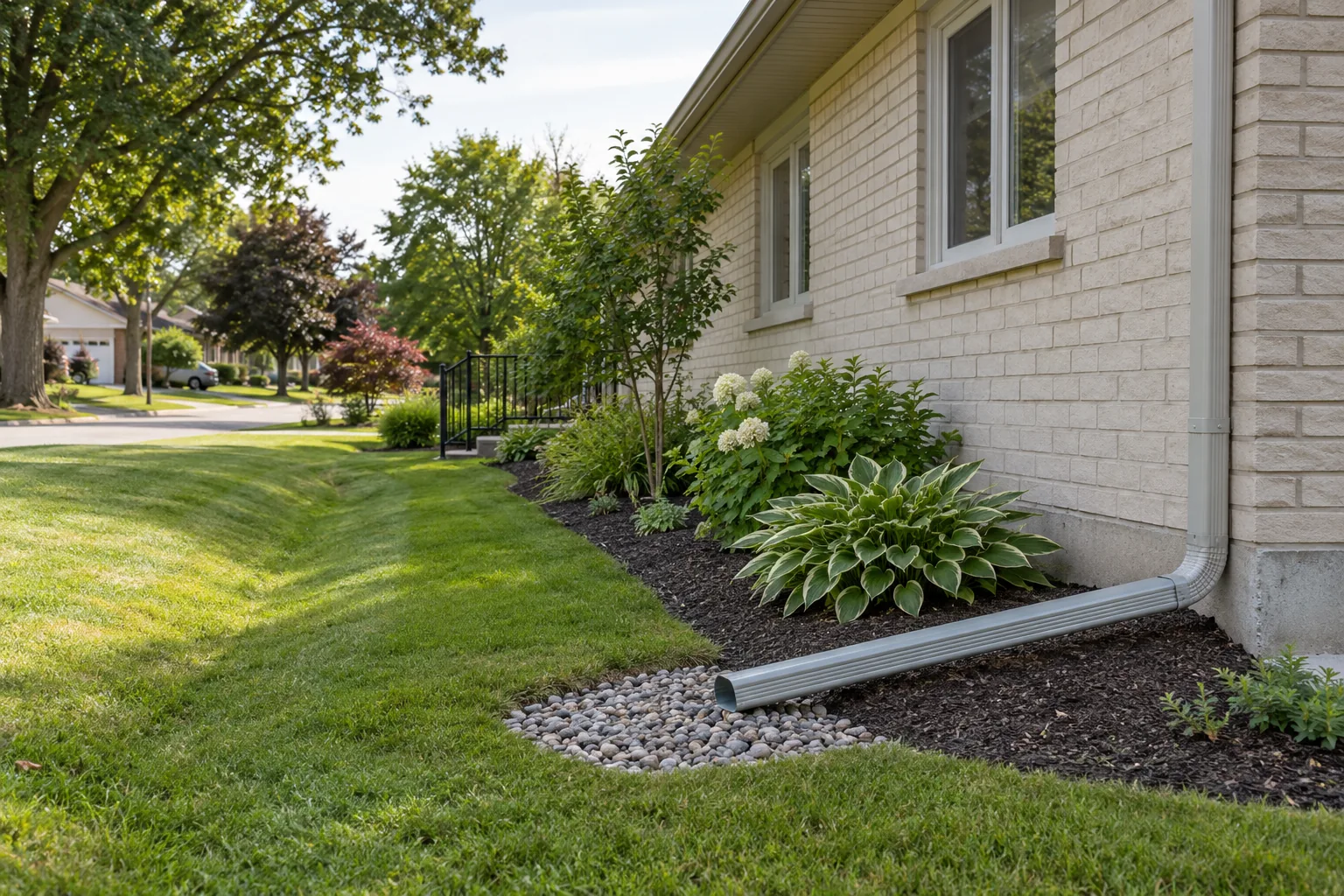
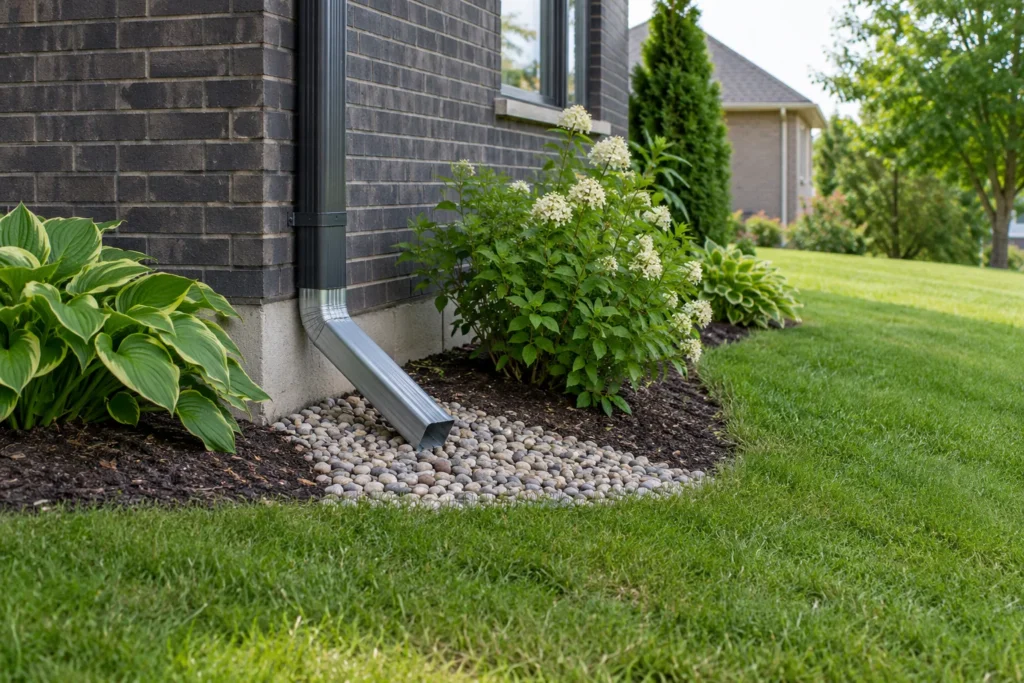
A downspout extension should reach a suitable location, remain connected and avoid directing water onto a walking route or across a boundary. Its position may change how people mow, use a gate or clear snow. Downspout and surface-water management is a useful focused discussion where roof runoff is the main input; it should still fit the broader drainage path.

Shallow grass swale with surface water in a lawn
Metal downspout extension ending over a gravel splash pad

Match the landscape response to the condition

A surface route needs to be restored

Where an existing shallow swale is obstructed, restoring its continuity may be more relevant than adding a new drain. Review accumulated soil, bed edges and other barriers. Keep a practical maintained route while retaining appropriate neighbouring and building levels.

The lawn has unsuitable low ground

A grade correction can be considered when the low area and available discharge path are understood. Plan the finished levels, soil preparation and turf reinstatement together. Adding soil to the puddle alone does not establish where the displaced water will travel.

Runoff gathers at a hardscape edge

Examine the paved surface, support, direction of fall and junction with the lawn. A coordinated surface repair or collection feature may be appropriate. Establish the route and outlet first; a channel drain beside a patio is not a substitute for understanding the whole discharge arrangement.

The cause remains uncertain

Persistent saturation may involve more than a surface obstruction. Gather rainfall history, soil observations and available property plans before committing to a solution. Some conditions require professional investigation or a specialist scope before landscape work can be defined.

A collection feature needs a complete and maintainable arrangement

An area drain can collect water at a defined low point, and a channel drain can intercept water at an appropriate paved edge. Their visible position matters, but so do the connected route, elevations, discharge, required design and maintenance. A neat grate cannot demonstrate what happens beneath it or whether the destination is acceptable.

Keep collection points reachable. Leaves, sediment, clippings and mulch can obstruct an inlet; a dense shrub or fixed storage box can make inspection difficult. Locate the feature with mowing, patio use and garden maintenance in mind. Finished surface levels should help water reach the intended collection point without creating an awkward lip or an unrelated low pocket.

A gravel trench or infiltration feature should not be selected only because it hides below the lawn. Soil behaviour, available space, nearby buildings, utilities and approval requirements affect whether infiltration is suitable. Where the proposal needs an engineered design or underground work outside the defined landscaping scope, establish that requirement before choosing the finished landscape treatment.

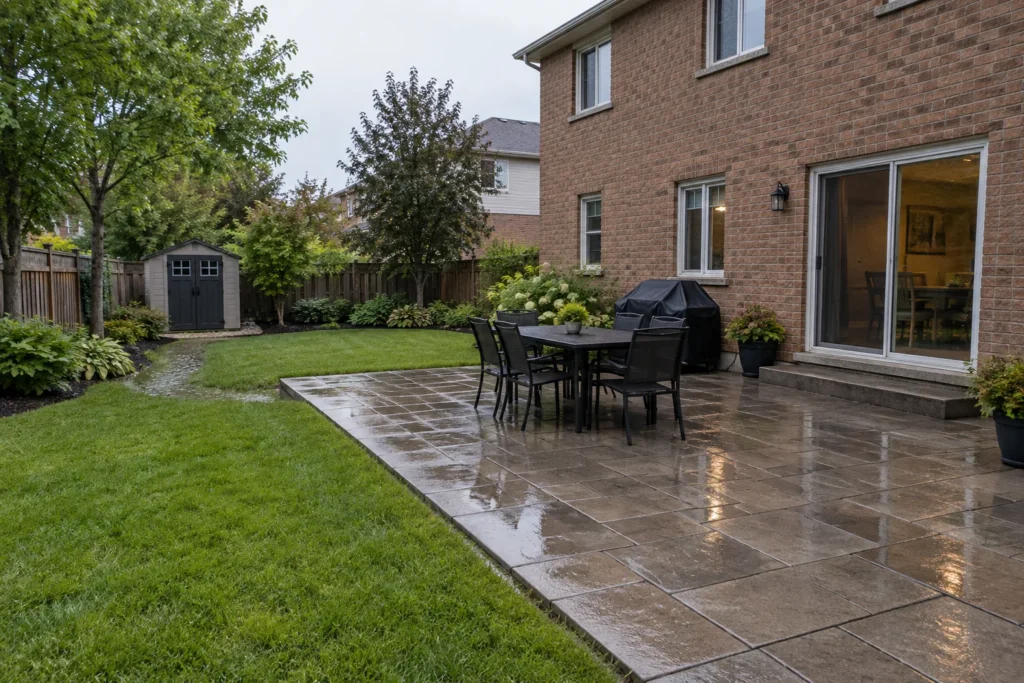
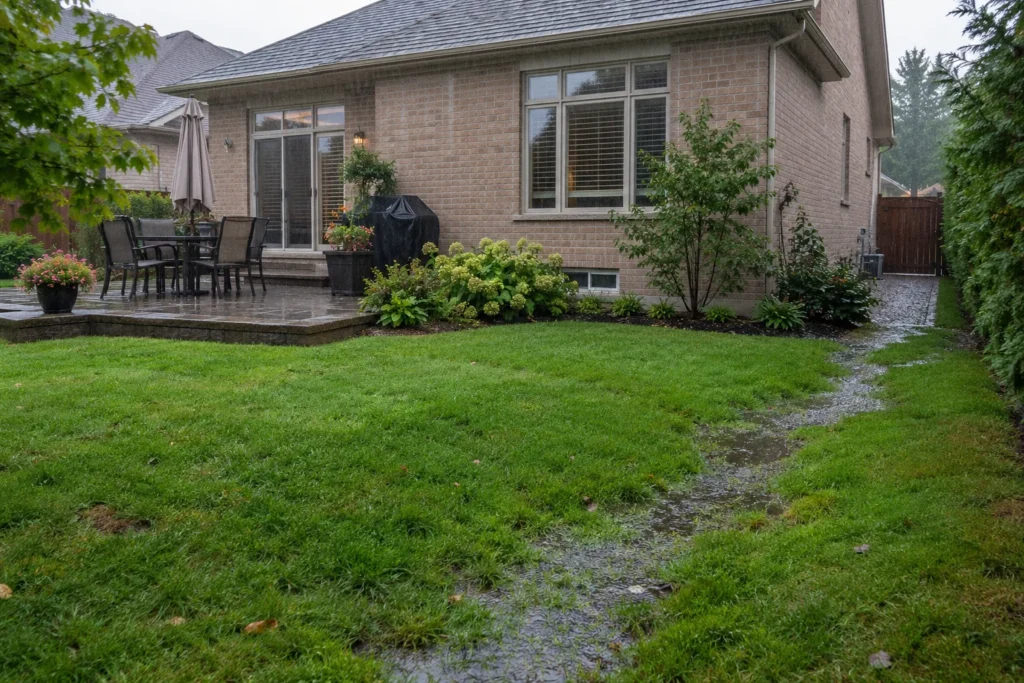
Rain-wet patio edge and adjoining lawn
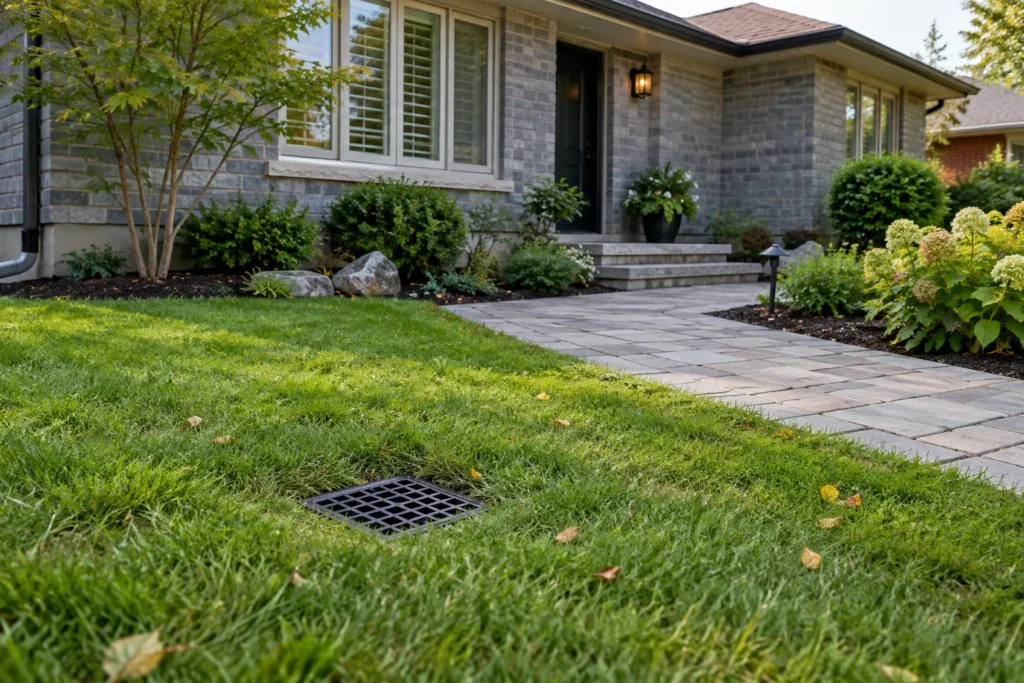
Square area-drain grate in a shallow lawn depression

Collection and conveyance solve different parts of the problem

Collection and conveyance solve different parts of the problem
Landscape featurePrimary roleQuestion that still needs an answer
Shallow surface swaleProvides an open route through the landscape.Is its full route continuous, appropriately graded and kept clear?
Localized grade correctionChanges unsuitable ground levels or a transition.Where will water move once the low spot is changed?
Area or channel inletCollects water at a specific location.What connected system and permitted outlet receive it, and how will it be maintained?
Downspout adjustmentChanges a concentrated roof-water discharge point.Does the new discharge avoid entrances, winter walking routes and neighbouring land?

Drainage changes can require Burlington review

Review the City Site Alteration screening process before proposed grading or excavation. Burlington’s Grading and Drainage Clearance guidance also addresses plans, existing and proposed elevations, swales, downspout directions and drainage features in its applicable pre-building process. A new inlet or infiltration measure can involve additional design and agreement requirements. Confirm the actual property and work with the City before construction rather than treating one small component as automatically exempt.

Information reviewed:

Keep the drainage scope clear

This page concerns landscape surface water, lawn and hardscape relationships, swales, runoff and appropriately defined collection features. Sewer repair, sewer connections, foundation waterproofing, sump-system work, major underground construction and engineered stormwater systems need their own qualified scope. A wet yard does not prove which of those systems, if any, is involved.

If water is entering the building, appears to involve a service pipe or presents an immediate flooding concern, address that condition through the appropriate specialist or authority. Landscape planning can be coordinated with their findings. It should not be sold as a guarantee that a basement will remain dry or that every drainage problem can be corrected with a trench.

Define the solution before restoring the lawn

  1. Build a useful condition record

    Collect the address, broad photos, wet-weather observations and available surveys or grading plans. Identify downspouts, paved areas, existing inlets and recent changes. The record should show where water begins and where it continues beyond the visible problem.

  2. Review levels, outlet and permissions

    Confirm working limits, boundaries, utilities, retained trees and relevant City or agency review. Establish which part can be addressed as landscaping and whether a professional plan or another trade is needed. Do not choose a drain before its outlet is known.

  3. Coordinate the landscape work

    Agree on the correction, material handling, surface transitions and reinstatement. If the patio or other hardscape needs work, coordinate it with the water route rather than restoring the grass first and disturbing it again. Keep construction sediment from blocking existing features.

  4. Review the finish and maintenance access

    Check the intended route, accessible collection points and restored lawn or beds. Explain which areas should stay clear and what observations remain useful after rainfall. Maintenance responsibilities and any separate specialist work should be explicit in the scope.

Keep the route working through gardens, mowing and winter thaw

The final landscape should make the drainage arrangement easy to live with. Leave space to inspect an inlet, clear a route and maintain adjoining grass. Avoid planting directly over access points or using a bed edge as a dam across the surface path. Choose the garden shape around the water function so future maintenance does not gradually erase it.

Review the yard seasonally. Autumn leaves can cover a grate that was clear in summer. Mulch may move into a shallow swale, and grass clippings can collect at a low edge. Snow stored on the lawn changes where meltwater arrives during a thaw. A route beside the driveway should be considered with both warm-weather runoff and winter pedestrian use.

After landscape work, note how the property behaves during ordinary rainfall. Photograph any recurring collection and the adjoining route, rather than changing the ground immediately. If a problem continues, those observations help determine whether the original source remains, the route is obstructed or further assessment is needed. Burlington yard drainage planning can help organize the questions for a broader review.

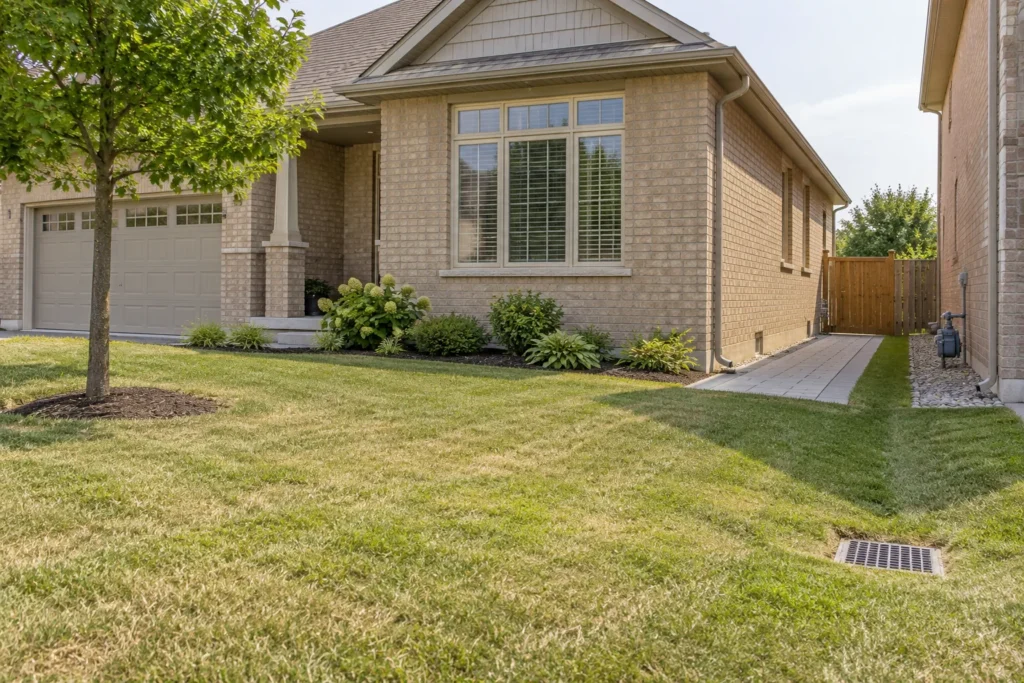
Clear area-drain inlet beside a side walkway
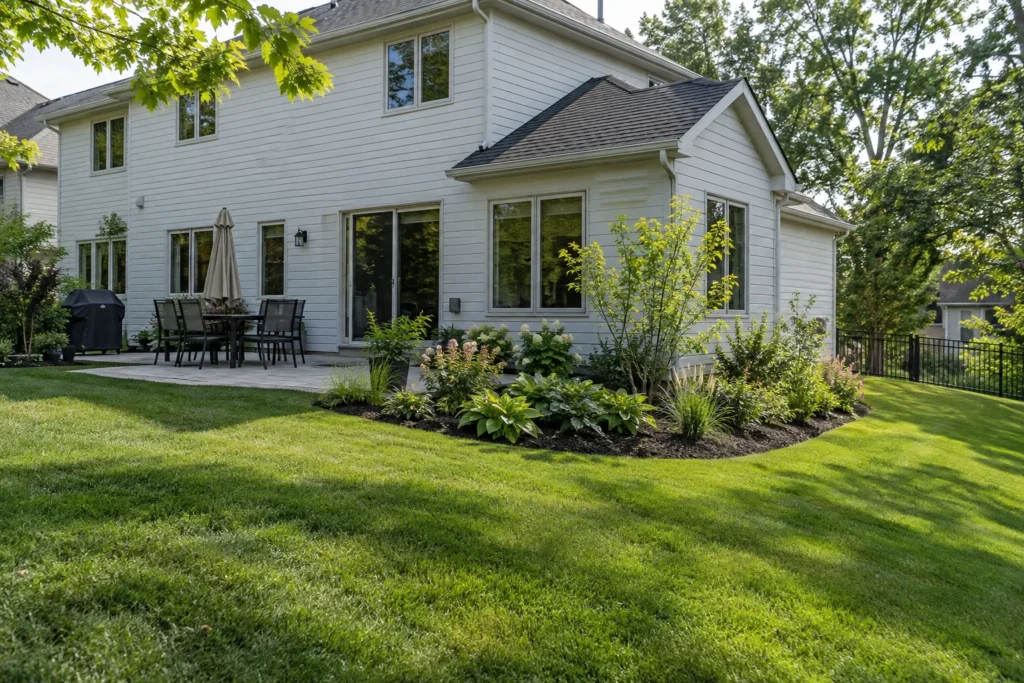
Patio, garden bed and gently sloping lawn behind a white-sided home

Questions about landscape drainage

Will installing a drain fix every wet yard?

No. A drain collects water only as part of a complete arrangement. The source, levels, connected route, appropriate outlet and maintenance all matter. Some yards need a surface correction; others need a specialist assessment. Choose the response after understanding the condition, not from the appearance of a grate.

Is a French drain always the right choice?

No. A buried gravel-and-pipe feature is one possible approach under suitable conditions, but its suitability cannot be assumed from a puddle. Soil, outlet, buildings, utilities, design and approval needs affect the decision. An open surface route may address a different part of the problem more directly.

Can water be sent toward a fence or neighbouring yard?

Do not use a property edge as an assumed discharge point. Review the legal boundary, existing drainage arrangement and receiving route. The proposed work should address your problem without transferring it to adjoining land or blocking a route that needs to remain open.

Why does water remain after the rain has stopped?

The explanation may include a shallow low spot, slow infiltration, a concentrated source or an obstructed path. How long the area stays wet and how surrounding ground behaves help frame the assessment. Persistent saturation needs more investigation than a quick photograph of the surface alone.

Can drainage work happen with a new patio or lawn?

It should be coordinated where the projects affect the same levels or routes. Establish the water plan before setting patio elevations or laying sod. Agree on access, collection features, borders and restoration together so one completed surface does not have to be disturbed by the next task.

What should I send for a drainage estimate?

Include the Burlington address, wider property photos, close views of the wet area, downspouts and existing routes. Describe when water appears, where you see it travel and how long it remains. Mention recent construction and provide any available survey, approved grading plan or specialist findings.

Landscape Drainage Gallery

Show us how water moves through your yard

Tell us when the problem occurs and which parts of the landscape it affects. Useful photos and observations help define the next assessment and a coordinated scope.

  • Burlington property address
  • Broad and close wet-weather photos
  • Downspouts, patios, low areas and existing routes
  • Available property plans and recent changes

Tell us what you would like to change, repair or maintain around your property.