
Skip to content

Explore services

Request an Estimate
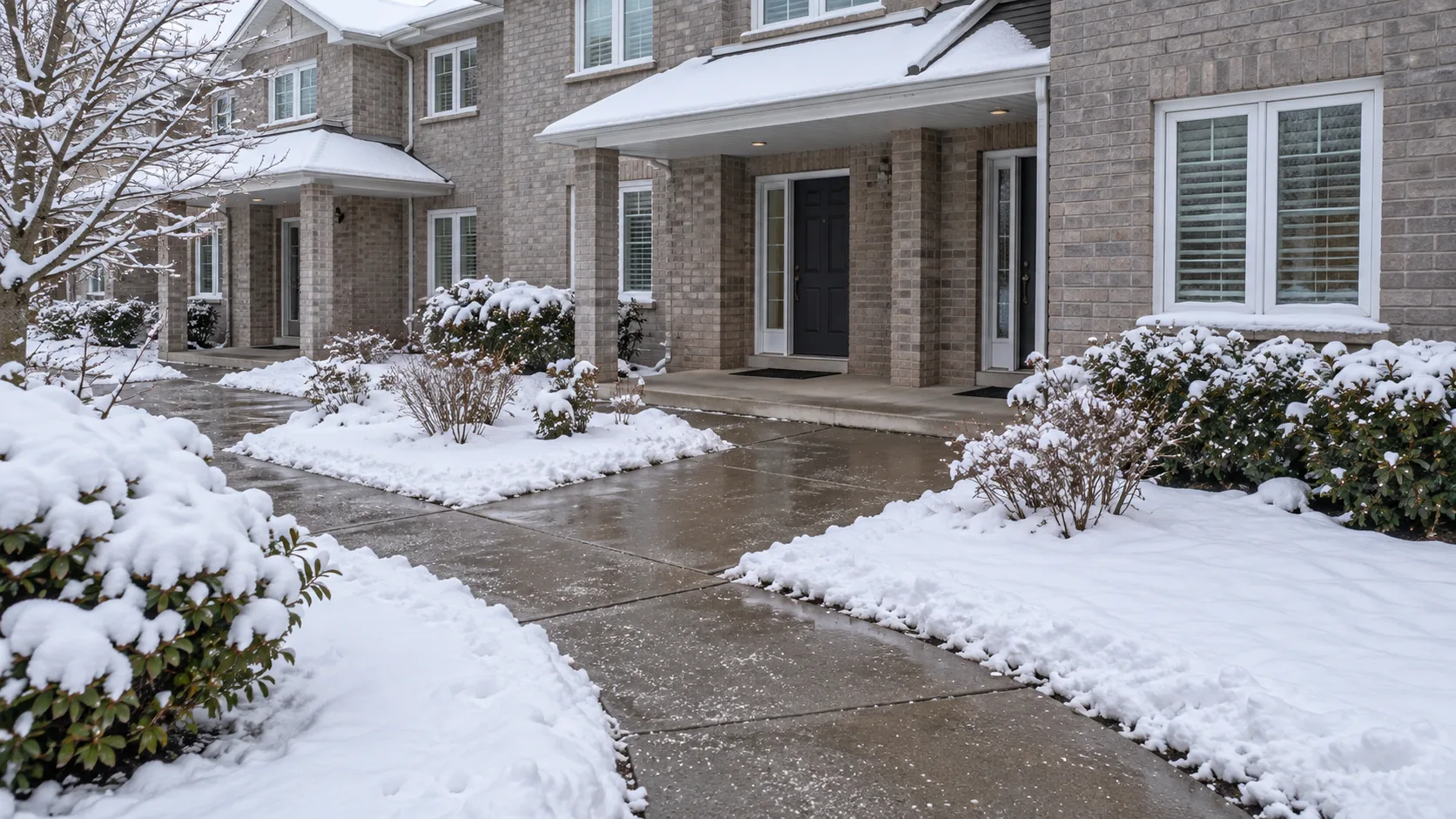
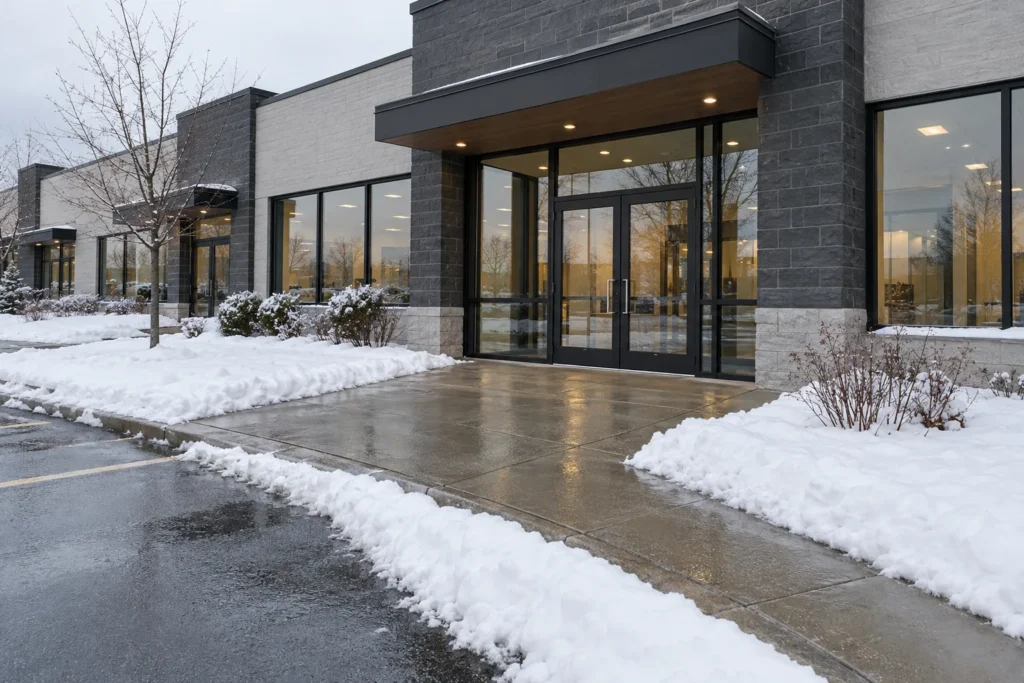
Commercial entrance after thaw with restrained visible ice-control treatment and clear walk

Commercial Salting & Ice Management in Burlington

Commercial Salting & Ice Management

Plan commercial winter treatment around the surfaces people use, the source of recurring ice and the actual service arrangements agreed for the site.

Commercial ice management needs to account for more than visible snowfall. A wet entrance can refreeze after the sky has cleared, roof water can cross a path and shaded sections may behave differently from the open parking area. The service scope should identify those conditions and the areas where assessment or treatment is requested.

Salting and other ice-control work are separate from simply clearing snow. Material suitability, application, changing weather and the underlying surface all affect the approach. Burlington Landscaping treats the enquiry as a property-specific winter scope with defined zones and authorisation, rather than a promise that one application can keep every surface dry or eliminate all risk.

Identify the water and the walking surface

Mark entrances, ramps, steps, walks and routes from parking. Note where water arrives and where it remains after other sections dry. Downspouts, roof edges, snow piles and pavement depressions can contribute to recurring ice. A close photograph of an icy patch is useful, but a wider view often explains why that location repeatedly changes condition.

The surface material matters. Concrete, natural stone, interlock, metal thresholds and different site finishes can have distinct care requirements. Product compatibility and manufacturer guidance should influence treatment selection. Existing damage, loose units and uneven transitions should be recorded rather than expected to disappear beneath ice-control material.

Application is only one part of the work. Loose snow may need clearing first, and accumulated water or persistent discharge can limit what a treatment can achieve. Discuss the condition being managed and the practical response. More material is not automatically a better answer, especially near planting, sensitive finishes or drains.

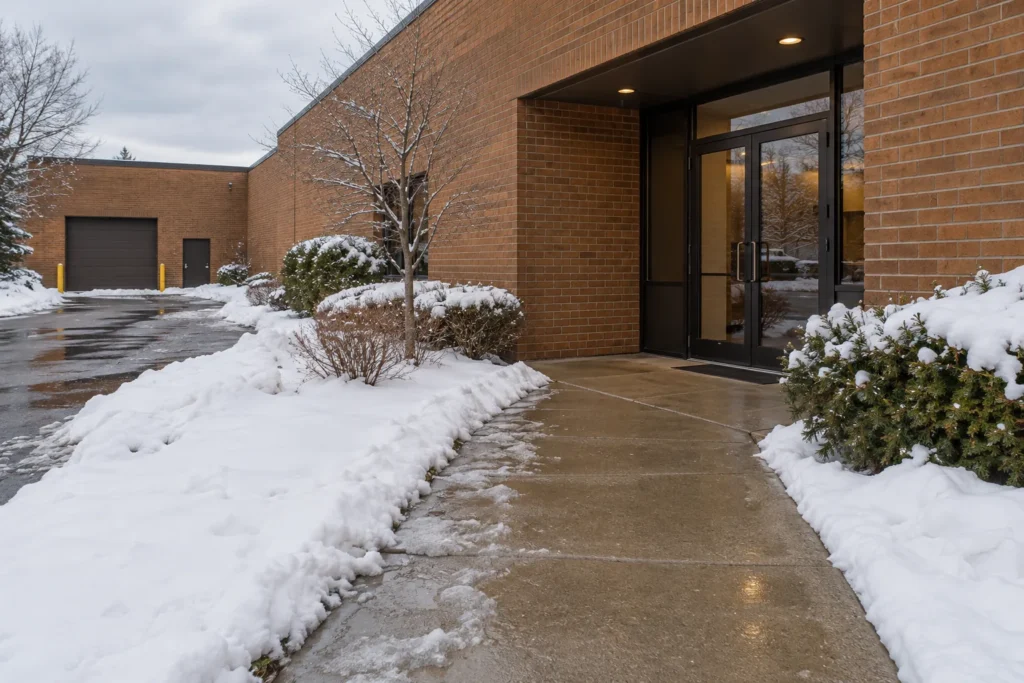
Meltwater on a commercial entry path before refreeze
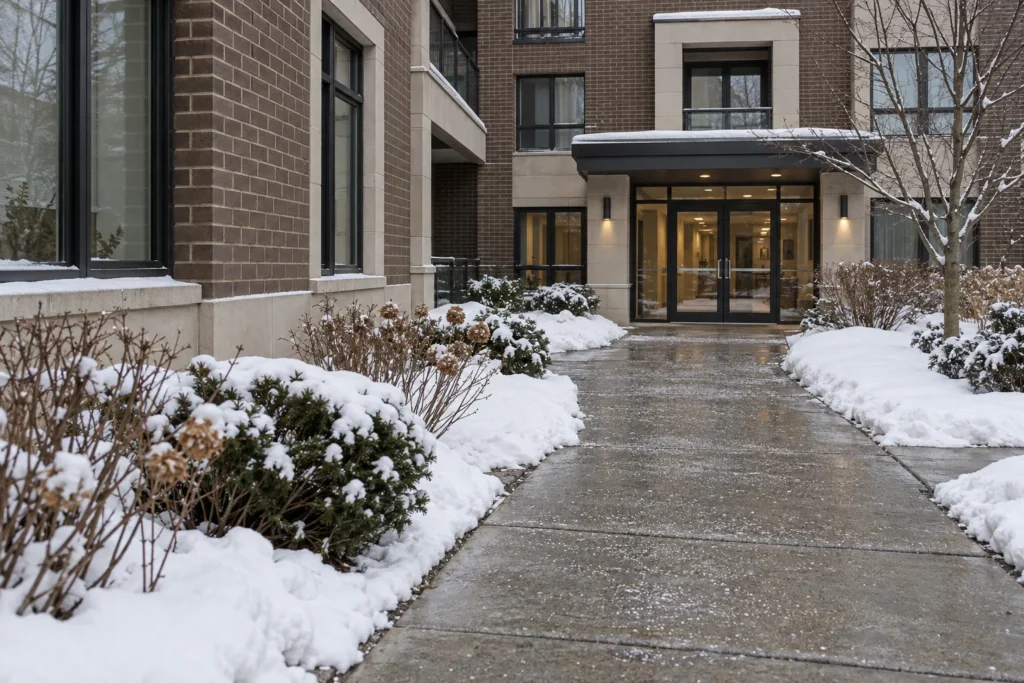
Fine ice-control material distributed realistically on walkway

Define each treatment zone and its changing conditions

Define each treatment zone and its changing conditions
ZoneRelevant site detailQuestion for the agreement
Primary entranceFoot traffic, canopy discharge and door threshold.What condition initiates assessment or treatment?
Walk and rampShade, slope, surface material and meltwater route.Which connected sections are included?
Parking and travel laneVehicle use, sun exposure and drainage.Is this treated with the pedestrian areas or separately?
Loading or service accessOperating hours, water sources and restricted areas.Who reports a concern and authorises additional work?
Planting and perimeterSensitive plants, storage banks and public-route boundary.How are material compatibility and treatment limits managed?

Confirm the operating scope before assuming coverage

A commercial ice arrangement should explain what the provider does, when it is initiated and how conditions outside the agreed work are handled. No universal application rate, temperature promise or continuous-monitoring service should be inferred.

Trigger and authority

Clarify whether the work follows agreed weather conditions, a site assessment or an authorised request. Identify the responsible contact and who may approve an additional treatment. A report from a tenant does not automatically settle who can authorise a charge.
Material and surface compatibility

Discuss the proposed material in relation to the property’s surfaces and nearby planting. Keep product information available and avoid blanket claims that any treatment is harmless to every finish. Intended use and conditions should guide the actual selection.

Timing and repeat work

Refreeze, continuing precipitation and new meltwater can change conditions after an application. Confirm how reassessment or further treatment is handled and whether it is included. An initial visit does not establish an unlimited ongoing service.

Information and records

Agree what work summaries, times, locations or photographs are required and available. Records should describe the work actually completed and any observed limitations. Do not assume a particular reporting system, legal protection or inspection frequency.

Treatment cannot replace a recurring water repair

A downspout that discharges across an entrance can repeatedly feed ice onto the same route. A low pocket may hold meltwater every time temperatures rise. Winter treatment may form part of the immediate response, but these patterns can also need a separate property assessment and repair when conditions allow.

Record when the concern appears and what else is happening on the site. The position of a snow bank, roof drainage or a blocked inlet can explain why the same area changes after clearing. Avoid diagnosing every patch from a single photograph, and avoid treating additional material as the only possible response.

Coordinate with commercial snow removal so clearing and treatment boundaries align. The end of a plowed route should not leave an untreated gap to the entrance merely because the two scopes were drawn differently. Commercial property maintenance can support separate seasonal attention to site features that affect winter use.

Respect the edges and the accessible route

Treat the planned surface deliberately and consider nearby beds and finishes. Material scattered into planting is not useful treatment of a walkway. Pile locations and pedestrian movement can spread debris beyond the intended area, so ongoing cleanup and the seasonal condition of edges should be discussed as separate practical considerations.

An entrance slope or ramp deserves the same careful scope as the flat walk beside it. Identify the complete connection from parking or a public route to the building. Door use, handrails, drainage and surface changes influence access. The owner or manager should describe important operational needs so they can be assessed in the proposed arrangement.

Winter conditions remain changeable. Neither a cleared appearance nor visible treatment material guarantees a surface is safe in every circumstance. The useful agreement is specific about work, communication and response to reported conditions, without suggesting a guarantee of an ice-free property or removal of all liability.

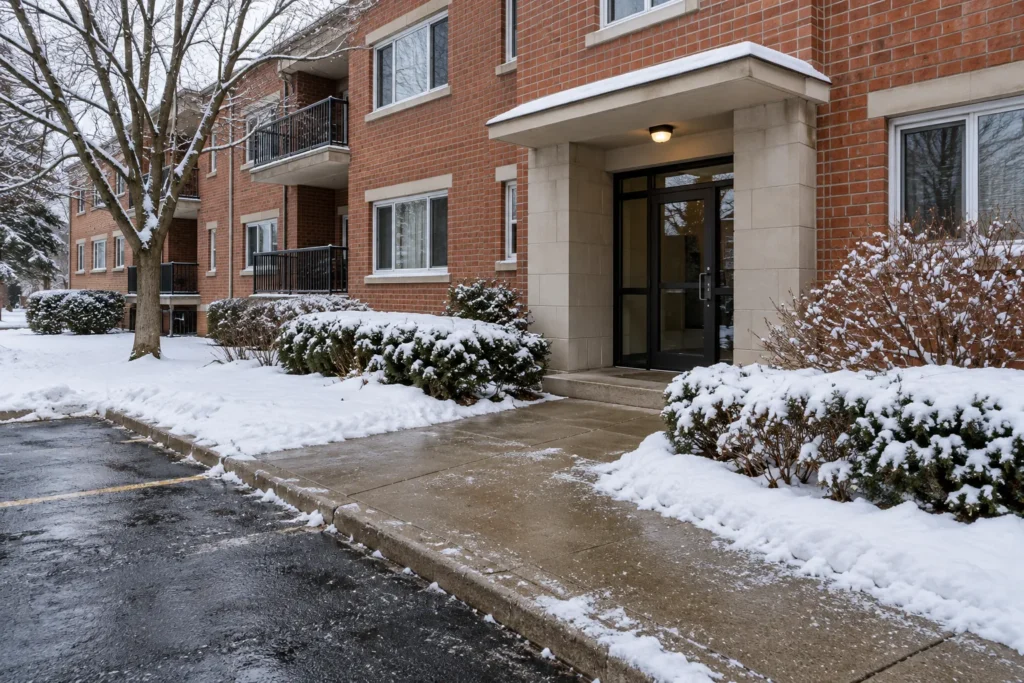
Treatment boundary separating walking route from planting
Accessible entrance slope observed during winter conditions

Prepare a focused ice-management enquiry

  1. Mark the surfaces and recurring concerns

    Provide a plan or photographs showing entrances, walking routes, ramps, parking and service areas. Identify surfaces that repeatedly refreeze and possible water sources. Include operating hours and known access restrictions.

  2. Review the treatment boundaries

    Confirm included zones, surface materials and sensitive adjoining features. Distinguish routine clearing from ice-related work. Identify what needs further assessment before a treatment method or material can be selected.

  3. Agree service and communication terms

    Clarify triggers, timing, reporting, additional-work authorisation and repeat treatment. If documentation is required, describe the actual format and content needed. Confirm the available arrangement rather than relying on a generic monitoring promise.

  4. Use observations to guide longer-term work

    Track recurring meltwater and storage conflicts through the agreed contact route. Refer underlying drainage or surface defects for a separate assessment. Update the winter plan if an approved property change alters the route or material being treated.

Keep private commercial treatment distinct from municipal work

The treatment area should be defined for the private property and the authority available to arrange work. Adjoining municipal routes and another owner’s surfaces need clear responsibility. The City’s winter operations have their own priorities and should not be treated as the private provider’s trigger or timing standard.

For a managed site, property manager snow service connects treatment requests to the correct contacts and approval process. A shared site map can identify where snow clearing, ice work and tenant responsibilities meet. This reduces gaps without turning one agreement into assumed unlimited coverage.

When comparing estimates, ask which zones, triggers, visits, materials and records are included. Confirm what happens during freezing rain, a prolonged event or a later report of refreeze. Prices and service models are proposal-specific; this page does not establish a rate, threshold or guaranteed response.

Commercial ice-management questions

Is salting included with every snow visit?

Only if the agreement includes it. Snow clearing and ice treatment should have clear areas and triggers. Confirm whether treatment follows a clearing visit automatically, requires assessment or is separately requested and authorised.

Can treatment guarantee an ice-free property?

No. Weather, precipitation, meltwater and surface conditions can change after work. A defined service can address the agreed conditions and zones, but no claim of eliminating every slippery condition or all liability should be assumed.

What if an entrance keeps freezing again?

Record the pattern and possible water source, then use the agreed communication route. Further winter response may be needed, while recurring discharge or a low surface can require a separate longer-term repair. One more application may not address the cause.

Are all ice-control materials suitable for every surface?

No. Selection should account for product guidance, surface material, conditions and nearby planting. Provide any relevant finish information. Do not assume that a material used on one part of the site suits every adjoining threshold, stone or planted edge.

What information helps with an estimate?

Share the site address, marked treatment zones, materials, operating hours, access and recurring ice concerns. Include the required contact structure and documentation needs, plus the service terms you want clarified for changing conditions and repeat work.

Commercial Salting & Ice Management Gallery

Define the commercial surfaces and refreeze concerns

Send the route people use and the areas that repeatedly change condition. Include likely water sources and treatment boundaries so the enquiry can address the actual site.

  • Entrances, walks, ramps and parking zones
  • Surface materials and sensitive planting
  • Recurring water or refreeze photographs
  • Operating hours, contacts and service requirements

Tell us what you would like to change, repair or maintain around your property.