
Burlington Landscaping
Sod vs Overseeding vs Artificial Turf
Compare sod, overseeding and artificial turf by the existing lawn, soil, drainage, sun, traffic and care you can realistically provide.
Sod, overseeding and artificial turf solve different starting conditions. Sod replaces a lawn surface with living turf, overseeding adds grass to an existing lawn, and artificial turf creates a manufactured surface over a prepared assembly. None removes the need to understand the ground and how the yard is used.
Begin with the outcome you need: a fuller existing lawn, a reset after construction, a small heavily used area or less routine mowing. Then examine the cause of the current difficulty. Persistent shade, compacted traffic routes or poor drainage can continue to affect the next surface if they are left outside the scope.
Keep what is working before deciding to replace it
Walk the lawn and distinguish thin grass from bare ground, weeds, settled areas and damage along repeated paths. A lawn with a useful grass population may be a candidate for renovation. A surface stripped by construction or dominated by an unsuitable base presents a different problem. Photographs should show both the worst area and the healthy portion you would prefer to retain.
Look at sun and use across the day. The corner beside a dense hedge may differ from the open centre, and a shaded passage used by a dog may not perform like the rest of the yard. One treatment does not have to cover every part of the property. A path or planted bed may be more sensible than repeatedly replacing grass in a difficult strip.
Separate appearance goals from functional needs. A uniformly green photograph says little about the ability to tolerate the way a household uses the lawn. Explain whether children need play space, furniture sits on the grass, pets use one route or a gate concentrates traffic. These details help compare a realistic surface with the daily demands placed on it.
Sod provides coverage, followed by establishment
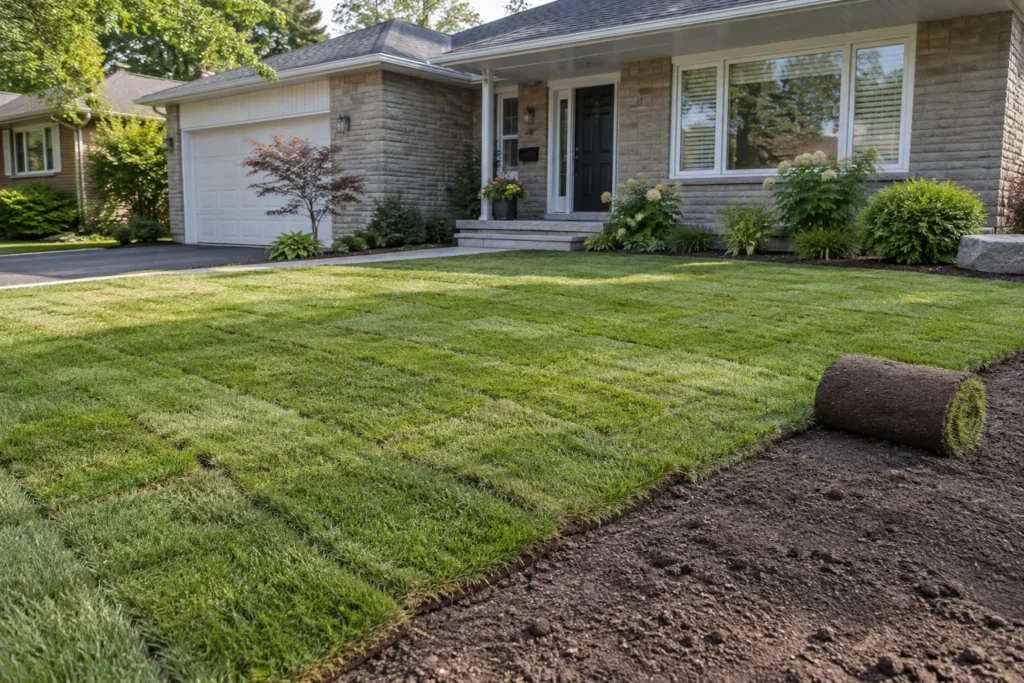
Sod can create an immediately covered appearance after suitable preparation, but the installed rolls still need to establish in the soil below. Ground preparation, final levels, contact with the root zone, water access and protection from disruptive use all belong in the installation discussion. A green surface on completion is not the same as a mature lawn ready for unrestricted traffic.
Ask what happens to the existing vegetation and unwanted material, how compacted ground will be addressed and how the lawn meets walks, beds and drains. Simply laying sod over rough or unsuitable ground can leave the preparation problem hidden for a short time. The finished surface must fit the property's drainage arrangement.
Choose this route when a complete living-lawn reset makes sense and the establishment care can be provided. Discuss the available season and actual conditions rather than assuming a fixed watering calendar. The sod installation service explains the preparation and handover questions that belong in a defined scope.
Overseeding works with an existing lawn
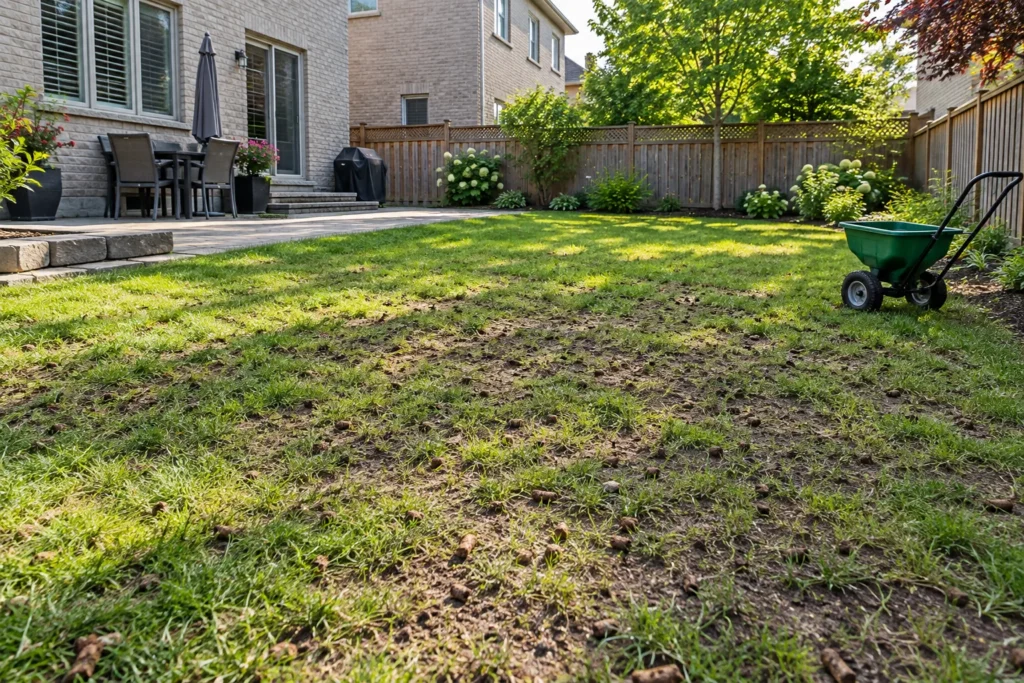
Overseeding adds seed to a retained lawn, so the remaining turf and conditions matter. The proposed work may involve assessing compaction, improving seed-to-soil contact and choosing an appropriate seed approach for the exposure and intended use. A dense layer of debris or an unresolved traffic problem can limit what seed alone achieves.
It is usually a gradual improvement rather than an instant new surface. Discuss how the area will be watered, how mowing will be handled and how traffic will be reduced while seedlings develop. Weather and soil conditions affect establishment, so avoid treating the calendar as a guarantee of results.
Renovation can preserve useful existing grass and avoid unnecessary stripping. Its limits should also be clear: a lawn with widespread grade problems or very little desirable turf may need a different scope. Aeration and overseeding should respond to the actual lawn, not be sold as a universal annual answer to every bare patch.
Artificial turf changes the care tasks
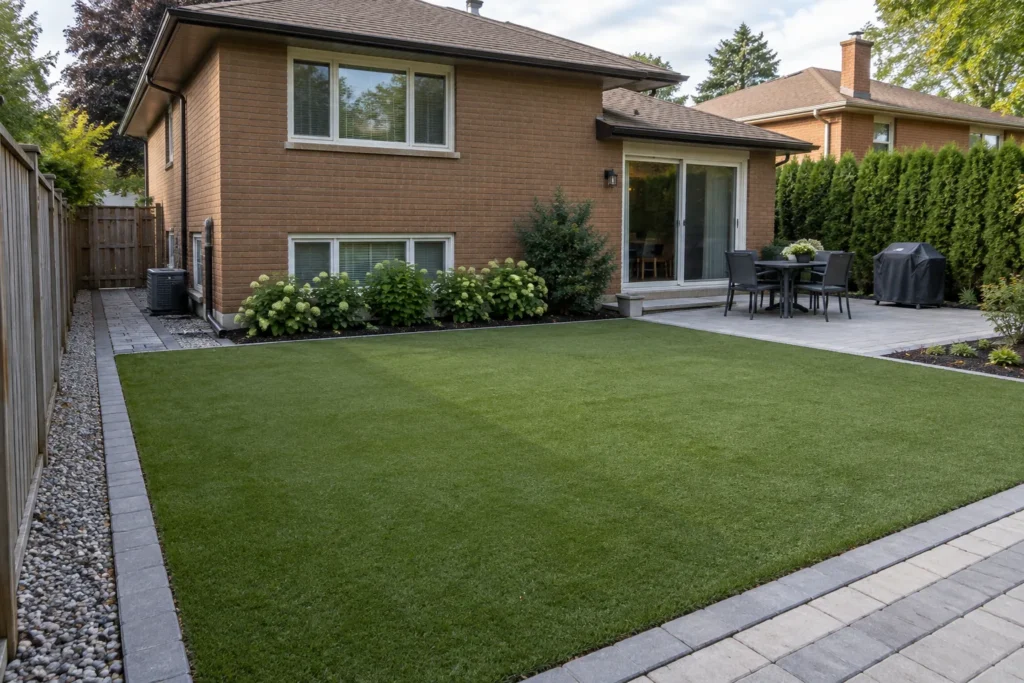
Artificial turf can be considered for a small defined area where the use and site conditions suit a manufactured surface. Its installation still requires thoughtful base preparation, levels, edge restraint, drainage and transitions. It should not be used to conceal a water problem or bridge unstable ground without addressing the underlying conditions.
Care continues after installation. Leaves and debris need removal, pet use needs a practical cleaning plan, and infill or grooming requirements depend on the selected system. Ask about surface temperature in exposed sun, the feel underfoot and how the product will be used by the household. A sample and product-specific information are more useful than a promise of zero maintenance.
Seams, perimeters and access covers deserve attention in the layout. A narrow awkward piece can complicate detailing, while future digging may disturb a finished area. Clarify the product, supporting assembly, cleaning expectations and eventual replacement considerations with the artificial turf scope before comparing it to living grass.
Compare from the actual starting point
| Decision | Sod | Overseeding | Artificial turf |
|---|---|---|---|
| Existing surface | Useful for a prepared full-lawn reset. | Useful where retained lawn is worth improving. | Replaces the living surface within a defined area. |
| First appearance | Covered quickly, with establishment still required. | Improvement develops as seed establishes. | Finished appearance follows installation of the complete system. |
| Water and soil | Living roots need suitable soil and care. | Seedlings and retained grass need supportive conditions. | The base and drainage still matter; cleaning needs remain. |
| Routine work | Mowing, seasonal care and observation. | Mowing plus establishment care and later lawn maintenance. | Debris removal, cleaning and system-specific upkeep. |
| Traffic | Plan reduced use while roots establish. | Protect developing seedlings from repeated disturbance. | Check the product and assembly for the intended activity. |
Solve the difficult zone instead of repeating the same fix
A bare route from the gate to the patio may be a circulation problem. If everyone follows the same line, a deliberate walk can make more sense than asking new grass to withstand constant wear. Similarly, dense shade beneath established trees may call for a suitable planted treatment while preserving roots and grade.
Standing water deserves diagnosis before any surface choice. Replacing the lawn can temporarily improve appearance without changing the arrival or exit of water. Heavy traffic can also compact soil again if the route remains unchanged. Identify which causes can be altered and which are ongoing conditions the design must accommodate.
A mixed yard is a valid outcome. Keep living lawn where it works, use planting where mowing is awkward and create a durable route where movement is concentrated. Compare these transitions as part of the landscape rather than forcing a single product across the entire property. This often makes the maintenance discussion more honest.
Compare the whole first season and the later care
Installation cost is only one part of the decision. Include removal, disposal, soil or aggregate preparation, edge work, access repair and the care needed afterward. Avoid comparing a fully prepared system with a price that assumes the ground is already ready. Ask each quotation to make that assumption visible.
Decide who will provide water, clean the surface and monitor developing problems. A household that travels regularly may need help establishing living turf, but artificial turf also needs a cleaning arrangement if pets use it. The right choice is one whose actual tasks fit the people responsible for it.
Keep future work in view. A planned deck, fence or drainage project can disturb a newly finished lawn area. Coordinate those works first where access overlaps. For retained living grass, the lawn maintenance service can be discussed separately from the installation or renovation so ongoing responsibilities are explicit.
Questions about choosing a lawn surface
Which option is always cheapest?
There is no reliable universal answer without the area, preparation, access and product scope. Compare complete quotations and the care you will provide. A low initial figure can exclude the work that makes the surface usable.
Can I use sod in one area and overseed another?
That can be a reasonable plan when the starting conditions differ. Agree on the boundaries, finished levels and care for each area. The purpose is to retain useful turf while giving damaged areas an appropriate reset.
Will artificial turf solve pet wear automatically?
It changes the surface, but pet use still affects cleaning, odour management, edges and drainage. Explain the pattern of use and discuss the proposed system rather than assuming every turf product has the same requirements.
Continue planning
Bring the property conditions into the conversation
Tell us what you would like to change, repair or maintain around your property.