Skip to content

Explore services

Request an Estimate
Snow-covered lawn beside a cleared residential driveway and front walk

Burlington Landscaping

Snow Removal

Plan winter access around the property: private driveways, entrances, shared parking, pedestrian routes, snow storage and ice conditions.

A clear parking area is only one part of a useful winter property. Someone still needs to reach the door, use the steps, open a gate or travel from an accessible parking space to the entrance. Snow storage and meltwater also affect what happens after the first pass of clearing.

Burlington Landscaping provides separate paths for residential snow removal, commercial snow removal, commercial salting and ice management, and property-manager snow service. Use the property type and the routes people depend on to frame the discussion. The specific areas, clearing conditions, ice treatment and communication arrangements belong in the agreed service scope.

Choose the winter service path for your property

Residential Snow Removal

For the private driveway and the agreed route to the home. Include front walks, steps, garage access and any side entrance that needs attention. Discuss driveway-mouth windrows separately so the scope reflects how the property meets the street.
Explore Residential Snow Removal

Commercial Snow Removal

For commercial parking and the routes used by staff, visitors and deliveries. Define entrances, pedestrian connections, loading areas and snow-placement zones together. The usable site layout matters as much as the total paved area.

Explore Commercial Snow Removal

At home, plan the full route from the driveway to the door

Look at the home with vehicles parked. The driveway may be accessible while a car blocks the walk, or a snowbank may make the front steps difficult to reach. Include the actual route used with groceries, children, visitors or mobility equipment. A side door used every day deserves attention even if the front entrance is more visible from the street.

Describe the surfaces and transitions. Asphalt, pavers, concrete, gravel, steps and uneven edges do not all present the same conditions. Point out loose materials, raised borders, low lighting, drains and any objects that become hidden by snow. A pre-season walk around the property makes those details easier to identify.

Decide where cleared snow can remain on the property. Protect usable entrances, gate openings and visibility, and consider the lawn and garden beneath the storage area. Avoid a location that sends thawing water back across the walking route. The discussion should connect clearing and later meltwater rather than stop at an empty driveway.

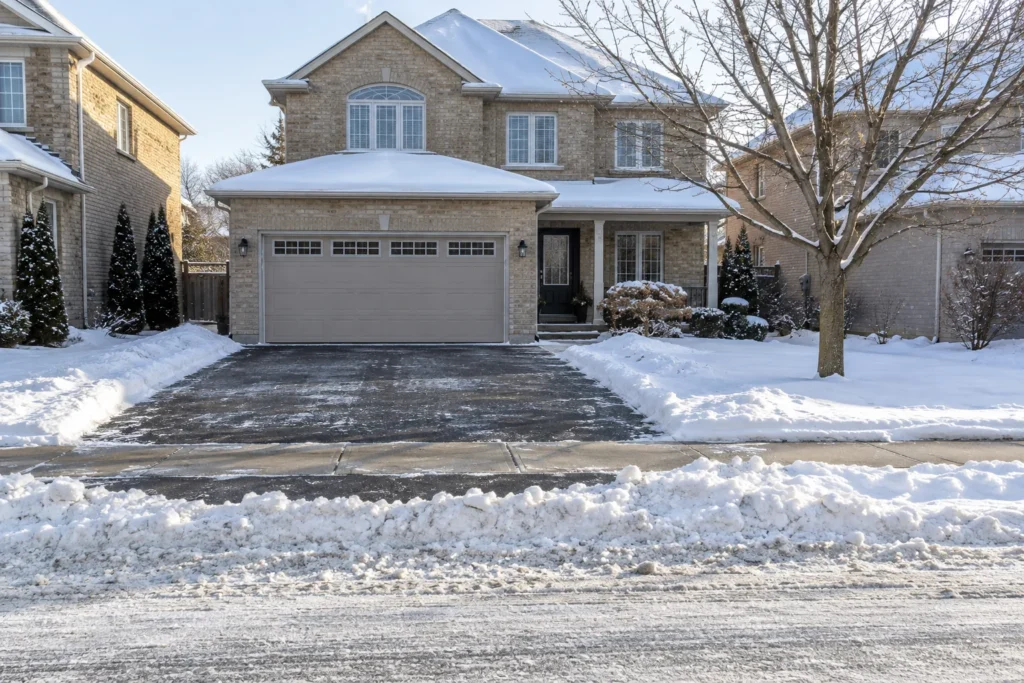
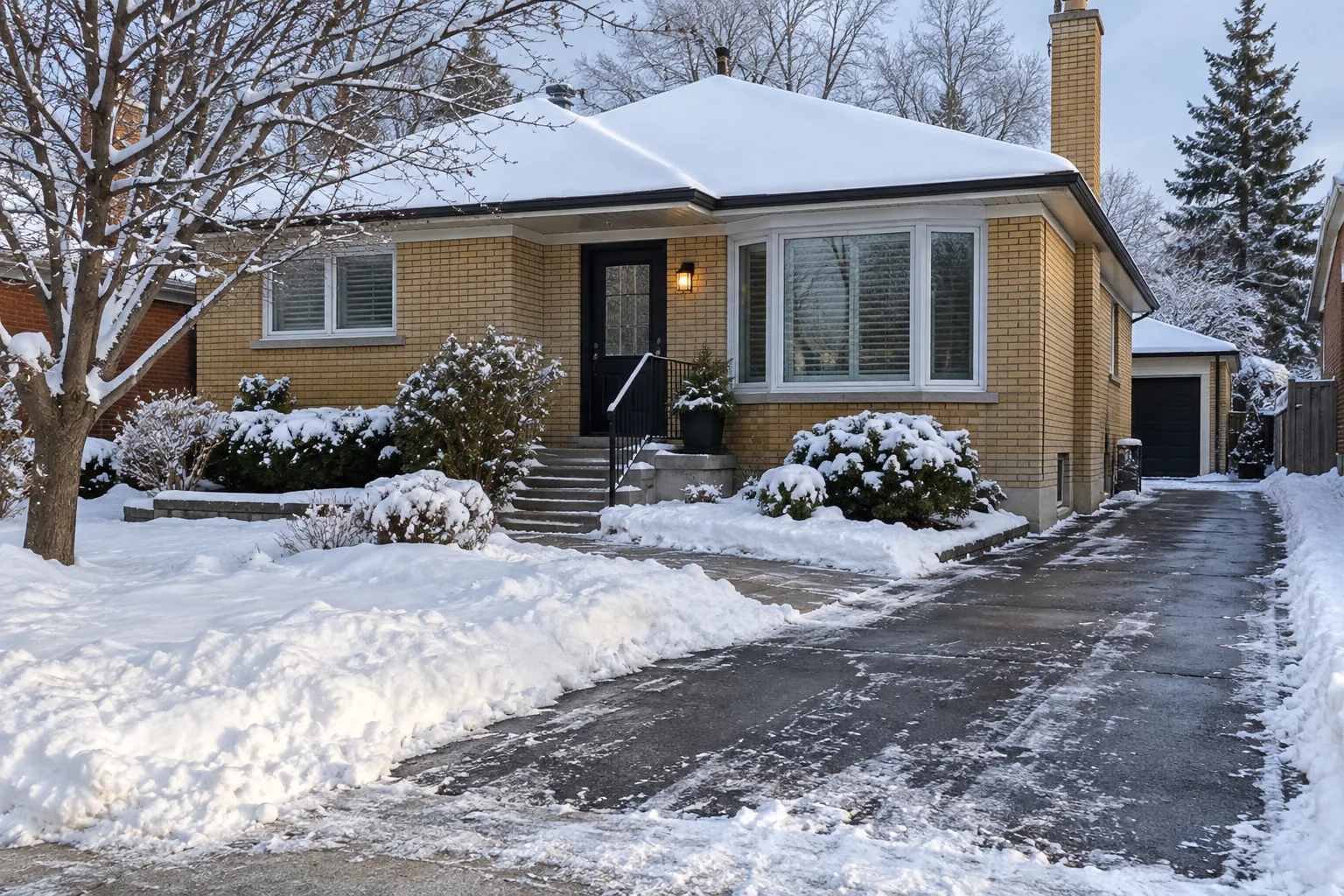
Cleared private driveway with a snowbank along the lawn
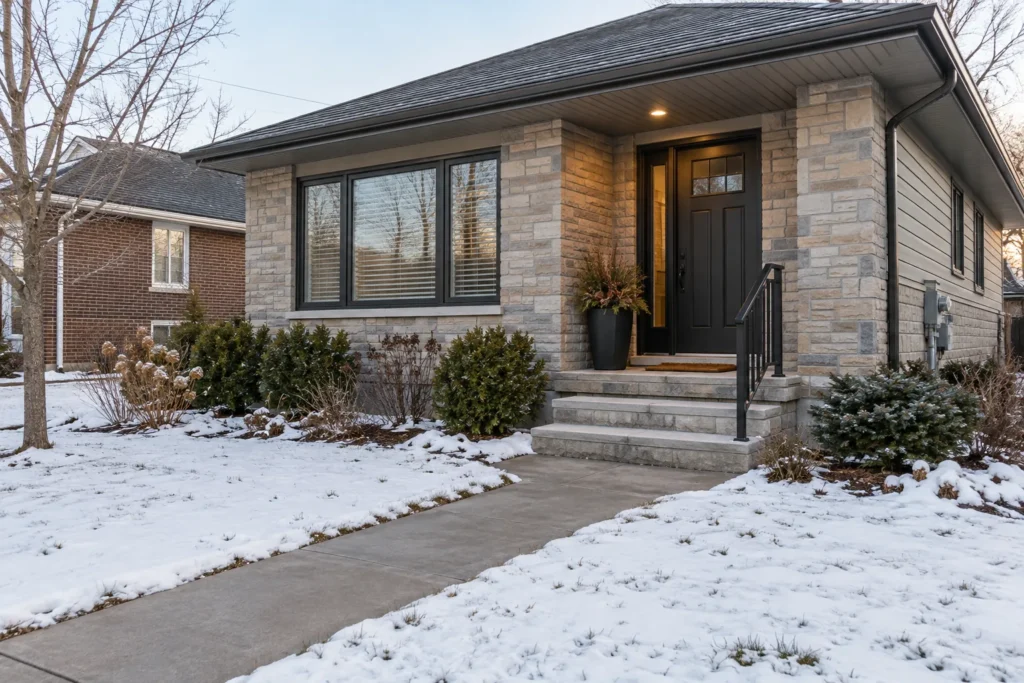
Cleared front steps and a short private walkway

Clarify these items in a winter service scope

Clarify these items in a winter service scope
ItemQuestion to settle
Clearing areaWhich private driveway, parking, walks, steps, landings or loading routes are included?
Service conditionsWhat agreed conditions initiate service, and how are continuing snowfall and return work handled?
WindrowsDoes the scope include the accumulation left at the driveway mouth after municipal plowing?
Ice treatmentWhich surfaces are included, what treatment is appropriate, and how are refreeze concerns communicated?
Access and obstructionsHow should vehicles, gates, deliveries and other obstacles be managed?
Snow storageWhere can snow be placed, and when would a separate relocation or removal discussion be needed?

A commercial property needs connected access, not isolated clear areas

Map the route from arrival to the entrance. Parking aisles, accessible spaces, pedestrian connections and door landings need to be considered together. Include secondary entrances and delivery routes that staff use. A clear entrance can still be difficult to reach if snow storage interrupts the path across the parking area.

Identify operating constraints before winter. Occupied parking, tenant schedules, loading activity and shared access can change how clearing is arranged. Show the site boundaries and neighbouring interfaces rather than assuming the contractor is responsible for every connected paved surface. Establish a contact who can answer access questions and report a changing site condition.

Separate plowing from ice management in the service discussion. Meltwater can refreeze after snow is cleared, particularly around snowbanks, shaded surfaces and downspout discharge. Commercial salting and ice management should be scoped for the relevant surfaces and conditions; an agreement for snow clearing should not silently stand in for every winter task.

Road-plow windrow crossing a residential driveway entrance
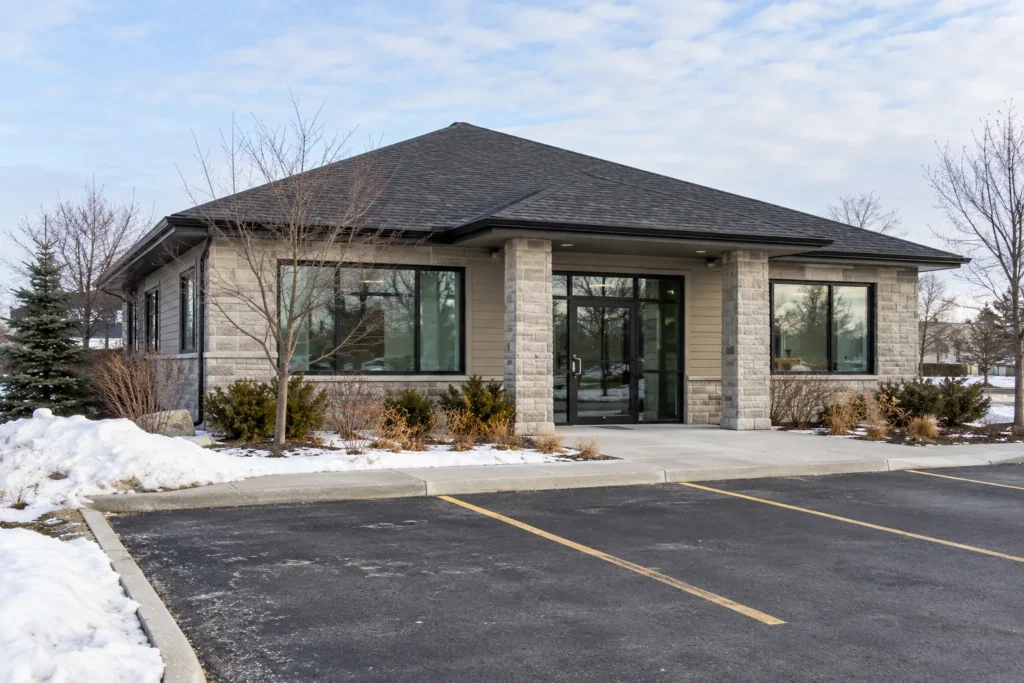
Cleared office parking and entrance

Burlington municipal clearing and private service have different scopes

The City provides winter clearing on municipal roads and sidewalks and publishes its snow plan, winter-parking information and windrow-program details. Use the current official pages for those programs. Private service should identify the areas on your property and any driveway-mouth work included in the agreement. City priorities and program conditions do not establish a private contractor’s trigger or response time.

Information reviewed:

Shared properties need a site plan and a clear communication route

For a townhouse, condominium or rental property, mark the common areas and explain where individual occupants remain responsible. A shared drive, private porch and municipal sidewalk may sit beside one another while belonging to different scopes. Include board or management requirements and identify who can authorize a change to the service arrangement.

Priority routes should reflect the property’s actual use. Show building entrances, accessible connections, waste collection, emergency access and loading areas that need consideration. Keep snow-storage planning away from necessary access points and important sightlines. Discuss a full-season storage constraint before banks occupy the only available space.

Create one practical route for reporting issues. A site contact can provide locations, photographs and the observed condition, rather than several conflicting requests from different users. Review recurring refreeze or runoff locations with the landscape: landscape drainage may be relevant to a persistent warm-weather source that also affects winter walking routes.

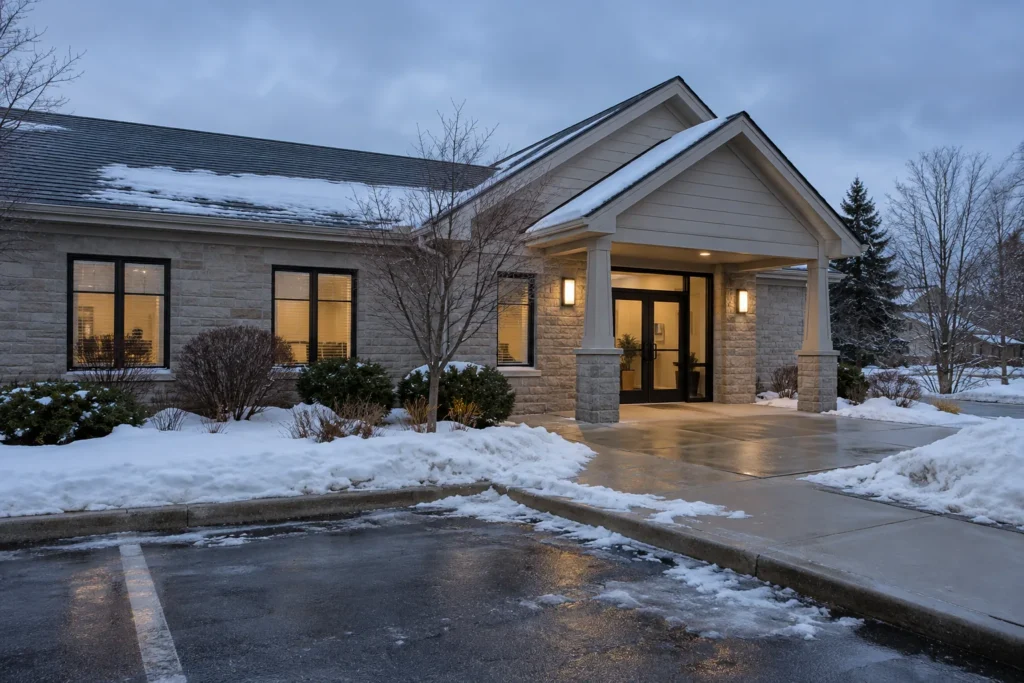
Damp commercial pedestrian route beside winter snowbanks
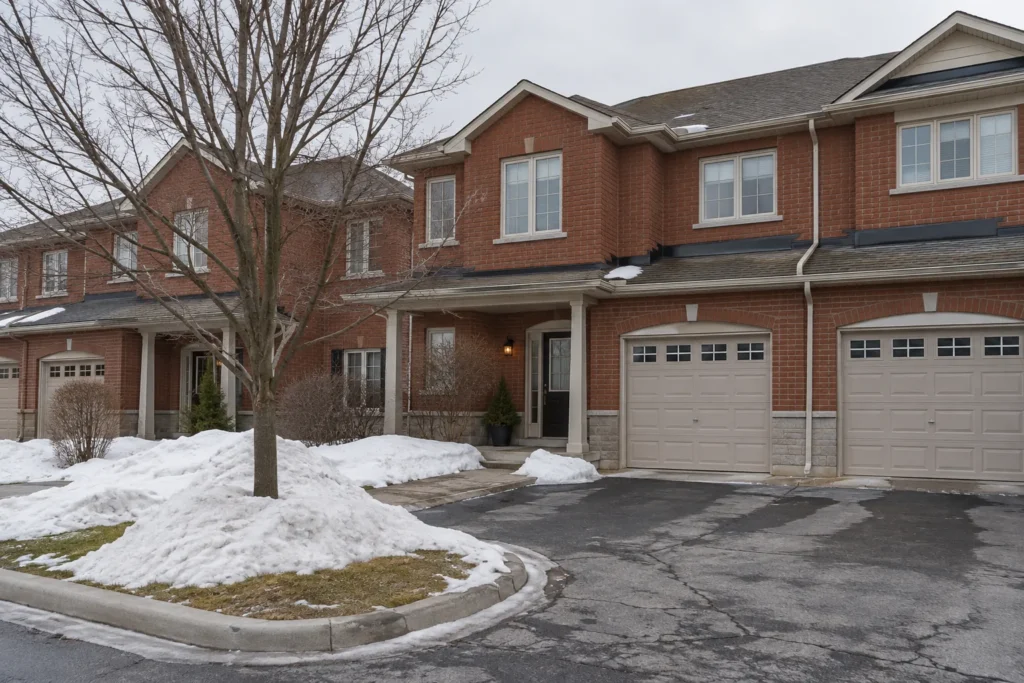
Townhouse shared drive with snow stored on a grass island

Prepare a useful winter-service enquiry

  1. Show the property

    Provide the Burlington address, property type and broad photos of drives, parking and entrances. Include shared routes, steps and loading access that may not be obvious from a street view.

  2. Define the required areas

    Mark what should be included and identify private, common and municipal boundaries. Explain how people use the site, including access needs, parked vehicles, gates and operating constraints.

  3. Discuss snow and ice separately

    Identify snow-placement space, driveway windrows, surfaces needing ice attention and known refreeze locations. Ask how those tasks would appear in the agreement instead of assuming all winter work is bundled together.

  4. Confirm the service arrangement

    Review the written scope, conditions, communication route and responsibility for obstructions. Keep the agreed site information available so a changed vehicle arrangement or new entrance requirement can be discussed clearly.

Questions before arranging snow service

Is residential snow removal only for the driveway?

The agreed scope determines the included areas. Identify the entrance walk, steps, landing, side door and garage route that matter to your household. Discuss them with the driveway so clearing one area does not leave the everyday pedestrian route unresolved.

Is a road-plow windrow the same as driveway clearing?

It is a separate accumulation at the street connection, often appearing after the inner driveway has been cleared. Ask whether driveway-mouth work is included and how it is arranged. Burlington also publishes information on its municipal windrow program; check current eligibility and program conditions directly.

Does snow clearing automatically include salting?

Do not assume that it does. Snow clearing and ice treatment should be stated separately in the scope, including which surfaces are covered. Surface materials, meltwater, shaded areas and refreeze patterns help frame the discussion about appropriate treatment.

What information helps a commercial or property-manager enquiry?

Send a site plan if available, photos, the property’s use, required routes, operating constraints and known ice areas. Identify the authorized contact and responsibility boundaries. Include snow-storage limitations so the winter arrangement can be considered before the season.

Can landscaping affect winter access?

Yes. Narrow walks, raised edges, awkward steps, blocked snow-storage areas and downspout discharge can affect use in winter. Note those recurring problems during the season and discuss suitable landscape changes when planning future walkway and entrance work.

Tell us which winter routes your property depends on

Choose the residential, commercial or managed-property path and describe the areas that need attention. Photos, access details and known ice conditions help frame a clear service discussion.

  • Burlington address and property type
  • Driveways, parking and required pedestrian routes
  • Windrows, refreeze areas and snow-storage space
  • Site contact and access constraints

Tell us what you would like to change, repair or maintain around your property.