
Skip to content

Explore services

Request an Estimate
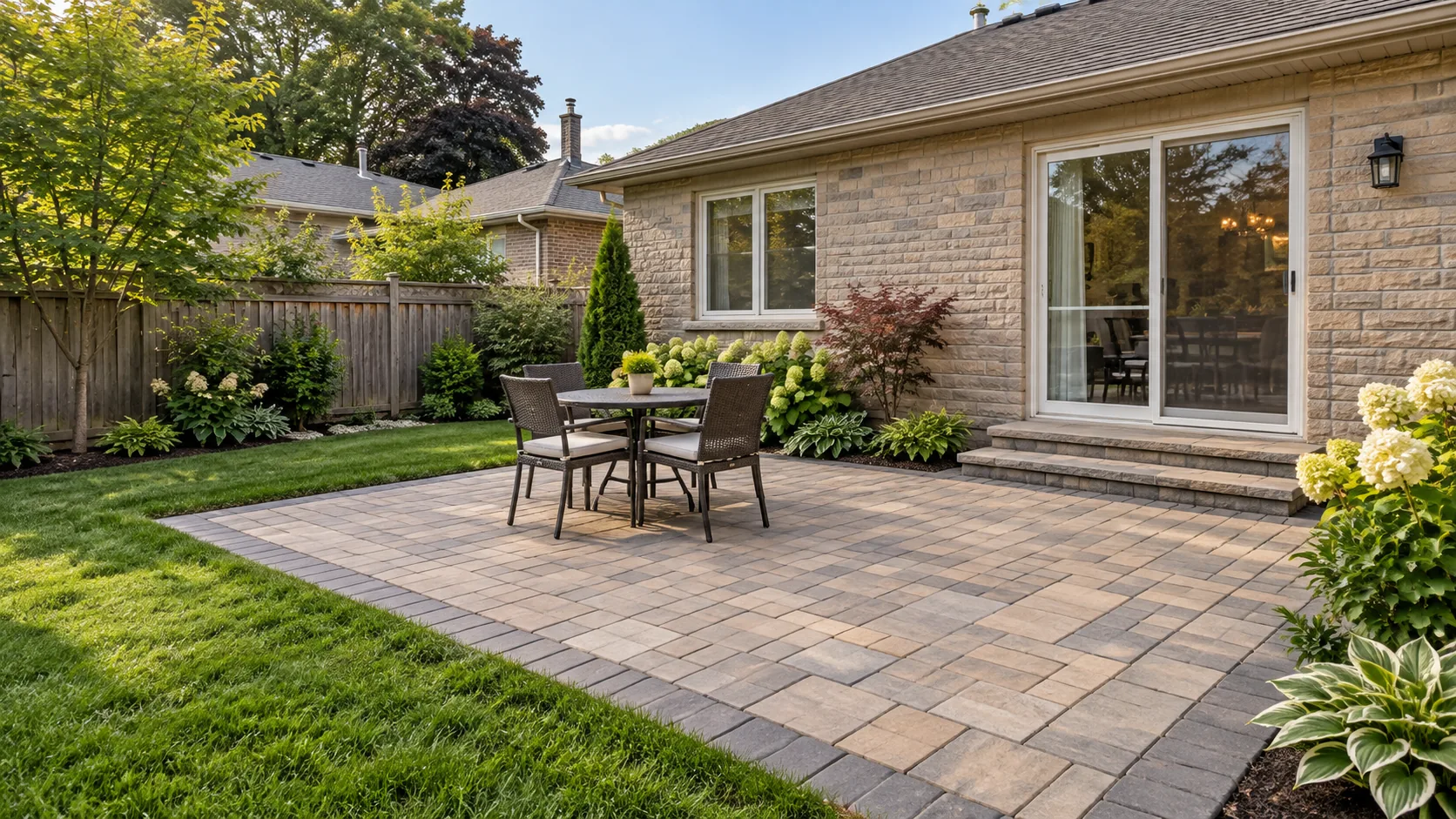
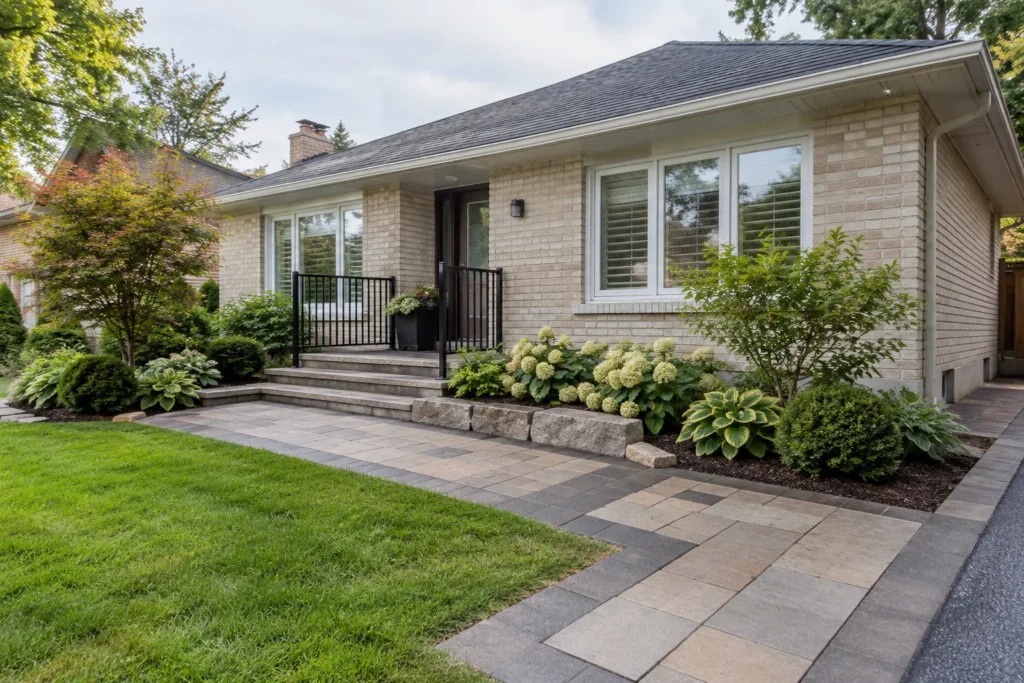
Maintained matte paver patio behind a stone-accent bungalow

Interlock Cleaning & Sealing in Burlington

Interlock Cleaning & Sealing

Refresh a sound paver surface by addressing dirt, stains and joints first, then decide whether a compatible sealer belongs in the plan.

A weathered patio or driveway can look ready for replacement when its underlying pavement is still useful. Soil in the joints, leaf staining, surface residue and uneven colour can obscure the original finish. Cleaning may improve that appearance, but it should begin with an assessment of the pavers, joints and supporting edges rather than a promise that pressure washing will make everything new.

Interlock cleaning and sealing in Burlington is a surface-care service with clear limits. The aim is to choose a cleaning method suited to the material, deal with joint condition and consider an optional finish. Loose units, settlement, broken borders and recurring puddles belong in the discussion before any coating is applied. A surface that looks cleaner can still need interlock repair underneath.

Separate surface wear from pavement movement

Walk the area when it is dry and consider what changes after rain. Identify dark organic staining, greasy marks, pale deposits, joint vegetation and any previous sealer. Compare those cosmetic issues with rocking units, a spreading perimeter or depressions that hold water. The distinction matters because cleaning addresses the surface while movement requires investigation of the pavement assembly.

Existing products influence the next step. A coating that has whitened, peeled or become patchy may need a different treatment from unsealed concrete pavers. Natural stone, clay units and manufactured concrete can respond differently to cleaners and pressure. A trial area can help establish realistic colour and texture expectations before the entire visible surface is treated.

Include nearby doors, siding, garden beds and drains in the assessment. Access for water, hoses and equipment should be practical without dragging across delicate planting. The work area also needs a plan for loosened debris and wash water. Washing material toward a door, neighbouring property or an inappropriate drain is not a satisfactory clean-up strategy.

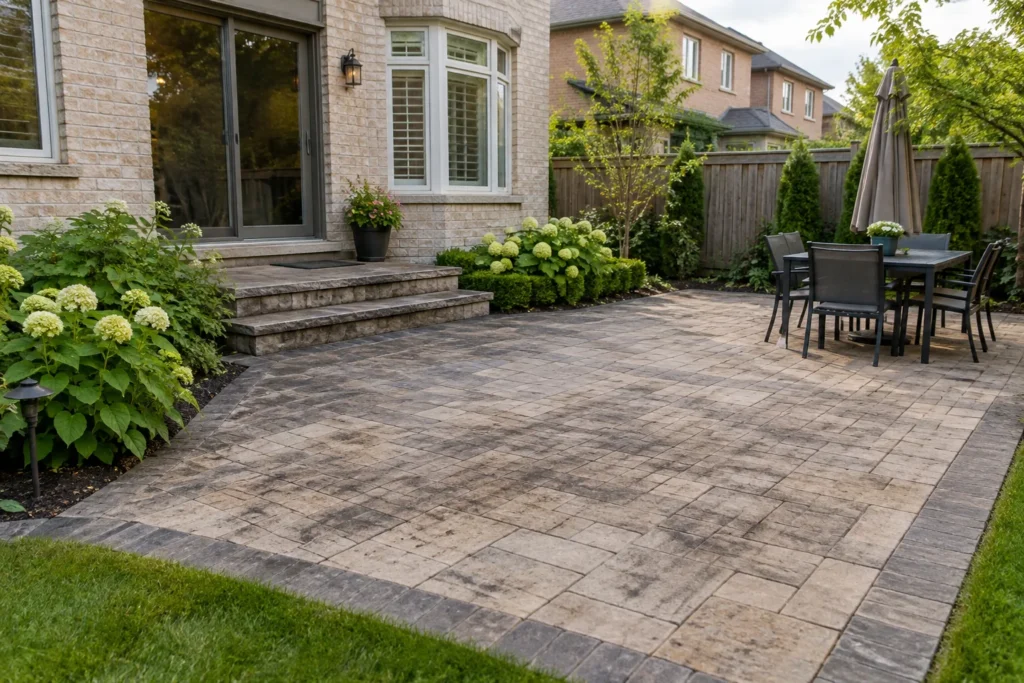
Patio pavers with dark organic surface staining beside a brick home
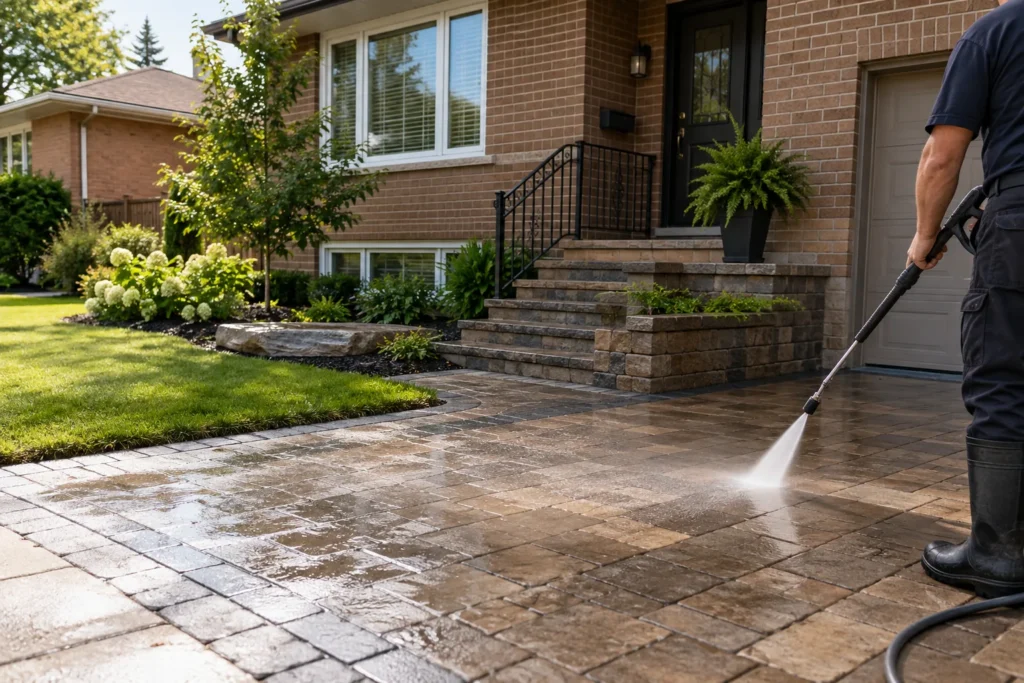
Controlled pressure washing on a paver entrance beside a brown-brick house

Which treatment answers the actual problem?

Which treatment answers the actual problem?
Visible conditionUseful first stepWhat a finish cannot do
Dirt or organic stainingIdentify the surface and use a compatible cleaning approach.Hide damaged faces or replace missing material.
Vegetation in jointsRemove growth and assess the depth and condition of joint material.Prevent every future windblown seed from establishing.
Uneven or rocking unitsInspect restraint, bedding, base and water before surface care.Stabilize unsupported pavers or correct settlement.
Patchy old coatingIdentify prior treatment and test preparation requirements.Guarantee an even result over incompatible residue.
Sound clean surfaceDecide whether the existing appearance already meets the goal.Make optional sealing compulsory.

Controlled cleaning protects more than the pavers

The strongest available wash is not automatically the most suitable. Pressure, working distance, detergent choice and dwell time all affect the result. The objective is to remove unwanted material while retaining a useful surface and avoiding unnecessary joint loss.

Material compatibility

Use the paver or stone manufacturer’s care guidance where the product is known. A cleaner intended for one stain or material may mark another surface. Tell us about coatings, previous cleaning and any replacement units that already look different.
Joint protection

Some joint loss can occur during cleaning and may be part of deliberate joint renewal. Distinguish that planned work from simply stripping out sand and leaving open gaps. Replenishment needs a suitable product and installation conditions.

Surrounding areas

Protect vulnerable finishes and planting, and consider where debris will collect. Doors, vents, electrical fittings and soft ground beside the pavement deserve attention. A neat result includes the edges and the adjoining access route.

Drying and weather

Joint products and sealers have their own moisture and weather requirements. A surface that appears dry at the top can retain moisture in the joints or lower areas. Let product requirements govern the next step rather than rushing through a calendar slot.

Joint renewal and sealing are separate choices

Joint material helps the units work as a pavement system. Its suitability depends on the paver type, joint dimensions, exposure and drainage arrangement. Where polymeric sand is appropriate, preparation, filling, compaction, removal of surface residue and activation all matter. It should not be described as ordinary sand with a guaranteed weed barrier.

Sealer changes surface behaviour and may change colour or sheen. Discuss whether the desired result is a restrained natural appearance or a more enhanced finish, and evaluate a sample when practical. A glossy photograph is not evidence that the same finish suits a shaded walkway, a vehicle surface or a stone with different absorption.

Sealing is optional, and some surfaces are better left unsealed or require a specific system. Compatibility with the material and existing treatment comes before appearance. A sealer does not eliminate cleaning, prevent all stains, stop frost movement or resolve water under the pavement. For broader material selection, the interlocking service explains construction and surface choices.

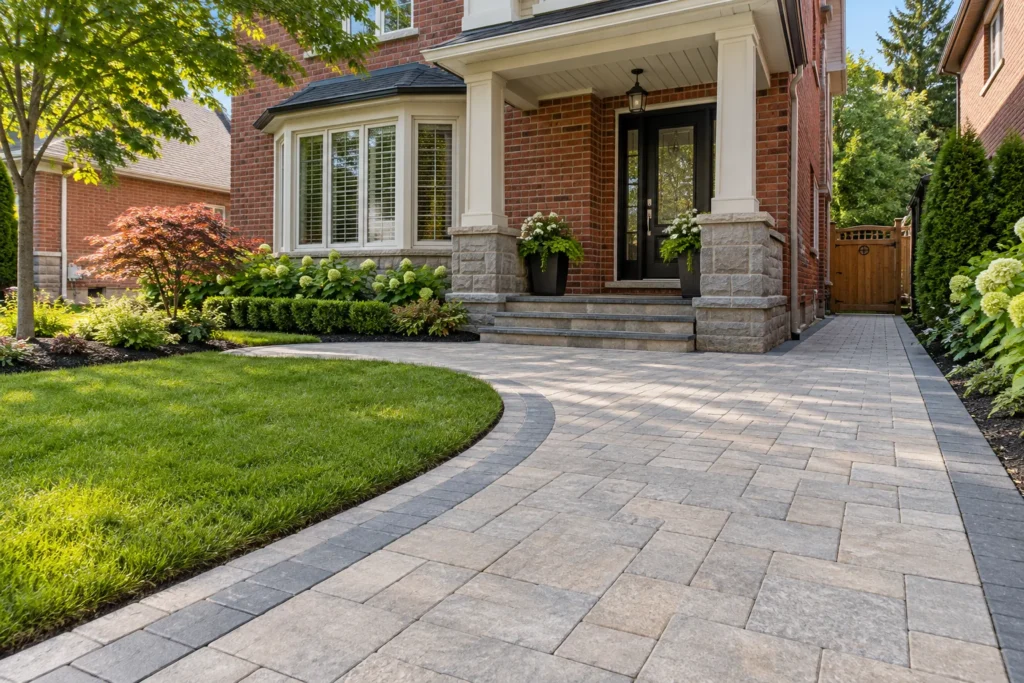
Paver walkway with clean filled joints and defined garden edges
Natural-look paver finish at a cream-brick bungalow entrance

Plan the work in a useful order

  1. Inspect and agree on expectations

    Record the material, worn areas, stains, prior coatings and joints. Identify the areas to clean and any appearance differences that may remain. Confirm whether the purpose is routine care, preparation for joint renewal or a compatible sealing treatment.

  2. Complete required repairs first

    Resolve loose edges, displaced units and relevant drainage faults before the final cosmetic work. If reconstruction is needed, coordinate it now so newly treated pavers do not immediately need lifting. Replacement units can differ in colour from older weathered ones.

  3. Clean and prepare the joints

    Use an appropriate method, manage debris and inspect the exposed condition. Complete the agreed joint work using suitable material and conditions. Clearing sand from the top of the units is important to avoid residue being fixed to the face.

  4. Assess the optional finish and care

    Apply only a compatible specified finish when the surface and weather meet its requirements. Discuss access restrictions, curing and future cleaning. Arrange vehicle and pedestrian access around the actual treatment rather than assuming immediate normal use.

Set expectations for older pavers

Cleaning can reveal variations that dirt previously concealed. Older units may have worn faces, mineral deposits, faded colour or stains that extend into the material. A test can inform the approach, but no responsible surface-care scope should promise identical colour across every paver. Repaired patches and sheltered areas may continue to weather differently.

For a driveway, identify tyre marks, oil staining, garage access and where cars can stand while work is completed. Interlock driveways also need sound edges and vehicle support; surface treatment cannot substitute for those details. A patio has different furniture-moving and household-access considerations that should be included in the plan.

Compare estimates by the actual area, preparation, stain treatment, joint renewal and proposed finish. Ask whether prior coating removal is included, which areas need a trial and how unforeseen incompatibility is handled. Future residential property maintenance can help keep leaves and debris from accumulating, while periodic inspection catches open joints or movement before a small issue spreads.

Questions about cleaning and optional sealing

Does every interlock surface need sealing?

No. The decision depends on the material, existing condition, desired appearance and compatible products. A sound unsealed surface may be the right choice. Treat sealing as a considered finish option with its own preparation and care requirements.

Will sealing stop weeds in the joints?

It does not stop every seed or all future growth. Joint condition, accumulated soil, shade and nearby vegetation also matter. Cleaning and appropriate joint renewal address the current condition, while continuing debris removal helps limit material building up on the surface.

Can cleaning fix sunken pavers?

No. A depression or rocking unit needs a pavement assessment. Cleaning may make the outline easier to see, but it cannot rebuild support or restore the water route. Plan necessary repairs before joint renewal and any final coating.

Can an old sealer simply be covered?

Only after compatibility and preparation are assessed. Existing residue, moisture or a failing coating can affect the new result. Share any available product details and photographs. A trial area may be needed before deciding whether removal or another approach is practical.

Will the pavers look exactly as they did when new?

Not necessarily. Wear, age, previous treatments and absorbed stains can remain visible. Discuss the realistic improvement and preferred finish before work begins. A useful result is a cleaner, appropriately maintained surface with understood limitations.

Interlock Cleaning & Sealing Gallery

Discuss the condition of your interlock

Send an overall view and close photographs of staining, joints and any uneven areas. Tell us whether the pavers were previously sealed and whether the goal is cleaning, joint renewal or an optional finish.

  • Approximate patio, walkway or driveway area
  • Material or product details if known
  • Previous sealer or cleaning history
  • Movement, puddles and access limitations

Tell us what you would like to change, repair or maintain around your property.