
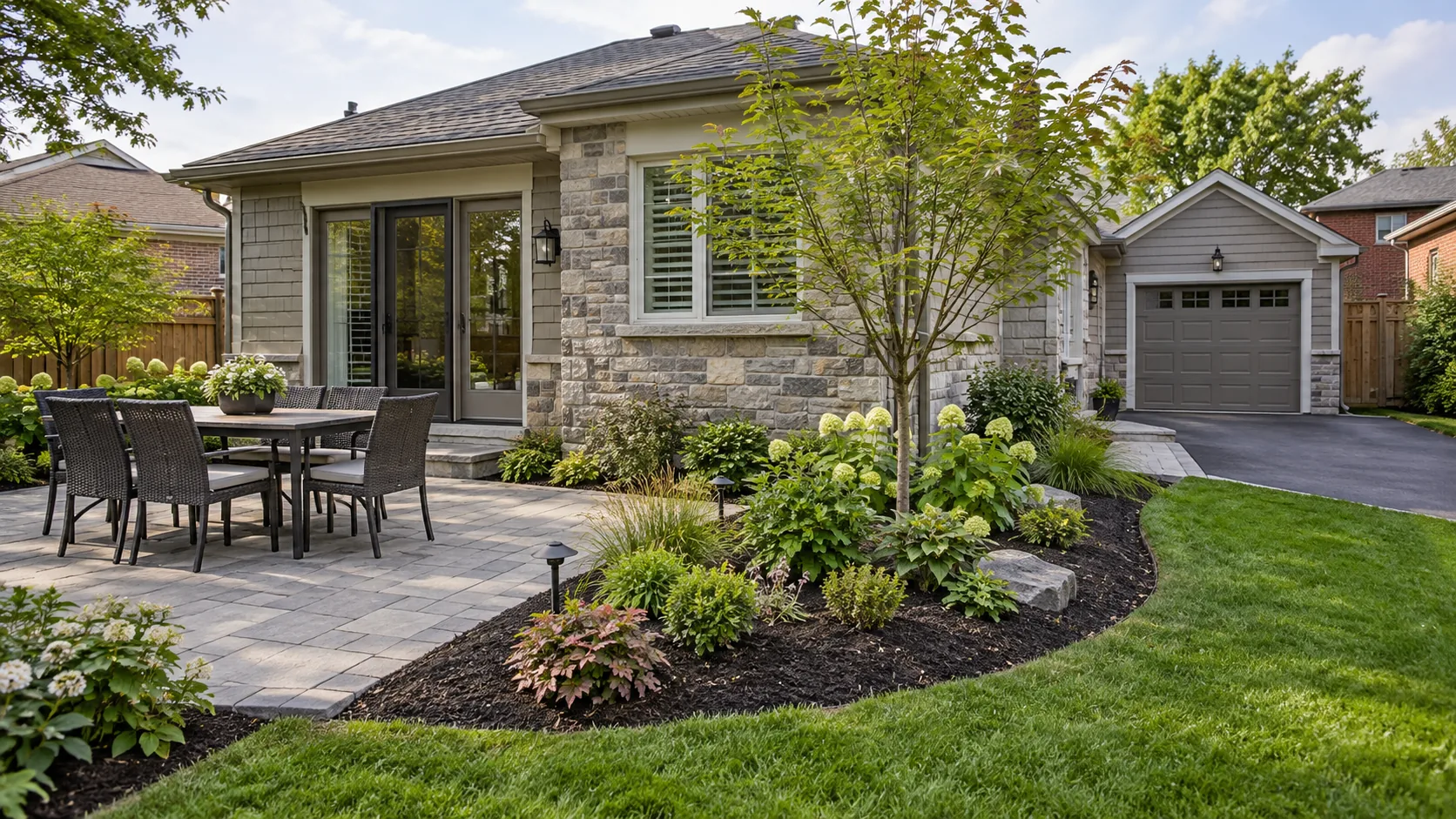
Burlington Landscaping
Garden Installation
A garden starts below the plants: workable soil, clear edges, useful spacing and a realistic plan for watering after installation.
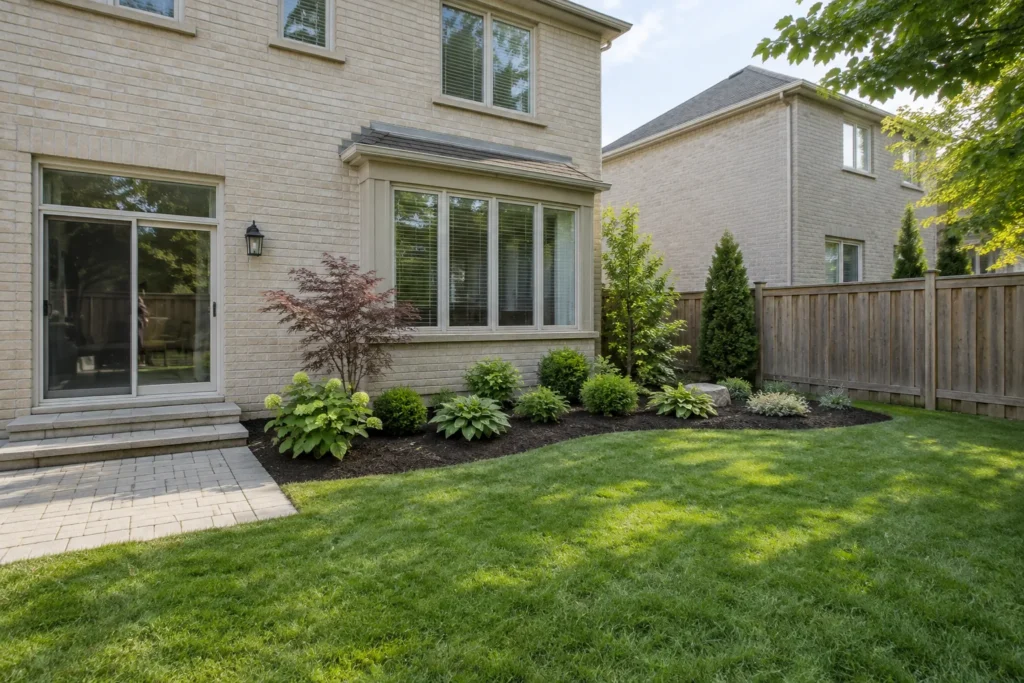
An empty strip beside the patio can become a useful garden, but filling it with plants is only the visible part of the work. Existing grass, buried debris, compacted soil, downspout discharge and the level of the adjoining lawn all affect how the new bed will function. Garden installation brings those conditions into the scope before the first plant is set out.
Use this service when you are ready to turn a planting plan into a prepared and planted space, renew an exhausted bed or complete the soft landscape after construction. If the arrangement and plant selection are still undecided, begin with garden design. The installation discussion should then confirm exactly what is being built, what is being retained and how the garden will be cared for during establishment.
Define a bed that belongs beside the lawn and patio
A good bed outline makes the whole space easier to use. Look at doors, paths, sitting areas and the lawn before drawing the garden edge. Leave room for a person to pass, a chair to move and a mower to turn without repeatedly stepping into planting. A narrow leftover strip may need a simpler planting scheme than the broad border imagined in a reference photograph.
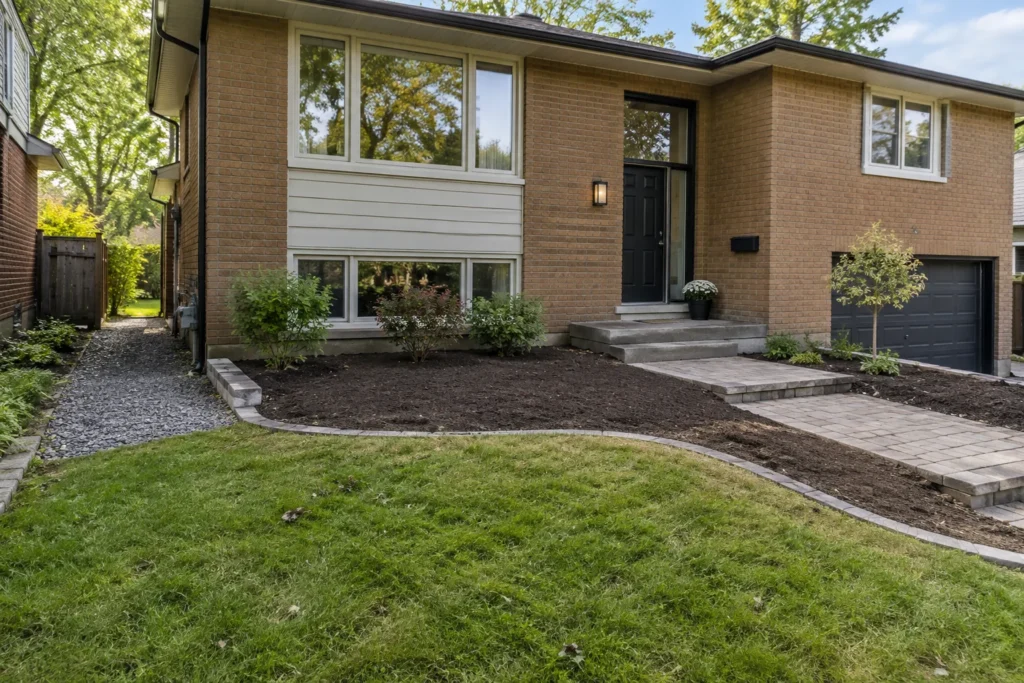
Confirm what comes out. Turf removal, old edging, unwanted roots, scattered gravel and landscape fabric can all change the preparation work. Existing plants worth keeping need protection and working space; they should not disappear into a general demolition allowance. Show any irrigation, low-voltage wiring or other private installations that may be hidden in the soil.
The prepared bed should meet surrounding surfaces deliberately. Raising soil against the house, covering a useful drainage route or burying the edge of a patio creates problems that planting cannot disguise. Where water already collects, discuss landscape drainage before choosing a finish. The planting area needs an appropriate water relationship with the house and the rest of the yard.
Agree on the installation scope before ordering plants
| Scope item | Decision to record |
|---|---|
| Existing material | Identify turf, weeds, old edging and unwanted plants to remove, and name the plants or features that must remain. |
| Soil preparation | Describe the soil condition, compaction and proposed preparation rather than assuming every bed needs the same imported blend. |
| Edges and transitions | Choose a lawn, stone or hardscape interface that contains the bed without interrupting drainage or access. |
| Plant supply and layout | Confirm plant identities, approximate supplied sizes, quantities, mature space and any agreed substitutions. |
| Bed finish | Settle the mulch or stone area and how it meets stems, trunks, paths and existing surfaces. |
| Establishment care | Clarify watering responsibility, access to water and the observations that should prompt follow-up. |
Set out the plants with room for the garden to develop
An installation layout should be checked on the ground before planting. Nursery containers can make a new garden seem sparse, especially where shrubs will become substantially wider. Filling every gap immediately may lead to crowding, repeated pruning and later removals. Check the space at windows, walks, vents, meters and the patio edge using expected mature dimensions as well as the size arriving on planting day.
Plant selection and preparation work together. A shaded corner with persistent moisture needs a different discussion from a sunny bed beside reflective paving. Improving soil workability does not turn every location into the same growing environment. If the ground stays saturated, investigate the source and route of the water rather than relying on new soil in isolated planting holes.
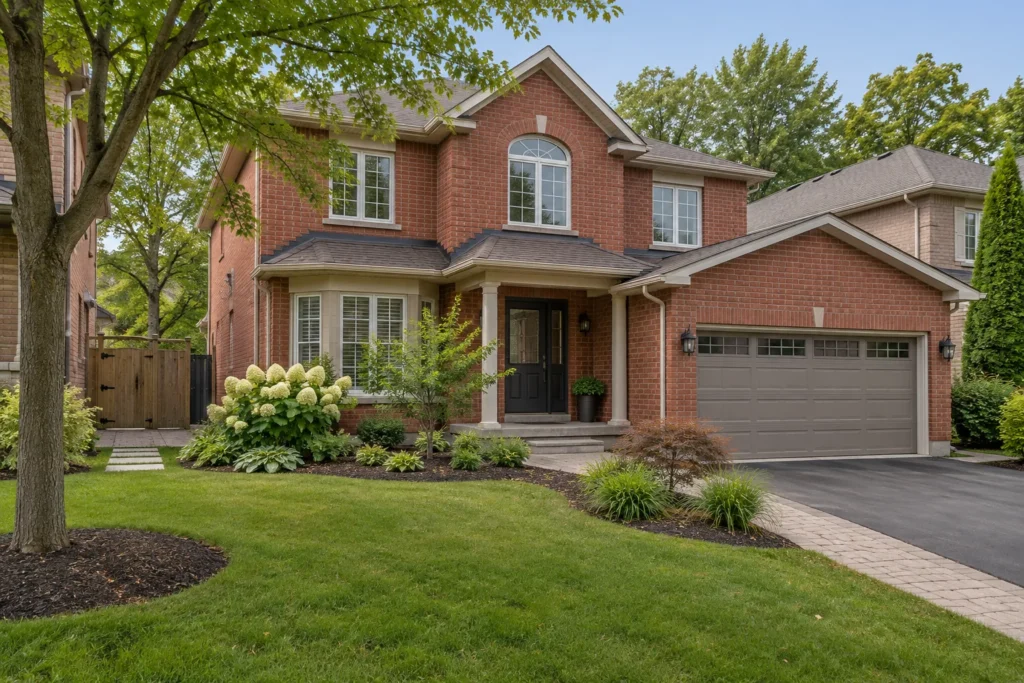
Finish the bed so the plants remain readable and accessible. Mulch can cover exposed soil and simplify routine care, but it should not be piled against trunks or plant crowns. Keep the bed edge visible and leave a practical route for watering, weeding and selective pruning. Mulch and decorative stone have different maintenance implications; the surface choice belongs in the plan, not as an afterthought once the plants are installed.
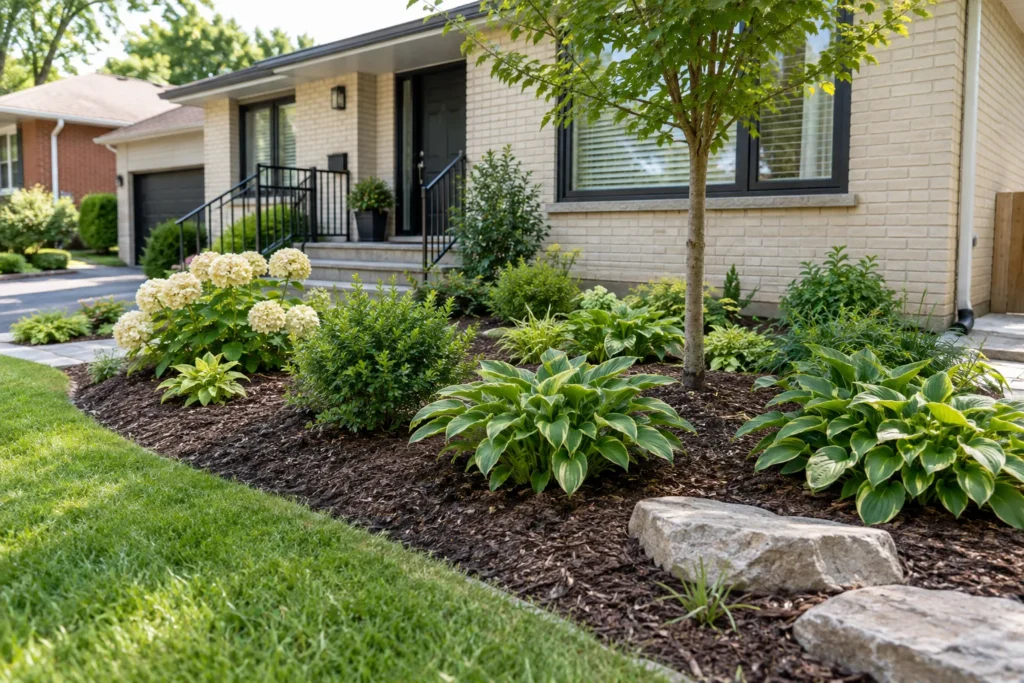
Establishment is a period of observation
Newly planted material is adapting to a changed root environment. Water needs depend on the plant, root ball, soil, exposure, rainfall and the season. A fixed calendar rule cannot replace checking actual moisture. Discuss how to reach each planting area with water, especially behind a dense border or across a newly finished patio.
Watch the root area as well as the leaves. Surface mulch can appear damp while the root ball below needs attention, and frequent watering can keep a poorly drained location excessively wet. Report persistent pooling, soil settlement, leaning plants or unusual decline so the cause can be considered. Planting does not come with an assumed survival guarantee.
Be clear about ongoing care. Weeding, edge upkeep, selective pruning and topping up an organic finish are different tasks from the initial installation. If you want help after the garden is planted, discuss garden maintenance and the desired scope rather than assuming that recurring visits are included.
From a proposed bed to a usable planted space
Walk the edges
Identify the bed boundaries, retained plants, access route and neighbouring surfaces. Bring the design or plant list if one exists, and explain whether the garden is part of a larger patio, lawn or drainage project.
Confirm preparation
Agree on removal, soil work and edge construction before the delivery. Utility information and tree-root constraints can change the working method. Difficult access or a fragile finished surface should be discussed while the scope is still flexible.
Check the layout
Review the plant positions and their relationship to windows, doors and paths. Resolve substitutions and spacing questions while plants can still be moved. A clear layout gives the installation a purpose beyond filling the available soil.
Finish and hand over care
Review the final bed level, mulch, visible edges and watering access. Identify who will care for the plants and what observations matter during establishment. Keep the plant list so future maintenance is based on the actual material installed.
Coordinate the garden with construction access
Garden installation is usually more efficient after the work that must travel through the same space. A new fence, rebuilt patio or planned utility trench can disturb freshly prepared soil and planting. Identify those later projects during the estimate discussion so the garden is not installed across their only access route. Where work is phased, the temporary finish and retained working area should be deliberate.
Give the installation a clear endpoint. Confirm whether the scope includes all plants in the plan, a defined phase or only selected beds. A partly planted property can still be a complete agreed phase when its boundaries and care needs are understood. Keep quantities and substitutions visible rather than leaving unplanted areas to assumption.
After completion, keep the plant list and any agreed care information together. A record of what was installed helps distinguish a seasonal change from an unfamiliar plant response and makes later additions more coherent. If you intend to add plants yourself, explain where they will go so preparation and spacing allow for them.
Garden installation questions
Can you install a garden from an existing plan?
An existing plan is a useful starting point. The site conditions, supplied plant sizes, access and any changes since the plan was prepared still need checking. Send the drawing and plant list with photographs. Confirm whether the enquiry is for installation only or also includes revising the layout or selection.
Do all old plants need to be removed?
No. Identify what you value before the scope is settled. A healthy retained shrub can help anchor a new garden, but its roots, mature spread and care needs affect work around it. Plants that are declining, oversized or poorly located may need a separate discussion rather than automatic replacement.
Can a bed be installed beside a mature tree?
Existing roots and tree protection requirements can constrain excavation, soil changes and material storage. A planting bed is not permission to cut major roots or mound soil around the trunk. Show the tree and the proposed bed together so the preparation method can be considered before work begins.
Is new mulch enough to renew an old garden?
It depends on the underlying issue. Mulch can refresh the surface, but it does not correct invasive roots, crowded planting, blocked water paths or compacted preparation. Decide whether the job is a bed-finish refresh, targeted planting or a more substantial installation so the estimate matches the intended result.
What should I send for a garden installation estimate?
Provide broad and close photographs, an approximate bed outline, the access route and any plant list or drawing. Explain what stays, what should be removed and where water is available. Mention recent construction and persistent wet areas because those can affect preparation and planting decisions.
Garden Installation Gallery
Tell us what needs to become a finished garden
Show the proposed beds and the surrounding lawn, patio or house. A clear outline, retained-plant list and watering plan help turn the enquiry into an installation scope.
- Burlington address and garden photographs
- Bed boundaries, retained planting and removal needs
- Plant list or design and desired supplied sizes
- Access, water supply and establishment-care responsibility
Tell us what you would like to change, repair or maintain around your property.