
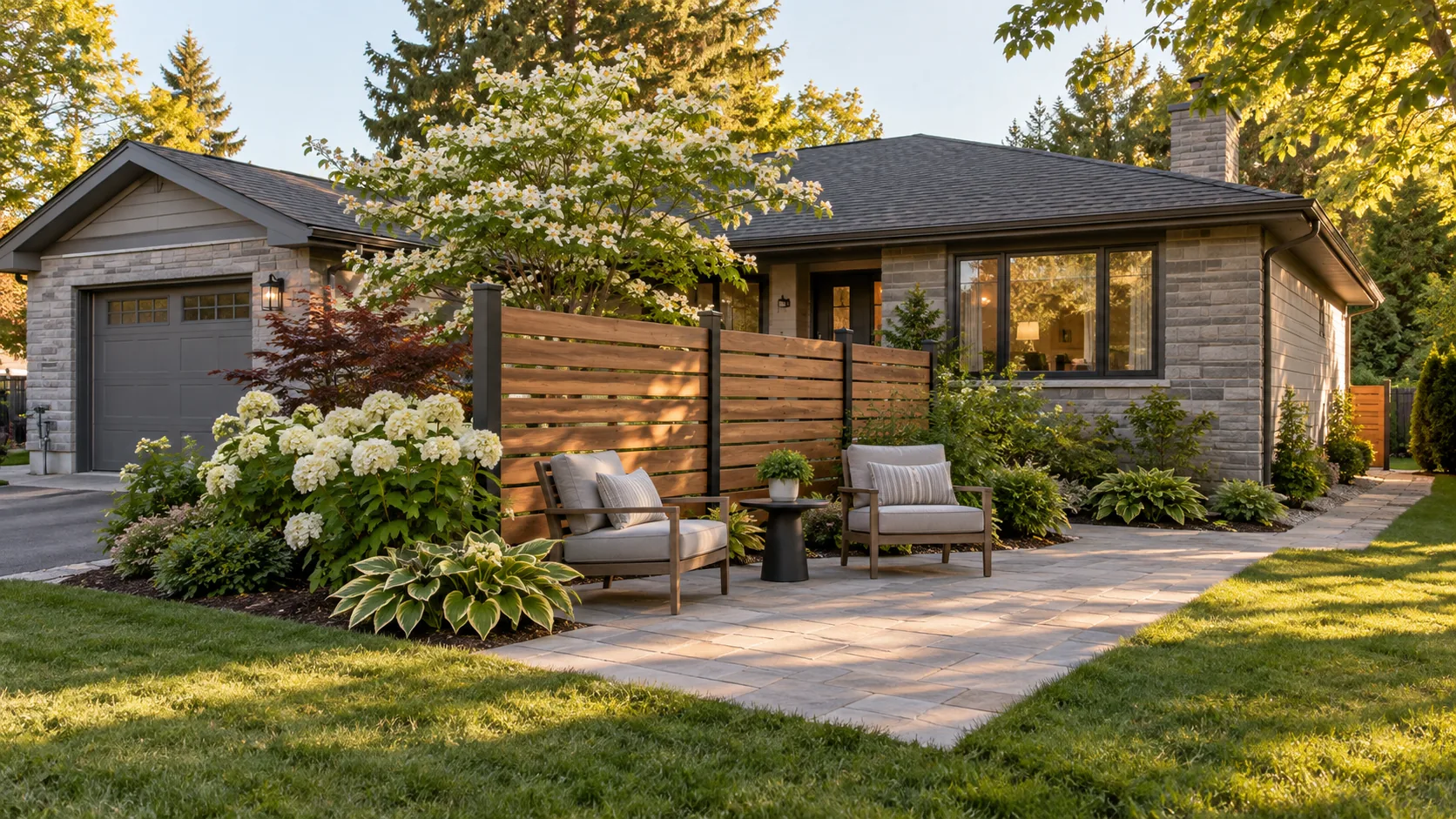
TARGETED SCREENING · USEFUL BACKYARD DETAILS
Privacy Screens & Backyard Features in Burlington
Screen the view that matters while keeping air, light and access. Use a focused built feature that fits the seat, equipment or storage area it serves.
Privacy is often a specific sightline rather than a problem along every edge of the yard. A dining chair may face a neighbouring window; a deck may expose a lounge area; equipment may dominate the view from the house. A carefully placed screen can address that one relationship without turning the whole property into a solid enclosure.
Privacy screens and backyard features in Burlington should begin with the seat or object being screened, then account for ground levels, wind, boundaries and access. This service focuses on immediate built elements. Privacy Landscaping considers the broader combination of fences, structures and growing cover, while Hedge & Privacy Planting addresses the living edge.
Draw the View From Where You Sit
Stand and sit in the area that feels exposed. The view changes with eye level, deck height and the neighbouring grade. A screen placed too far from the seating may need to be much larger than one positioned thoughtfully beside it. Identify which part of the view needs softening and which part provides useful openness or a garden outlook.
Solid boards, spaced slats and partially open panels create different degrees of screening. Angled views through slats can differ from a straight-on view, so assess the intended position rather than relying on a product photograph. Afternoon light may cast strong stripes or glare through a panel. Consider the view from inside the house and from the neighbouring side as well as the immediate patio.
Wind matters even for a short screen. Posts, connections and foundations must suit the panel and its exposure. Attaching a tall panel to a deck edge can change the loads on the deck; an existing railing is not automatically a suitable fixing. Freestanding screens need their own coherent support. The shape and weight of a planter do not establish that it can safely act as a foundation.
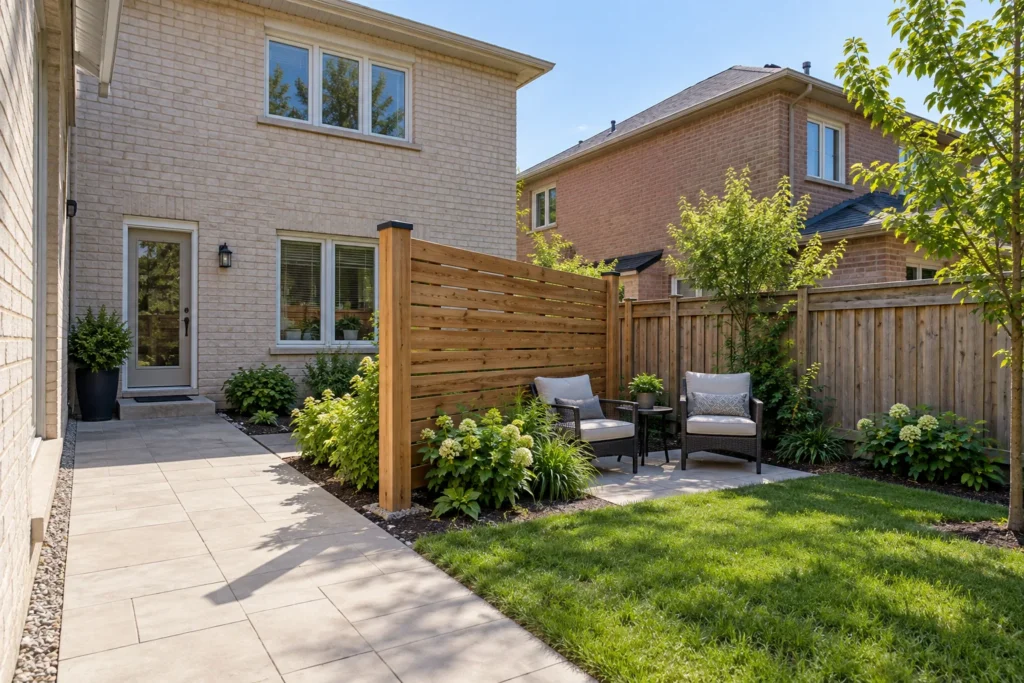
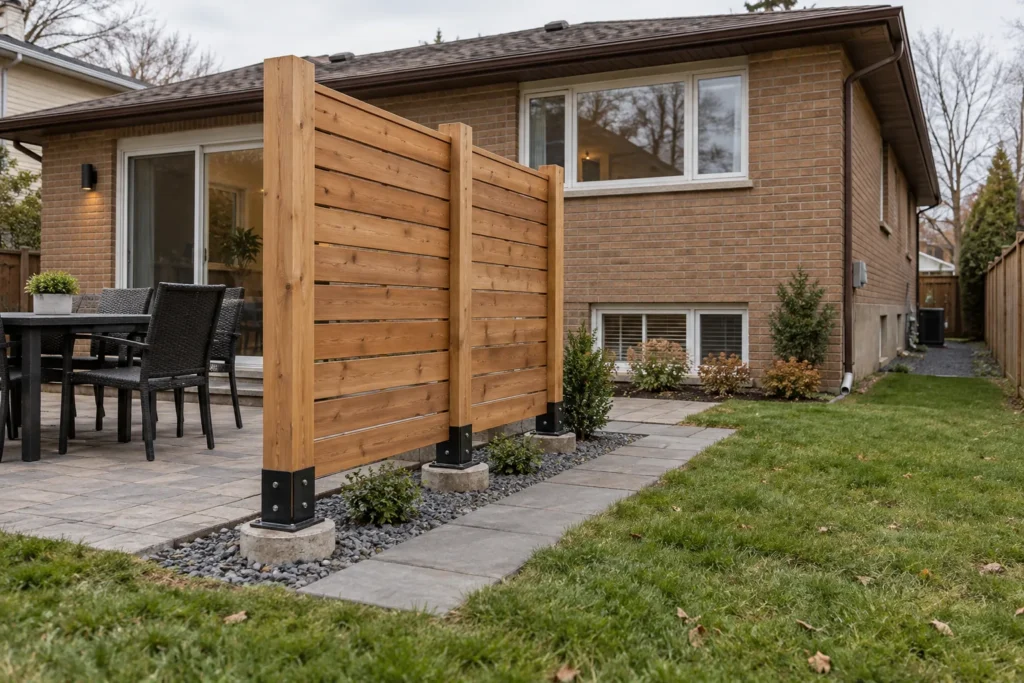
A Small Feature Can Change How the Whole Yard Works
The best location is not always directly on the boundary. An inset screen beside a lounge can preserve a wider garden view and leave the boundary available for planting. It can also create a narrow inaccessible strip if positioned carelessly. Measure the space needed behind and beside the feature for cleaning, pruning and repairs.
Keep gates and paths functional with the screen in place. A panel beside a deck stair should not conceal the landing or force someone carrying a tray into a tight turn. Where a backyard storage feature is included, check door openings, handles and the route used with a mower or bicycle. These everyday movements should be tested with furniture present.
Coordinate with Deck Construction and Fence Installation when posts or panels share a connection. A coherent material palette can link them visually without assuming they share the same foundation or regulatory treatment. Keep screening distinct from any required guard or pool enclosure; appearance alone cannot establish those functions.
Hide Equipment Without Blocking Its Work
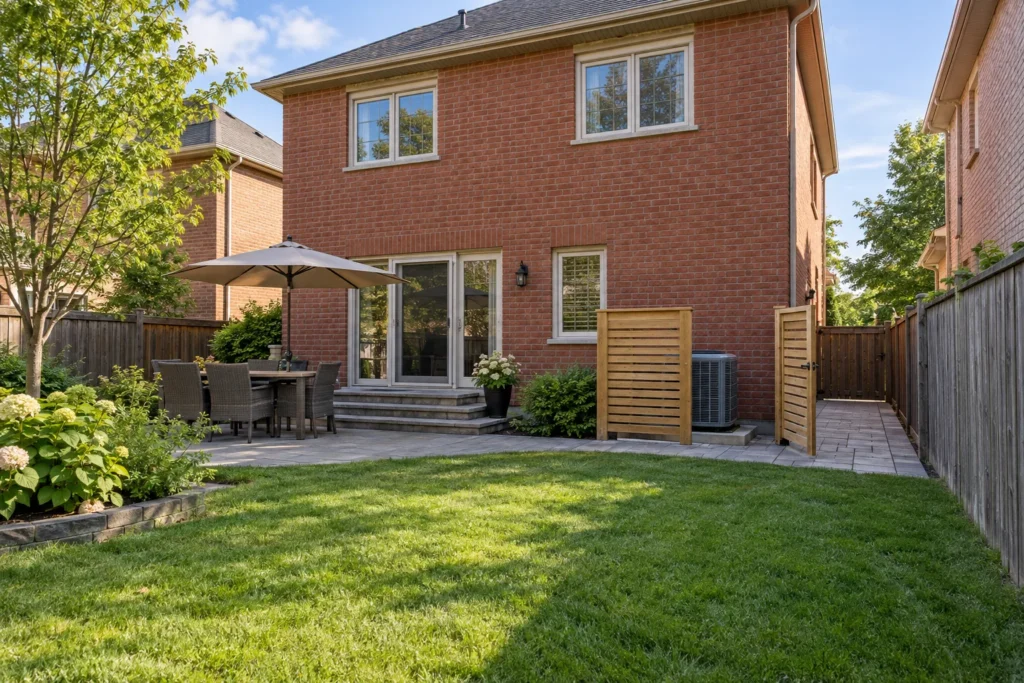
Utility screening needs to start with the equipment's service, ventilation and operating requirements. A screen should not obstruct meters, shutoffs, intake or exhaust openings, air-conditioning airflow or the working space needed by a technician. Confirm clearances with the relevant equipment instructions and service provider rather than choosing a generic gap from a landscaping photograph.
A hinged access panel may help visually, but it must open fully and remain usable as planting grows. Keep the approach clear and consider removal if equipment needs replacement. Do not enclose stored fuel or other sensitive items in an improvised decorative box. The visible screen is secondary to safe, practical equipment access.
Around seating, combine the built feature with planting that fits the space at maturity. Low shrubs can soften posts while preserving an open route; a taller hedge needs width and ongoing care. Avoid planting directly against timber where moisture and pruning become difficult. A modest layered edge often feels more comfortable than a tall wall of boards. Match the planting to sun and moisture instead of treating greenery as an interchangeable filler.
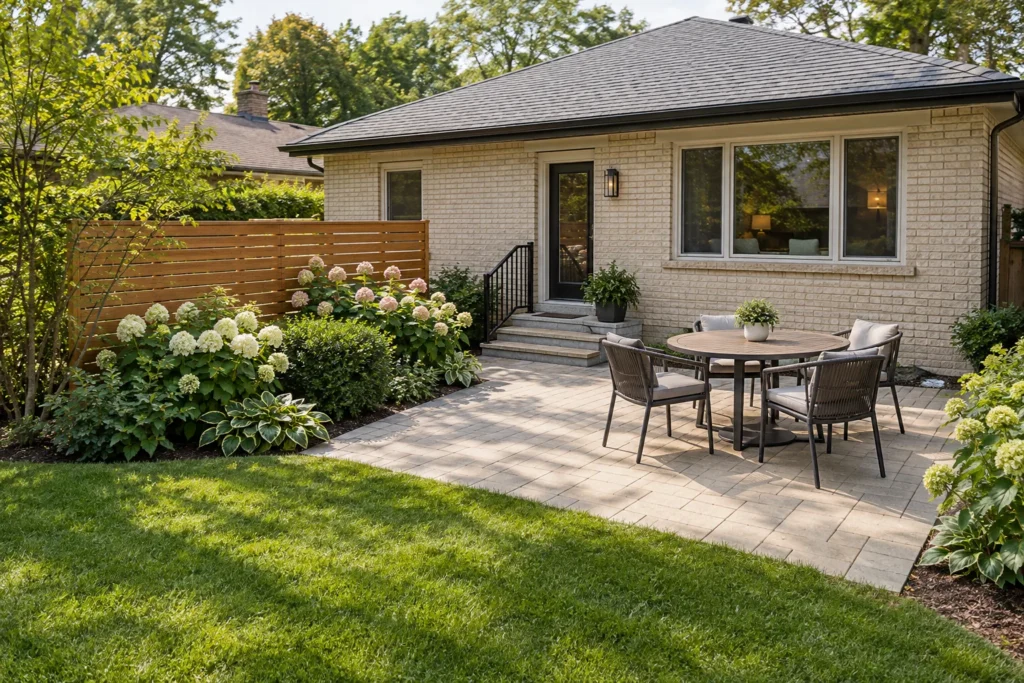
Choose the Feature for the Problem
| Situation | Useful direction | Trade-off to check |
|---|---|---|
| Exposed dining seat | Targeted panel close to the relevant view. | Furniture clearance, light and permitted screen position. |
| Raised deck overlooks a neighbour | Screen the seated sightline with suitable structural support. | Wind load, deck connection and applicable height measurement. |
| Visible equipment | Ventilated screening designed around service access. | Manufacturer clearances, safe operation and future replacement. |
| Unfinished storage edge | A modest coordinated storage feature and clear path. | Door swing, drainage, maintenance and whether it requires separate approval. |
Choose Materials That Can Be Cared For
Wood brings warmth but changes appearance with weather and its finishing routine. Discuss whether natural weathering or a maintained coating is intended and how both sides will be reached. Fine slats may demand more careful detailing and cleaning than a simpler board pattern. A dark finish can alter the visual weight of the panel and its heat in direct sun.
Metal and manufactured panels have product-specific fixing, expansion and finish requirements. Check edges, fasteners and how a damaged part could be replaced. Avoid using decorative cut-outs where the purpose needs reliable privacy from a particular angle. A highly patterned panel may cast busy shadows or create a much stronger visual feature than expected.
Keep water at the base in mind. Posts and adjacent garden edges should not create a pocket that traps runoff beside the house or stair landing. Planting, mulch and storage should leave the intended clearance and inspection access. The feature should remain useful when autumn leaves collect and furniture is put away, not only when the patio is dressed for summer.
Check Screens Separately From Boundary Fences
Burlington's current fence guidance distinguishes privacy-screen provisions under the new residential zoning regime from those under By-law 2020. Do not carry one regime's conditions onto every property. Confirm which provisions apply, how height is measured and whether the proposed attachment or feature changes required approvals. Deck-mounted screens and independent accessory features can raise different questions. Pool screening must also preserve the approved enclosure and avoid climb assists. These checks should be made before the final panel dimensions are set.
Information reviewed:
Turn an Awkward View Into a Clear Scope
Show the sightline
Photograph from the actual seat toward the view you want to screen, then show the same area from farther back. Include the house, deck edge or boundary so the proposal has context.
Test access and support
Mark the suggested footprint, furniture movement and clear routes. Review wind exposure, suitable foundations, equipment requirements and any attachment to an existing structure.
Specify the feature and planting
Agree material, openness, finish, access panels and any planting separately. Define removal of existing items and restoration around the work so the estimate describes the complete change.
Privacy Screen Questions
Can a screen replace a deck guard?
Only if the actual design meets the required function and applicable requirements. A decorative privacy panel should not be treated as a guard simply because it is tall or solid. Its support and protective role need explicit assessment.
Will slatted panels provide complete privacy?
That depends on slat spacing, orientation, distance and the angle of view. Assess the actual seated sightline. Greater opacity can increase enclosure and wind effects, so privacy and support should be decided together.
Can I screen an air-conditioning unit?
Potentially, with its operating and service requirements preserved. Confirm clearances and airflow needs before choosing the screen location. Leave room for maintenance and eventual equipment replacement, and keep growing plants from closing that space.
Privacy Screens & Backyard Features Gallery
Show Us the View You Want to Change
Describe whether the priority is seating privacy, equipment screening or a more useful storage edge. Photographs from the actual viewing position are especially helpful.
- View from the seat and a wide area photograph
- Deck, patio, boundary and equipment context
- Preferred material, access needs and planting to retain
Tell us what you would like to change, repair or maintain around your property.