
Skip to content

Explore services

Request an Estimate
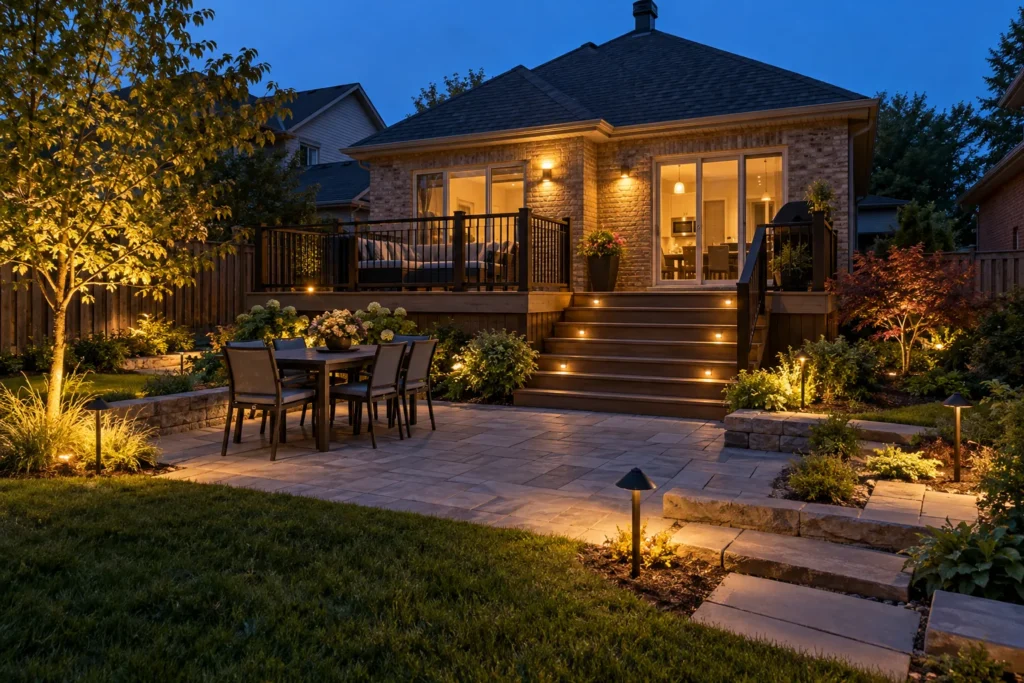
Realistic dusk garden with restrained path, step and entrance lighting without fantasy glow

Site First. Finish Second.

Landscape Lighting

Make routes, entrances and outdoor spaces easier to read after dark. Plan restrained landscape lighting around the way people move, the planting they see and the electrical work the installation requires.

Landscape lighting should help people understand the yard after daylight fades. A visible step edge, a comfortable entrance and a clear route between the house and patio are more useful than making every plant equally bright. Burlington Landscaping considers lighting within the landscape layout, with the required electrical scope identified separately.

Begin With Movement, Then Add Emphasis

Walk the property at dusk before deciding where fixtures belong. Notice the route from the driveway to the front door, the side gate and any steps leading to outdoor seating. A light that looks attractive from the street may leave the actual walking surface in shadow. Start with those everyday movements and identify changes in level before choosing decorative effects.

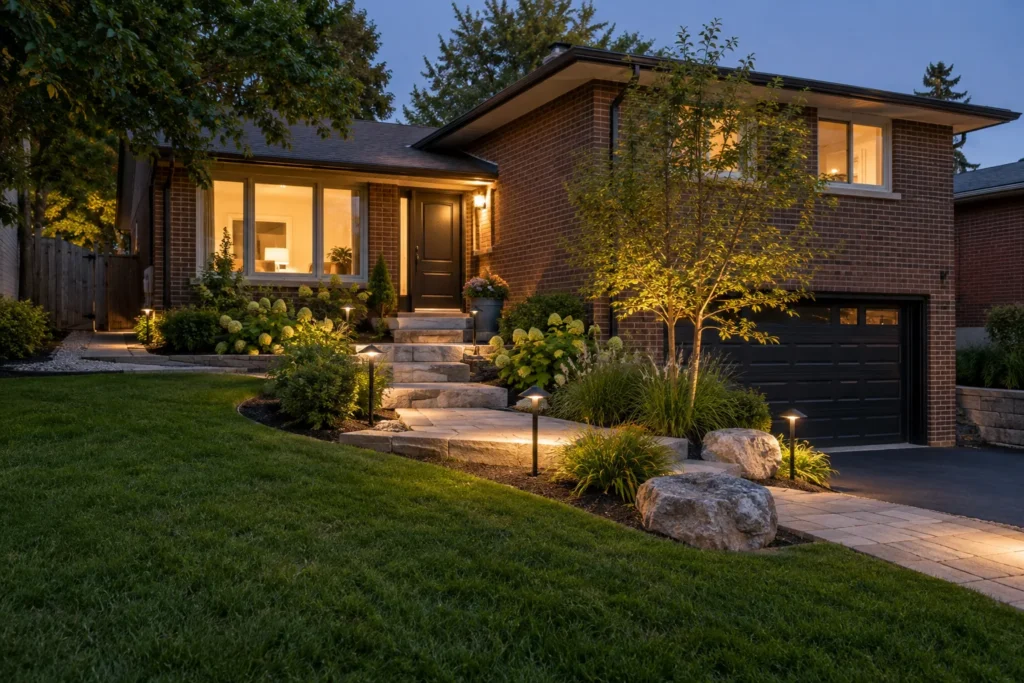
The position of a fixture matters as much as its output. Keep path lights back from the walking line and mower route, where they can illuminate the surface without becoming an obstacle. Check whether nearby shrubs will cover them as they grow. On a short path, fewer well-positioned fixtures may give a clearer result than two uninterrupted rows.

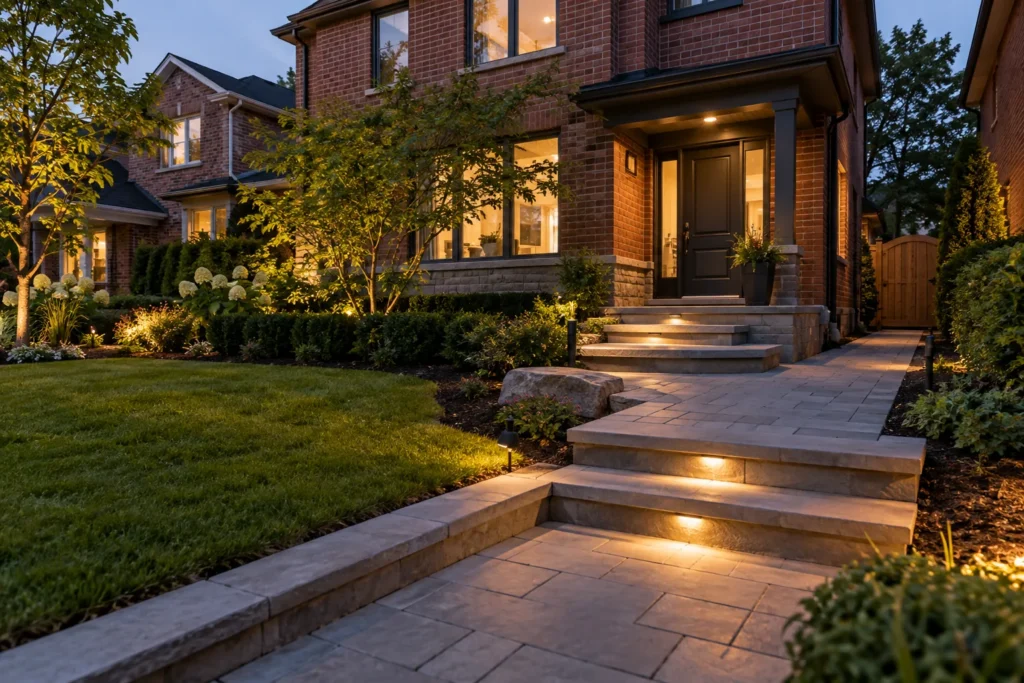
Steps need their treads and changes of level to remain legible from both directions. Inset or shielded fixtures can help, but the stair geometry still has to work in daylight. Lighting cannot correct inconsistent risers, a missing landing or a settled approach. Coordinate any necessary outdoor step work or walkway improvements before settling the light positions.

Path lights positioned away from mower and walking route
Subtle step lighting making a grade transition visible

Give Each Area a Clear Lighting Job

Give Each Area a Clear Lighting Job
AreaUseful objectivePlacement question
EntranceRecognize the door, landing and approachWill the light shine into approaching eyes or nearby windows?
PathFollow the route without stepping into plantingCan fixtures remain outside walking, mowing and snow-clearing space?
StepsRead the tread edges and change in levelIs there enough illumination from both directions?
Garden or treeReveal selected form and textureCan the beam stop within the intended feature?
Patio or deckSupport comfortable circulation and seatingCan practical movement lighting operate separately from accent lighting?

Keep the Garden Visible Without Flooding It

Choose a small number of features worth emphasizing: a branching tree, a textured planting group or the edge of an outdoor room. Consider the view from inside the house as well as from the patio. A restrained composition gives the eye somewhere to rest and avoids turning the whole yard into a uniformly lit display. The surrounding darkness is part of the evening setting.

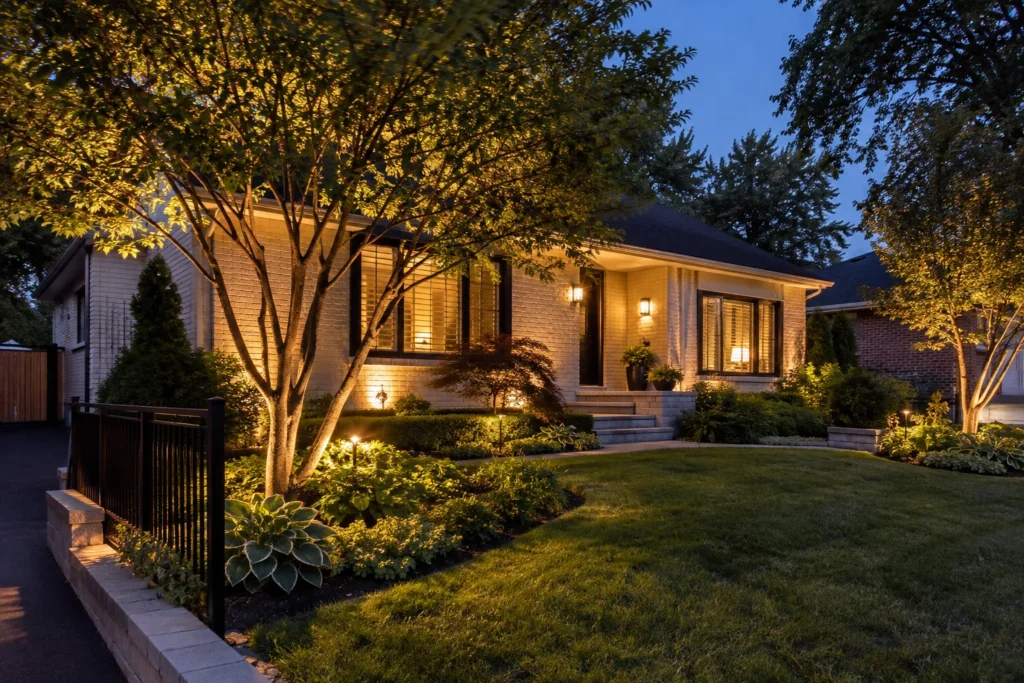
Tree lighting should account for the trunk position, canopy spread and nearby bedrooms. Aim and shielding can limit direct glare, while fixture placement should avoid damage to roots and allow care of the bed. Do not attach lights or bury new cabling around an established tree without considering the tree and working route. Future growth can change the effect and may require adjustment.

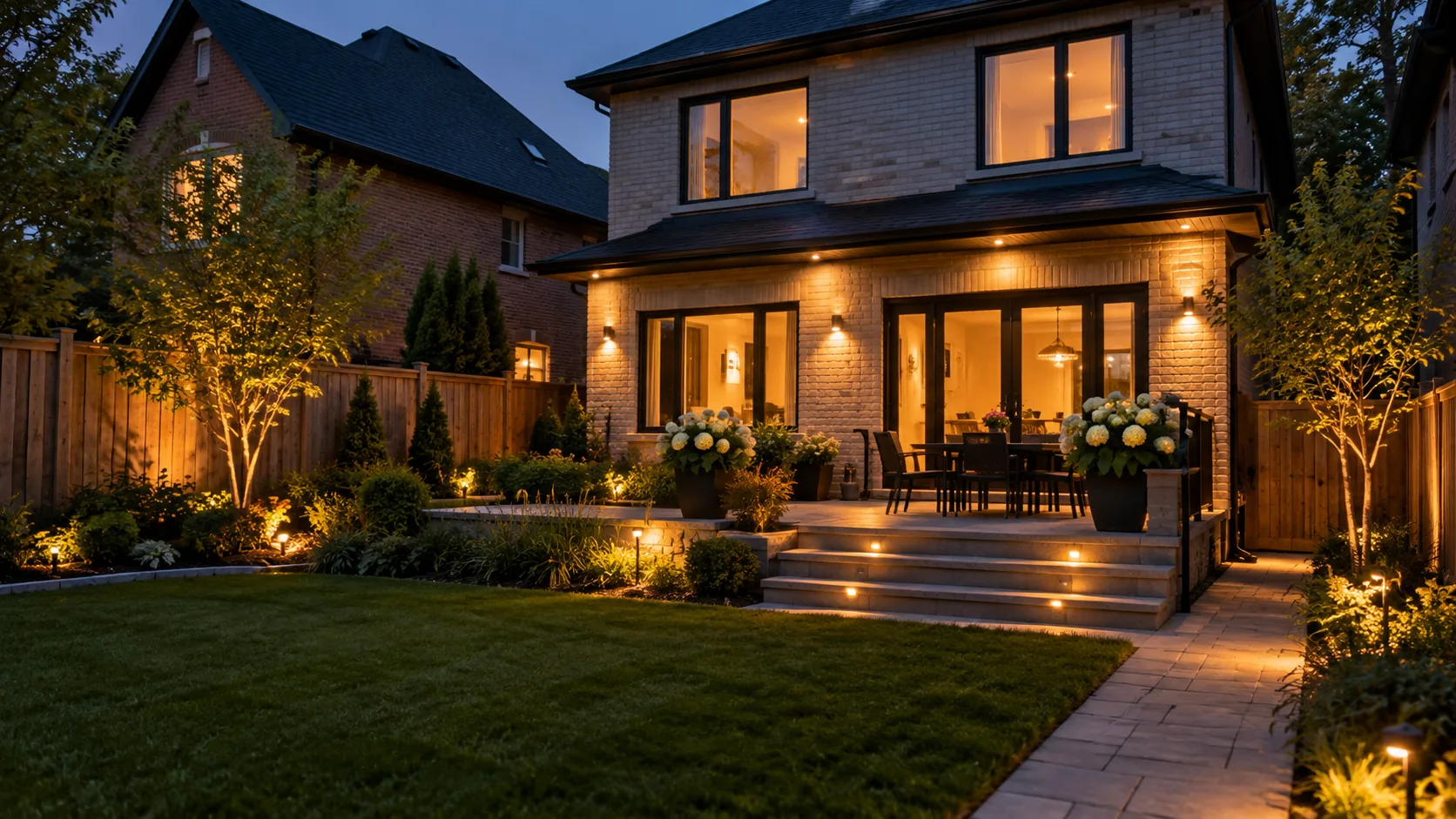
At a deck or patio, concentrate on the perimeter and useful passageways before adding decorative points. A bright fixture beside a seated person can be uncomfortable even when it photographs well. Coordinate lighting with deck construction or the broader backyard plan so supports, access, planting and wiring are considered together.

Tree lighting aimed to avoid excessive glare
Patio and deck-edge lighting with believable fixture placement

Separate Landscape Coordination From Electrical Work

Lighting proposals should identify the fixtures and the electrical system that will supply them. Line-voltage connections, new circuits, outdoor receptacles and other regulated electrical tasks require the appropriate qualified electrical contractor and applicable approvals. Landscape coordination is not an electrical credential, and low voltage is not a reason to improvise a connection to the house.

Supply and equipment location

Identify where power is available and where a suitable transformer or control equipment could be reached for service. Keep access to existing equipment open. The electrical contractor should determine the supply arrangement and required protection rather than having the landscape layout assume an unused outlet is suitable.

Routes before finished surfaces

Plan cable routes before new paving, walls or planting close the working area. Record crossings and the approach to protected trees and existing utilities. A sleeved crossing may be worth discussing where future access would otherwise require removal of completed hardscape.

Outdoor suitability

Choose equipment intended for its outdoor exposure and installation position. Fixtures at the lawn edge, within planting and close to grade face different physical and moisture conditions. Product instructions and qualified installation requirements take precedence over a preferred photograph.

A maintainable installation

Leave fixtures reachable for cleaning, adjustment and replacement. Record the selected equipment and control arrangement at completion. Landscaping that buries fixtures in mulch or allows plants to close over them will change the light and make later care harder.

Plan Controls Around Real Use

  1. Decide what operates together

    A welcoming entrance may need a different operating pattern from patio accents. Discuss which areas should work independently and what the household actually uses in the evening. Avoid a single all-on arrangement merely because it is simple to draw.

  2. Choose a practical control method

    Discuss timer, daylight sensing or other suitable controls with the electrical provider. Confirm how the household will operate and adjust them. The scope should state the selected arrangement rather than promise a particular smart-home platform or automatic operating schedule.

  3. Review the effect after installation

    Assess aiming and glare from normal viewing positions, including paths, seats and indoor windows. Seasonal foliage can alter shadows. Agree whether initial aiming and any later adjustment are part of the quotation, and retain enough access to make sensible changes.

What Affects the Lighting Estimate

The number of fixtures alone cannot describe the work. Distance from the supply, access under or around existing paving, the condition of stairs, the type of mounting surface and the need for electrical modifications can change the scope. A simple garden with accessible soil can be very different from an established courtyard surrounded by finished stone.

Separate fixtures, landscape preparation, electrical work and reinstatement in the proposed scope. Identify any retained equipment that needs evaluation and any fixtures the owner intends to supply. The planting plan also matters: a light intended for a small specimen tree should suit its likely growth rather than require repeated relocation. Garden design and lighting are strongest when each allows the other to be maintained.

Review the View From the Neighbouring Areas

Check proposed lighting from the edge of the property and from rooms used in the evening. A fixture hidden from the patio can still be visible from a bedroom or the adjoining yard. Discuss shielding, aiming and separate controls before increasing output. Seasonal foliage changes can expose a light that was screened in summer, so the selected positions should allow sensible adjustment. The goal is to illuminate the intended surface or feature with a clear purpose and leave unrelated areas comfortable.

Questions About the Service

Can lighting be added to an existing landscape?

Often it can, but the route to each fixture needs assessment. Existing paving, roots, walls and finished decks can restrict access and require careful reinstatement. Send photographs of the whole route and identify existing lighting equipment rather than showing only the feature you want illuminated.

Does brighter lighting make the yard safer?

Useful visibility depends on placement, shielding and transitions between bright and dark areas. Excessive brightness can create glare and leave nearby surfaces harder to read. Lighting supports clear movement, but does not replace sound steps, maintained paths or an appropriate property security plan.

Can you include electrical connections?

The quotation should identify which landscape tasks are proposed and which electrical tasks require a qualified electrical contractor. New supply, circuits and regulated connections should be confirmed by that trade. Do not assume landscape installation includes every electrical alteration or approval.

Will lights interfere with mowing and snow clearing?

They can if positioned within the working route. Mark lawn edges, snow-storage areas and regularly cleared paths before placement. Fixtures should remain visible and reasonably protected while leaving room for the actual maintenance method agreed for the property.

Can the lighting be installed in stages?

Staging can work when the overall equipment capacity, routes and future crossings are planned first. Record which areas form the initial installation and which are future options. A later phase may require additional electrical review rather than simply connecting more fixtures to the original system.

Landscape Lighting Gallery

Plan Lighting Around the Way You Use the Yard

Share evening and daylight photographs, the routes that need attention and any existing outdoor lighting or power equipment.

  • Property address and entrance, path, step and patio photographs
  • Known electrical equipment and existing fixture details
  • Priorities for movement, accent light and control

Tell us what you would like to change, repair or maintain around your property.