
Lawn Surface
Collect agreed leaves, small debris and loose branches while observing weak areas. Aggressive raking on soft turf can disturb the surface, so the method should suit the ground and grass condition.

Site First. Finish Second.
Reset lawn, garden and access areas after winter without rushing wet ground or removing useful growth indiscriminately. Plan debris removal, selective cutback, bed preparation and follow-up care around the property.
Spring cleanup is the transition from winter conditions to active lawn and garden care. It can bring together fallen leaves, small branches, matted debris and untidy edges, but it should also reveal what needs attention next. The goal is a workable, understood yard rather than stripping every bed to bare soil.
Begin by checking whether lawn and beds can carry the intended work without damage. Surface dryness beside a driveway does not prove that a shaded rear corner is firm. Walking or moving material repeatedly over saturated ground can leave ruts and compact the growing area just as the lawn is starting to recover. Access and conditions matter more than choosing one date for every property.
Look for loose branches, accumulated leaves and winter litter before close lawn work begins. Separate ordinary yard material from sharp objects, damaged structures or unidentified dumped waste that may need different handling. Agree what can be collected, where it will be staged and whether removal from the property is part of the quotation. A cleanup description should make those boundaries clear.
Avoid using the visit to force hidden ground problems into a tidy finish. Soft depressions, displaced edging, runoff marks and settled paving can be recorded for assessment. Removing debris may expose a problem, but grading, lawn repair planning and hardscape reconstruction are separate decisions. Photograph recurring wet areas before they dry so the next discussion has useful context.
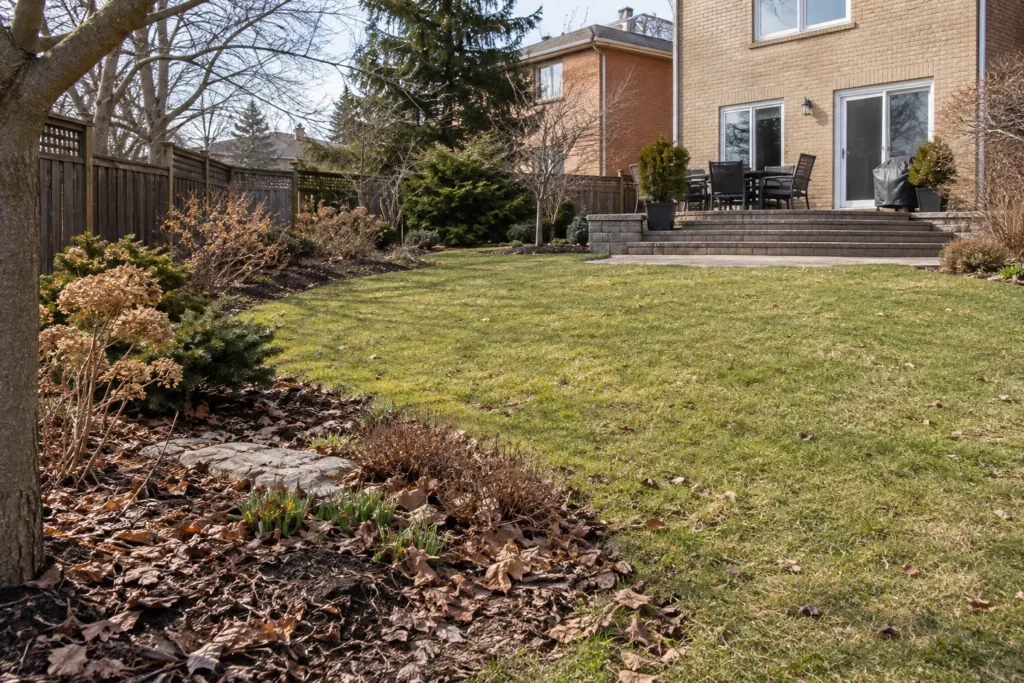
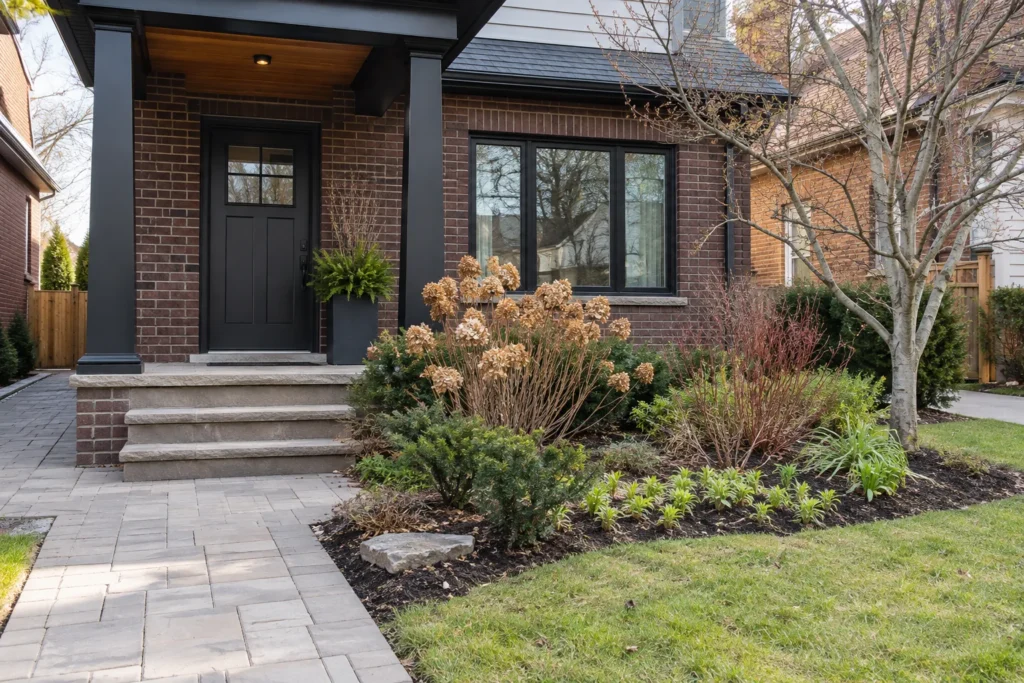
Collect agreed leaves, small debris and loose branches while observing weak areas. Aggressive raking on soft turf can disturb the surface, so the method should suit the ground and grass condition.
Remove unwanted debris selectively and identify retained plants before cutback. Keep emerging shoots, bulbs, plant crowns and intentional habitat material in view while deciding what stays.
Make bed boundaries and walking routes readable again. Surface cleanup can reveal broken edging or settled pavers, which should be recorded rather than silently treated as routine repair.
Prepare agreed beds for subsequent mulch or planting only after weeds, soil condition and drainage are considered. New material should not conceal an unresolved problem or bury plant crowns.
A spring bed can contain dormant perennials, early bulbs, self-seeding plants and last season’s stems in the same small area. Mark valued plants and clarify what the owner wishes to retain. Selective cleanup avoids treating unfamiliar growth as a weed and gives the garden a better starting point for its next stage. Where plant identity is uncertain, resolve that question before removal.
Cutback depends on the plant and its condition. Not every shrub should be pruned heavily in spring, and removing all standing growth at once is not the only way to make a garden presentable. Some retained stems and leaf material can be intentional parts of the garden. Discuss priorities for appearance, access and habitat so the scope reflects the household’s choices.
Bed edges and mulch require similar care. Define the edge without repeatedly raising soil against trunks, siding or paved surfaces. If fresh mulch is requested, consider the existing layer and how water reaches the soil beneath it. Garden maintenance and mulch work can follow a cleanup, but quantities, materials and ongoing care should be identified separately.
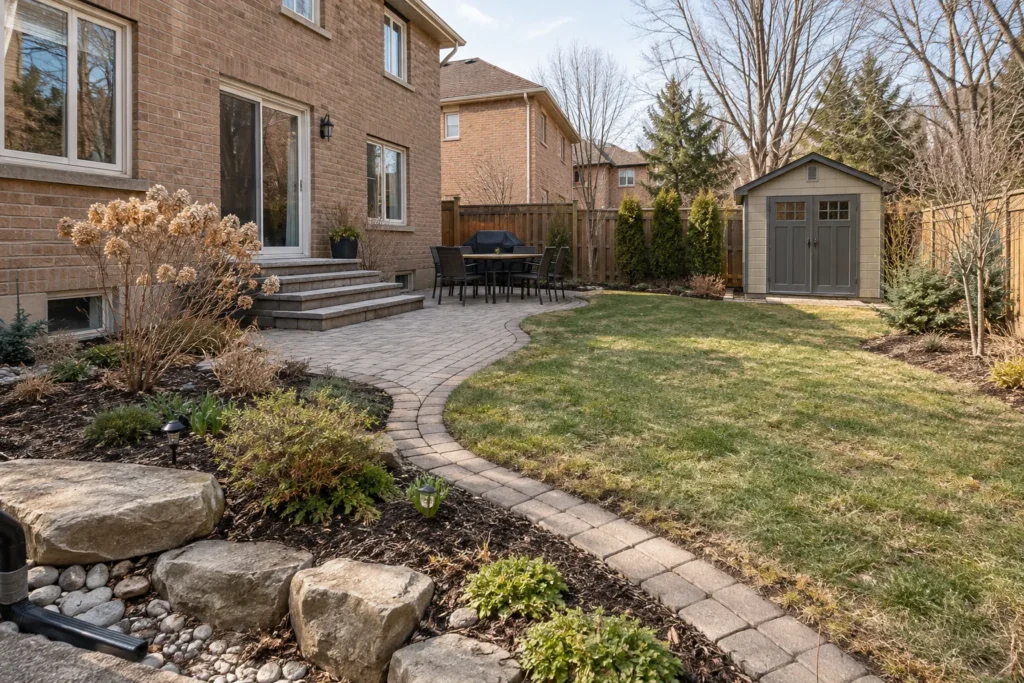
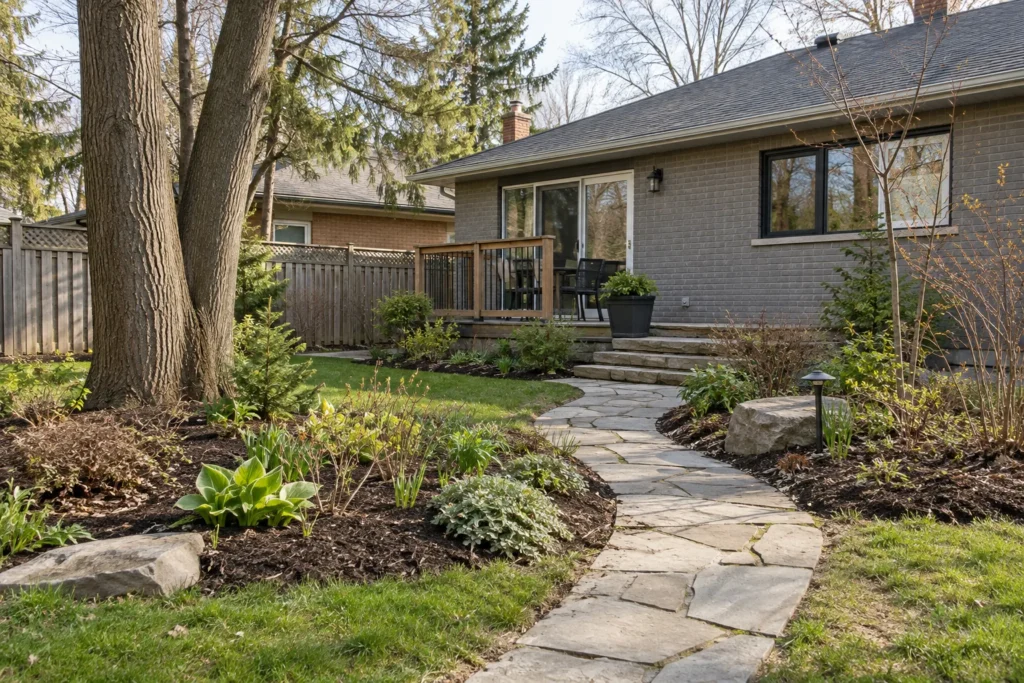
| What becomes visible | Useful cleanup action | Potential follow-up |
|---|---|---|
| Leaves over lawn | Remove agreed accumulation without tearing wet turf | Assess thin grass after conditions and growth are clearer |
| Winter-broken small branches | Collect accessible agreed debris | Refer tree hazards or major pruning to an appropriate specialist |
| A full garden edge | Reveal and tidy the existing boundary | Rebuild a failed edge or redesign the bed separately |
| Low, soft ground | Avoid repeated traffic and document the location | Investigate water source, grade or soil condition |
| Settled pavers | Remove loose surface debris and identify the area | Obtain a defined hardscape repair assessment |
| Existing mulch buildup | Review depth around plants before topping up | Remove excess or prepare the bed before adding material |
Spring cleanup should allow the next work to happen with less disruption. Keep working routes deliberate and avoid spreading collected material across areas already cleared. A narrow side gate, steps or a shared access arrangement can change how debris is moved even when the yard itself is small.
Observe bare patches, animal disturbance and flattened areas without promising one treatment for all of them. Grass may need a later, specific lawn plan after moisture, shade and use are understood. Cleanup does not establish whether overseeding, sod or another approach is appropriate.
Remove accessible loose debris from agreed surface routes where appropriate, while leaving designed swales and finished levels intact. A blocked or damaged underground drain needs separate investigation; simply finding water is not permission to excavate or redirect it.
Keep material piles and repeated traffic away from vulnerable growing areas. Avoid changing soil levels or cutting substantial roots as part of ordinary tidying. Where a tree poses a concern or work could affect protected trees, seek the appropriate assessment before continuing.
Agree whether material stays in an approved onsite location or is removed. Identify access surfaces that need sweeping or protection after hauling debris. Existing household waste, large unwanted objects and construction material should be listed separately from ordinary seasonal yard material.
Send wide photos and describe whether the priority is lawn access, garden preparation, accumulated debris or all of these. Mark areas the household wants retained, including bulbs and beds that may not yet look active.
Define the yard areas, selective cutback, edging and disposal request. State whether mulch, soil, new plants or repairs are being requested as additional work. Access conditions and the ground’s readiness belong in this conversation.
Once the yard is visible, identify genuine follow-up work and who will handle ongoing attention. A residential maintenance arrangement can keep the reset useful, while a one-time visit can end with clearly defined owner responsibilities.
If other landscape construction is planned, consider its working route before investing in a finished spring reset. Heavy access can disturb new edging, fresh mulch and vulnerable lawn. Cleanup can still remove unwanted material and make the yard accessible, while final soil preparation and planting wait until construction is complete. Explain any upcoming work when requesting the estimate so the proposed visit can focus on useful preparation and avoid finishing an area that is about to be disturbed again.
Snowmelt alone does not establish that the ground is ready. Shaded or low areas may remain saturated, and repeated traffic can damage them. Assess access, moisture and emerging plants before deciding how to proceed, and allow the method or timing to reflect those conditions.
Only when it is included in the agreed scope. Mulch requires a suitable prepared bed and a material decision; adding it over weeds, excess old material or buried crowns can create more work. Identify mulch quantities and preparation separately in the estimate.
The treatment should reflect plant needs and the owner’s garden priorities. Some standing growth and leaf material may be intentionally retained. Identify preferred plants and areas before work so the cleanup is selective rather than a blanket instruction to clear everything.
Describe the damage for assessment. Small debris collection and tidying differ from repairing broken edging, rebuilding pavers, correcting grade or replacing plants. Any proposed repair should be clearly scoped and authorized rather than presumed part of seasonal cleanup.
Include the lawn, every bed, the side route and any concentrated debris. Add a close view of damaged or uncertain areas while keeping a wider view for context. Mention narrow gates, stairs and whether collected material needs removal from the property.
Describe what winter left behind and what you want ready for the growing season. Mark plants and areas that should remain undisturbed.
Tell us what you would like to change, repair or maintain around your property.