
Entrances and Arrival
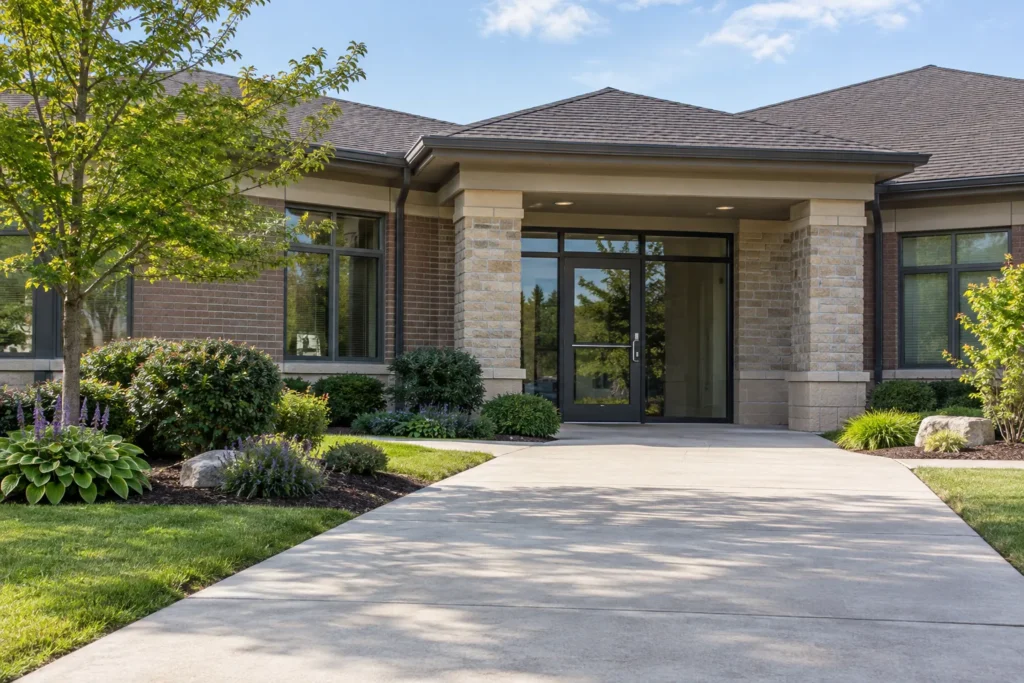
Keep agreed planting and surface-debris tasks tied to the routes people use. Identify furniture, signs, bike areas and other features that influence access and need to remain reachable.
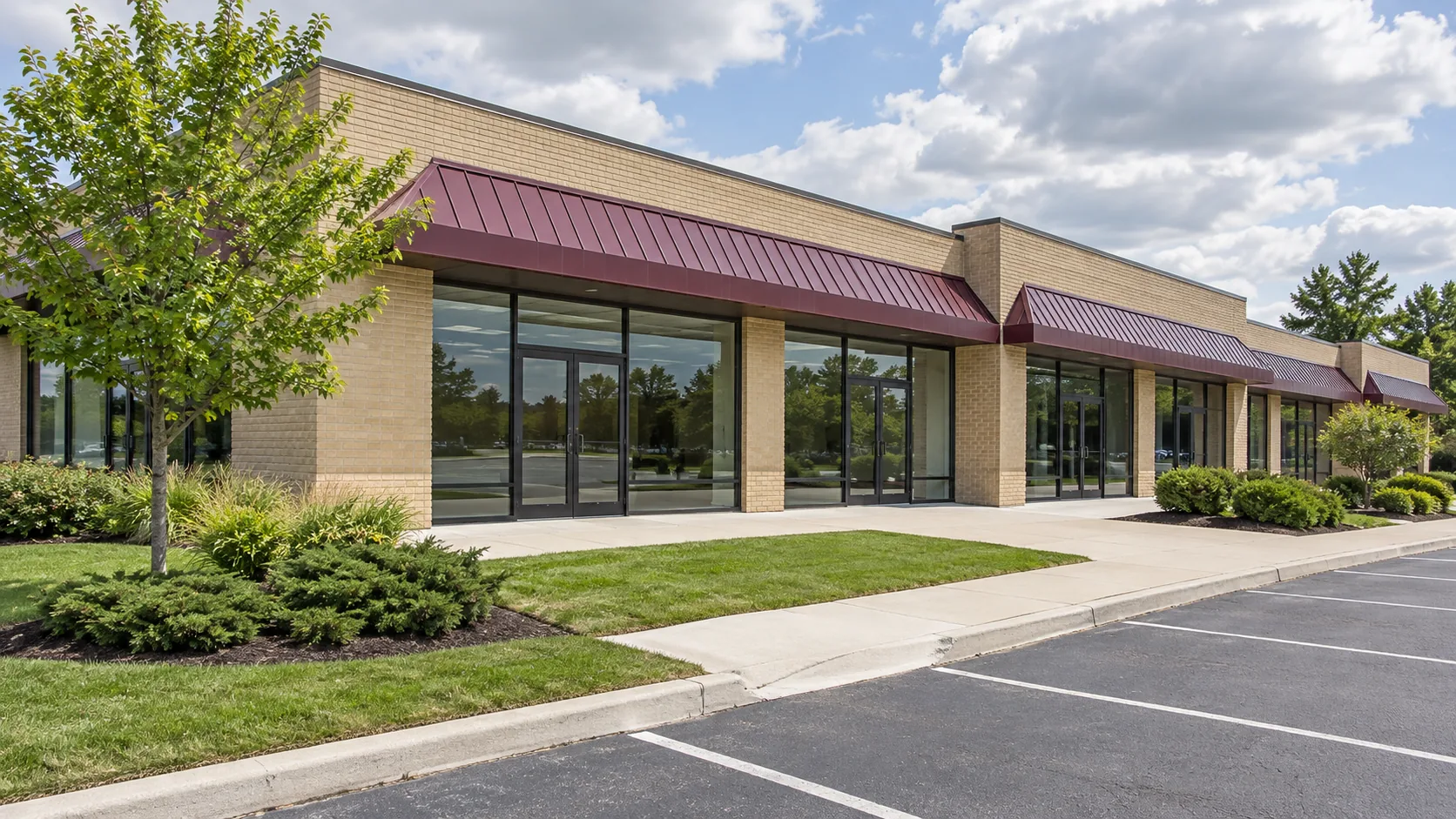
Site First. Finish Second.
Define recurring grounds care through site zones, tasks, access and communication. Keep routine maintenance, seasonal work, corrective repairs and winter operations clear within the property’s own requirements.
A commercial maintenance arrangement should tell the owner or manager what areas are covered, what work is intended and how exceptions are handled. The grounds may serve several tenants or user groups, and a vague instruction to maintain the property leaves too many decisions undefined. A mapped, task-based scope provides a more useful starting point.
Start with a plan or annotated aerial view, then confirm it against ground-level conditions. Mark lawns, beds, private walkways, entrance areas and other exterior zones requested for care. Identify excluded land, public interfaces and areas maintained by tenants or another provider. A boundary drawn around a parcel is not enough if responsibilities differ within it.
Record practical restrictions in each zone. Narrow grass strips, steep ground, occupied patios, parked vehicles, loading activity and locked gates can all affect how work is carried out. Include the routes used to reach the work, not just the finished landscape area. A remote rear bed may require crossing a service yard whose access must be coordinated with the site contact.
Then describe the tasks. Mowing, trimming, bed weeding, selective pruning and surface-debris attention should have a stated coverage rather than being inferred from a general label. Frequency and standards are agreed for the actual property; there is no universal schedule established by this page. Record seasonal changes and weather-related access limitations so the working scope remains realistic.

| Zone or task | Routine coverage to specify | Separate or conditional scope |
|---|---|---|
| Lawn areas | Mapped areas, mowing, trimming and edge attention | Renovation, sod, soil correction or drainage investigation |
| Garden beds | Weeding, edge care and identified pruning | New planting, major reductions or redesign |
| Private paved routes | Agreed loose surface-debris attention | Pressure washing, paver repairs or structural work |
| Seasonal cleanup | Timing basis, coverage and material handling | Unlisted debris, additional accumulation or extra visits |
| Condition observations | Contact, reporting method and scope limits | Diagnosis, professional inspection or corrective construction |
| Winter operations | Distinct winter agreement | Triggers, priorities, salting and return visits specifically agreed |
Keep agreed planting and surface-debris tasks tied to the routes people use. Identify furniture, signs, bike areas and other features that influence access and need to remain reachable.
Map the actual cutting areas and obstacles. Note locations that stay soft, suffer repeated wear or cannot be reached while vehicles or equipment occupy adjacent space.
Define the maintained bed edges and selected pruning responsibilities. Mature plant spread, shared boundaries and utility access may need specific instructions from the manager.
State whether rear grounds and loading-area landscape strips are included. Distinguish ordinary grounds debris from dumped waste, hazardous material and building-maintenance tasks.
Recurring work should preserve the useful condition of the grounds, but it cannot correct every underlying defect. A lawn repeatedly rutted in the same corner may have a moisture or access problem. Replacing grass without understanding it can repeat the failure. Similarly, frequent weeds at a failed edge may indicate a repair need rather than insufficient routine attention.
Garden care should reflect the actual planting. Identify valued specimens, new installations and plants needing particular treatment. Confirm the scope of pruning so a request for tidy beds does not become an unauthorized major reduction. Large tree work and tree-health or hazard assessment should be referred to an appropriate specialist rather than implied as a grounds-maintenance credential.
Paved surfaces also need a clear boundary. Loose debris attention is different from evaluating a failing base, lifting pavers or altering runoff. Record visible damage through the agreed contact method, then obtain a defined scope for correction. Commercial landscape enhancements provides a route for those separately authorized improvements while routine care continues in the agreed areas.
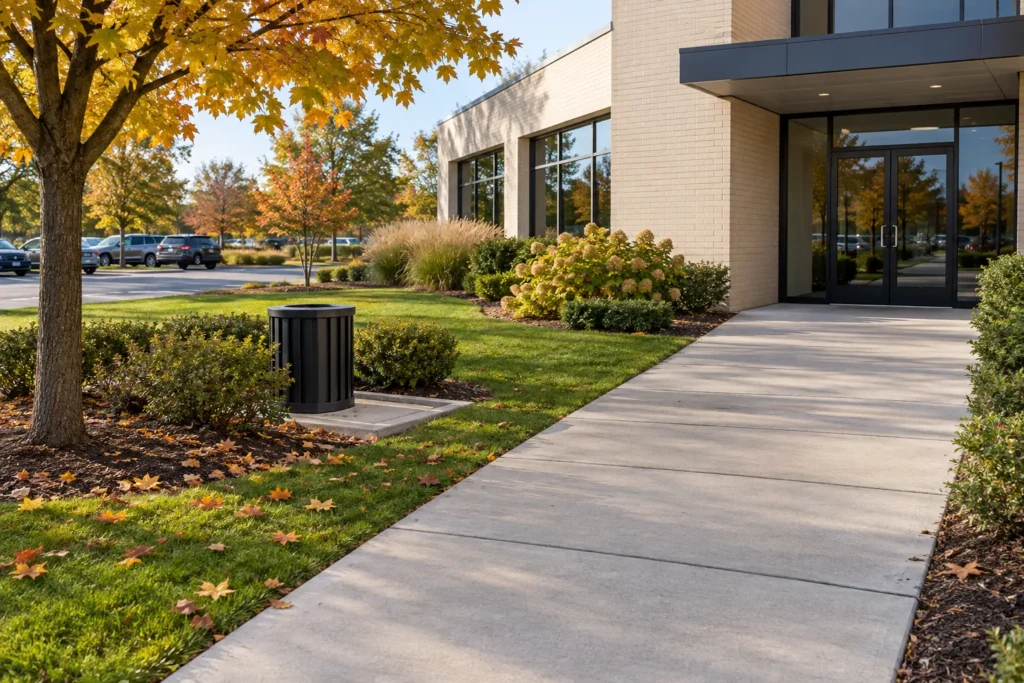
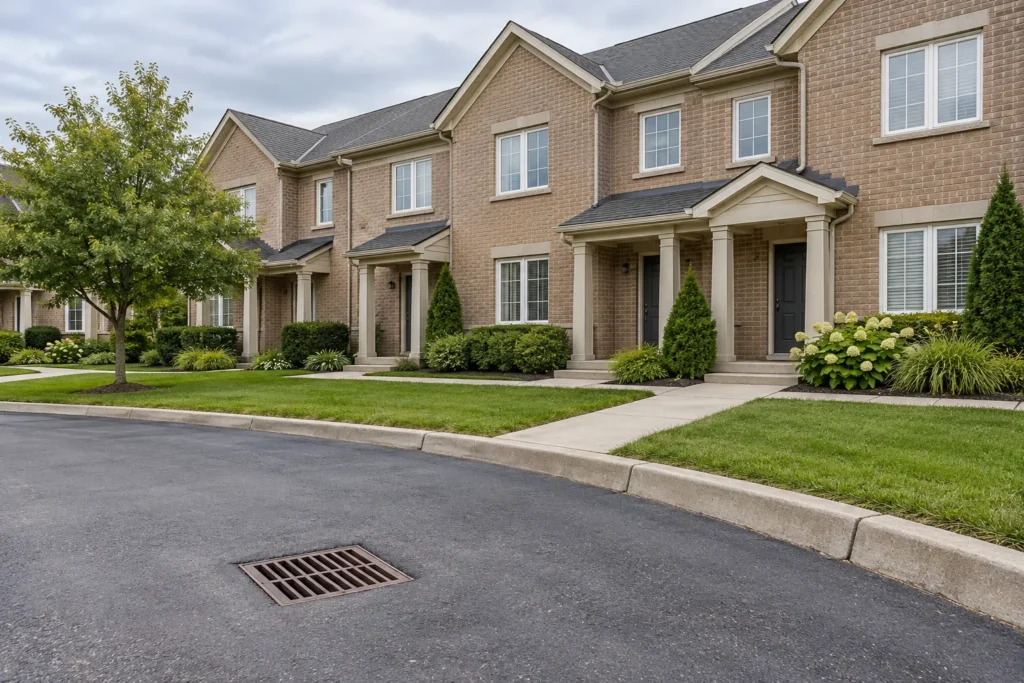
Maintenance involves recurring decisions, especially when access is blocked or conditions differ from the plan. Establish a site contact and an authorized approval contact; they may not be the same person. The arrangement should explain what information is needed and how a proposed change moves from observation to approval.
Decide how a locked area, parked vehicle, active delivery or wet ground will be communicated. State how missed or restricted work is treated under the arrangement. Do not assume the provider can move tenant property, interrupt operations or return automatically at no additional cost.
Define what visible grounds conditions are to be reported and by what method. Photographs and a mapped location can make the issue understandable. Observation during maintenance is not an engineering inspection or a guarantee that every hidden defect will be identified.
Require an identified scope for replacement planting, repairs, mulch additions or other improvements outside recurring tasks. Record who can approve the proposal and how authorization is communicated. A tenant request or casual onsite conversation should not silently change the owner’s agreement.
Identify any visit records or reporting requirements the property needs and confirm them in the arrangement. Keep site instructions current when tenants, contacts or access arrangements change. Confirm the available reporting method, frequency and documentation requirements in the agreement.
Spring and fall can require concentrated effort beyond a routine growing-season visit. Winter debris, leaf accumulation, bed preparation and material removal should have a stated coverage and scheduling basis. Clarify whether those tasks are included, separately priced or authorized as needed. The site’s changing conditions may call for more than one visit, but that should be discussed rather than presumed.
New lawn and planting also introduce establishment responsibilities. Determine who will water, monitor and protect the work between visits. Regular maintenance at an agreed frequency does not necessarily supply the attention a new installation needs. Keep the establishment period and any restrictions on use visible to the site contact and other providers working around it.
Winter operations require their own agreement. Commercial snow removal and salting and ice management involve priority routes, snow storage, triggers, return visits and record requirements specific to winter service. A summer site map can help, but it does not establish winter operating terms or mean every parking area and path is automatically covered.
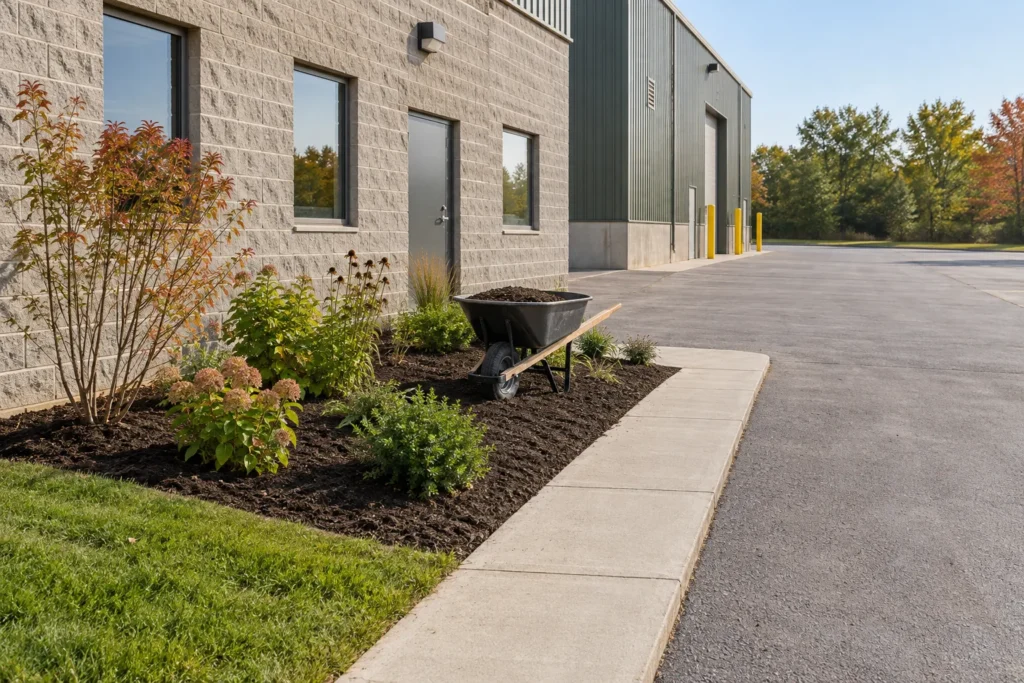
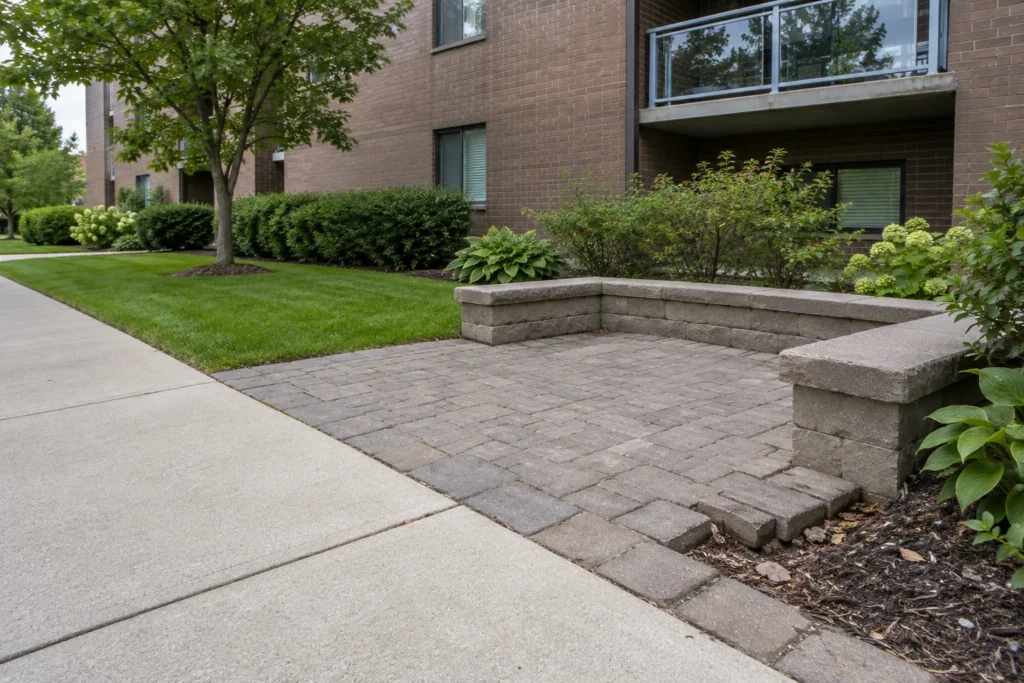
Provide the address, a site map, requested tasks and photographs of all maintained areas. Identify building operations, shared spaces and known recurring problems. Explain any reporting or procurement requirements that a proposal must address.
Walk through the zones, access and exclusions with the authorized contact. Separate recurring care from seasonal work, projects and specialist services. Agree the intended frequency and how conditions affecting work will be communicated.
Keep instructions current as planting, tenants or site use changes. Assess proposed improvements separately and update the maintenance map where completed work affects care. Property-manager coordination can help organize responsibility across managed sites.
Two proposals can use the same service name while describing different work. Compare the map, lawn and bed tasks, seasonal inclusions, material handling, frequency, access assumptions and reporting requirements. Ask how additional work is authorized and what happens when part of the site is inaccessible. A lower total is not meaningful if the coverage omits areas the property needs maintained.
Also identify which items belong to other providers. Building systems, irrigation repair, electrical work, roof drainage, major tree care and professional site assessment should not disappear into the general word grounds. A defined arrangement makes coordination easier because each party can see what it is responsible for. Larger changes to the site belong in a commercial landscape project rather than an informal expansion of routine visits.
If the property uses a proposal form or procurement process, provide it with the site information. Insurance documents, reporting formats, access procedures and other owner requirements should be stated for review rather than presumed from a general service description. Ask providers to identify any exceptions or unclear items before comparing proposals. Ask for any required documentation and have proposed service arrangements confirmed before accepting the agreement. The final agreement should reflect the actual accepted scope and confirmed requirements.
The required frequency and timing must be agreed for the specific property and tasks. Site use, growth, access and seasonal work can differ substantially. Provide your requirements for assessment; this page does not promise a universal weekly schedule or response standard.
Only if the agreed scope says so. Seasonal accumulation and material work can differ from routine lawn and bed attention. Identify coverage, disposal, materials and any additional visits clearly so the manager can compare proposals on the same basis.
The arrangement should define the contact and treatment of restricted work. Gates, vehicles, deliveries and wet conditions can prevent safe or useful access. Agree communication and any return-visit terms in advance rather than relying on an automatic assumption.
Provide a separate address, map and requirement set for each site. Access, task coverage and approval contacts may vary even under one manager. The proposal should show which properties and responsibilities are included and how any requested reporting is to be handled.
Observation and repair are different responsibilities. A visible problem can be reported through the agreed process, but corrective construction or replacement should have its own defined scope and authorization. Urgent building or safety concerns may require the appropriate specialist or property response.
Share the site map, maintained areas and operational expectations so the proposal can be specific to the property.
Tell us what you would like to change, repair or maintain around your property.