Skip to content

Explore services

Request an Estimate
Managed multi-building property with practical common landscaping and clear service zones

Landscaping for Property Managers in Burlington

Landscaping for Property Managers

Organize landscape care and improvements around clear site boundaries, authorised contacts, documented priorities and the way each managed property operates.

Property managers need a landscape scope that can be understood by people who are not standing on the grounds every day. Common lawns, entry beds, tenant patios, service lanes and privately controlled areas may sit beside one another, while responsibility for each belongs to a different party. A useful arrangement makes those boundaries visible and connects them to the work being requested.

Burlington Landscaping approaches managed-property enquiries through the site, its operating needs and the approval structure. Recurring care, deficiency repairs and capital improvements have different authorisation and planning requirements. Keeping them distinct makes estimates more useful and reduces uncertainty about whether an observed problem is included work, a separate proposal or an issue the manager needs to refer elsewhere.

Start with an area map and an authorised contact

A site plan or marked aerial view can show common lawns, beds, entrances, walkways and service areas. Identify exclusions as carefully as included areas. Tenant-controlled patios, adjacent municipal land and another owner’s frontage should not become assumed maintenance space because they are nearby. At mixed-use properties, show where residential and commercial responsibilities meet.

The contact structure should explain who can request routine changes, approve additional work and receive reports. An on-site superintendent may identify a concern while spending authority rests with a manager or board. Record the appropriate route for each type of issue rather than asking whoever happens to be available beside the entrance to approve a permanent change.

Access instructions belong with that information. Gates, parking, loading windows, waste collection and resident activity affect the work. Identify restrictions that apply throughout the site and those unique to one area. For multiple properties, a common administrative approach is helpful, but each location still needs its own practical access and scope details.

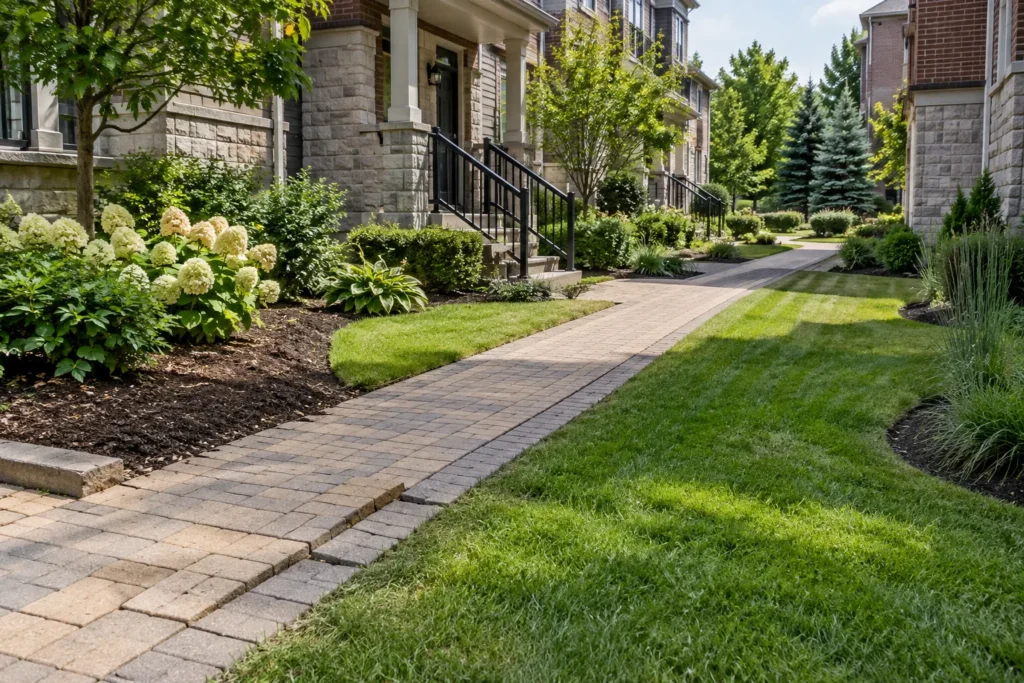
Common lawn and bed zones visually separated for scope definition
Site contact meeting point beside an uncluttered property entrance

Separate the work by purpose and authority

Separate the work by purpose and authority
Type of workWhat the scope should establishHow approval differs
Recurring grounds careIncluded areas, tasks, frequency and seasonal limits.Agreed routine work follows the service arrangement.
Local deficiencyThe symptom, affected area and proposed investigation or repair.Confirm whether it is included or needs a separate approval.
Landscape enhancementThe desired improvement, construction limits and restoration.Approve a defined project before changing the property.
Urgent reported conditionLocation, immediate concern and the responsible contact.Use the agreed notification and authorisation route.
Winter transitionStorage, access, vulnerable features and seasonal handover.Confirm the separate winter scope and operating terms.

A useful specification describes the grounds, not just the service name

Labels such as complete maintenance can conceal important differences. The agreement should make the expected work understandable in relation to the site and the standards the manager is trying to maintain.

Lawns and edges

Define the grass areas, trimming boundaries and hard surfaces affected by cleanup. Identify slopes, isolated strips and restrictions around resident property. Lawn renovation and major grade repair should not be assumed to be part of ordinary mowing.

Gardens and planting

Record which beds receive weeding, pruning, debris removal or seasonal attention. Identify retained plants and access limitations. New planting, plant replacement and redesign may need a separate proposal even when routine bed care is included.

Routes and shared access

Coordinate work near entrances, accessible routes, loading areas and waste collection. A landscape task should not casually obstruct the path people use to reach the building. Discuss temporary work limits and the communication needed for disruptive operations.

Waste and restoration

Clarify how generated material is handled, where it may be staged and which surrounding areas are restored after project work. Large dumped items, contamination and unrelated construction debris need their own scope rather than an assumption of unlimited removal.

Use deficiencies to choose the next action

A deficiency report is most useful when it identifies the location, visible condition and practical effect. A lifting paver beside an entrance, a dead planting strip and a wet lawn may all merit attention, but they do not require the same response. Photographs with wider context help the manager distinguish an isolated defect from a recurring site condition.

The next step may be observation, routine care, a repair estimate or referral for a qualified assessment. Avoid turning a photograph into a confident diagnosis that the evidence cannot support. Water, structure and tree-related issues can extend beyond a surface treatment. The proposed scope should state what is being corrected and which assumptions remain to be checked.

Coordinate ordinary maintenance routes with tenant and service activity. Trucks at a loading door, moving vehicles and pedestrians can change access during a visit. Include restrictions and preferred coordination arrangements in the site information. Commercial property maintenance provides the recurring grounds-care pathway, while this service focuses on managing requirements, contacts and authorisation across the property.

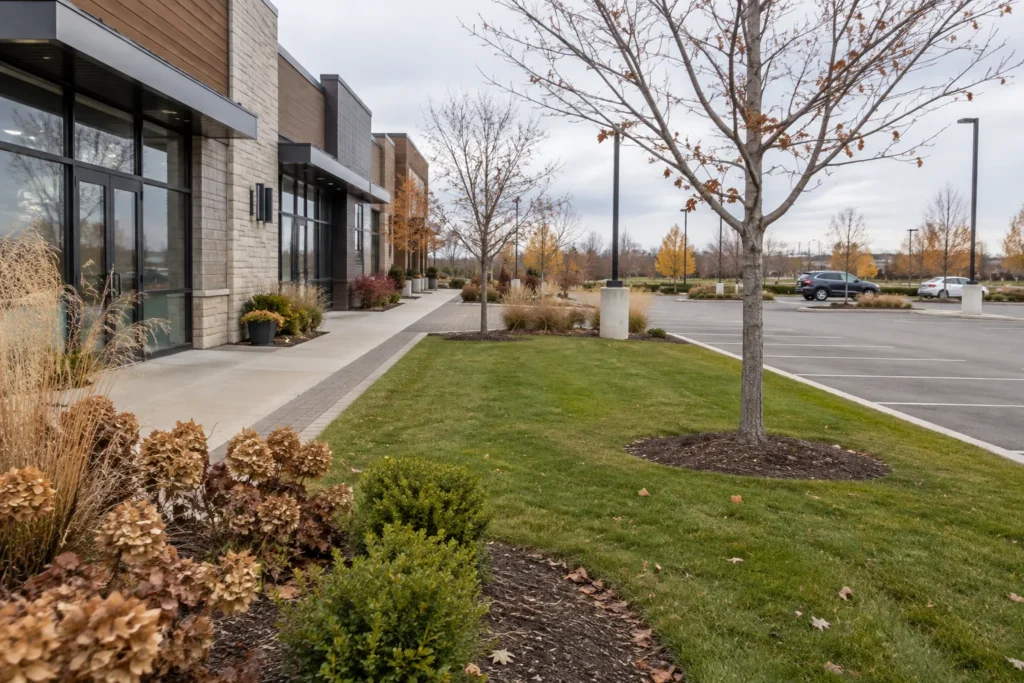
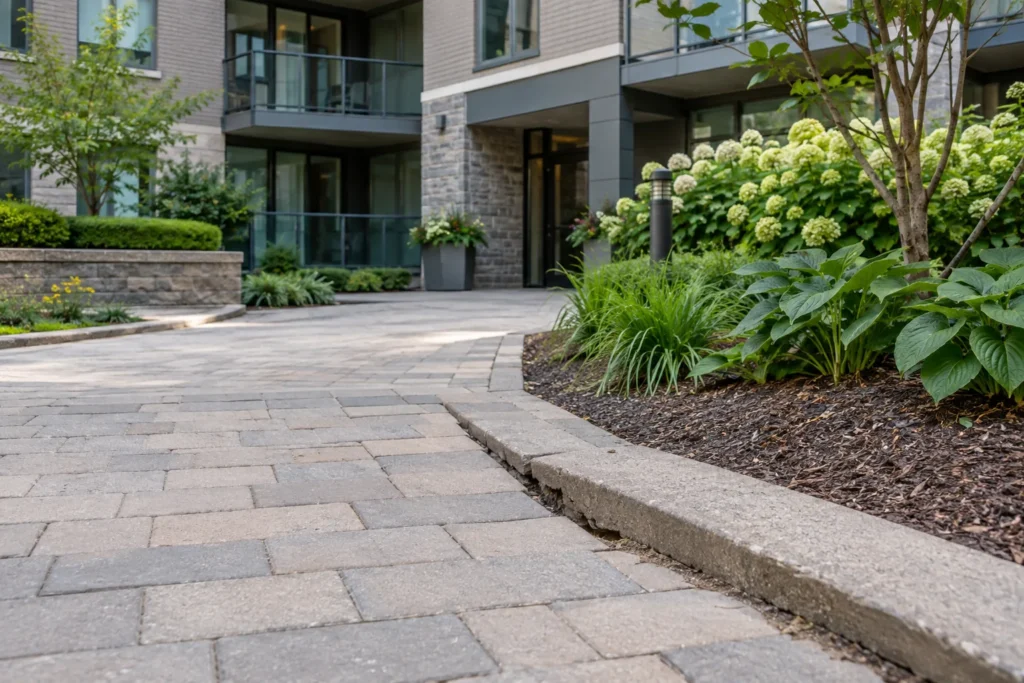
Visible localized deficiency requiring project authorization
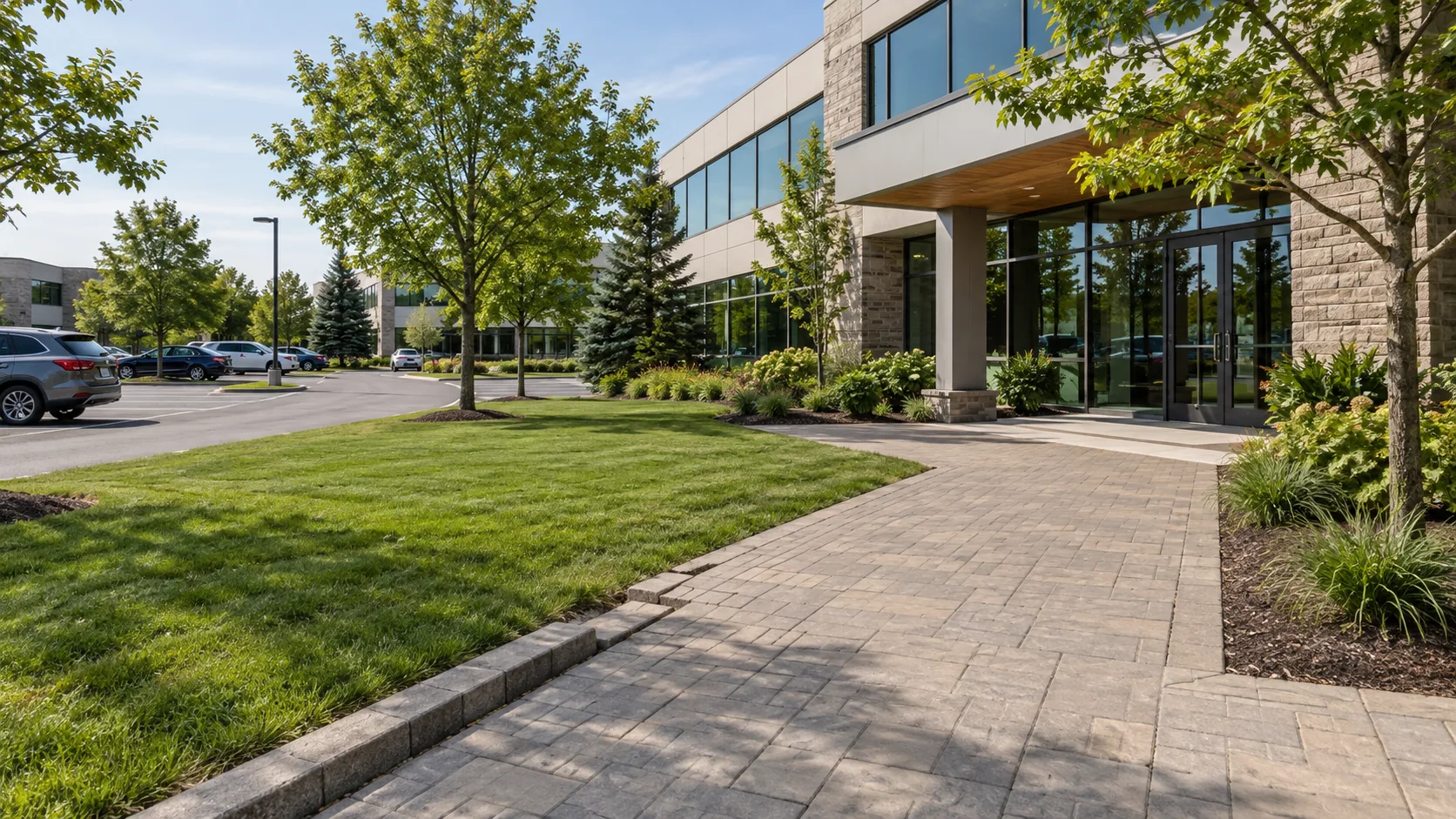
Routine maintenance route clear of loading and tenant access

Make additional work reviewable before it starts

A useful proposal identifies the affected area, intended result, included work and boundaries. If replacing planting, describe the preparation and establishment responsibilities as well as the supplied plants. If repairing a path, clarify the limits of removal, supporting work, transitions and reinstatement. A short statement such as tidy the front is too open to interpretation for a project approval.

Discuss what happens if hidden conditions change the work. Excavation can expose poor support, buried material or services that affect the original scope. The approval route should allow the manager to review a concrete change before unnecessary additional work proceeds. Authority limits and required supporting information should be established in advance.

For board or ownership review, compare options by the property problem each one addresses. A cosmetic improvement can be worthwhile, but it should not be presented as a repair to unresolved water or pavement movement. Commercial landscape enhancements is the appropriate project route for approved changes beyond the recurring care arrangement.

Plan seasonal handovers and capital work together

Autumn is a useful time to identify winter access, suitable snow storage and planting that could be affected by clearing. Record exposed edges, drains, gates and vulnerable fixtures before they are hidden. Leaf removal and final grounds tasks should be coordinated with the winter setup without assuming they are included in every maintenance agreement.

Capital work should consider when access will be available and what it means for ordinary use. A redesigned entry bed may require pedestrian arrangements; a path repair may affect the route from parking to the building. Coordinate deliveries and restoration so one contractor’s finished area does not immediately become another contractor’s access lane.

For a managed residential site, condo and multi-residential landscaping focuses on shared grounds and resident interfaces. Property manager snow service addresses the winter coordination that follows. The same area map can support both discussions, but snow triggers, ice treatment and return visits need their own confirmed terms.

Seasonal landscape-to-winter transition with storage zones understood
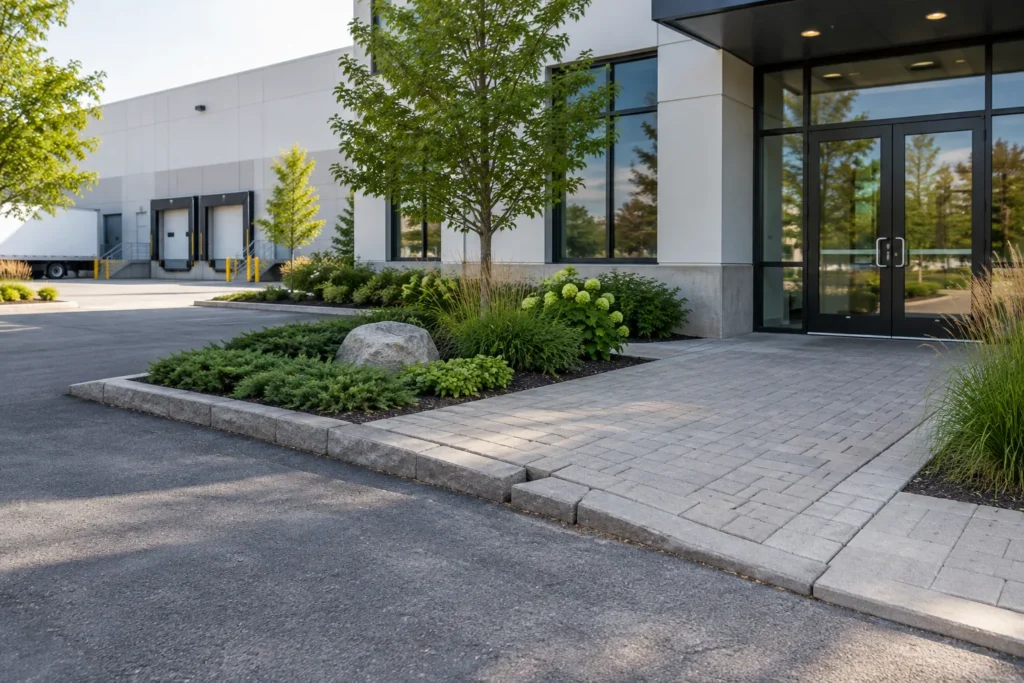
Capital landscape enhancement area distinct from recurring care

A clear route from enquiry to managed grounds work

  1. Assemble the site information

    Provide addresses, marked grounds, included areas, known concerns and current service needs. Identify the decision-maker, on-site contact and any reporting or procurement requirements. For multiple sites, keep each location’s scope distinct even when the management contact is shared.

  2. Review priorities and service boundaries

    Separate recurring tasks from repairs and desired improvements. Record access, sensitive areas and the effect on residents or tenants. Identify matters requiring further assessment so the initial enquiry does not become an unsupported promise to solve every site condition.

  3. Confirm the proposal and approval route

    Agree what work is authorised, how changes are reviewed and which documents or updates are required. Clarify invoicing references and site identifiers where relevant. Communication and documentation arrangements should reflect the actual service rather than assumed software or reporting capabilities.

  4. Maintain information as the property changes

    Update contacts, access restrictions and the area map after approved projects or occupancy changes. Review seasonal needs and recurring deficiencies. Good administration supports practical work only when the details remain current enough to guide people on the ground.

Multi-site consistency should preserve site-specific needs

A portfolio can use a common format for quotes, contacts and work requests without treating every location as identical. One property may have extensive common lawns, another mostly entrance beds and narrow pedestrian routes. Access, loading, storage and resident activity can differ enough to change how similar tasks are completed.

Use a site identifier on photographs and requests so observations are not confused between addresses. If a manager sends a list of concerns, group them by property and area rather than mixing unrelated items into one broad instruction. This helps produce estimates that can be checked against the right location and approved within the correct budget.

Scope clarity also supports continuity when a manager or site contact changes. Keep the current agreement, area map and outstanding approved work understandable to the next person. A useful handover records responsibilities and open decisions, rather than relying on informal knowledge held by one employee or resident.

Managed-property landscaping questions

Can one enquiry cover several Burlington properties?

Yes, provide each address with its own areas, access details and requested work so suitability and service arrangements can be assessed. A common management contact is useful, but it does not remove the need for a property-specific scope.

Does recurring care include repairs and new planting?

Only where the agreement expressly includes them. Routine mowing or bed care differs from rebuilding a path, replacing failed planting or redesigning an entrance. Identify additional work and the authorised approval route before assuming it is covered.

Can residents or tenants request changes directly?

The manager should establish who may request work and who can authorise it. A reported concern can be passed through the agreed contact route. Permanent changes should follow the property’s authority structure rather than informal instructions from whoever is nearby.

What reporting can be included?

Discuss the information needed, such as dated photographs, work summaries or deficiency locations, and confirm what is available in the proposed arrangement. Do not assume a particular portal, inspection frequency or documentation package unless it has been agreed.

Can landscaping and snow use the same contact structure?

That can be practical, but the winter agreement still needs its own included areas, priorities, triggers, storage and communication terms. Review the seasonal handover so the grounds information supports winter work without creating assumptions about coverage.

What should a property manager send first?

Provide the address or site list, area map if available, requested recurring tasks, known deficiencies and the contact authorised to approve work. Include access restrictions, resident or tenant considerations and any proposal format the ownership or board requires.

Landscaping for Property Managers Gallery

Define the grounds, contacts and approval needs

Share the properties and the work you need to coordinate. A clear starting brief can separate routine care from project decisions and identify the next useful assessment.

  • Property addresses and marked areas
  • Current care needs and known deficiencies
  • Authorised manager and on-site contact
  • Access, reporting and proposal requirements

Tell us what you would like to change, repair or maintain around your property.