
Skip to content

Explore services

Request an Estimate
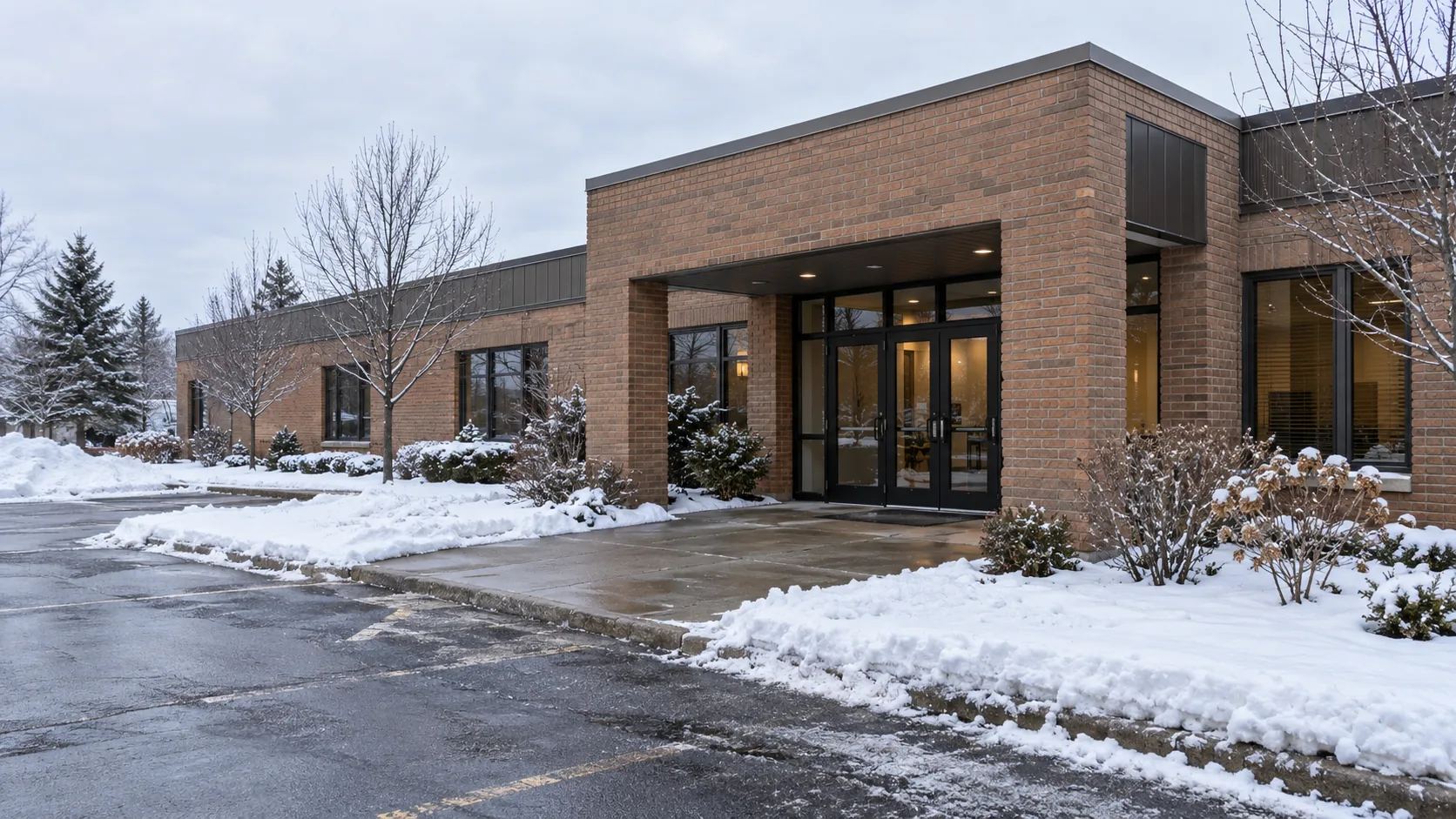
Believable commercial parking lot and entrance cleared with realistic snow-storage banks

Commercial Snow Removal in Burlington

Commercial Snow Removal

Coordinate commercial winter clearing around the routes people and vehicles use, with property-specific priorities, storage and agreed operating terms.

Commercial snow removal begins with how the site operates. Customer parking, staff arrival, loading, waste collection and pedestrian access may overlap in the same small area. A plowed rectangle is not a complete plan if the entrance route is blocked, the loading door cannot open or the pile removes visibility at the driveway.

A Burlington commercial property needs a clear winter scope showing included surfaces, priorities, storage and access restrictions. The agreement should also define triggers, the timing approach, prolonged-storm work and any separate ice treatment. Those details vary by provider and site, so the service enquiry should make them reviewable rather than assume one universal winter package.

Map vehicle lanes and the route to the building

Identify travel lanes, stalls, accessible parking, entry drives and the pedestrian routes between them. A parking plan should account for vehicles that remain overnight and for areas that become inaccessible during operating hours. Tell us when the site is occupied and where temporary access restrictions are most difficult to manage.

The walking route needs its own scope. Include entrances, ramps, steps, landings and connections from parking rather than assuming a vehicle-area pass covers them. Priority routes should be visible on the area map so the requested sequence reflects the building’s use. A side entrance used by staff may matter more operationally than its size suggests.

Identify public sidewalks and adjoining land separately from the private property. A commercial agreement should not quietly assume authority over another owner’s surface or municipal infrastructure. Where responsibility is uncertain, the manager should resolve it before the work area and price are confirmed.

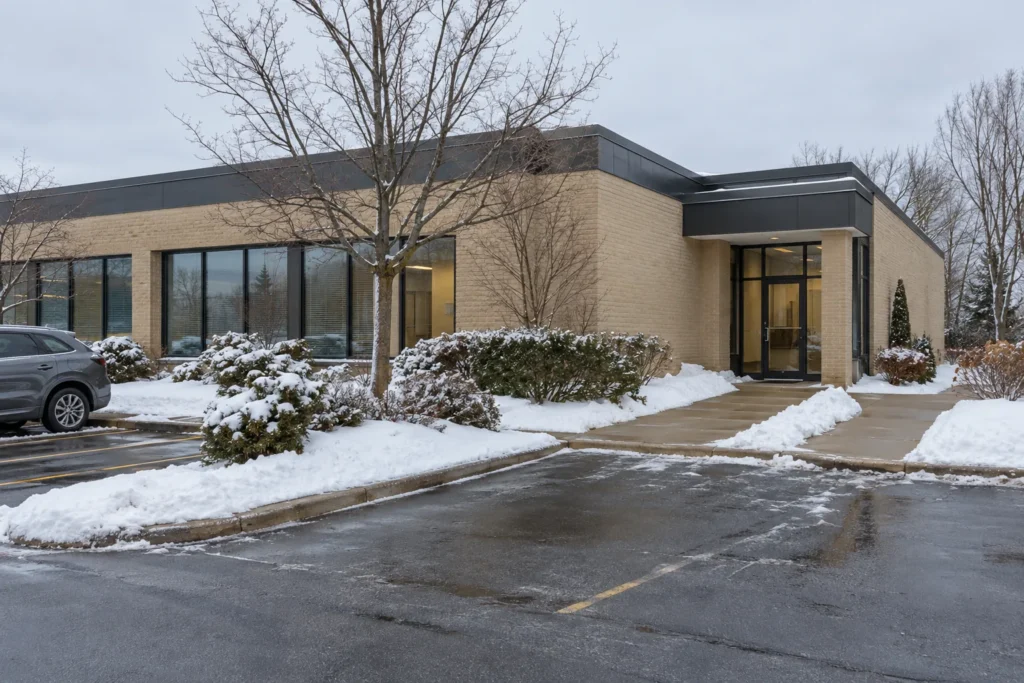
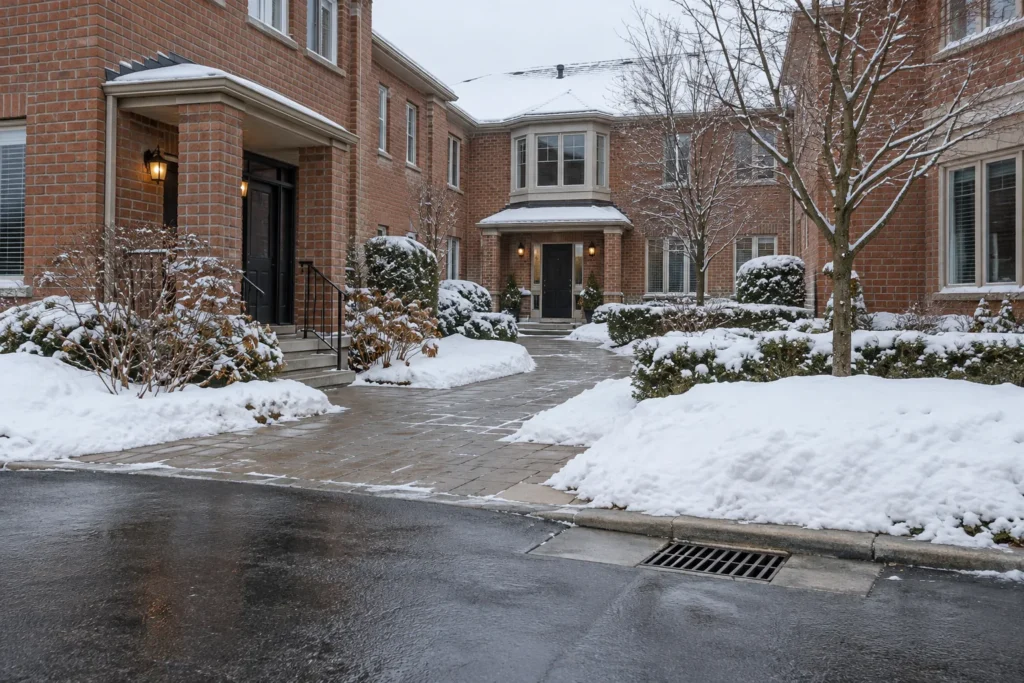
Parking-lot travel lane separated from parked vehicles
Priority building entrance and accessible pedestrian route

Organise the site by its operational needs

Organise the site by its operational needs
AreaInformation neededConflict to prevent
Entrance and pedestrian routeOpening hours, accessible connections and included steps or ramps.A cleared lot ending at an obstructed door approach.
Parking and travel lanesOvernight vehicles, traffic flow and unavailable sections.Treating occupied stalls as fully accessible work areas.
Loading and service doorsDelivery windows, turning space and door movement.Snow storage consuming the space needed for a vehicle to operate.
Waste and utility accessRequired routes, enclosures and service schedules.Piles blocking collection or equipment access.
Storage and drainage marginsSuitable pile locations and meltwater routes.Banks blocking visibility, drains or pedestrian circulation.

Snow storage is an operating decision

Choose pile locations with the property’s use in mind. A convenient pushing direction can still be unsuitable if it blocks a loading turn, exit, sightline or drain. Review the available space before winter and consider how the site changes as snow accumulates. A location that works for an early event may become constrained later.

Keep piles clear of features that need access or protection, including doors, service equipment, low fixtures and vulnerable planting. Consider where meltwater travels as conditions warm. A bank beside a busy shaded walk can feed water back across the route. Storage should support the broader water plan rather than simply move snow out of the parking stalls.

If the property has limited storage, discuss what further relocation or off-site removal might involve and whether it is available. That is a separate scope decision with access and authorisation requirements. Do not assume ordinary clearing includes unlimited piling, removal or movement to adjoining land.

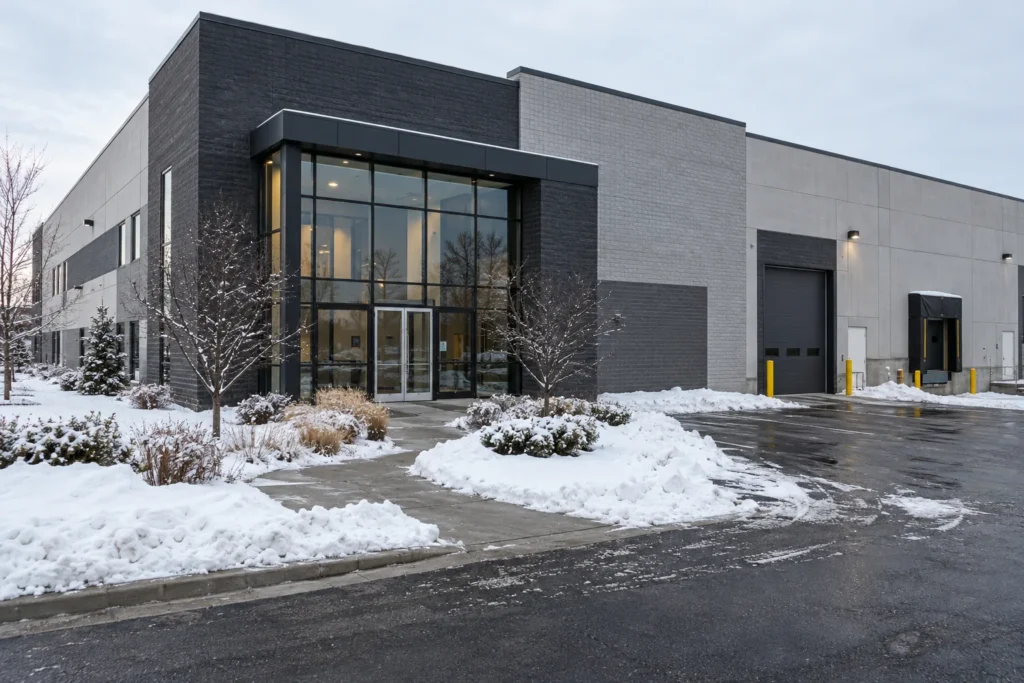
Loading access kept clear beside designated snow storage
Snow bank location avoiding sightlines and drainage inlet

Set the operating terms before the first event

A practical winter agreement defines when work begins, how priorities are applied and which additional services require approval. It should match the actual offer and the property’s operating constraints.

Trigger and covered event

Confirm the accumulation or weather condition that initiates service and how it is assessed. Distinguish automatic work under the agreement from work requiring a request. Do not infer a trigger from municipal road-clearing thresholds or a neighbouring property’s contract.
Timing and priority

Provide operating hours and critical access needs, then review what can actually be offered. Site priorities and target timing should be written clearly without turning a preference into an unsupported guarantee. Ask how the provider communicates disruptions or restrictions.

Continuing or repeated snow

Define the approach to prolonged storms, further accumulation and later clearing. A pass during an event does not mean every surface remains bare while snow continues. Clarify which return work is included and what would be a separately authorised request.

Treatment and documentation

Confirm whether ice treatment, observations and work records are included and in what form. Commercial salting and ice management is a distinct service scope. No documentation format or continuous monitoring should be assumed unless it is agreed.

Conditions can change after a clearing pass

A long storm can leave partial accumulation between visits, even on a property with a clear service arrangement. Traffic, drifting and later municipal plowing can also change conditions. The agreement needs to explain how these situations are handled and how the site contact reports a specific concern without assuming every report automatically authorises extra work.

Meltwater and refreeze can affect entrances after snowfall has stopped. Roof discharge, low pockets and shaded routes deserve attention in the site review. Removing loose snow is not the same as correcting drainage or guaranteeing an ice-free surface. Where recurring water crosses a route, the manager may need a longer-term property repair as well as the agreed winter response.

Keep the link between parking and the building usable within the defined scope. A narrow gap left by parked vehicles, a blocked ramp or a pile at the end of the walk can break that connection. Discuss the areas that cannot be reached under normal occupancy and what cooperation is needed from staff, tenants or other site users.

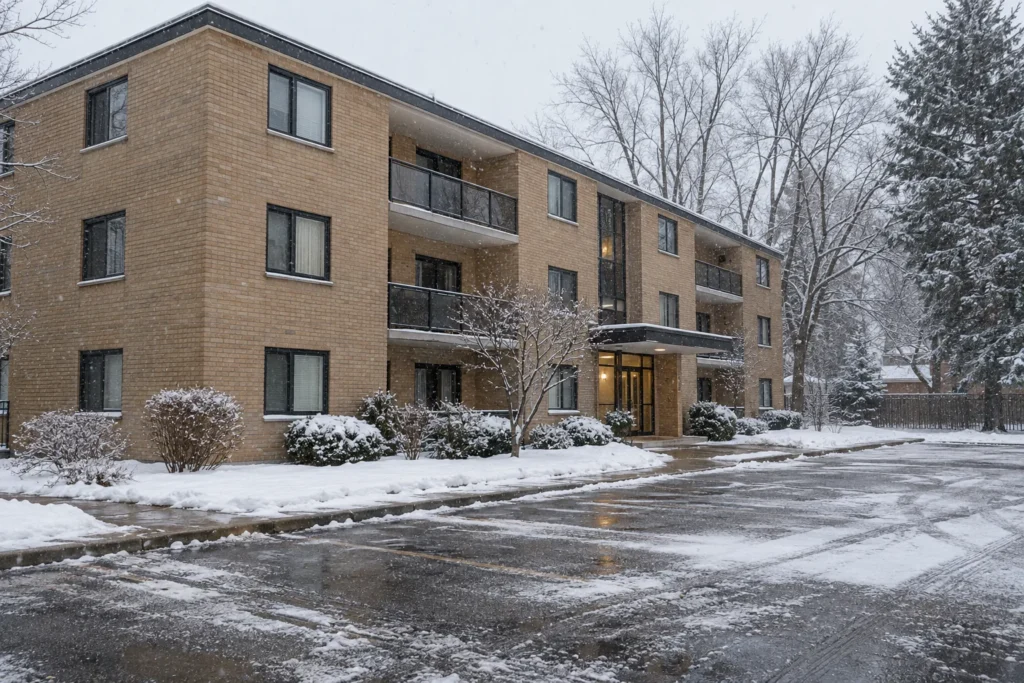
Prolonged-storm condition with honest partial accumulation
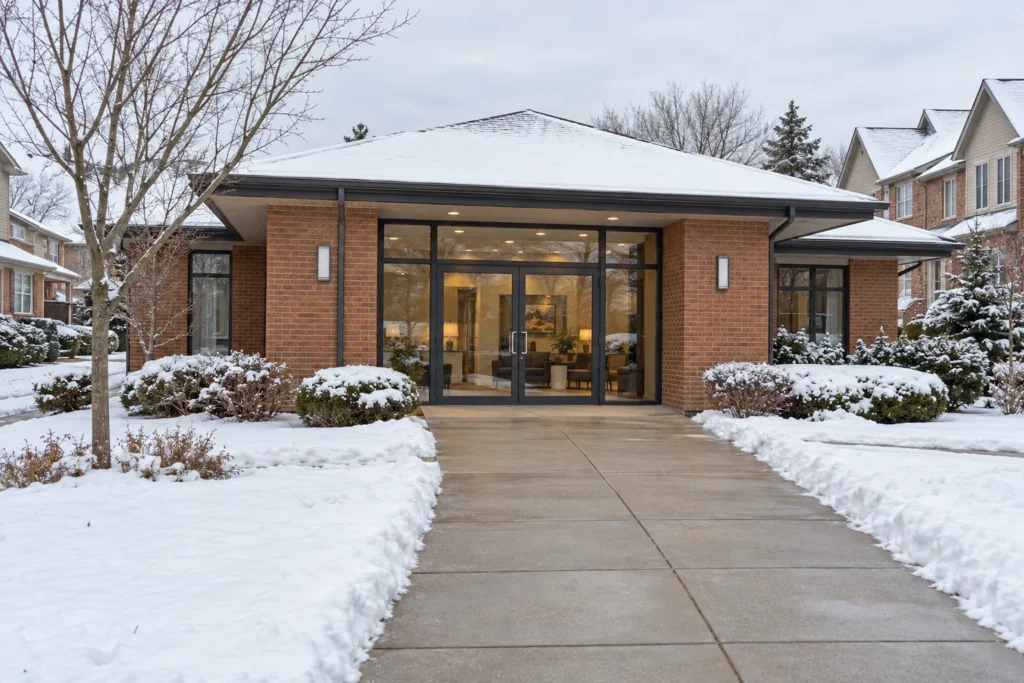
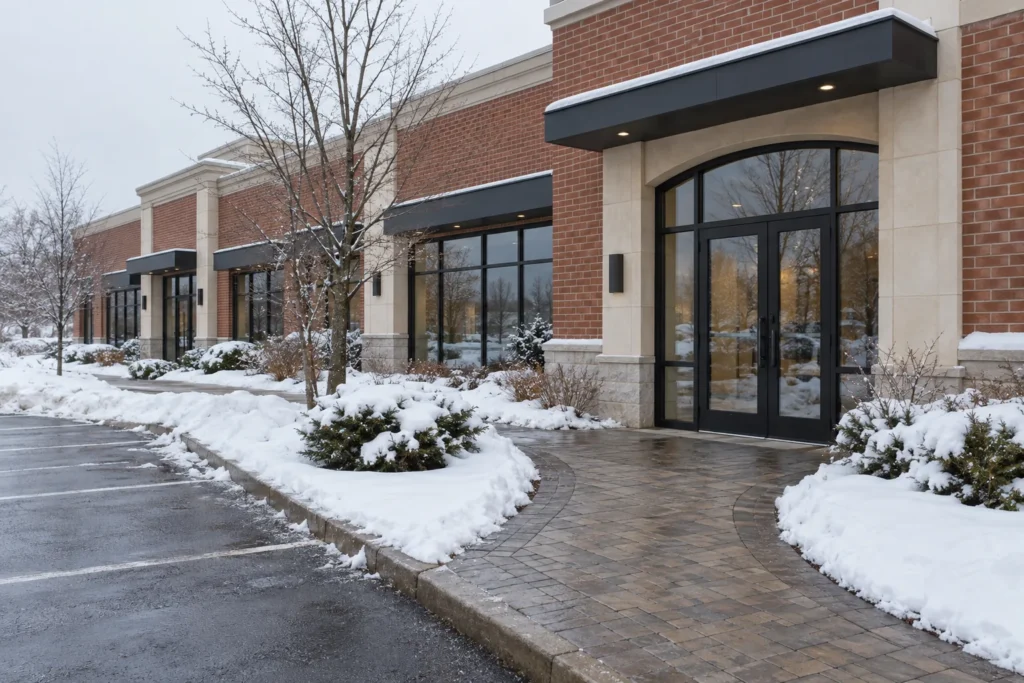
Cleared walkway connecting lot and an ordinary building entrance

Distinguish private commercial work from City winter operations

Burlington maintains municipal roads and sidewalks according to its winter plan. A private commercial scope should identify the property areas it covers and should not adopt City service targets as the provider’s own trigger or response time. Current winter-parking rules can also affect on-street access during a declared snow event.

Snow placement must respect public routes. The City advises that residential and commercial snow must not be moved onto or across a road or piled in bike lanes. Resolve storage on the property or an appropriately authorised alternative rather than using the street to absorb a private-site constraint.

Information reviewed:

Develop a commercial winter scope that can be reviewed

  1. Collect the site and operating information

    Provide the address, area map, opening hours, vehicle activity and all required access routes. Identify the authorised contact, on-site contact and any tenant restrictions. Include known drainage or surface defects before snow hides them.

  2. Set areas, priorities and storage

    Mark included work and exclusions. Review entrances, accessible routes, loading and waste access alongside the parking area. Identify suitable snow storage, sensitive features and the point at which additional relocation might need consideration.

  3. Confirm service and authorisation terms

    Review triggers, timing, prolonged storms, return visits, ice treatment and any additional charges. Clarify how a request is approved and how blocked access or other changed conditions are reported. Keep seasonal and event-based terms specific to the actual proposal.

  4. Maintain site information through the season

    Update vehicle restrictions, operating hours, contacts and storage concerns when they change. Coordinate approved additional work with the manager. Record information in the agreed form so decisions refer to the correct location and event.

Prepare the grounds for winter and learn from recurring conflicts

A pre-season review can identify raised pavement edges, broken borders, low signs, unmarked drains and planting exposed to storage. Some concerns can be addressed before clearing begins; others need to be documented as constraints. Commercial property maintenance can support seasonal grounds preparation under a separate agreed scope.

Repeated winter difficulty can reveal a landscape issue. An island that leaves no practical turning room, a walk directly below roof discharge or a loading area with no storage margin may need a permanent change. Commercial landscaping considers those broader site improvements. Winter service should not be presented as a substitute for every necessary repair or redesign.

For managed sites or several addresses, property manager snow service focuses on contacts, approvals, requests and seasonal coordination. The physical work at each location still needs a site-specific plan. Common ownership does not make parking layouts, tenant hours or snow-storage capacity identical.

Commercial snow-service questions

Does parking-lot clearing include all walkways?

Only where the agreement identifies them. Mark the routes from parking to doors, ramps, steps and secondary entrances for assessment. Vehicle-area work and pedestrian work should have explicit boundaries rather than rely on the word complete.

Can work be arranged around opening hours?

Provide the operating hours and priority needs so the proposed service can be assessed. Confirm the actual timing terms and communication arrangements. A preferred opening condition should not be treated as a verified guarantee before the provider agrees it.

What happens during an extended storm?

The agreement should define how continuing accumulation and subsequent visits are handled. Snow can return after a pass while the event continues. Clarify included work, priorities and any separate request process before the season begins.

Is salting automatically part of snow removal?

No. Confirm whether treatment is included, which surfaces it covers and what initiates it. Product suitability, changing conditions and documentation belong in that separate scope. Clearing snow does not guarantee the property remains free of ice.

Can snow be taken off site?

Discuss whether removal is available and appropriate for the property. Storage limits, access, authorisation and charges need assessment. Off-site work should not be assumed included in an ordinary clearing arrangement.

What helps with a commercial estimate?

Provide the address, marked areas, operating hours, parked-vehicle patterns, loading and pedestrian routes, storage options and site contact. Include the terms you need clarified, such as triggers, return visits, treatment and additional-work approval.

Commercial Snow Removal Gallery

Map the commercial winter work before confirming the service

Share the operating areas and access needs that matter most. Include storage and parked vehicles so the proposed scope can be reviewed against the way the property functions.

  • Site map, entrances and pedestrian connections
  • Parking, loading and operating hours
  • Snow-storage areas and existing defects
  • Trigger, treatment and communication requirements

Tell us what you would like to change, repair or maintain around your property.