
Property Questions
What Should Be Completed Before Installing Sod?
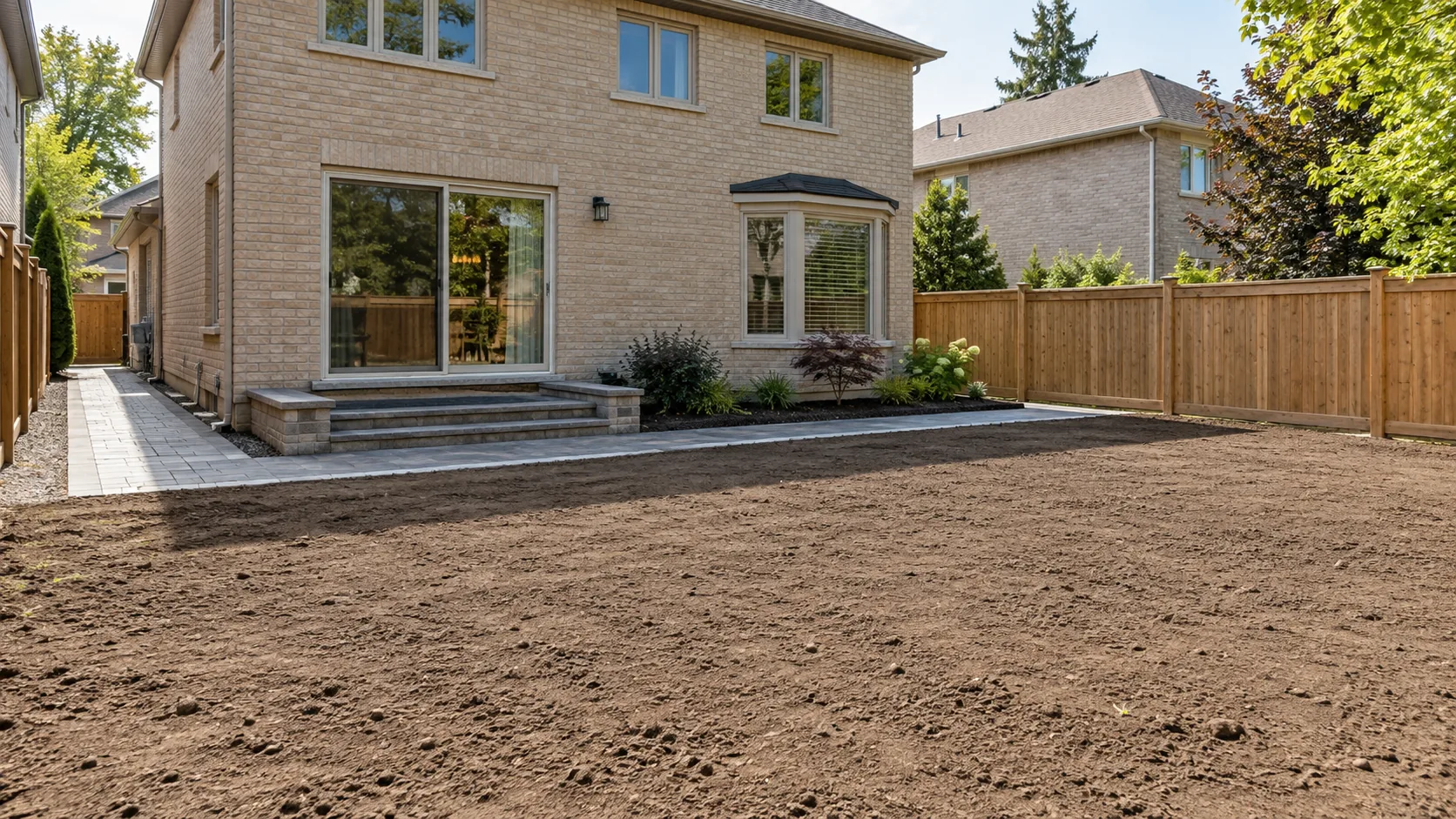
Sod belongs near the end of a landscape project, after heavy access, fixed levels and concealed work are resolved. New grass cannot compensate for unfinished construction or an unresolved water route.
Before sod arrives, the yard should be ready to become a finished lawn. That means more than removing the old grass. Heavy work should be complete, the intended grade and drainage should be settled, soil preparation should be suitable, and a practical establishment plan should be in place.
The sequencing question is simple: what remaining task would require driving, digging, storing materials or repeatedly walking across this area? If that task is still ahead, laying the finished lawn may create avoidable damage and rework. The following checks help identify those dependencies before fresh sod becomes the surface everything else has to cross.
Finish the work that uses the lawn as a work route
List the remaining construction in the yard, including work that is not part of the lawn contract. A patio, fence, deck, drainage excavation, shed base or tree-related task may need access through the same area. Ask where equipment, removed material and deliveries will travel. A finished lawn placed across the only route is vulnerable even when the nearby project appears small.
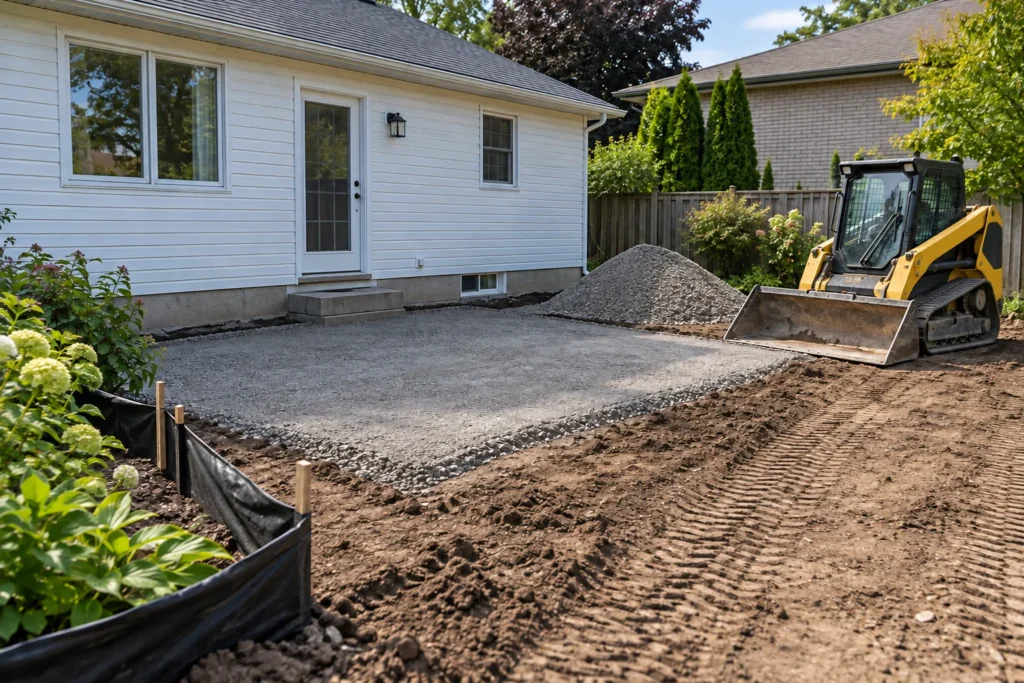
Complete heavy hauling and base construction before final soil preparation. Repeated traffic can compact or rut the ground, and stored aggregate can mix into the soil surface. Simply promising to be careful with the new grass does not remove the effect of moving materials over it. If construction must continue, define what area remains unfinished and how the final restoration will be handled.
Do not assume the contractor installing sod controls every trade or delivery. Agree the handoff between tasks so one crew is not preparing soil while another still needs the same passage. A brief list of unfinished work, access routes and retained features can prevent confusion more effectively than choosing a lawn installation date in isolation.
Set the fixed edges and the water relationship first
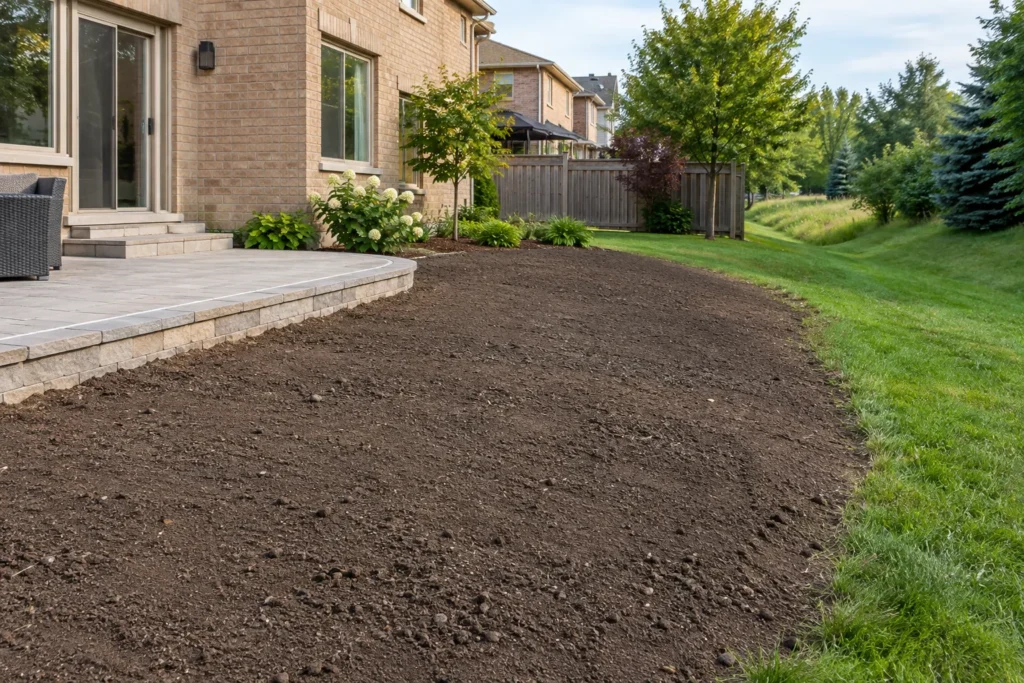
Complete the structures and hardscape that establish the surrounding levels: patio edges, walks, steps, driveway transitions and garden borders. Their relationship to the lawn determines how soil meets them. Raising or lowering an unfinished edge after sod is installed can create a strip that must be removed and reconstructed.
A smooth lawn is not necessarily a flat lawn. The intended surface should connect with the property drainage arrangement and fixed features. Low pockets, abrupt humps and water directed toward a building are different issues from a deliberately sloping surface. Do not fill a swale or raise ground against the house merely to make the yard look level.
Where grading work or landscape drainage is proposed, resolve that scope before covering the soil. A fresh green surface can make the yard look finished while concealing the fact that the water route is still uncertain. Photographs and relevant plans should document what has actually been completed.
A terrace beside a future lawn also needs a usable transition for walking and maintenance. Check where a mower enters, where edging is intended and whether the soil finish would leave a hollow along the paving. Those details belong in preparation, rather than becoming small repair jobs after establishment begins.
What should be settled before the grass arrives?
| Dependency | Why it comes first | Evidence of a useful handoff |
|---|---|---|
| Heavy construction and hauling | Traffic and material storage can undo prepared soil and damage fresh sod. | The remaining work and access route are explicitly identified. |
| Grades and drainage | The lawn surface follows the intended levels and water routes. | The relevant levels, outlets and required reviews have been resolved. |
| Buried work | Later trenches would break the finished lawn. | Drainage, irrigation or planned service work is completed and documented as applicable. |
| Soil and retained roots | The growing surface needs assessment without careless disturbance. | Preparation limits and tree-sensitive areas are understood. |
| Watering and temporary access | New sod needs suitable establishment conditions and protection. | A realistic care and use plan is agreed before delivery. |
Complete concealed work without guessing what is underground
Identify irrigation changes, landscape drainage and any planned conduits or service connections early enough to coordinate them. This does not mean every lawn requires all of those systems. It means work that is already part of the project should not be postponed until after the finished surface is laid.
Ground disturbance needs the appropriate utility-location process and attention to private buried services. Existing irrigation, lighting cable and other owner-installed lines may require separate information. Do not treat an apparently empty lawn as confirmation that digging is unrestricted. Resolve responsibility for locating and protecting relevant services before soil work begins.
Keep records of completed concealed work, including routes and accessible maintenance points where available. A neat lawn should not bury a required access cover or make a drain impossible to maintain. Ask how finished soil and turf meet each component. A photograph taken before covering can be useful later without pretending to be a surveyed as-built drawing.
Prepare a growing surface, not a cosmetic cover
Soil preparation should address the existing surface and the intended lawn rather than follow a fixed quantity chosen without assessment. Construction debris, unsuitable material, persistent weeds and severe compaction can affect the result. Spreading a thin clean-looking layer over a problem is not the same as creating a suitable rooting environment.
Tree roots and retained planting change how preparation can be carried out. Deep cultivation, added soil or machinery beside a tree may cause harm even when the tree itself is not removed. Identify those limits before work. Where specialist input is needed, obtain it before deciding that the lawn preparation will include excavation or grade change around the tree.
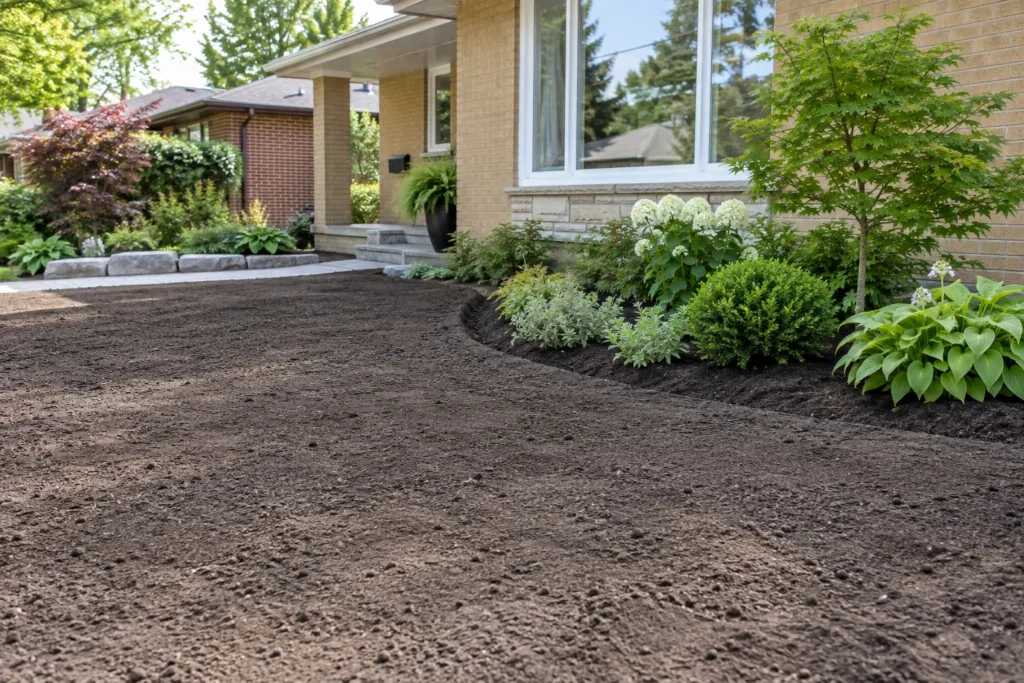
Finish the bed edges and soil transitions deliberately. A loose pile against a border, a buried shrub base or a hollow below a walk creates a future difficulty. Prepared ground should support the chosen finish and retain the intended levels. The exact method and materials belong to the assessed site and agreed scope, not a generic article recipe.
Confirm any required review before concealing the grade
Some lawn work is part of a larger building or site-alteration project with approved grading information and required review. Check those obligations with the responsible authority and the person coordinating the project. Do not assume that installing sod is the signal that all earlier requirements have automatically been satisfied.
The City of Burlington distinguishes its site alteration process from grading and drainage clearance connected with building work. Which process applies depends on the actual project. If an inspection, documentation or grading review is required before sod, arrange it before delivery. A contractor schedule should follow that dependency rather than conceal unfinished review beneath a completed lawn.
Existing construction records may be helpful, but later changes should be explained. An older approved plan and the present ground are not necessarily identical. Ask who is confirming the proposed finished condition and what information they need. This is especially important where a lawn restoration follows major excavation, new structures or changes near a shared water route.
Burlington checks that can affect the sequence
The City provides separate guidance for site alteration and for grading and drainage clearance associated with building work. Confirm the applicable requirements and any pre-sod review with the City for the actual project. Before ground disturbance, use the appropriate locate process and identify relevant private services.
- City of Burlington: Site Alteration Permits
- City of Burlington: Grading and Drainage Clearance Certificates
- City of Burlington: Call Before You Dig
Information reviewed:
Have the establishment plan ready before delivery
Fresh sod needs timely installation and care suited to the actual conditions and product. Confirm how watering will be provided, who will do it and whether the area can be reached without repeatedly crossing the newly laid lawn. A hose and a vague intention to water are not a reliable plan if no one is available or the supply does not reach the far end.
Discuss weather and ground readiness with the installer rather than treating a calendar date as the only condition. Saturated or otherwise unsuitable ground can interfere with preparation and installation. A delivery should follow readiness of the site and care arrangements. Ask how changes will be communicated if those conditions are not suitable.
Plan temporary routes for people, pets and routine tasks. Bins still need to move, the shed may still be in use and another contractor may need entry. Decide where those activities go during establishment. Avoid promising an exact return-to-use date without the installer’s assessment of the grass, weather and rooting progress.
A final readiness walk before ordering sod
Walk the construction route
Identify every remaining delivery, excavation and heavy task. Resolve whether each is complete or has an agreed route outside the finished lawn. Confirm the limits of any area deliberately left for later restoration.
Review the fixed boundaries
Check the patio, paths, beds, structures and relevant drainage connections together. Make sure the final soil level is intentional and any required grading review has been addressed before it is covered.
Check preparation and access points
Confirm the growing-surface preparation, retained tree limits and visible maintenance access. Record useful concealed-work information and keep covers and outlets available for their intended use.
Agree the care handoff
Identify the person responsible for watering, the instructions they will follow and how access will be limited. Provide the installer with the information needed to coordinate delivery and a finished, ready site.
Questions about scheduling sod
Can sod go in before a new fence?
If the fence work will disturb or cross the lawn, finishing it first can avoid damage and reinstatement. The actual access and work method determine the conflict. Coordinate the two scopes instead of assuming fresh turf can tolerate the remaining construction.
Does adding sod fix a bumpy yard?
Sod follows the prepared surface; it does not establish correct levels underneath. Address the assessed grading and soil preparation before installation. Some intentional slope may need to remain so the lawn works with the property drainage.
Should I choose sod before deciding how the lawn will be used?
Choose the intended use and assess the conditions first. A shaded traffic route or repeatedly disturbed area may need a different solution. The lawn-options guide compares sod, overseeding and artificial turf as broader choices.
What belongs in a sod estimate request?
Explain the area, current surface, access, water concerns and any unfinished construction. Include photographs and relevant grading information. Sod installation should have clear preparation and care boundaries; Request an Estimate can bring those details together.
Published