
Property Questions
What Photos Help With a Landscaping Estimate?
A useful estimate photo set explains the whole area, the specific problem and the route into the yard. A few organized views beat a large collection of close-ups.
The most helpful landscaping photographs answer three questions: where is the work, what needs to change, and how could the area be reached? You do not need a professional camera or an elaborate presentation. Clear phone photographs, accompanied by a short explanation, can make an initial request much easier to understand.
Photographs support an early conversation; they do not reveal buried materials, establish property boundaries or replace measurements on site. Their job is to show enough context that the next questions are useful. A depressed paver, for example, means more when the viewer can also see the porch, roof outlet and surrounding surface.
Write the request before opening the camera
Start with a sentence describing the result you want. “The rear patio holds water near the door” is more informative than “landscaping quote.” If you want several things, put the immediate problem first, then list the additional changes. Explain what should stay: a sound walk, a favourite tree, an existing deck or a lawn area used for play.
Separate what you have observed from what you think caused it. “This patch remains wet after the surrounding lawn dries” is an observation. “The whole yard needs a drain” is already a proposed solution. Sending the observation leaves room to assess other causes and avoids narrowing the scope before anyone has seen the site.
Note the general location of each photograph in your message. Front entrance, east side gate and rear patio are easier to follow than a sequence of unnamed attachments. If compass directions are uncertain, use clear references such as the side with the garage. Consistent descriptions matter more than formal terminology.
Give the detail a place in the property
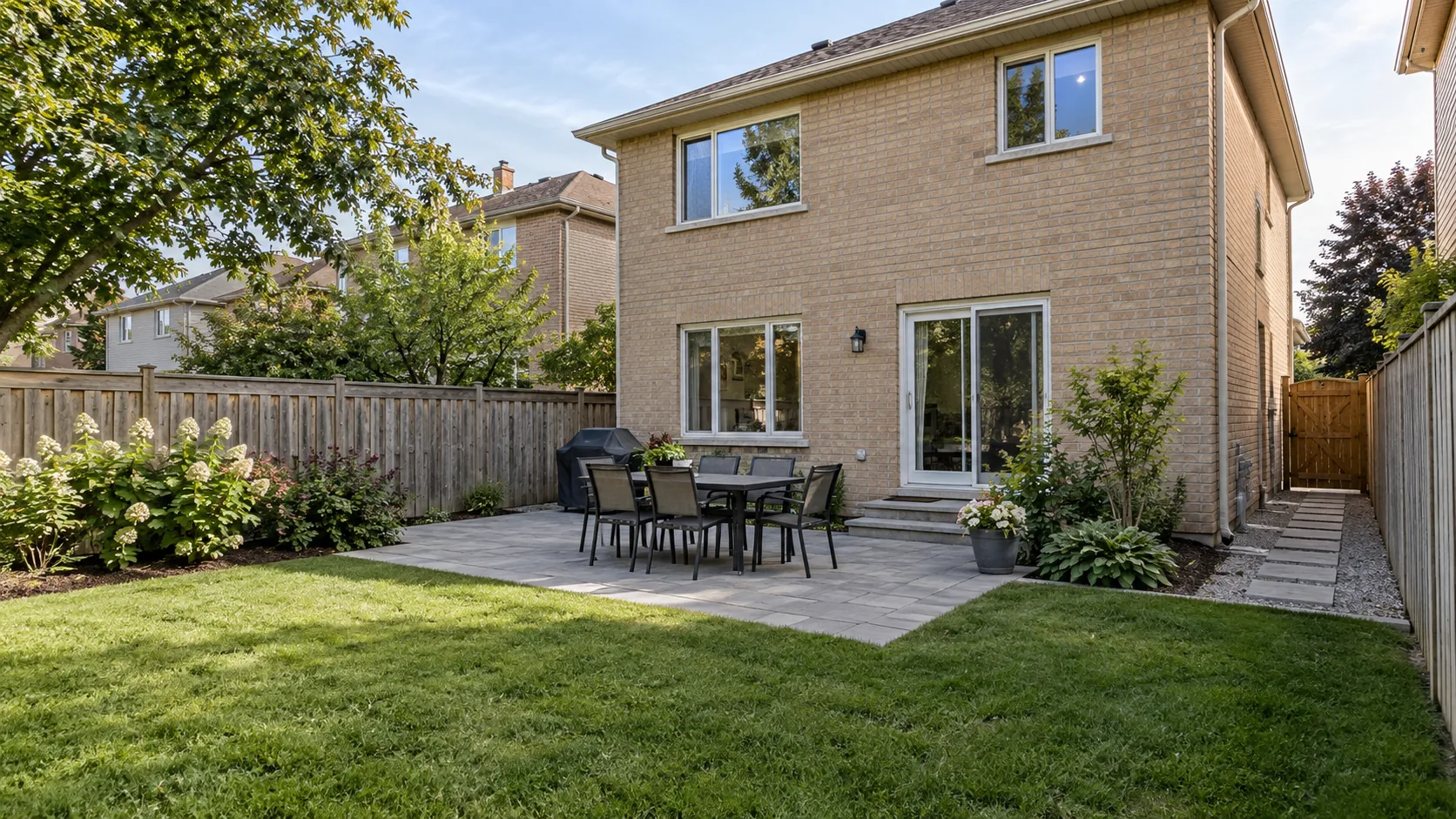
Take a wide view from a normal standing position that includes the work area and a fixed reference, such as the house or fence. A second view from the opposite end often explains a shape that the first view hides. Keep the camera reasonably level and avoid an extreme wide-angle setting that stretches a small patio into a large terrace.
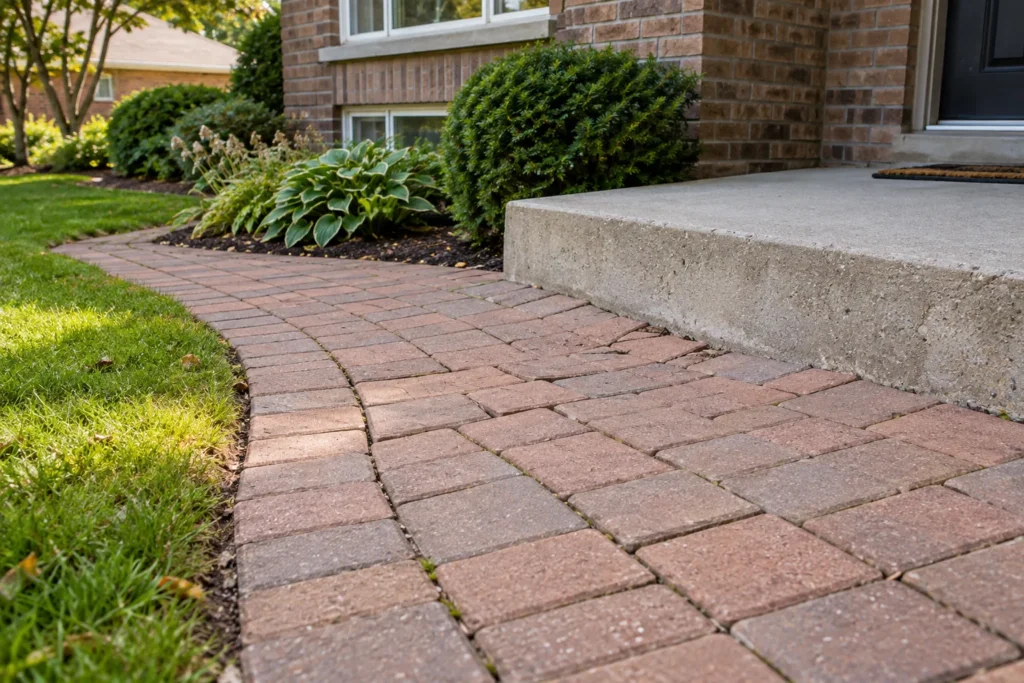
Next, move closer to the problem. Show the settled pavers, worn lawn, broken edge or crowded planting, while keeping some recognizable surroundings in the frame. The viewer should be able to connect that detail with the wide view. A photograph of one loose paver against an unidentifiable background gives little sense of scope.
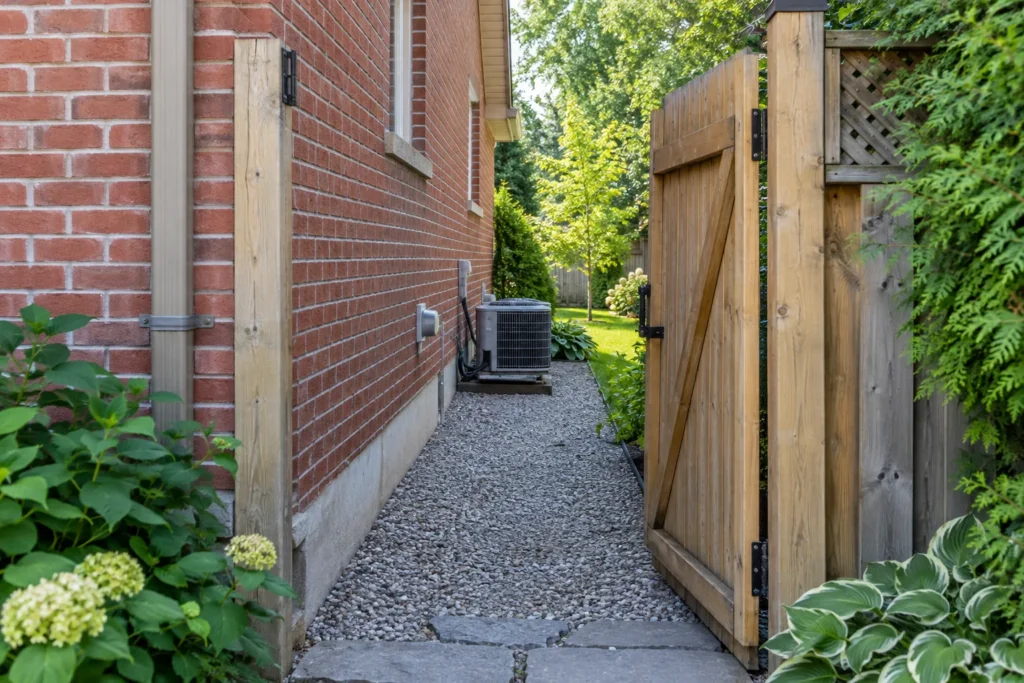
Photograph access as its own subject. Stand outside the side entrance and look toward the yard, then photograph the narrowest visible turn or opening. Include steps, low branches, air-conditioning equipment, window wells and overhangs that affect the route. An open gate can hide the fact that the passage becomes tighter immediately beyond it.
If a gate opens into a shared or neighbouring space, explain that relationship rather than assuming it is available for construction. Photographs cannot establish permission to use another property. Also mention whether the route shown is the only route, and whether anything in it must remain in place throughout the work.
A compact set for common requests
| Request | Photographs to include | A note that helps interpret them |
|---|---|---|
| Patio or walkway renewal | Whole surface, both ends, threshold or steps, close view of the damaged area. | Identify what is being retained and when the problem first appeared. |
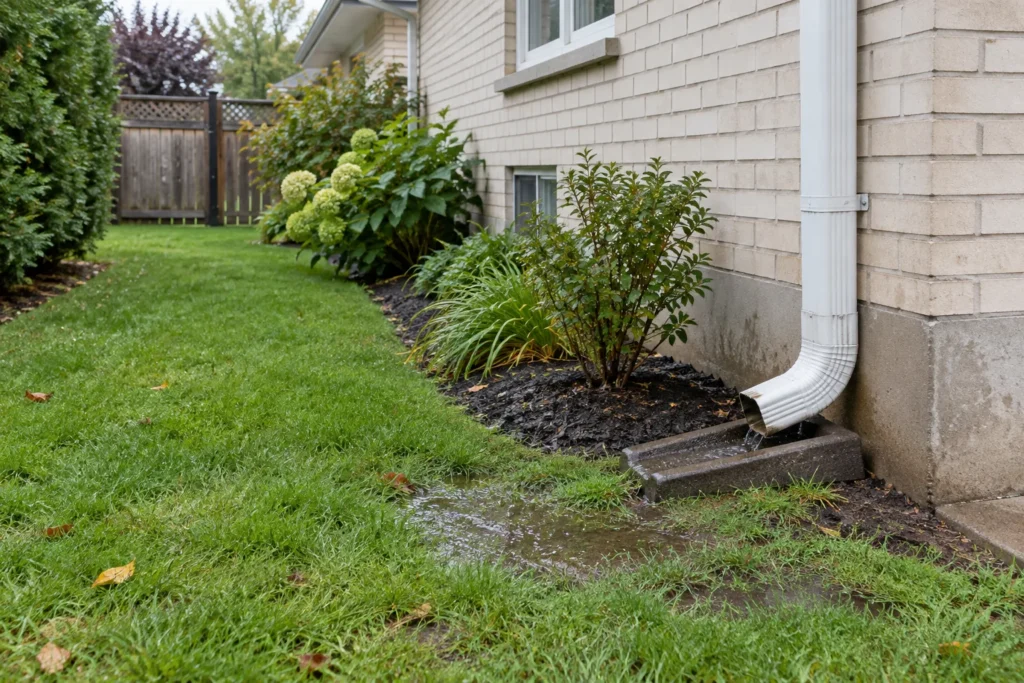
| Wet yard | Whole affected area, roof-water outlet, nearby paved edges and the apparent onward route. | Say whether it was raining and how long the wet area remained. |
| New lawn or planting | Whole area, shade from surrounding trees or buildings, existing soil surface and access. | Describe ordinary use, seasonal shade and any planned construction. |
| Recurring care | Front, rear, beds, lawn edges and routes between them. | Distinguish private areas from shared or managed grounds. |
Include fixed heights and connections
The place where new work meets something fixed often matters more than the centre of the yard. Show the patio door threshold, bottom of a stair, garage floor edge, existing retaining wall and the transition into a walk. Frame these connections from the side as well as from above, where practical, so the difference in levels is understandable.
Do not place a ruler against a doorway and assume that it establishes the correct finished grade. A photograph can flag a tight relationship, but construction levels need proper assessment. Avoid moving soil, pulling up paving or removing a drain cover simply to make a more revealing image. A clear record of the current condition is enough for the first discussion.
For a driveway or entrance request, include a view with a vehicle parked in its usual position if you are comfortable doing so. Explain any sensitive information you have cropped out. Vehicle doors, the route to the porch and delivery access can be difficult to judge from an empty expanse of pavement. A separate view of steps and the landing helps complete that picture.
For water problems, record the conditions as well as the place
A wet patch photographed on a dry afternoon may show damage without showing its source. If it is safe, take a view during ordinary rain or soon after it stops. Include the downspout outlet, the surrounding lawn and any edge that seems to interrupt the flow. Stay indoors during hazardous weather and photograph through a window if that is the only safe option.
Follow with a photograph from the same position after the surrounding ground begins to dry. State the approximate time between images and describe any continuing rain or irrigation. You are documenting a sequence, not proving a drainage diagnosis. Water seen at one point may have travelled from elsewhere before it appeared there.
Where water is approaching a basement opening, entering a building or associated with a suspected sewer issue, describe that immediately. A routine landscape estimate request should not hide a more urgent building or plumbing concern. Landscape surface work, foundation waterproofing and wastewater repairs are different scopes.
Add dimensions without creating false precision
A rough length and width can help explain scale if you can measure safely on level ground. Label the measurements as approximate and state the units. A short written note is usually clearer than drawing several arrows on a compressed photograph. Measure the actual area under discussion rather than the entire property unless the entire property is relevant.
For access, an opening width measured with the gate fully open is useful, but it is only one constraint. Note turns, overhead restrictions and the ground surface. Do not climb, enter unstable ground or stretch a tape across a hazard. If you cannot measure something safely, say it is unmeasured and provide a clear photograph instead.
An available survey or approved drawing can be sent separately with a description of what it is. Avoid presenting a real-estate listing sketch or an old fence position as a verified boundary. Dates and document context matter. The purpose is to identify information that may help a site review, rather than to produce a construction plan yourself.
Send a photo set that is easy to follow
Keep the useful originals
Select sharp, well-lit images and retain the original files. Screenshots inside a messaging app or a collage can obscure details. Ordinary daylight usually communicates material condition more clearly than dramatic evening lighting.
Choose different information
Remove accidental duplicates, but keep a genuinely different angle that explains access, height or water. The right number is the number needed to explain the request; a small organized set is a practical starting point.
Protect personal details
Check for people, licence plates, visible mail and other information that does not help the request. Crop or retake the photograph if needed, while preserving the work-area context. Do not photograph neighbouring private spaces unnecessarily.
Finish with the unanswered questions
Mention uncertain dimensions, concealed conditions, shared access and proposed future work. If attachments are too large for the available form, use the stated contact route to arrange a suitable way to provide them.
Show retained features and proposed work separately
If the request includes several phases, name them in the message and use a wide photograph to show how they connect. For example, a future rear patio and a present side-path repair may share one access route. That relationship can affect the present discussion even when the later work is only a possibility. Identify it as future work rather than implying that it is included now.
Photograph a retained feature where it affects the work: a tree beside the access, a garden bed near a proposed path or a fence gate that must continue to open. The viewer needs to understand the space around it, not just the feature itself. An attractive tree portrait will not show where equipment could pass beside it.
Finally, say whether anything important lies outside the photographs. A shed behind the camera, a step just beyond the gate or a shared walkway out of frame can change the interpretation. You do not need to document every corner of the property. A short note about what is missing prevents the selected views from suggesting that the unseen area is open and unrestricted.
Questions about sending estimate photographs
Do the photographs need to look attractive?
No. Ordinary condition is the useful information. Leave furniture and everyday features in place where they explain how the area is used, and show damage honestly. Good light and a clear view matter more than staging the yard.
Can a photograph give me a final price?
It may support an initial scope discussion, but a photograph cannot confirm excavation, buried construction, drainage levels or all access constraints. Ask what is provisional and what still needs a site assessment. The quote-comparison guide explains how to compare the eventual written scope.
Should I send inspiration images too?
They can help communicate a material or mood, provided you clearly identify them as references separate from the current property. Explain what you like about each reference. Your actual yard photographs remain the more important evidence for access, space and existing conditions.
What if I do not know which service I need?
Describe the problem and desired result in plain language, then use Request an Estimate. You can also use Contact for a question about the request process. There is no need to assign a technical cause before sharing the property information.
Published