
Landscape Planning
How Snow Storage Affects Front-Yard Landscaping
Make room for winter snow storage while protecting walking routes, visibility, planting and the path of meltwater through the frontage.
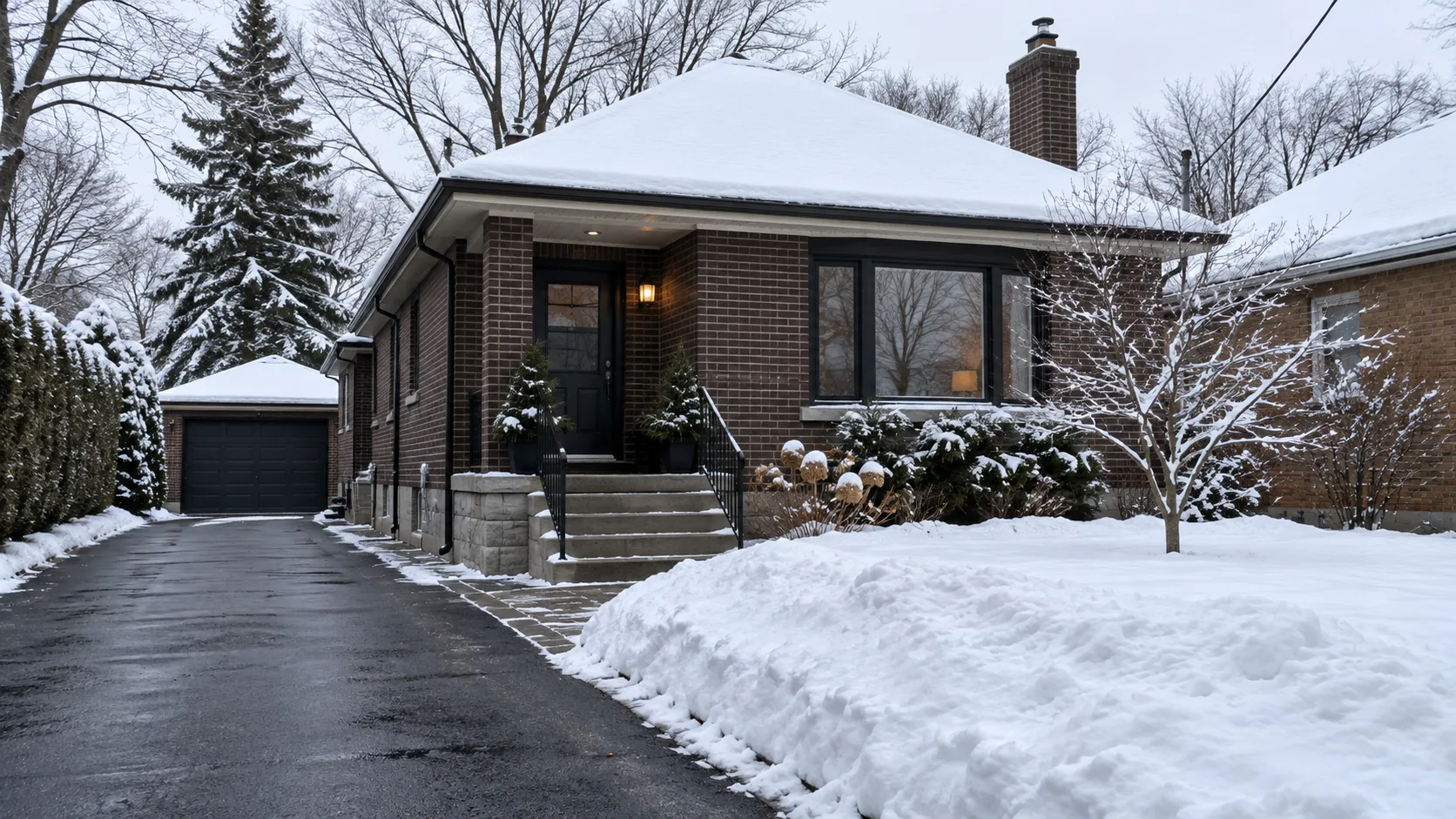
A front yard has a second layout in winter, and the best time to reserve that useful space is before permanent landscape features fill it. The driveway and walk become clearing routes, while part of the lawn may become temporary snow storage. A summer design that uses every edge for raised beds, delicate shrubs or decorative walls can leave very little room for that change. Snow then competes with parking, the front door and visibility at the street.
Plan where cleared snow can reasonably remain before fixing the permanent landscape. The question is not how much snow one storm will bring, but whether the frontage can handle repeated clearing without losing its essential routes. Looking at storage, meltwater and planting together helps the same modest front yard function through both winter use and the growing season.
Start With Where the Water Will Go
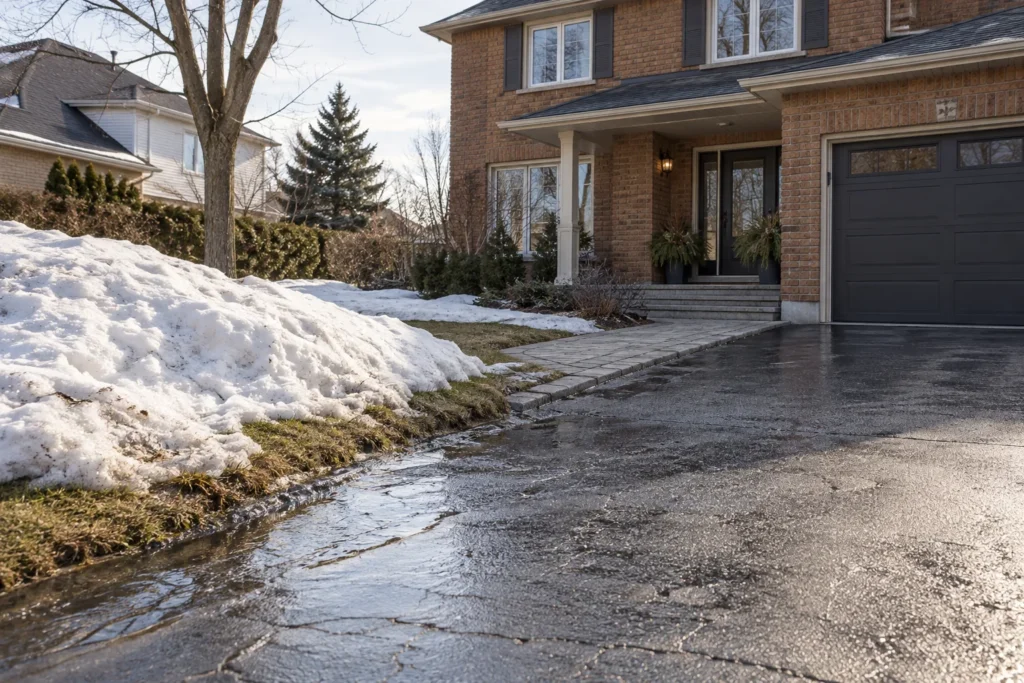
Snow does not stop being part of the drainage plan when it is piled on a lawn. As it melts, water can move toward a walk, steps or garage even if the original cleared surface is dry. A storage patch uphill of the main entrance deserves particular attention. Review the surrounding levels and where water can travel without creating an avoidable crossing at a frequently used route.
Observe an existing frontage through a thaw if possible. Photograph the base of snowbanks, the driveway edge and the lowest part of the walk. Note whether water spreads across the path, collects behind an edge or reaches a downspout discharge area. These observations are more useful than assuming all melt will soak into the lawn, especially while the ground remains cold or saturated.
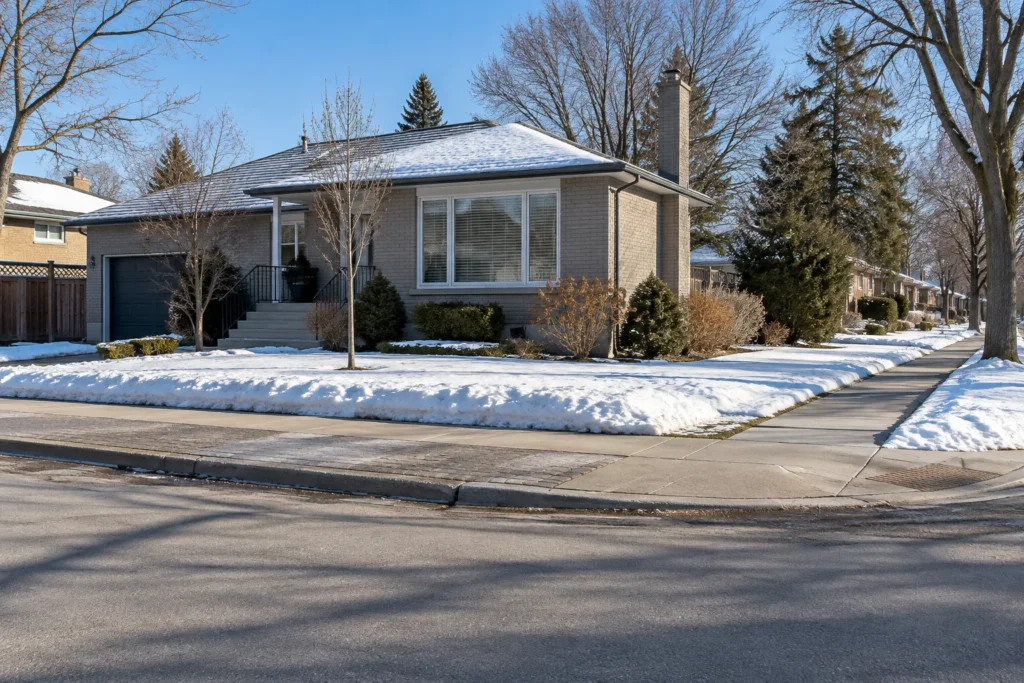
At a corner, storage also affects views between pedestrians and drivers. A mound that seems harmless from the porch may hide someone approaching the driveway or intersection. Consider the view from a vehicle in its actual exit position as well as from the walking route. Keep the relevant visibility area open and confirm property-specific requirements. Do not use a tall winter bank to occupy space that was deliberately kept low in the summer planting design.
Give Repeated Clearing Somewhere to Go
Consider how snow normally leaves the driveway. Hand shovelling, a snowblower and a private clearing arrangement may use different routes and storage locations. The landscape should allow the intended method without forcing snow through a narrow gap or against fragile features. Discuss the actual equipment and approach with the person responsible; do not design around an assumed machine that may never be used.
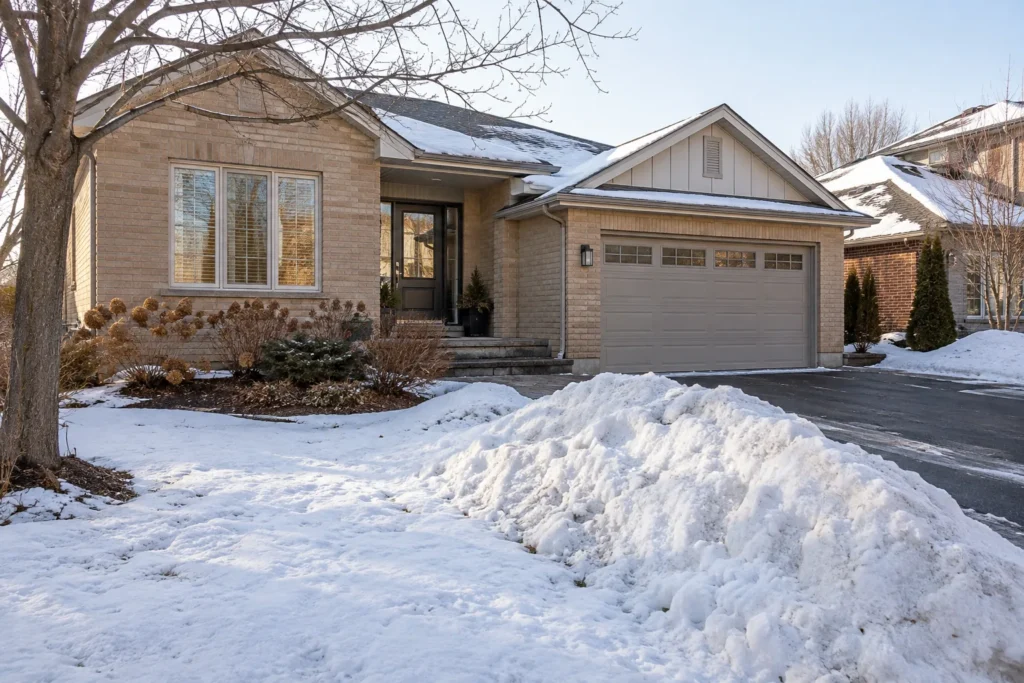
The first small snowfall can make almost any frontage appear adequate. Repeated events expose the limits. Banks grow outward, storage areas become harder to reach and a gate that opened freely may begin hitting piled snow. Leave the main walking connection and door operation legible as storage accumulates. Avoid using the only practical pedestrian route as reserve space for a later storm.
On a narrow lot, there may be genuine limits to what can remain on site. Recognise them before using all available lawn for a new driveway extension or planting bed. A smaller landscape feature, a revised clearing method or another agreed snow-management arrangement may be needed. Do not assume that excess snow can be pushed to a neighbour's property or onto public infrastructure when the private storage area fills.
Draw storage as an area on the plan rather than a tiny arrow marked snow. Show how someone reaches it while keeping parked vehicles and the entrance clear. The sketch need not predict exact storm volumes to be useful. Its purpose is to expose conflicts early, including places where a raised border, light fixture or decorative boulder would block the route used every winter.
Check What Shares the Storage Edge
| Nearby feature | Winter conflict | Planning response |
|---|---|---|
| Front walk and steps | A bank narrows passage or meltwater crosses the entrance. | Keep a clear route and assess storage position with the finished levels. |
| Driveway exit or street corner | A growing bank obscures pedestrians or traffic. | Protect the required sightline and avoid treating it as overflow storage. |
| Low lights, valves or service points | Features become buried or are struck during clearing. | Locate and maintain them with practical access and equipment movement in mind. |
| Shrubs and garden edges | Concentrated snow, debris or clearing contact affects delicate features. | Separate vulnerable planting from the main storage and handling area. |
Plant for the Exposure the Bed Will Receive
A garden immediately beside the driveway may receive piled snow, grit and splash from winter operations. Its conditions can differ from a sheltered bed near the porch. Choose plants after considering the exposure, drainage, light and mature space, and seek suitable horticultural advice for the actual location. A plant described as hardy is not automatically suited to every kind of concentrated winter impact.
Leave an understandable separation between the intended storage space and planting that should be protected. Low edging can define the summer layout, but it needs to be visible and compatible with clearing. High sharp corners or narrow raised beds may turn an ordinary shovel route into an obstacle. Avoid assuming that snow-covered features will always be remembered by someone operating equipment in poor visibility.
Spring inspection is useful feedback. Record displaced edging, broken stems, debris accumulation and spots where melt lingered. These do not all have the same cause, and a poor plant result should not automatically be blamed on salt. Adjust the storage arrangement, drainage or species selection based on evidence. Front Yard Landscaping can coordinate these changes with the entrance and overall frontage.
Keep Public and Private Winter Work Distinct
The City manages municipal roads and sidewalks according to its winter priorities. Private driveway, entrance and pathway work needs its own understood scope. The point where the driveway meets the public area can be affected by both operations, so discuss how access will be maintained without assuming the private visit and municipal plow will occur together.
Ask a private provider to identify the exact surfaces included, intended storage areas and treatment of steps, gates and windrows. Clarify ice treatment and any return arrangements through the actual agreement. The appearance of a front-yard plan does not establish a trigger, response time or unlimited snow handling. Those operational details must come from the agreed service, not a general landscaping article.
Keep public sidewalks, bike lanes, roads and access points free of private storage. The City directs residents not to move snow onto or across roads or pile it in bike lanes. A new driveway or garden edge should not depend on doing so. Municipal programs can also change; consult the current City snow information for available services rather than relying on an old notice or an assumption about eligibility.
For the separate private service scope, see Residential Snow Removal. For the permanent layout around the route and planting, use Front Yard Landscaping Planning. Keeping both conversations connected makes the landscape easier to use without presenting one generic winter arrangement as suitable for every property.
Use One Winter to Improve the Next Design
Record the normal clearing route
Photograph where snow is placed after ordinary clearing and after a larger accumulation. Include parked vehicles, gates and the complete entrance walk. Explain who clears each area and which tools or equipment are actually used. Mark places where storage repeatedly interferes with daily movement rather than relying only on a summer photograph.
Follow the thaw
Record where meltwater travels and where it remains. Include roof discharge, low paving and bed edges in the photographs. Note the timing and weather conditions without trying to diagnose every wet patch from one observation. A recurring crossing at the steps is a useful design question even when the driveway itself drains well.
Revise fixed obstacles first
Review walls, raised beds, posts, fixtures and changes in surface level that constrain clearing. Consider whether a small adjustment can open the route while keeping planting and pedestrian space useful. If grading or drainage changes are proposed, assess the whole water path and any relevant approvals before construction.
Agree the operating boundaries
Identify on-property storage, surfaces to clear and features to protect. Discuss what happens when the usual space is constrained and record the actual service terms where a provider is involved. Keep the plan available when planting or other frontage changes are considered later, so the useful winter space is not gradually filled.
Check Current Burlington Winter Information
Use the City's current snow page for municipal operations and program information. Its published placement guidance directs residents to keep private snow off and from being moved across roads, and out of bike lanes. This article does not set municipal or private response times, eligibility, fees or clearing triggers.
Information reviewed:
Snow Storage and Front-Yard Questions
Can the lawn be the main snow-storage area?
It may be a practical location if its position, access and meltwater path suit the property. Assess the effect on planting, nearby routes and visibility. Repeated concentrated storage can have different consequences from ordinary snowfall on the lawn. Use spring observations to refine the arrangement rather than assuming any open grass is equally suitable.
Should I remove a garden bed beside the driveway?
First identify the actual conflict. A small change in bed shape, plant placement or storage method may be enough. If the bed occupies the only workable storage route, broader revision may be reasonable. Keep its drainage role and surrounding levels in mind; replacing a planted area with paving can create a different water problem.
What should an estimate request include?
Send summer and winter views if available, the normal storage locations and photographs of meltwater or blocked access. Explain which permanent landscape features you want to retain. When you request an estimate, distinguish a layout improvement from a request for a specific winter service agreement so the relevant conditions can be discussed clearly.
Published