
Burlington Landscaping
Low-Maintenance Landscaping
Reduce the work your yard asks of you with manageable planting, useful surfaces and a landscape arranged for ordinary seasonal care.
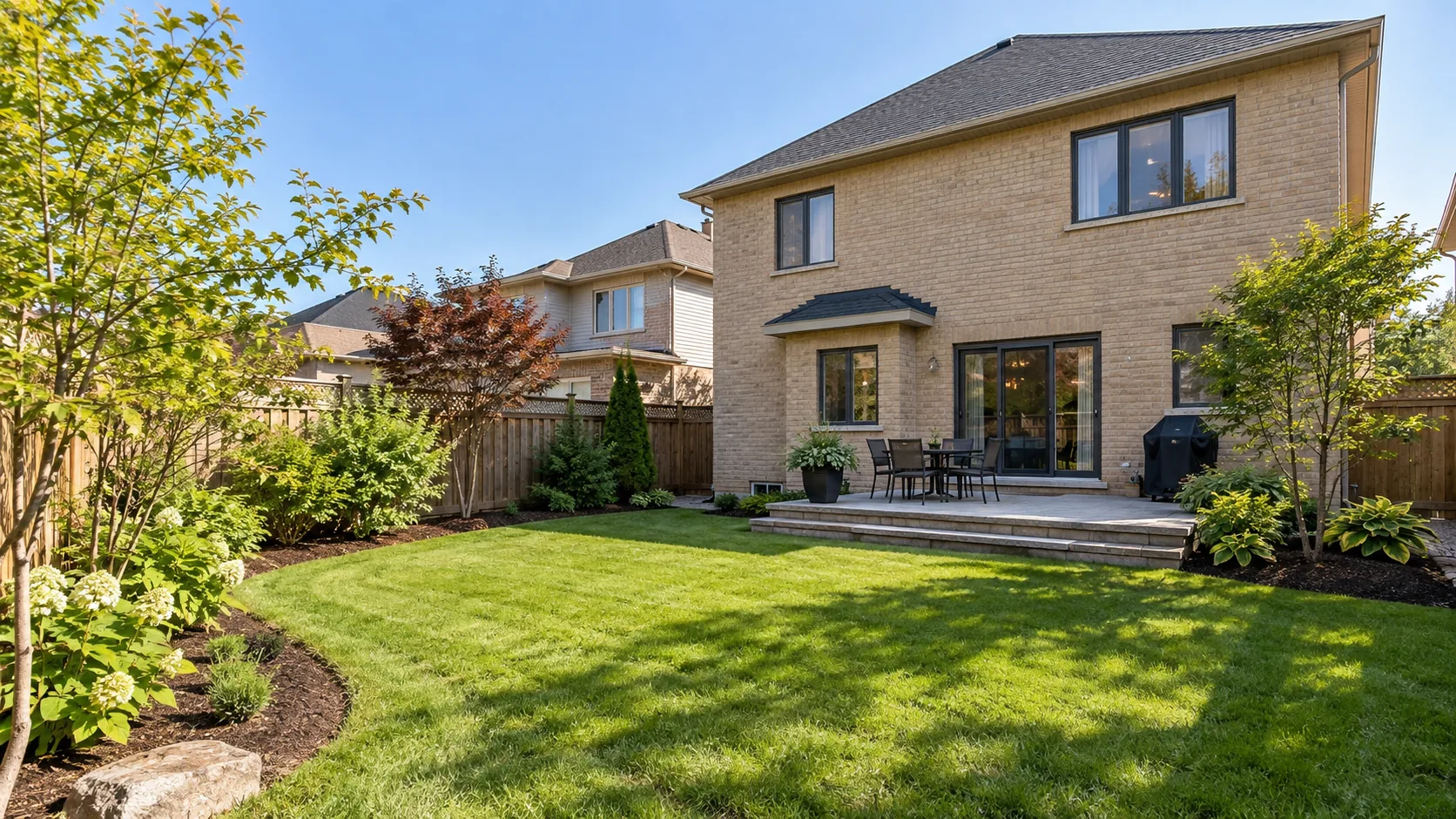
A lower-maintenance yard starts with the tasks you want to reduce. That might mean less mowing, fewer narrow beds to weed, easier pruning or a patio that is simpler to keep clear. Replacing every green surface with stone is only one possible change, and it can introduce its own drainage, cleaning and weed-management work.
Burlington Landscaping plans practical reductions in care demand without treating a living landscape as finished forever. The right arrangement depends on the available space, growing conditions and how you use the yard. A good result makes necessary work easier to reach and more predictable, while keeping the outdoor space useful and comfortable.
Begin with the work you actually do
Think through a normal month and a full year. Mowing a broad rectangle of lawn may be straightforward, while trimming around many small islands takes much longer. A garden with room to stand may be easier to maintain than a narrow strip behind furniture. Name the difficult tasks before choosing a substitute material.
The reason for the change also matters. A busy household, a frequent traveller and someone finding kneeling difficult may need different solutions. Reducing plant variety can simplify identification and care, while raising every bed can introduce retaining, watering and access considerations. Compare the practical work involved rather than relying on a style description.
Keep valuable uses in the brief: play space, a pet route, shade, room to entertain or an established tree. Lower maintenance should support those uses. Removing useful lawn merely to achieve a photograph can leave the property less convenient in everyday life.
Simplify the shape before replacing the surface
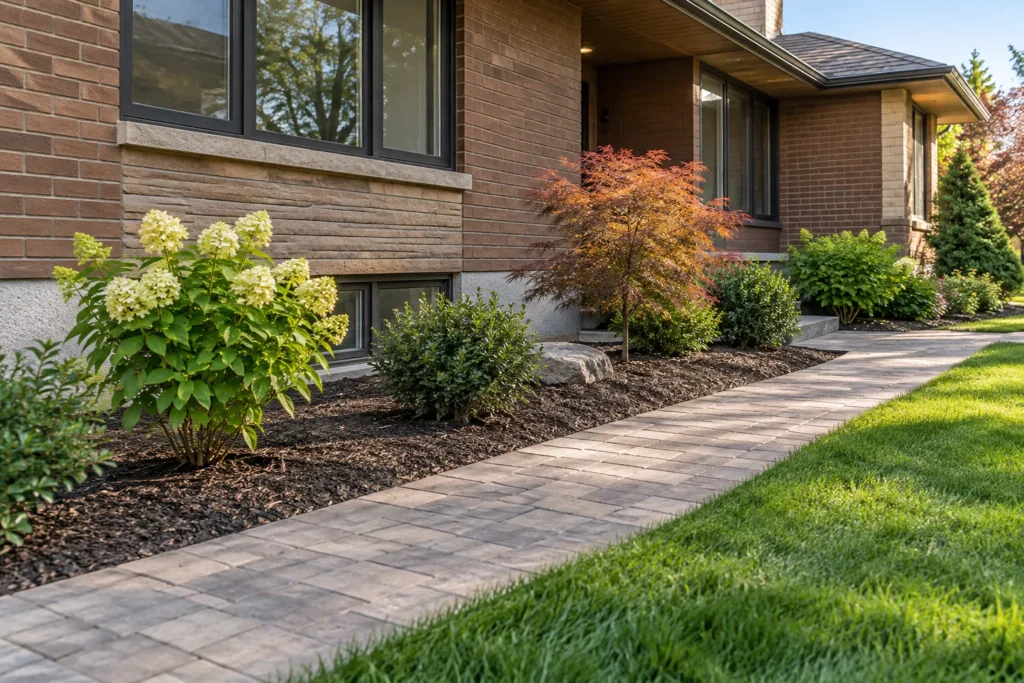
Consolidating small beds can reduce edging and make the remaining garden easier to reach. A clear line between lawn and planting helps routine work, but the line must also allow shrubs to grow without overhanging the mower route. Avoid tiny grass pockets between steps, posts and boulders that need separate trimming.
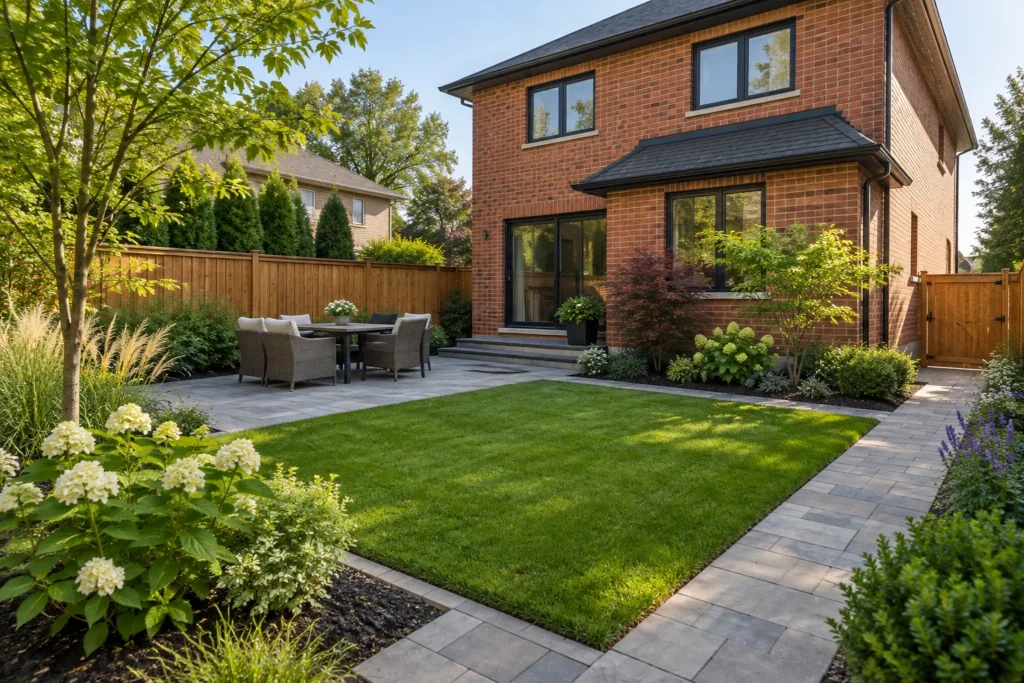
Reducing lawn can be sensible where grass receives little use or is repeatedly damaged. A larger patio may serve dining better, while a suitable planted bed can make a shaded corner more purposeful. Check access and water before enlarging hard surfaces: a surface that reduces mowing can still create runoff or leave a cramped path.
Pavers need occasional joint and surface attention, while decorative aggregate can collect leaves and windblown soil. Mulch and decorative stone have different roles; choose them for the location and expected upkeep, rather than assuming one permanently eliminates weeds. Keep loose material contained away from steps and frequently used walks.
Artificial turf may suit a defined use, but it also needs cleaning, debris removal and consideration of drainage, heat and pets. Assess those conditions alongside repairing the existing lawn or changing its shape. The useful choice is the one that fits the household's actual care capacity.
Compare the work each choice creates
| Landscape choice | Work it may reduce | Care still to plan |
|---|---|---|
| Fewer, larger planting beds | Repeated edging around small islands and awkward turf fragments. | Reachable plants, weeding, mulch renewal and pruning as plants mature. |
| A useful paved sitting area | Mowing within a space regularly used for furniture. | Sweeping, leaf collection, joint attention and periodic cleaning. |
| A manageable rectangular lawn | Trimming around complicated curves and isolated obstacles. | Mowing, watering during establishment, soil attention and seasonal lawn care. |
| Repeated groups of suitable plants | Managing many different pruning and watering requirements. | Spacing, monitoring health, dividing or selective replacement over time. |
Choose plants for the space they will occupy
A small nursery plant can eventually fill a path or cover a window. Mature height and width should inform the bed dimensions from the start. Choose plants for the actual light, soil moisture and exposure; a plant that struggles in its location can demand more attention than an apparently less fashionable but suitable alternative.
Repeated groups can simplify a garden without making it monotonous. Combine a restrained plant palette with different useful heights and seasons, leaving enough space to see and reach the soil between young plants. Filling every gap at installation can create repeated pruning and removal later. Garden design should explain how the composition changes as planting develops.
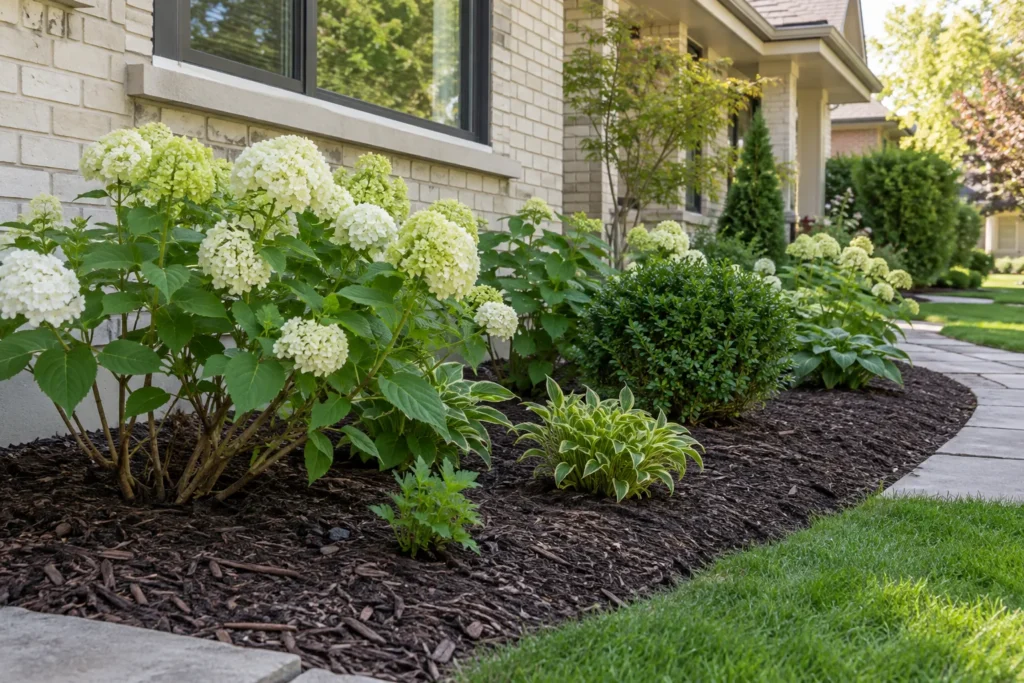
Mulch can help manage exposed soil and moisture, but it needs sensible depth and placement. Keep plant crowns and tree trunks visible rather than burying them, and allow for periodic renewal. Existing weeds and unsuitable soil should be addressed before the finish is spread; covering a problem does not remove its cause.
Access is part of the planting design. Leave a practical route to taps, gates, utility equipment and the far edge of a deep bed. Where irrigation is appropriate, consider coverage and control rather than assuming an automatic system removes the need to observe plants. Establishment watering and later adjustments remain part of the plan.
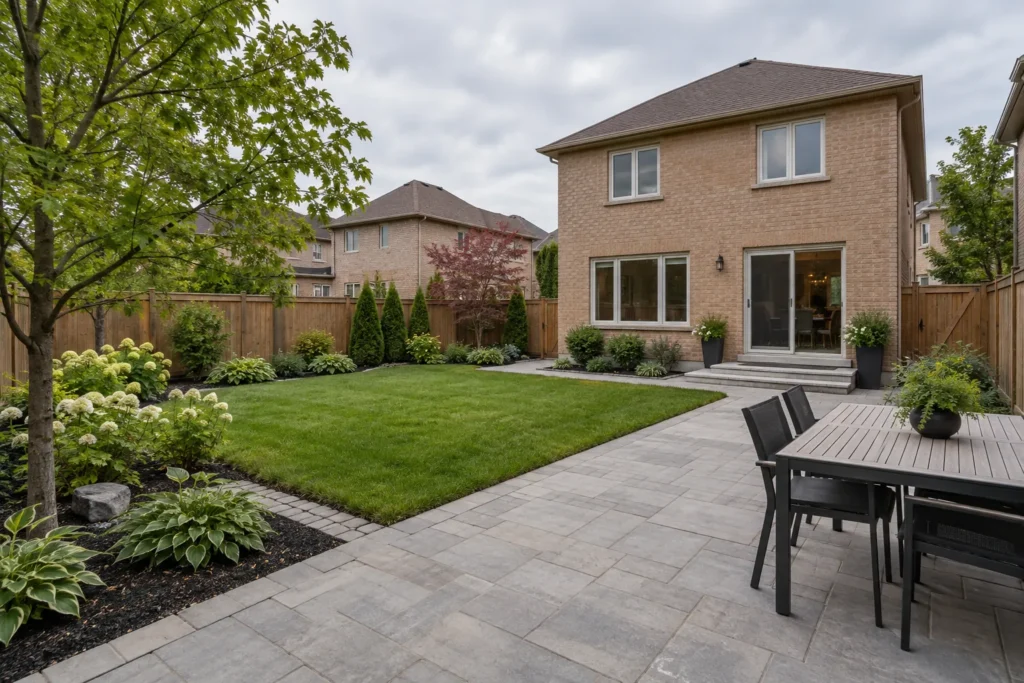
Durability includes water and repair access
A low-care finish performs poorly if the grade underneath it is unresolved. Identify persistent wet areas, compacted ground, overflowing roof outlets and runoff routes before changing the surface. Decorative stone does not make a depressed area drain, and a new paved pad needs an appropriate surface-water route.
Design edges and transitions so they can be maintained. A straight border that traps leaves against a fence may still be inconvenient, while a small inaccessible planting gap between two structures can be difficult to weed. Leave useful working space and decide how accumulated debris will be removed.
Consider future access as well. A gate that admits the mower and a route to replace a damaged fence panel can save disruption later. Durable materials should be selected with their installation, repairability and compatibility with the rest of the yard in mind. The aim is a coherent landscape with fewer recurring difficulties, rather than the smallest possible list of tasks today.
Reduce care in the right order
Audit the recurring tasks
Identify where time is spent on mowing, pruning, leaf collection, weeds and watering. Photograph difficult corners and note whether access, plant selection or the underlying site condition is causing the work.
Keep useful space and simplify the rest
Define the lawn, seating, planting and storage that the household needs. Consolidate fragments, improve working routes and compare the long-term care of proposed replacement surfaces.
Address ground and access before the finish
Coordinate grading, drainage, paths, irrigation changes and base preparation before planting or mulching. Consider retained-tree protection and relevant City review where excavation or grade changes are proposed.
Set a realistic maintenance routine
Record establishment watering, seasonal pruning and expected surface care. Some owners handle these tasks; others arrange garden maintenance. Clarify the routine before judging the finished yard against the original goal.
Useful questions about a lower-maintenance yard
Can a yard be designed to require no maintenance?
Every outdoor finish needs some attention. Plants grow, leaves arrive, surfaces collect debris and joints or edges change with use. The practical goal is to reduce difficult tasks and make the remaining care manageable. Be specific about which work you want to do yourself and which work you want to avoid.
Is removing all the lawn the best solution?
Not necessarily. A simple usable lawn can be easier to manage than several small beds or a large loose-stone area under trees. Compare mowing effort with leaf collection, weed management, cleaning and the way the household uses the space. The amount of lawn should follow the property and its purpose.
Does decorative stone stop weeds permanently?
No outdoor material prevents all windblown seeds, leaf debris or future soil accumulation. Stone may suit selected areas, but it needs an appropriate base, containment and a plan for cleaning. Planting beds and tree surroundings may be better served by another treatment depending on the site.
Can existing plants stay?
Yes, when their health, size and position fit the revised layout. Selective removal or relocation can be more useful than a complete reset. Large retained plants also influence access and excavation. Explain which plants matter to you and where current growth is becoming difficult to manage.
Can the changes be completed in stages?
They can if the sequence protects completed work. Resolve drainage, major access and surface changes before final planting in affected areas. The low-maintenance landscaping guide can help compare options, while the service scope should identify the actual work and care responsibilities for each stage.
What information makes an estimate useful?
Describe the tasks you want to reduce, the outdoor uses to retain and any limits on kneeling, lifting or regular watering. Include property photos, approximate areas, access information and troublesome wet or shaded locations. That helps assess practical changes instead of quoting a generic replacement surface.
Low-Maintenance Landscaping Gallery
Make your yard easier to look after
Describe the work that is taking too much time and the space you still want to enjoy. We can use that brief to discuss simpler shapes, suitable planting and surfaces that fit the property and a realistic care routine.
- Tasks you want to reduce
- Lawn, seating or planting you want to keep
- Sun, shade, water and access concerns
- Burlington address and wide photos of the yard
Tell us what you would like to change, repair or maintain around your property.