
Burlington Landscaping
Tree & Shrub Planting
Choose a planting location for the tree or shrub it will become, with usable space above ground and suitable conditions around its roots.
A small nursery tree can fit almost anywhere on planting day. That does not make every location a good place for it to mature. The useful question is how the plant will share the property with the house, paths, fences, utilities and existing vegetation over time. Tree and shrub planting begins with that relationship, then works back to the material and installation scope.
A new shade tree, a group of flowering shrubs and a replacement in an established border each call for different preparation. Explain the purpose first: shade, seasonal interest, a softened view, shelter or structure in a garden. Garden design can resolve the wider arrangement where several beds and uses need coordinating. This page concerns new landscape planting; it does not assume tree removal or specialist tree-care services are included.
Give each proposed plant a clear job and enough room
| Question | What it changes |
|---|---|
| What should the plant do? | Shade, flowers, screening and garden structure lead to different mature forms and placement decisions. |
| Where will its canopy spread? | Check windows, doors, rooflines, overhead services and the route people use beside the bed. |
| Where can roots develop? | Consider foundations, paving, walls, buried infrastructure and the existing root environment. |
| What light reaches the site? | Observe the actual planting area through the day rather than judging only from an open part of the lawn. |
| How does the ground behave? | Persistent wetness, fast drying, compaction and restricted soil space influence suitability and preparation. |
| How will it be maintained? | Leave access for watering, observation and appropriate pruning as the plant develops. |
Read the planting space from the ground to the roofline
Begin with the surroundings. A tree beside a driveway can affect vehicle clearance and snow-storage space; a shrub under a window can eventually obscure the view. A planting beside a fence needs room on your own property, including space to maintain it. Measure the usable area rather than treating the fence line or pavement edge as extra growing space.
Look upward and below ground before settling the position. Overhead wires, service entries, buried lines, irrigation and lighting can all affect the work. Public utility locates are part of digging preparation, but privately installed services may need separate identification. A location that looks empty at the surface should not be assumed clear for excavation.
Existing trees also shape the decision. Their roots and shade can limit where a new tree or shrub can establish, and excavation near a retained tree can cause harm even when its trunk remains untouched. Bring the whole planting context into the discussion, including neighbouring and public trees where the working area may overlap. Trees and landscaping planning explains that wider construction relationship.
Check tree protection and digging constraints before installation
Burlington protects public trees and regulates certain private trees. The review can concern injury from excavation, soil changes or access as well as removal. Identify retained trees, ownership and the working area before preparing new planting holes or staging material. Where a tree may be affected, confirm the applicable City requirements and obtain qualified tree advice when needed. Utility information must also be addressed before digging; do not assume a planting hole is too small to matter.
Information reviewed:
Match the supplied plant to the conditions it will enter
Supplied size is only one part of choosing material. Consider mature height and width, expected form, sun exposure and the moisture the site can support. Larger material may give a stronger initial presence, but it also changes handling, access and watering requirements. Confirm the proposed plant and supplied size in the scope instead of relying on a generic description such as medium tree.
The root area needs useful soil space, not just an attractive surface. Compacted construction ground, rubble or persistent saturation should be identified before planting. Soil preparation should suit the existing conditions and the plant; adding a different material to a single hole does not automatically solve a wet or restricted site. Discuss the larger root environment where hardscape encloses the planting area.
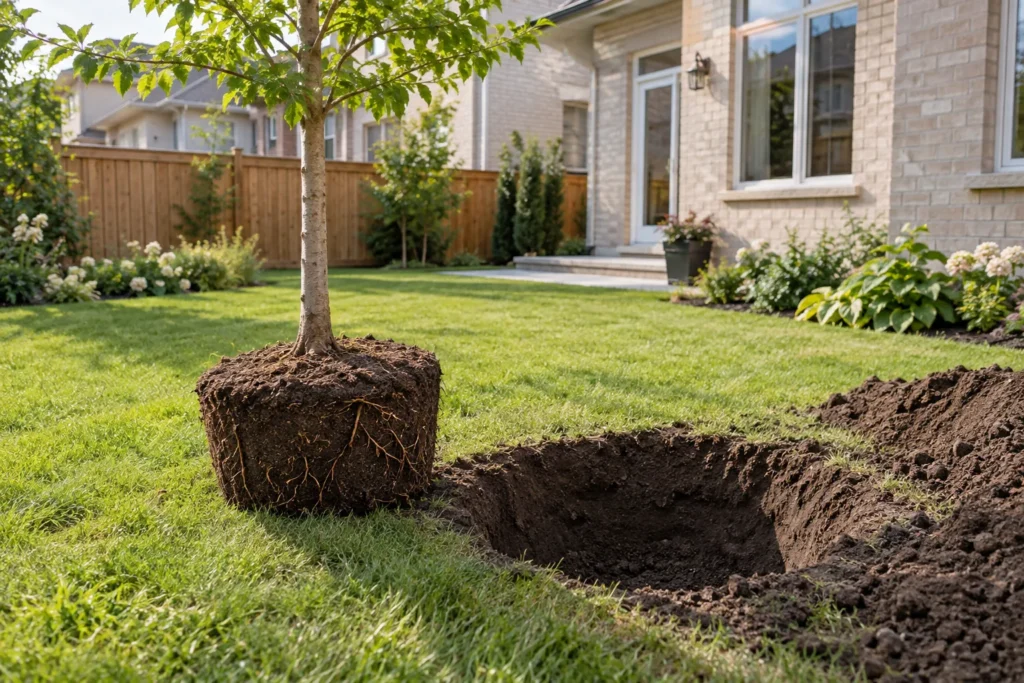
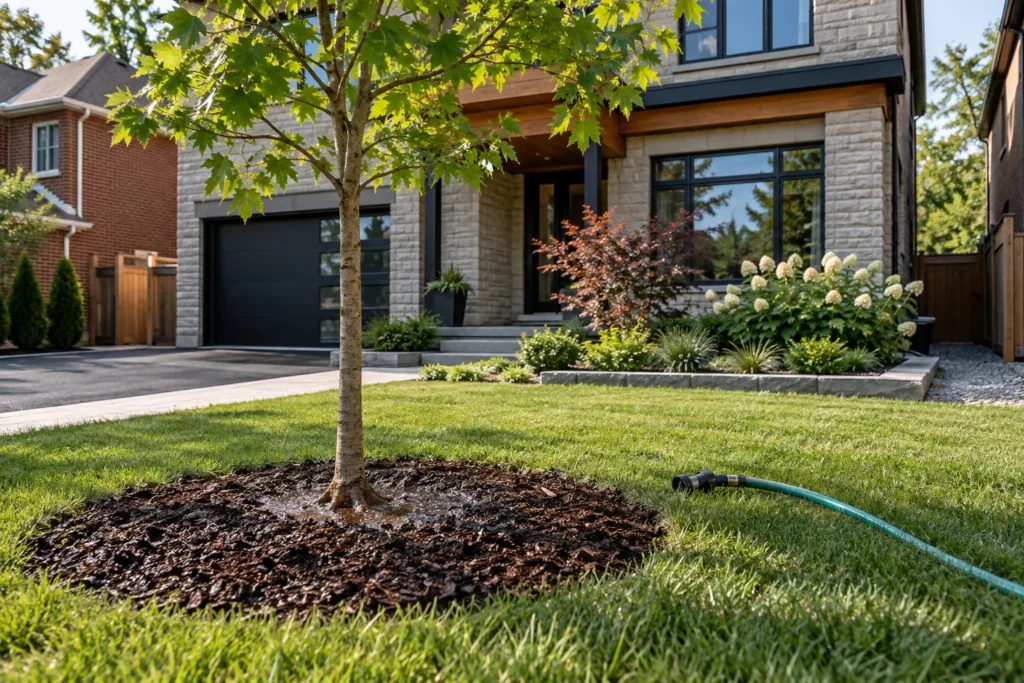
Planting levels and finishing deserve attention. The root collar and surrounding grade should have a sensible relationship, with mulch kept away from the trunk rather than forming a deep mound. Support, where appropriate for the specific planting, should be arranged without damaging the stem and should be reviewed as the tree establishes. Keep the area reachable for watering and inspection after the installation crew leaves.
Plan planting as a sequence of decisions
Explain the purpose
Show the shade, view or garden relationship you want to change. Include photographs from the house and the outdoor area you use. A street-facing view alone may miss the reason the plant is being added.
Confirm the available space
Check mature spread, nearby structures, service constraints and property boundaries. Discuss access for the supplied material and how existing lawn or paving will be protected during handling. Identify retained roots before excavation is planned.
Agree on the plant and preparation
Record the selected material, supplied size, quantity and preparation scope. Resolve any acceptable substitutions before ordering. The plant should suit the site instead of requiring a permanent effort to keep it smaller than its intended form.
Review establishment care
Clarify watering responsibility, mulch care and observation after installation. Water needs change with weather and soil conditions. Keep plant identification available so later pruning and seasonal care are appropriate to the species and the reason it was planted.
A new plant should not create a future access problem
Visualize ordinary use as well as the finished photograph. Can someone open the gate when the shrub is mature? Will branches occupy the path to the side door? Is there space to service the meter without cutting the plant back every visit? These questions are easier to answer while the location can still move.
For a living boundary, hedge and privacy planting brings spacing, seasonal coverage and continuous maintenance into a more specific plan. If privacy depends on both planting and a built feature, consider privacy landscaping so a tree is not asked to solve the entire sightline immediately. The appropriate choice may be a smaller group positioned at the actual view rather than a dense row around every edge.
Think about the future work around the plant
A planting position can be suitable today but conflict with a planned patio, widened driveway or new fence. Discuss likely changes before deciding where a tree should establish. Moving future excavation away from developing roots is generally easier at the planning stage than after the landscape has filled in. A simple sketch of future work is useful even when the planting is the only current project.
Protect the practical use of the property. Keep door approaches, gate swings and service access in the location discussion. A shrub should not rely on being cut back immediately after planting just to make a path usable. Consider leaf drop, flowers or fruit near seating and paved routes as part of choosing the plant, without assuming one feature is a problem on every property.
Ask what information will be available after installation. Plant identity and supplied size help guide future care and avoid treating unlike shrubs as though they need the same pruning. Keep a note of any site concern identified during preparation so later changes in the ground or surrounding work can be considered in context.
Questions about new trees and shrubs
Can a large tree provide immediate shade?
Larger supplied material can have a stronger initial canopy, but the eventual shade pattern still depends on form, orientation and growth. Handling space and establishment care also change with size. Discuss the area you want shaded and the site conditions before deciding that the largest available tree is the best fit.
Can shrubs be planted close together for a fuller look?
Spacing should consider their mature width and intended form. Tight planting can reduce initial gaps but create crowding and ongoing pruning demands. Decide whether the aim is individual shrubs, a layered border or a managed hedge, and select the spacing for that purpose rather than for a single day of appearance.
Will new planting fix a wet corner?
Plant choice can respond to moisture, but planting alone does not explain why the corner is wet. Persistent standing water may involve roof runoff, a low grade or a blocked path. Investigate the conditions and any necessary landscape water work before expecting a new tree or shrub to solve them.
Does the planting enquiry include tree removal?
Do not assume removal, stump work, arborist assessments or specialist pruning are part of new planting. Identify any existing tree that conflicts with the proposal so the correct scope and approvals can be considered separately. Retaining the trunk while excavating through roots is also a tree-impact question.
Can you guarantee the tree will survive?
No survival outcome should be assumed. Plant suitability, root condition, installation, weather and later care all matter. Confirm the installation and establishment responsibilities in the proposed scope, and raise unusual decline or site-water problems promptly rather than relying on a general guarantee that has not been agreed.
Tree & Shrub Planting Gallery
Show us the space where the planting needs to work
Send photographs of the proposed location and its surroundings, including overhead services, fences and paved edges. Explain the purpose and the mature space available so selection and preparation can be considered together.
- Burlington address and proposed planting locations
- Desired purpose, plant preferences and mature space
- Nearby services, buildings and retained trees
- Access for supplied material and watering arrangements
Tell us what you would like to change, repair or maintain around your property.