
Burlington Landscaping
Wet Yard & Standing Water Solutions
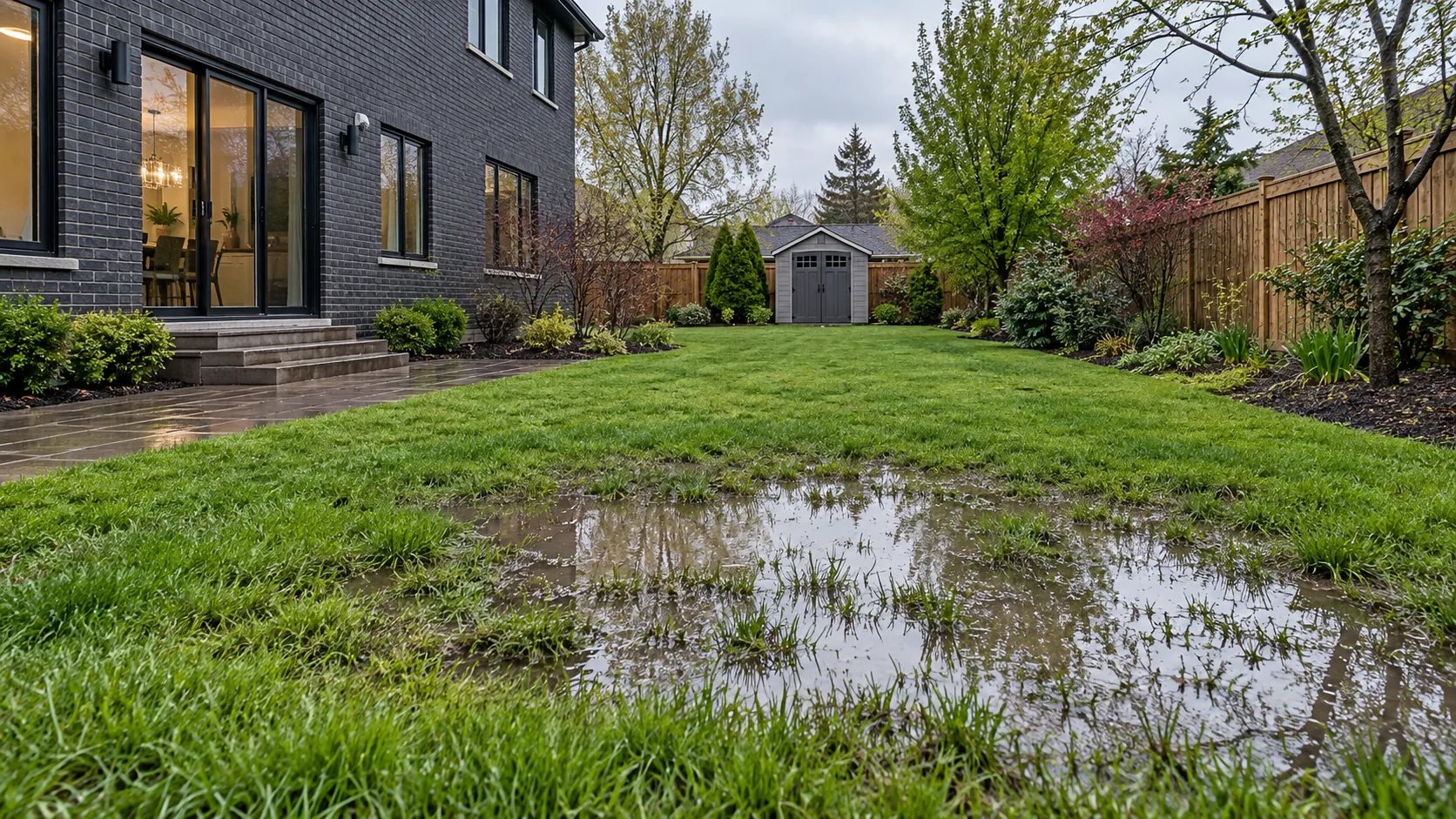
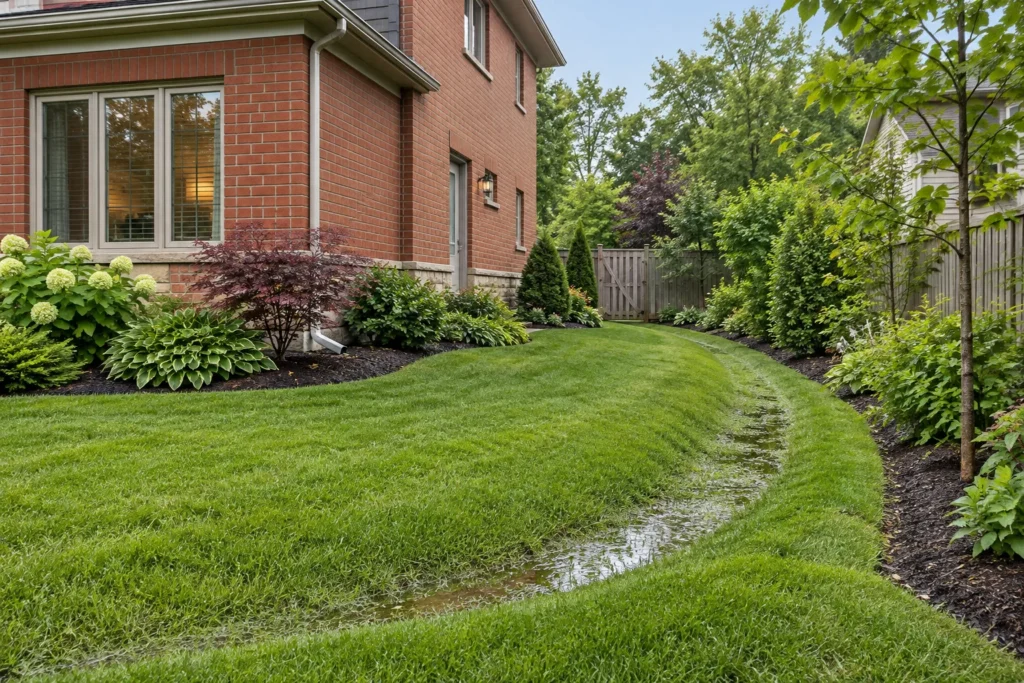
When does the water appear? Start with rain, melt, irrigation and roof runoff, then trace the yard’s low areas and possible discharge paths.
A puddle after intense rain and a lawn that remains soft through dry weather may have different causes. Before choosing a drain or ordering soil, record when the water arrives, where it first collects and how long the condition remains. That history helps separate a surface-water problem from a water source or site condition that needs a different response.
Wet-yard work is a problem-led enquiry. The aim is to understand the source, route, obstruction and available destination before discussing construction. Landscape drainage covers the broader service options; this page focuses on the standing-water symptoms that help frame an assessment. A French drain is one possible measure in some situations, not an automatic answer to every wet patch.
What the timing of the water can tell you
| Observed pattern | Useful information to collect |
|---|---|
| During intense rain | Show where runoff enters, which surfaces shed water and whether a low area fills before water can leave. |
| After several wet days | Record the extent of saturation and whether the ground remains soft beyond the visible puddle. |
| During snowmelt | Include snow-storage locations, frozen or obstructed routes and refreeze on nearby paths. |
| After irrigation | Note which zones ran, the duration you observed and whether the wet area changes when watering stops. |
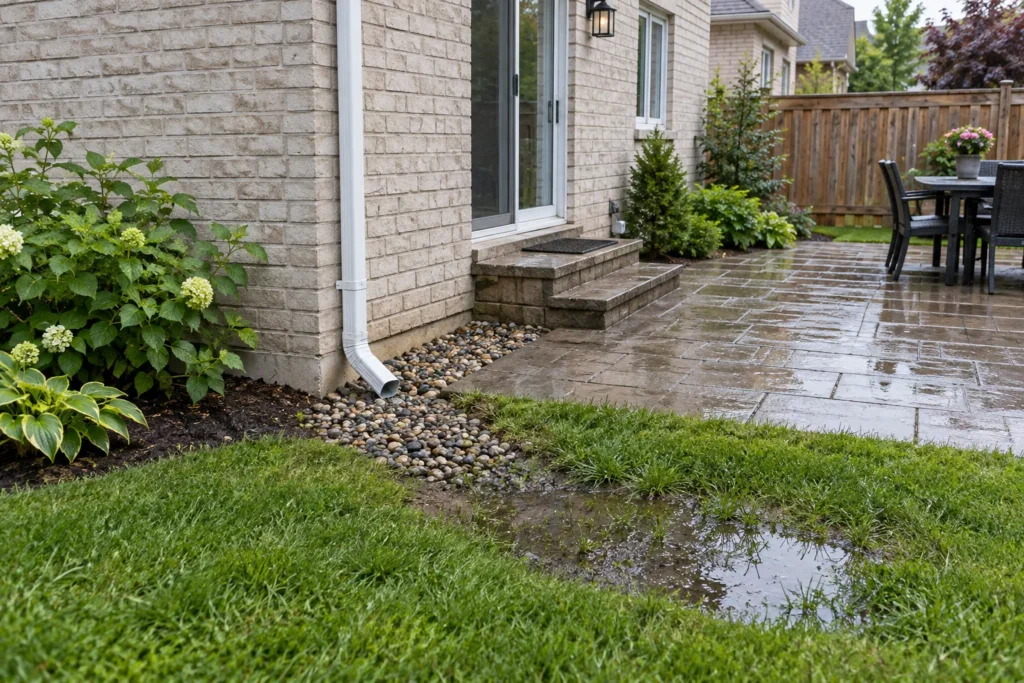
| At a downspout | Photograph the roof-water termination and the full route across lawn, garden or hardscape. |
| Without recent rain or watering | Explain the timing and any nearby services; a landscape-only solution should not be assumed. |
Trace how water reaches the low spot
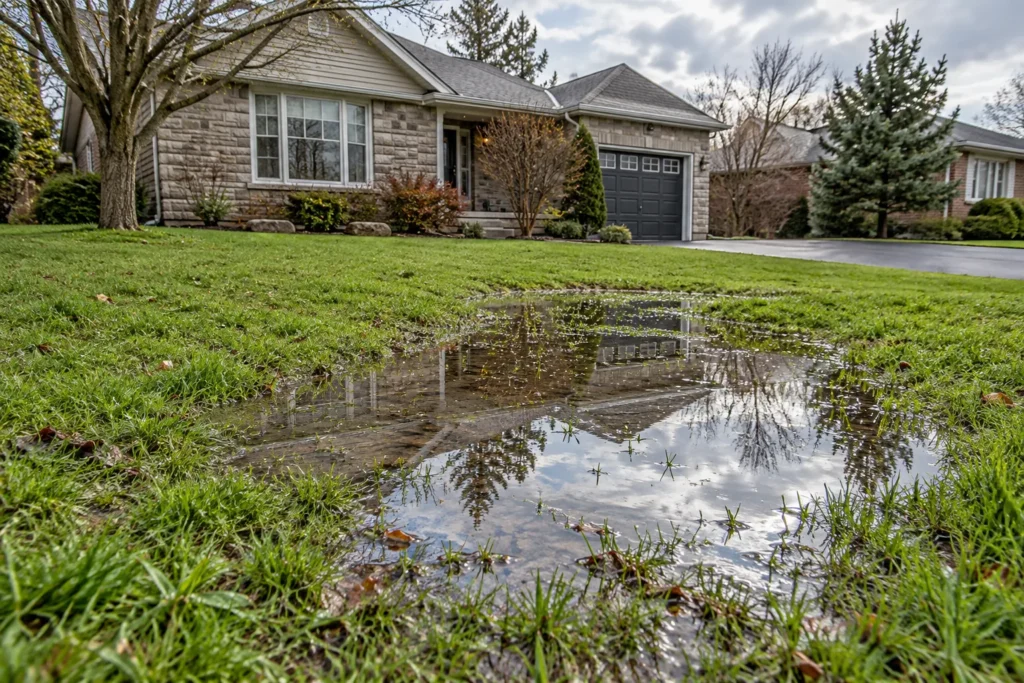
Begin beyond the puddle itself. A patio edge, driveway, roof downspout or blocked side-yard route can concentrate water in an area that previously seemed ordinary. Walk the surfaces that lead toward the wet patch and photograph the wider relationship. A close-up of standing water shows the symptom but may leave its source outside the frame.
Look for recent changes. New paving, a replaced fence, added soil, construction traffic or a shifted downspout extension can alter surface movement. These changes do not automatically establish responsibility or identify the final remedy, but they are useful history. Explain when the wet condition began and what was different before it appeared.
The ground surface may also have local depressions or compacted areas that hold water. Distinguish a small isolated hollow from a broader grade problem. Adding topsoil without checking the surrounding levels can move water somewhere less suitable or conceal a useful drainage path. Where levels need reconsidering, yard grading and leveling should be discussed as part of the site plan rather than an unmeasured lawn cosmetic task.
A solution needs somewhere appropriate for the water to go
Collecting water is only part of drainage. The proposal must consider where it can travel or disperse, what happens when the ground is already wet and how overflow behaves during a larger event. A buried pipe with no suitable outlet simply moves the unresolved question below the surface.
Property boundaries matter. Do not solve a private low spot by directing additional runoff toward the neighbouring house, across a public walkway or into an unauthorized connection. Existing swales, easements and connected routes need to be understood before they are blocked or redirected. Uncertain levels or a constrained outlet may require professional assessment and authority review.
Surface landscape work also has a clear boundary. Persistent water against the building, basement leakage, suspected sewer issues, unknown underground discharge or major drainage infrastructure can require another qualified scope. A wet-yard enquiry should identify those conditions early. No landscape measure should be presented as guaranteed protection from every storm or as a substitute for foundation or sewer work.
Choose the response after the source and route are understood
A blocked surface route may call for clearing or reshaping the obstruction. A local depression may require a planned grade adjustment. Concentrated roof runoff may need termination and surface routing considered together. These are different scopes, and more than one may be relevant on the same property. The assessment should explain which condition each proposed task addresses.
Infiltration or collection measures are not suitable simply because there is room to dig. Soil behaviour, available levels, surrounding structures and a lawful discharge strategy influence their use. The relevant approvals and professional design requirements need to be established for the proposal. Avoid selecting a product from a photograph and then trying to make the property fit it.
Plan the finish after the water work. Lawn, garden soil, edging and paving should meet the agreed final levels and preserve inspection or maintenance access. A drain or swale concealed by new planting can become difficult to maintain. If roof water is involved, coordinate downspout and surface-water management before rebuilding the affected area so the same source is not left in place.
Screen grade and drainage changes with the City
Burlington’s site-alteration process addresses filling, grading and excavation. Use the City’s screening information and confirm the proposed work rather than assuming a small backyard project is automatically exempt. Building-related grading and drainage clearance is a separate process tied to applicable building work. A landscape drainage enquiry does not itself establish permission for a new outlet, changed boundary grades or an underground connection. The Burlington yard drainage guide brings the property-planning questions together.
Information reviewed:
Prepare evidence before the wet area dries
Record the event
Take wide photographs during or soon after the water appears, from a safe accessible position. Note whether the event was rain, melt or irrigation and where water was first visible. Keep the date and any useful timing observations.
Show the route and context
Include the house, patio, downspouts, fences and nearby boundaries in the photographs. Mark drains and swales you know about. Explain whether water disappears, moves elsewhere or leaves the ground soft after the surface puddle is gone.
Discuss constraints before a remedy
Provide any available survey, grading plan or relevant prior work information. Identify access, trees, utilities and the suspected outlet. These details help establish whether a landscape scope is appropriate or professional input is needed first.
Agree on work and later checks
Confirm the specific source or route being addressed, finish restoration and maintenance needs. Keep access to drains and surface paths. Observe the area through later conditions and report what changed; do not judge the work solely from a dry-day photograph.
Restore the yard for how it needs to be used
Explain what the wet area prevents you from doing. A soggy route to a shed, a play lawn that stays soft and a damp unused corner have different practical priorities. Show the necessary walking routes and the surfaces you want to retain. This helps the proposed work address the usable yard as well as the visible water.
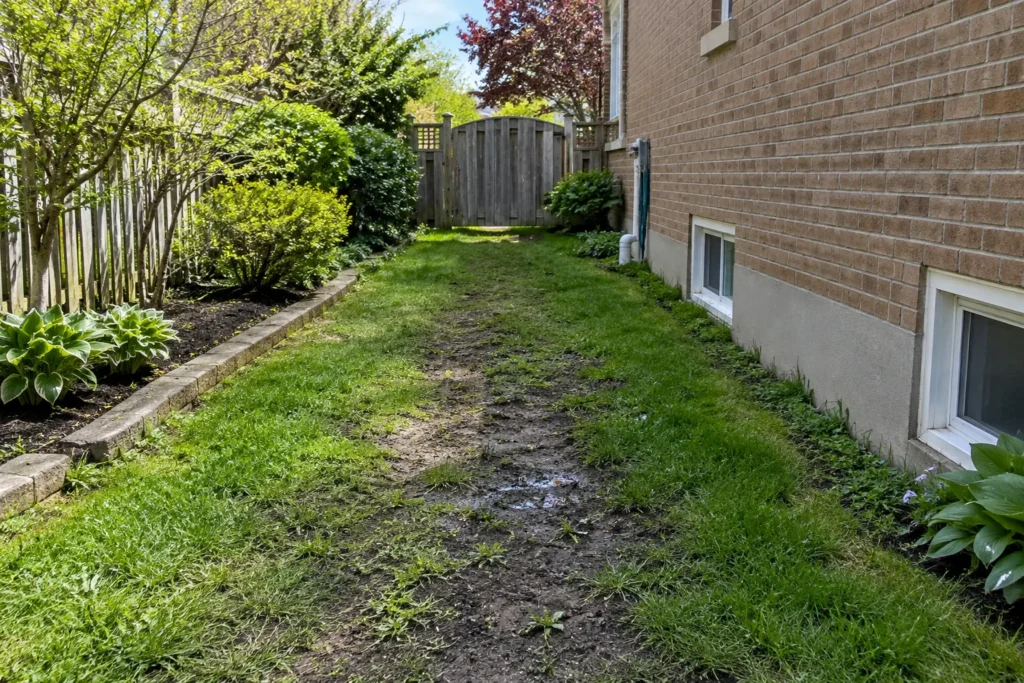
Access and restoration should be part of the scope. Reaching a rear low spot may involve a narrow gate or crossing an established lawn. Identify fences, trees and finished surfaces that constrain the route. Clarify which areas disturbed by the agreed work will be restored and what finish is intended, rather than discussing only the drain or grade change itself.
Keep later maintenance realistic. A shallow water route needs to remain clear, and a collection point must be reachable for inspection and cleaning. Do not plan a permanent shed, dense planting or a raised bed over the only usable maintenance access. Where the landscape will be completed in phases, protect the agreed water path through each stage so a later finish does not undo the earlier decision.
Wet yard and standing water questions
Does every wet lawn need a French drain?
No. The source, surface levels, soil behaviour and available outlet need assessment first. A blocked route or concentrated downspout may lead to a different scope. A drain also needs a suitable destination and maintenance access. Choosing the construction method before those questions are answered can leave the underlying problem unresolved.
Why is the yard still soft after the puddle disappears?
Visible surface water and soil saturation are related but different observations. Record the extent of softness and how long it lasts, along with rainfall and watering history. Why a backyard stays wet after rain explores that symptom; an individual property still needs its own assessment.
Can new sod fix the wet patch?
Fresh turf does not explain or correct a low area, blocked path or recurring water source. Replacing the surface too early can conceal useful evidence and expose the new lawn to the same conditions. Settle the water and grade decisions before choosing the lawn restoration that follows.
Is the neighbour necessarily causing the water?
A puddle near a boundary does not establish its source or responsibility. Observe the wider routes, levels and recent changes, and provide any available plans. A proposal must consider effects on adjacent land without assuming additional runoff can simply be redirected across the boundary.
What information helps most with an estimate?
Provide the address, broad wet-weather photos, the event timing and what happens as the area dries. Include downspouts, nearby paving, known drains and any available survey or grading plan. Mention basement symptoms, continuous unexplained flow or underground-service concerns so the appropriate scope can be identified.
Wet Yard & Standing Water Solutions Gallery
Tell us when the yard becomes wet and where the water begins
Send the event history with broad photographs of the affected area and surrounding surfaces. Those details help frame the source, route and constraints before a construction approach is proposed.
- Burlington address and timing of the wet condition
- Wet-weather photographs and the extent of soft ground
- Downspouts, hardscape, boundaries and known drains
- Recent changes, available plans and access constraints
Tell us what you would like to change, repair or maintain around your property.