
Request an Estimate
Request a Landscaping Estimate
Tell us about the property, the project or service you need, and what you want to work better.
Tell Us What Needs to Work Better
Start with the property and the change you want to make. You do not need a finished design to ask about the next step. Describe the area, any recurring problem and how you would like to use it. Photos and available plans help make the initial discussion more specific.
- Address and property type
- Service needed and project area
- What you want to change or the existing problem
- Desired timing and useful photos
- Approximate dimensions and investment range are optional
Tell us what you would like to change, repair or maintain around your property.
A Useful Request in Three Parts
The Property
Provide the address and identify whether this is a detached home, townhouse, commercial site or managed property. Explain which areas are privately controlled and which involve shared ownership or approval. For a managed site, include the main contact and any access restrictions that need to be considered.
The Change
Name the project area and explain the result you want: more usable patio space, a repaired entrance, a lawn renewal, improved surface-water movement or recurring grounds care. Describe the existing problem in ordinary terms. For water or settlement, mention when it happens and whether it has changed over time.
The Timing
Share your preferred timing and whether another project must happen first. A pool, addition, fence or exterior repair can affect landscape sequencing and access. An investment range can help discuss priorities, but it is optional. Approximate dimensions are useful when known; mark them as estimates rather than verified measurements.
Send Photos That Show the Context
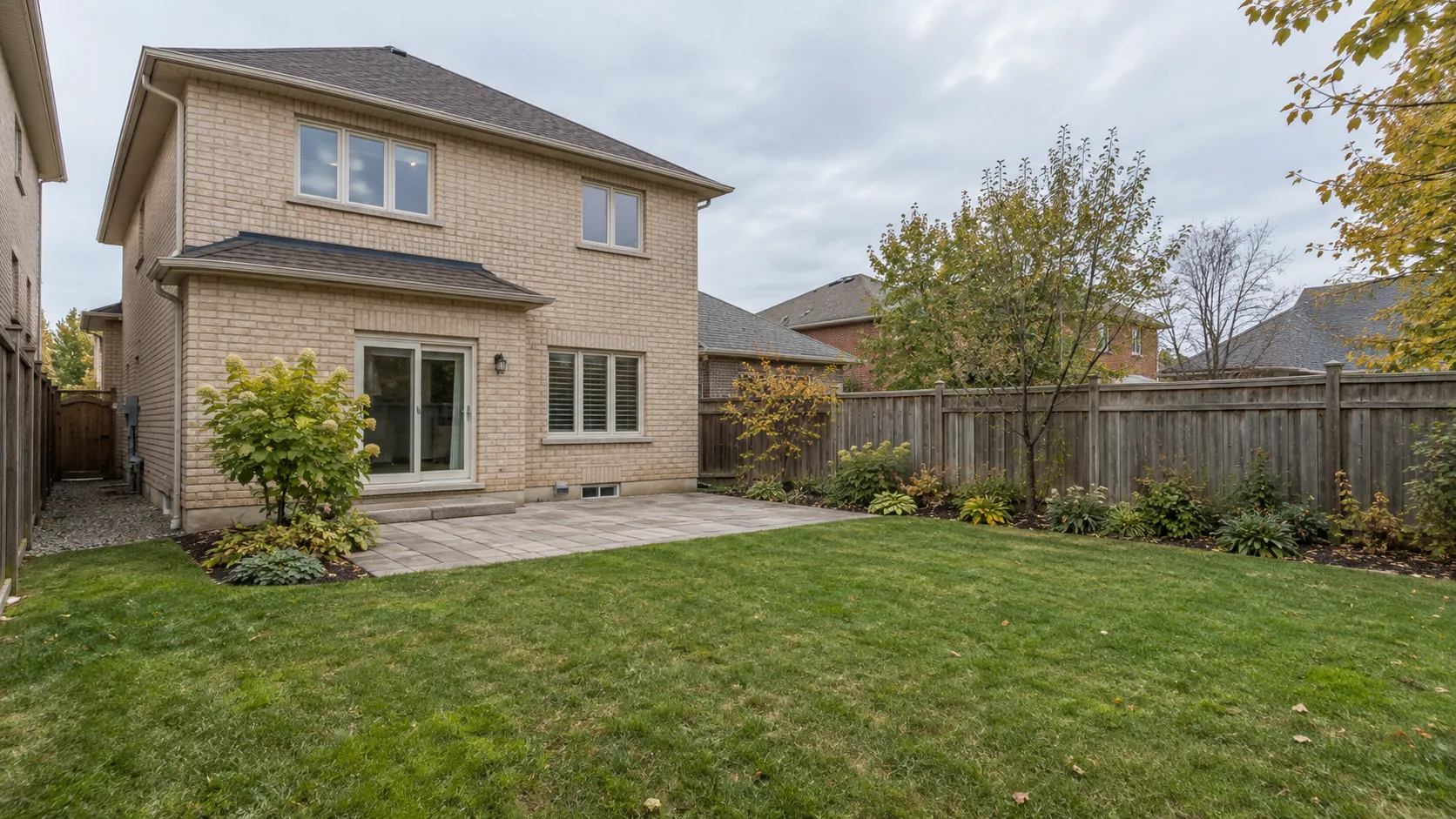
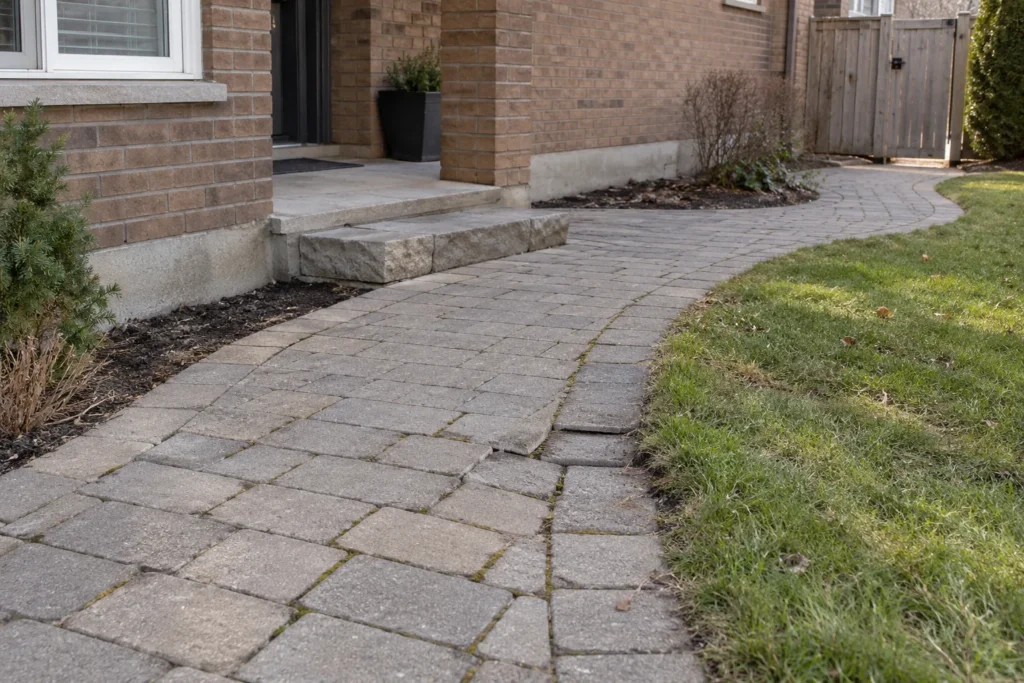
Start with a wide view of the relevant yard, driveway or common area. Include the house and adjoining surfaces where possible so levels and connections can be understood. Then add a closer view of the problem. For uneven interlock, show the surrounding walk, edge and nearby door or step rather than only one sunken paver.
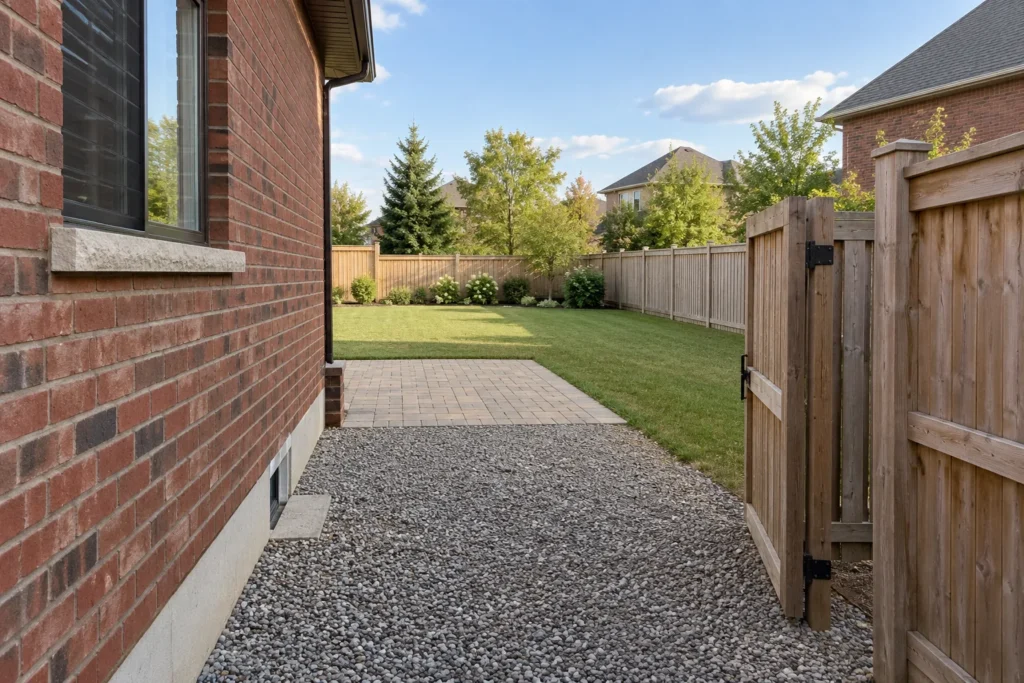
Photograph the route into the work area, including gates, narrow passages and anything that limits access. A backyard project can look straightforward in a close photograph while requiring careful material movement through a tight side yard. A simple view from the street or driveway toward that route is helpful.
For drainage, photograph the area during or shortly after the conditions you are describing when it is safe to do so. Include downspouts, low areas and the surrounding grade. A dry-weather photograph is still useful, but tell us when water appears and how long it remains. Do not place yourself in unsafe conditions to obtain a picture.
Different Services Need Different Details
| Request type | Details that help |
|---|---|
| Landscape construction | Activities to support, areas to retain, desired features, access route, available survey and known site constraints. |
| Interlock or lawn renewal | Extent of the affected area, history of movement or wear, nearby surfaces and any previous repairs. |
| Grading or drainage | When water appears, possible sources, current routes, low points and known outlets or obstructions. |
| Property maintenance | Included lawns and gardens, current care needs, site access, seasonal tasks and who authorizes additional work. |
| Snow or ice management | Private areas requested, entrances and walkways, snow-storage locations, operating needs and the site contact. |
Keep the Scope Clear From the Start
Mention known trees, utility equipment, private lines, easements, pool equipment and shared boundaries. Include existing drawings or approvals when available, and say which information has not been confirmed. An initial photograph or rough dimension does not replace site measurement, a locate, a survey or a required design.
If the project is phased, describe the eventual goal as well as the immediate work. This helps avoid completing lawn, paving or a fence in a place that later construction must disturb. Identify the areas that should be protected and the features you want to keep.
A useful estimate sets out preparation, materials, work areas, interfaces and exclusions. Compare those details rather than treating two headline prices as equivalent. How to compare landscaping quotes explains the questions that help make that comparison.
Before Sending Your Request
Do I need exact dimensions or a set budget?
No. Share approximate dimensions if you have them and label them as approximate. An investment range is optional. Explain your priorities so the discussion can focus on what matters most and what information is still needed.
Can I request a focused repair?
Yes. Describe the affected area, the history of the problem and the surfaces beside it. A focused repair still needs to address the cause and how the repaired area joins the retained landscape.
What happens if I am unsure which service I need?
Describe what is happening and what you want to change. For example, explain where water remains, which route is difficult to use or which area has settled. The property conditions help determine the appropriate starting point.
Should I mention permits or another contractor’s work?
Yes. Include approvals already obtained and other planned work that may affect access, grade, structures or timing. State which responsibilities have been agreed and which remain open so the landscape scope can be coordinated.
Start With What You Know
A clear request does not need polished drawings or technical language. Tell us about the site, the problem and the intended use. The estimate photo guide offers more detail on useful views, and Landscaping & Property Planning identifies site questions that may shape the work. Start with those details, then add the timing and questions that matter to you.