
Burlington Landscaping
Interlock Repair
Reset the cause, not just the pavers. Assess sinking, heaving, spreading and water problems before choosing a bounded repair or reconstruction.
A dip in an interlock driveway or a raised walkway edge is a visible symptom. The useful repair starts by asking why that part moved: settlement below the pavers, a failed edge, water, an unsuitable transition or a wider problem in the original preparation. Resetting the surface without understanding that cause can lead to another repair in the same place.
Burlington Landscaping assesses interlock repair around the condition of the surrounding installation and the work needed to correct the affected area. The aim is a clear decision between a bounded correction, broader rebuilding and separate maintenance such as cleaning or joint renewal. A sound-looking paver is worth retaining only when the completed repair can function with the ground and surfaces around it.
Read the movement before choosing the repair
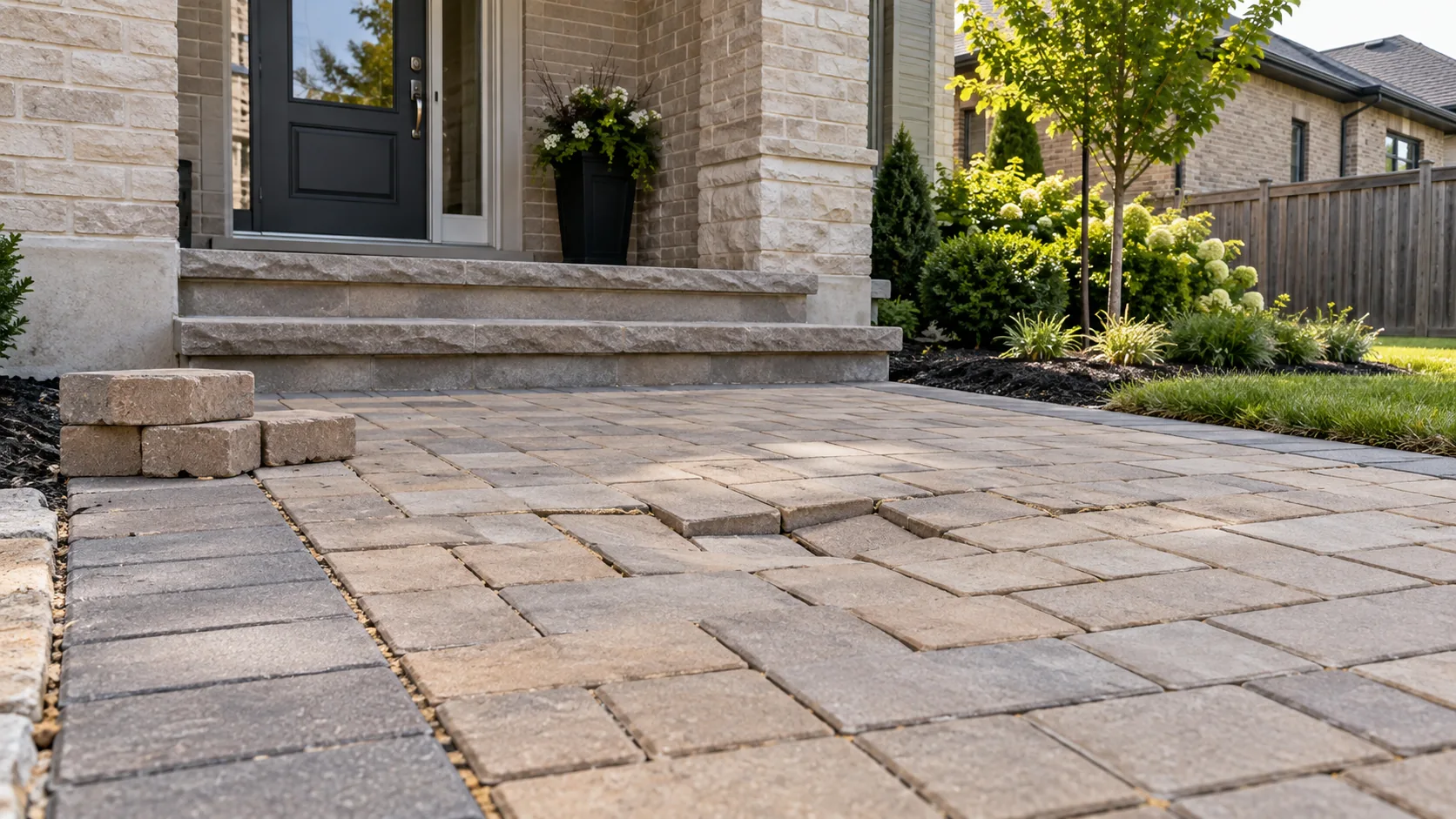
Different patterns suggest different questions. A small depression at a repeatedly used driveway position may have a different context from a raised line beside a porch or tree. A spreading border points toward edge support, while ponding can reveal a low surface or a wider water-route problem. The pattern needs site assessment; it is not a diagnosis from a single photograph.
Look beyond the most obvious unit. Note whether the area has changed gradually, appeared after nearby construction or returned following a previous repair. Photograph it from a low angle and a wider view so the affected surface can be understood in relation to the house, lawn, steps and driveway. After-rain photographs can help show where water remains.
Check the surrounding paving. If most of the installation is stable and the defect has clear limits, a localized repair may be practical. If levels are inconsistent across a broad area, the edges are failing or the intended water route never worked, repeatedly adjusting small patches may leave the main problem unresolved.
A trip edge deserves attention even when the damaged area is small. Make its location clear in the request, especially near a front door, step or frequently used side route. Avoid hiding the issue with loose material or decorative edging that creates another obstruction. The repair scope should describe the affected connection as well as the surface appearance.
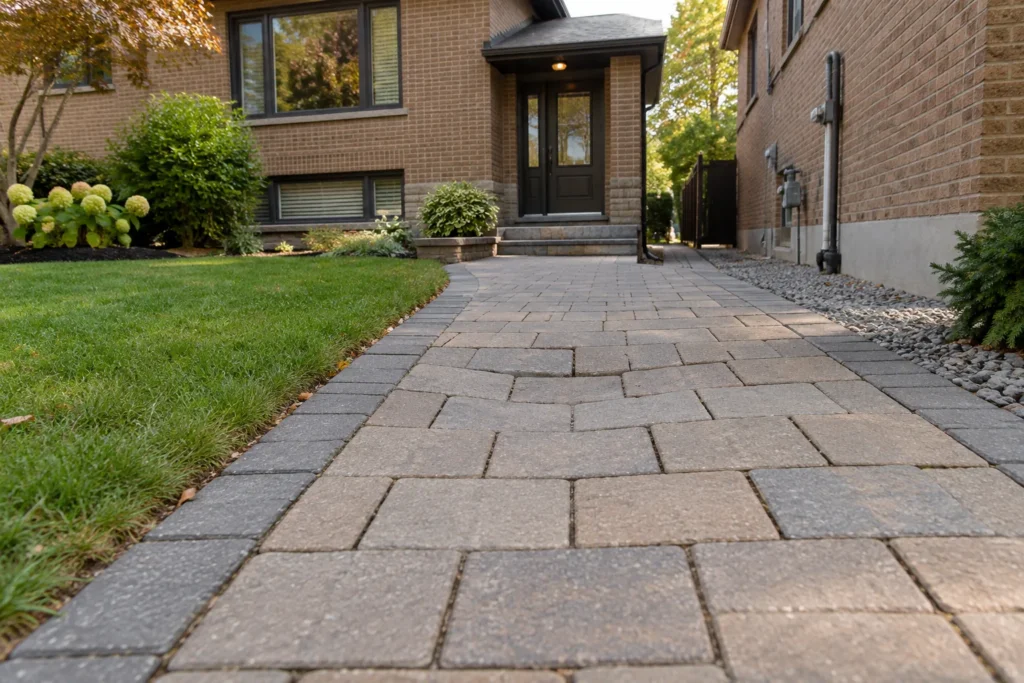
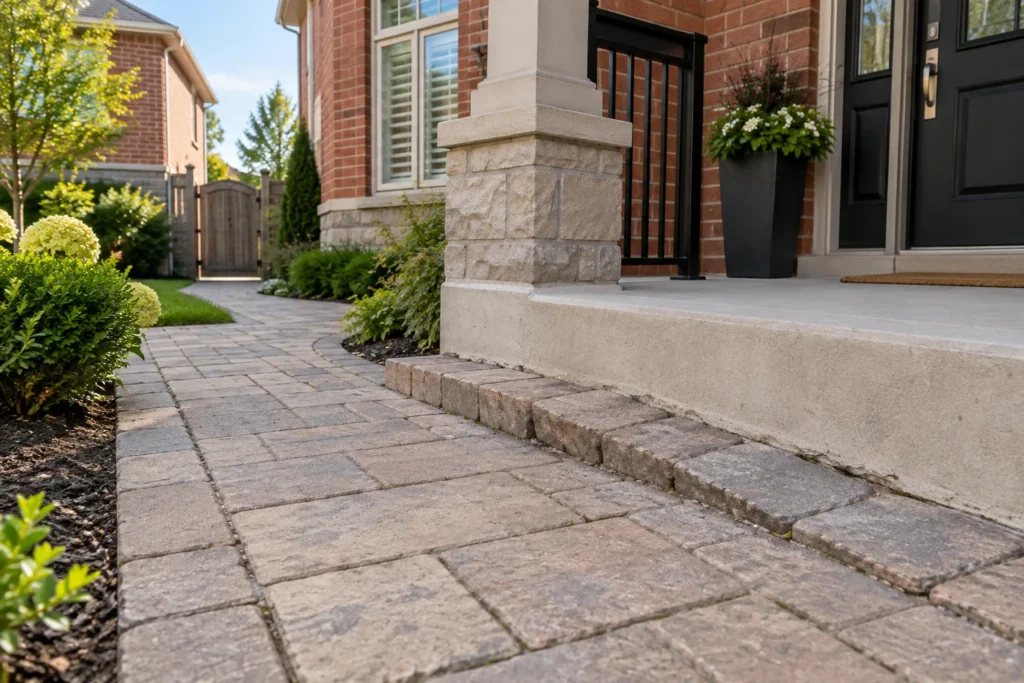
Visible conditions and the questions behind them
| Observed condition | What needs assessment | Why surface-only work can fall short |
|---|---|---|
| A localized dip | Extent of settlement, underlying support, use and nearby water. | Adding bedding without correcting unsuitable support may leave the same area vulnerable. |
| Heaved or raised edges | Movement pattern, fixed adjoining surfaces, roots and seasonal history. | Grinding or resetting one high unit may not address the wider movement or connection. |
| Spreading borders | Edge restraint, adjacent ground and the shape of the affected area. | Straightening the outer row alone leaves the force and missing support unexplained. |
| Water held after rain | Finished levels, source of runoff and an appropriate route out. | A visually flat patch can still hold water or shift the problem to an entrance. |
| Joint loss and weeds | Joint condition, movement, cleaning history and material suitability. | New joint material cannot stabilize an installation that continues to move. |
| Broad repeated failure | Base condition, overall layout, drainage and previous repairs. | A sequence of small patches may cost effort without delivering a coherent installation. |
Lift enough to understand the support and edge
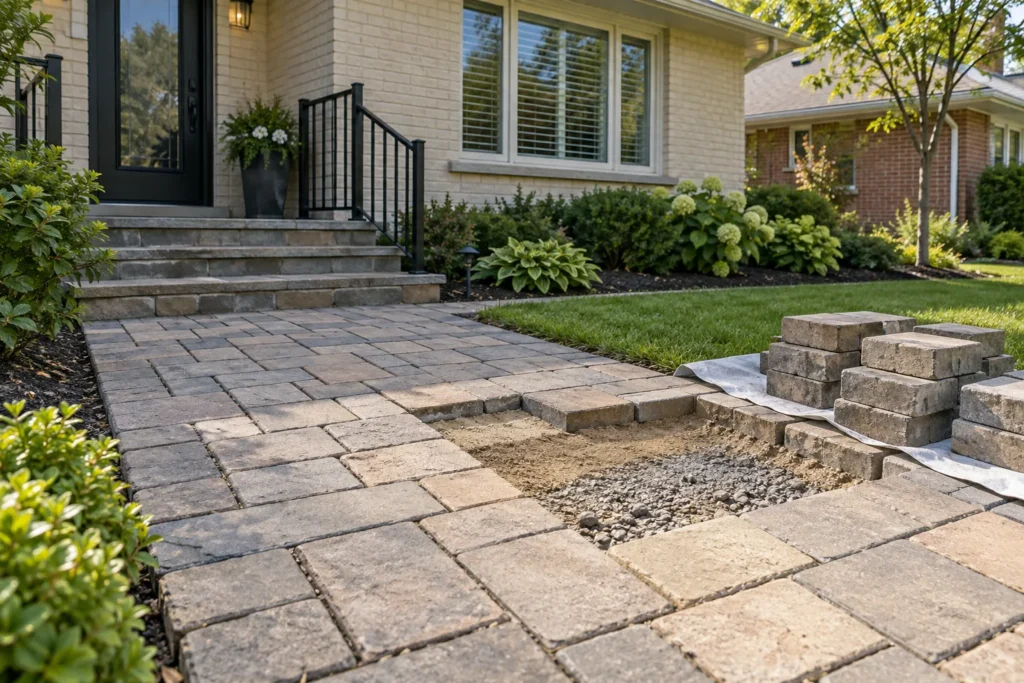
A bounded repair generally requires the affected paving to be lifted carefully, with the limits chosen to make a coherent connection to retained work. The condition underneath helps determine whether the correction involves bedding, deeper preparation, edge restraint or a combination. The visible paver area does not always predict the full repair footprint.
Reusable units should be assessed for damage, wear and compatibility. Old pavers may be sound but difficult to match if replacements are needed. Colour differences, weathering and discontinued products should be discussed honestly. Retaining existing material can be useful, but it should not require leaving broken units in a walking route or pretending a new patch will be invisible.
Edge restraint is part of the installation, not an optional trim. A border that has spread may need its support and adjacent ground corrected before the units are reset. Check whether gardening, erosion, vehicle use or earlier excavation has changed the conditions beside it. A decorative garden edge is not necessarily the required restraint for the paving system.
If the problem reaches a fixed stair, garage threshold or porch, the retained level constrains the repair. The corrected surface needs a deliberate meeting point without a new lip or steep final transition. Assess these interfaces before promising a small square patch. Larger interlocking work may be appropriate when the original levels and preparation are unsuitable across the area.
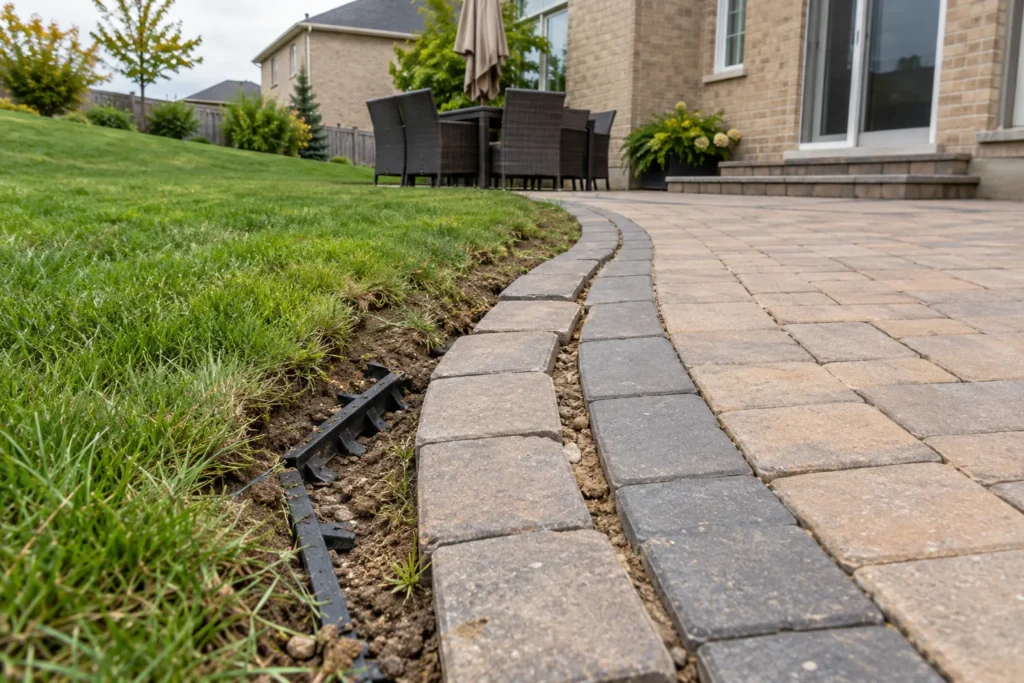
Water can turn a small defect into a recurring problem
A depressed area may collect water because it is low, but the source can also matter. Roof discharge, adjacent hard surfaces, poorly understood grades or an obstructed route can send more water into the repair location. The aim is to understand both why water reaches the area and how the finished surface should release it.
Surface adjustment should not direct runoff toward the house, onto a neighbour's land or down a regularly used entrance. A new drain also needs a suitable destination and a scope that fits the property. Where the issue extends beyond the paving, coordinate landscape drainage rather than describing a drain fitting as a complete solution.
Seasonal history helps the assessment. Explain whether the units remain displaced, change through winter or move after heavy use. There may be more than one contributing condition. Photographs and an inspection can narrow the questions, while lifting the affected area can reveal additional preparation needs. An estimate should explain how such findings will be addressed instead of promising a cause that has not been established.
Compare a localized reset with a coherent rebuild
Localized correction makes most sense when the surrounding paving remains serviceable, the defective area can be bounded and the underlying cause can be addressed within a practical scope. The repaired area should meet retained levels cleanly, use sound units and restore the necessary edge and joint details. A small visible defect still deserves complete preparation within its work limits.
Reconstruction becomes more reasonable when there is widespread settlement, an unsuitable overall slope, repeated repair failure or major problems in the original base. A patio that holds water across much of its surface may need more than a single low spot raised. A driveway with several spreading edges and uneven wheel paths may be difficult to restore through isolated patches.
Consider the future use of the space. If the walkway route, patio footprint or driveway connection is already unsuitable, rebuilding may allow those relationships to be corrected together. If the layout works and most of the surface is sound, retaining it can avoid unnecessary replacement. The repair-or-replace guide helps organize that comparison without assuming the most extensive option is always preferable.
Cleaning and sealing are separate decisions. Complete necessary physical corrections before discussing the finish. Cleaning, joint renewal and sealing can improve a suitable surface, but sealing is not a remedy for movement and is not mandatory for every installation. It should not be sold as preventing all weeds, stains or frost-related changes.
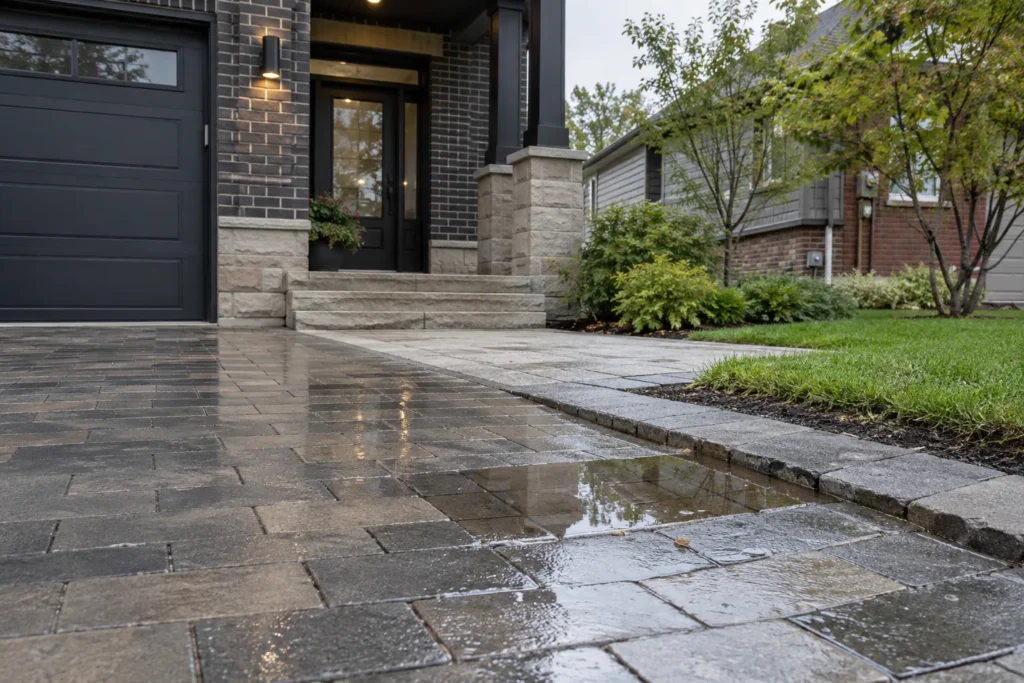
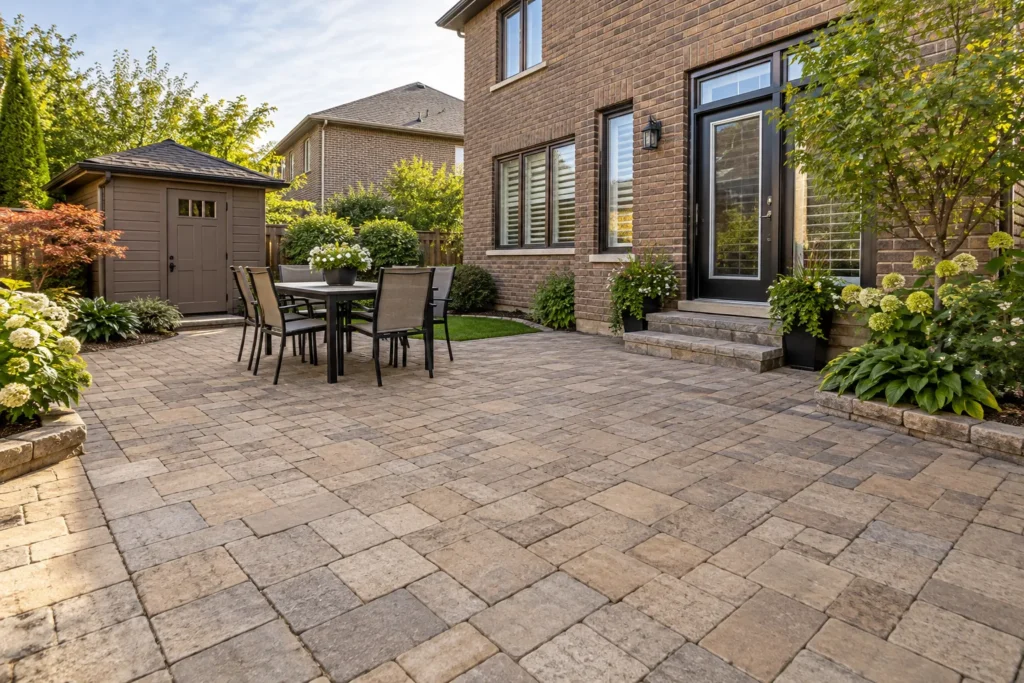
A repair scope should explain the cause and the limits
Record the symptom and history
Show the affected area and surrounding paving, describe when it appeared and mention earlier repairs or nearby excavation. The article on sinking interlock explains why the visible dip is only the starting point.
Compare repair boundaries
Review the extent of movement, retained levels, unit condition, edges and water. Identify whether the proposal is a bounded repair or wider reconstruction and explain why those limits are appropriate.
Allow for what is found below
Clarify removal, lifting, reusable material handling, preparation and the process for unexpected underlying conditions. Necessary changes should be discussed against the actual findings rather than hidden within a vague surface-reset description.
Rebuild the connections and finish
Restore appropriate support, restraint, levels and joints, then review transitions and nearby restoration. Explain any visible material mismatch and the maintenance that remains. Retain useful information about the materials and work limits for future care.
A repair can still involve approval-sensitive work
Resetting a bounded area and changing the grade or footprint of a landscape are different scopes. If the proposed correction expands into site alteration, retaining, tree-sensitive excavation or work at the street interface, confirm the relevant Burlington requirements before proceeding.
Identify retained trees and services as part of the review. An existing paved surface does not establish that deeper excavation is clear of roots or privately installed lines. Necessary locates and property-specific checks should follow the actual repair method.
Information reviewed:
Questions before repairing interlock
Can the existing pavers be reused?
Often they can be considered if their condition is suitable, but broken, badly worn or incompatible units may need replacement. Availability and colour matching should be checked. Reusing material does not remove the need to correct support, levels and restraint beneath and around the affected area.
Will a small repair be invisible?
A repaired area may show a difference because retained pavers have weathered or replacement units differ. Cleaning can also change the appearance of adjacent sections. Discuss the likely result before work begins; the first priority is a coherent, usable surface rather than a promise that every trace of the repair will disappear.
Why did a previous repair sink again?
The original cause may have remained, a wider area may be affected, or site conditions may have changed. Water, preparation, use and edges all deserve assessment. Describe what was done and when the problem returned. Another surface reset should not be assumed to be the appropriate response without that review.
Can joint sand correct loose or moving paving?
Joint material has a role in the paving system, but it cannot substitute for suitable support and restraint. Check whether units are moving because the base or border is failing before renewing joints. The material should suit the pavers and installation conditions, with preparation and application explained.
Can a low spot simply be raised to stop pooling?
Possibly, if the correction fits the surrounding levels and gives water an appropriate route. Raising it without checking the broader surface can move water toward another low point or create a lip at a fixed landing. Assess runoff source, destination and the full affected area before setting the repaired level.
When is replacement more sensible than repair?
Consider replacement when failure is widespread, the original levels are unsuitable, repair has repeatedly failed or the intended layout no longer works. Compare a complete scope for each option, including preparation, retained materials, drainage and restoration. A lower initial patch cost is not enough information on its own.
What affects a repair estimate?
Access, repair extent, lifting and handling, reusable material, depth of preparation, edge work, transitions, drainage and restoration all affect the work. A small difficult entrance can involve more detail than its area suggests. Ask how underlying findings and any additional work will be discussed before proceeding.
Interlock Repair Gallery
Show us where the interlock is moving
Send a wide view and a close view of the sinking, heaving or spreading area, with any useful after-rain photograph. Explain the history and the surfaces you want to retain so the discussion can compare an appropriate repair with broader rebuilding where needed.
- Burlington address and affected surface
- Wide and low-angle photographs of the defect
- Water, previous repairs and changes over time
- Access limits, retained materials and desired work boundaries
Tell us what you would like to change, repair or maintain around your property.