Skip to content

Explore services

Request an Estimate
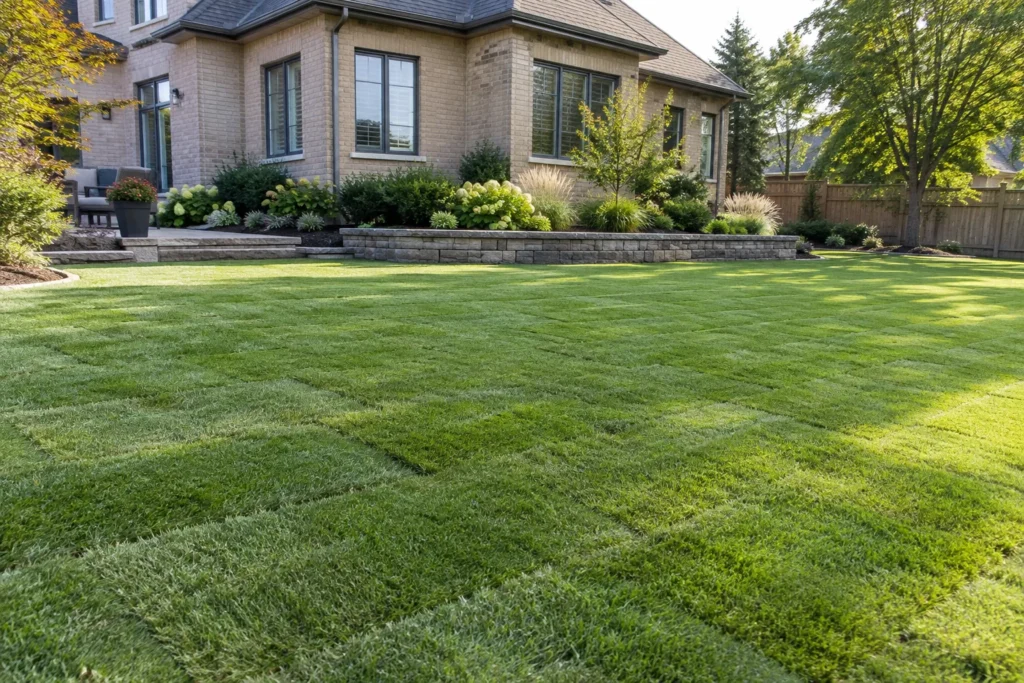
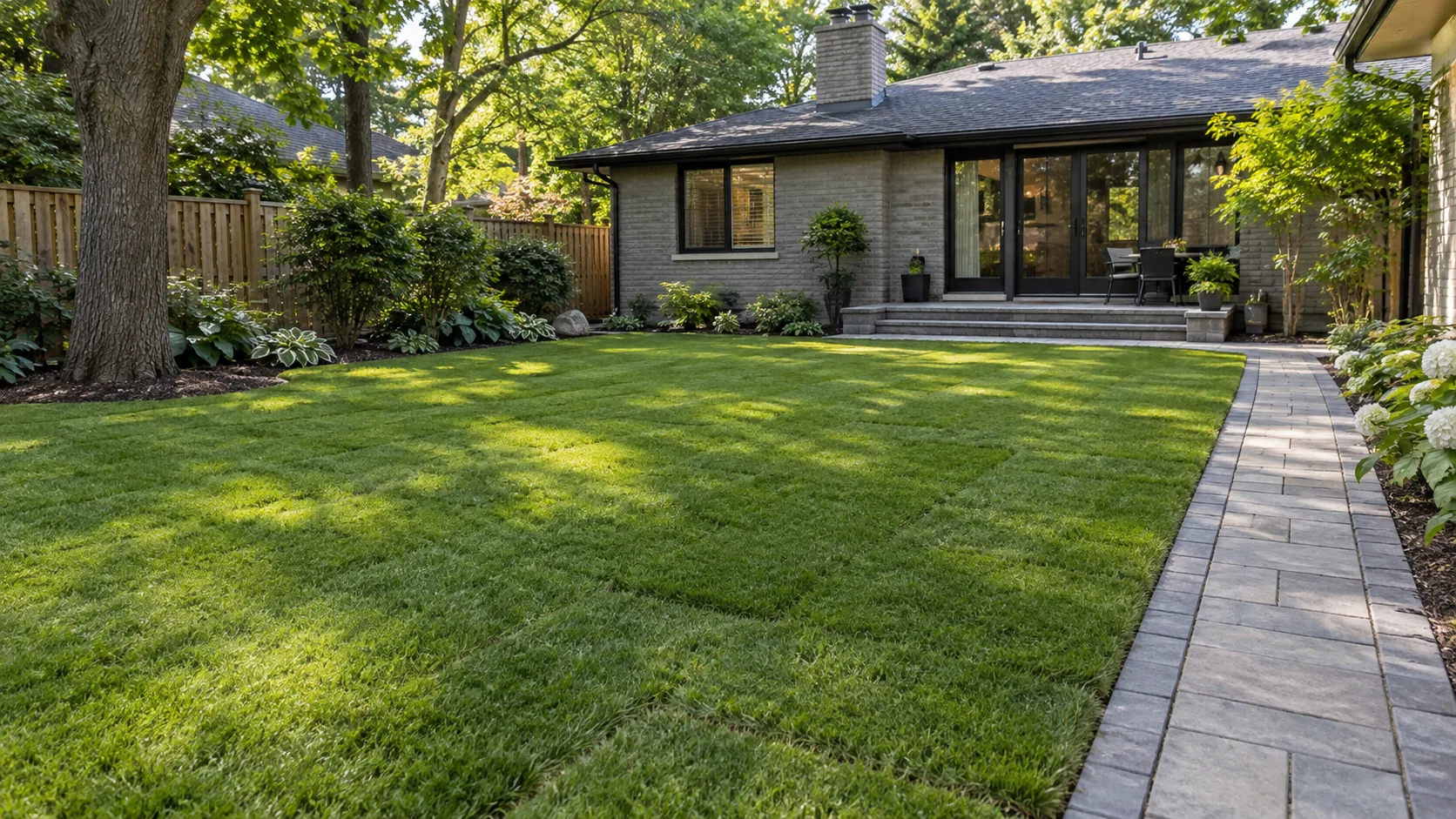
Fresh sod lawn beside a stone path behind a grey-brick bungalow

Sod Installation in Burlington

Sod Installation

A new lawn starts with usable soil, appropriate levels and a practical watering plan. Sod is the finish after those conditions are ready.

Fresh sod can turn prepared ground into a continuous green surface, but it cannot make an unsuitable site disappear. New grass still needs rooting space, light, moisture and time to establish. If the old lawn failed because of standing water, repeated traffic or deep shade, replacing its surface without changing those conditions can repeat the problem.

Sod installation in Burlington should therefore begin with the reason for the work. The scope for repairing construction damage differs from replacing a neglected lawn or finishing a newly graded backyard. Identify what needs removal, what soil can be retained and how the new surface will meet patios, paths and beds. Complete heavy access-dependent construction before the lawn becomes the route for another project.

New sod does not fix a drainage problem

A lawn may look like the lowest-cost place to send water, but fresh turf does not create an outlet. If the site remains wet, trace the source, route and destination before covering it.

Observe the wet pattern

Note whether the lawn stays soft after ordinary rain, receives roof discharge or only ponds during exceptional events. Photographs taken at different stages of the same rainfall can show more than one dry-weather picture. Include water arriving from neighbouring surfaces.
Retain the intended route

Do not fill a shallow drainage path simply to make the yard look flat. A lawn can be smooth for mowing while still following an appropriate grade. Raising edges without considering adjoining properties can block water that previously crossed the site.

Resolve the underlying scope

Some work is a soil and turf project; other work needs a separate water or grading assessment. Landscape drainage and yard grading and leveling address those different questions before final sod installation.

Check the wider project order

Finish drains, buried services, fence access and major hardscape work first. Protect retained trees when planning excavation and soil placement. New grass installed ahead of deliveries or heavy construction can be damaged before it has rooted.

Remove the failure and prepare a consistent growing surface

Removing failed turf exposes the condition beneath it. The work may involve old roots, debris, buried edges or compacted construction routes as well as grass. Define the removal area and disposal in the scope. Merely adding a thin soil layer over poor turf can leave an uneven interface and may raise the finished lawn above surrounding surfaces.

Soil preparation should suit the existing conditions and the grass being installed. Discuss usable topsoil, compaction, contaminants or debris and the depth available over hard material. Avoid assuming every property needs the same amount of imported soil. A reasonably uniform rooting environment is more useful than a visually dark layer with no attention to what lies underneath.

Set the prepared grade with the sod thickness in mind. At a patio, path or driveway, the finished grass should meet the edge intentionally. Consider mower movement, bed boundaries and how surface water passes through the area. Keep soil and turf clear of building details that need exposure; hiding an awkward foundation edge is not a reason to raise the entire lawn.

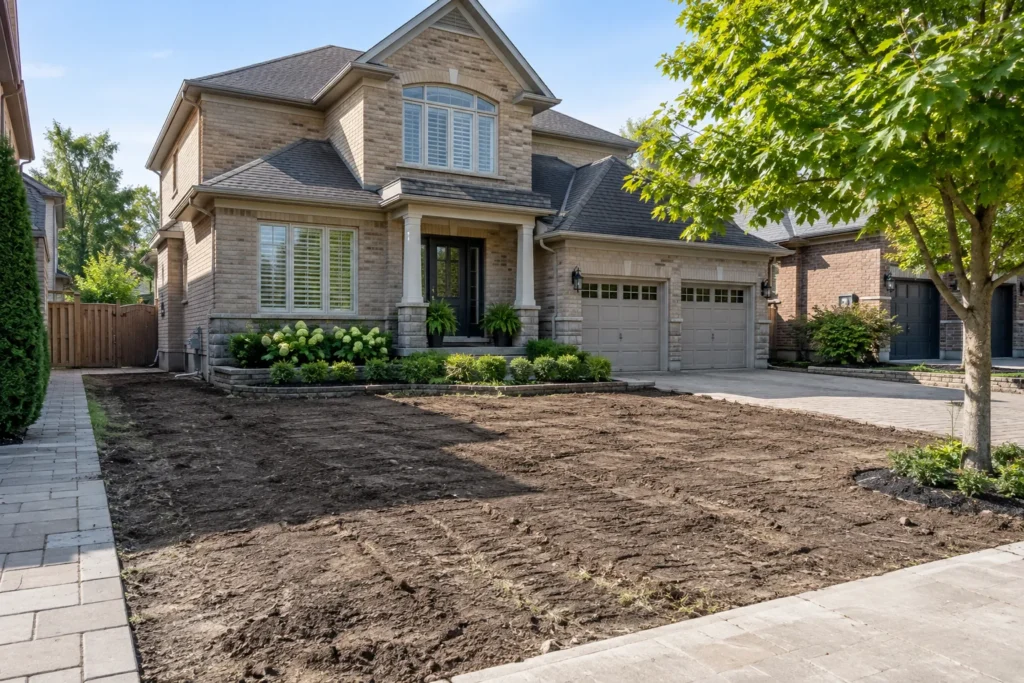
Bare front-yard soil after lawn removal beside a beige-brick house
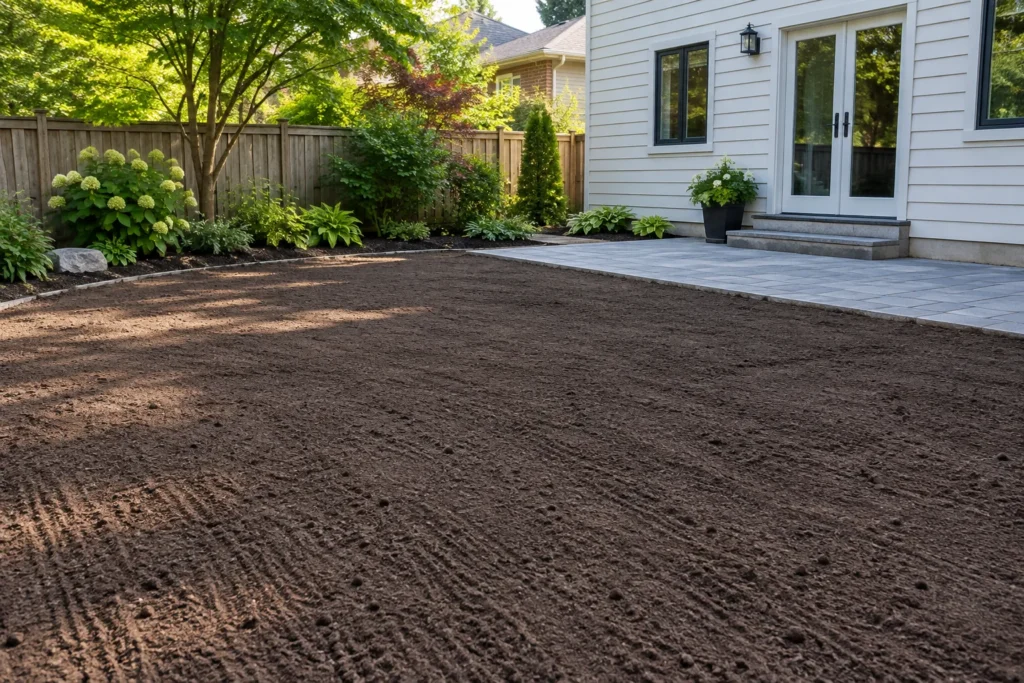
Fine graded bare soil beside a paver patio and mature garden

Choose the lawn approach from the condition

Choose the lawn approach from the condition
Starting conditionPotential approachQuestion before proceeding
Mostly healthy grass with thin patchesRetain the existing lawn and assess renovation.Can improved growing conditions support aeration and overseeding?
Extensive failed turf on otherwise suitable groundRemove failed material and prepare for new sod.What caused the failure, and has it been addressed?
Recent construction damageRepair soil and levels before laying turf.Are deliveries, excavation and restoration complete?
Persistent wet or badly uneven yardAssess grade and water before choosing the finish.Where will water travel after the work?
Intensive traffic or unsuitable shadeReview use and alternative layouts.Would a path, planting area or another surface work better?

Match the new lawn to light, use and existing edges

Look at the area through the day. A strip under dense tree cover has different growing conditions from an open front lawn, even on the same property. Tree roots also compete for moisture and limit soil disturbance. Tell us where grass has repeatedly thinned and whether shade changes as the trees leaf out.

Household use matters as much as appearance. A dog route, children’s shortcut or regular access to a shed can concentrate wear into a narrow band. If the route will remain heavily used, planning a durable path or adjusting the lawn footprint may be more useful than replacing the same strip repeatedly. Protect access to taps and garden beds so routine care does not depend on walking across fragile new turf.

The lawn should have a sensible shape for mowing and watering. Tight slivers between hardscape and planting are difficult to maintain evenly. Consider consolidating awkward edges into a bed or widening the practical grass area. The sod, overseeding and artificial turf guide compares finish choices when the existing layout itself needs reconsideration.

Laying the sod is the start of establishment

Sod needs prepared ground and coordinated delivery so living material can be placed in suitable condition. The installation should provide close contact with the soil, fitted edges and staggered joints without stretched pieces. Avoid leaving open seams or burying overlapping edges. Curves and obstacles need deliberate cutting rather than small scraps used to fill every difficult corner.

Watering must reach the new sod and the soil interface without creating prolonged flooding. Coverage is often less even at a gate, under a tree or beside a hot paved edge. Test hose reach and sprinkler placement before installation so the area can receive appropriate attention from the beginning. Rainfall does not automatically mean every part of the new lawn has received enough moisture.

Give roots a chance to develop before normal traffic and mowing. Readiness depends on rooting and conditions, not simply how green the surface looks. Discuss an establishment plan suited to the actual sod, weather and site. Pets, furniture and repeated shortcuts may need temporary alternative routes, and a household absence can affect when installation is practical.

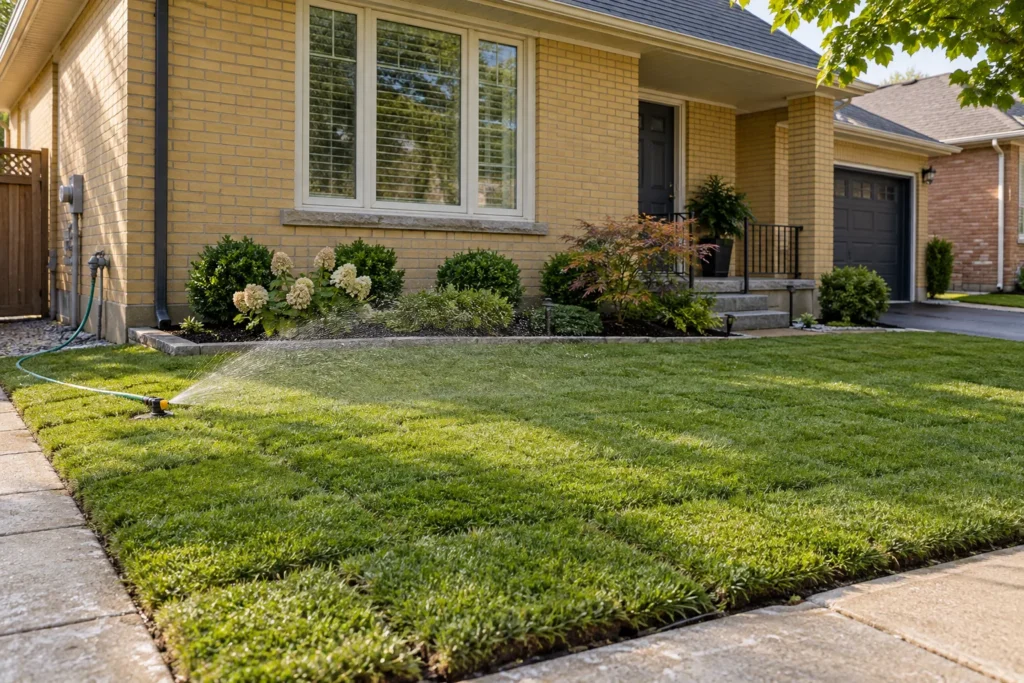
New sod with staggered joints below a low raised planting bed
A small sprinkler waters fresh sod beside a yellow-brick home

A sod project with the right work before and after

  1. Assess the cause and define the area

    Record where the existing grass failed, desired lawn boundaries, wet areas and access constraints. Identify whether the scope is replacement, construction restoration or part of a larger yard project. Agree which existing plants and edges are retained.

  2. Complete preparation and final levels

    Remove the agreed material, resolve underlying issues and prepare suitable soil. Establish finished lawn height at fixed edges and retain the appropriate water route. Confirm that other trades and heavy deliveries are finished before the final preparation is accepted.

  3. Coordinate delivery, fitting and water

    Place sod on the prepared surface with orderly joints and close soil contact. Make sure the agreed watering arrangement can cover the whole area. Review corners, edges and sections near trees where establishment conditions may differ.

  4. Manage establishment before routine care

    Follow the site-specific watering and traffic guidance, watch for uneven drying and assess rooting before normal use. Move into regular lawn maintenance when the grass is ready, with mowing suited to its condition rather than a fixed calendar assumption.

What changes the sod installation scope?

Area is only one factor. Removal, soil condition, access, grade correction, delivery handling and restoration around fixed edges can materially change the work. A small rear lawn reached through a narrow gate can involve a different installation approach from an open front yard. Show the full access route, including turns and steps.

Clarify who supplies and manages establishment water, whether irrigation needs adjustment and what happens to the removed turf and excess soil. An estimate should distinguish preparing ground for new sod from solving broader drainage or construction problems. What to finish before new sod provides a focused planning checklist when several outdoor projects are underway.

Timing should account for both suitable site conditions and your ability to care for the lawn afterward. Installing immediately before a long absence, intensive yard use or another construction delivery may be inconvenient even if the area looks ready. Discuss those constraints before choosing a date.

Sod preparation and establishment questions

Can sod be laid over the old lawn?

The existing material and underlying soil need assessment. Covering failed grass without addressing its condition can create a poor interface and unsuitable final levels. The scope should identify what is removed, what is retained and how a suitable prepared surface is achieved.

Will sod make a wet backyard dry?

No. It does not create a drainage outlet or remove the cause of persistent saturation. Investigate the source and route of water first. A drainage or grading project may be needed before sod can serve as the final lawn finish.

How soon can children or dogs use it normally?

Wait until the lawn is sufficiently rooted for the intended use. Conditions and establishment progress vary, so a universal number of days is not reliable. Plan alternative routes and discuss how readiness will be assessed for your installation.

Is a green surface proof that the sod is established?

No. The sod can remain green while its roots are still developing into the prepared soil. Check moisture coverage and follow the agreed establishment guidance. Normal mowing and traffic should respond to the lawn’s condition, not colour alone.

What should I send with an enquiry?

Provide overall views, close photographs of failed sections, patio and bed edges, wet areas and the access route. Approximate area, sun exposure, household use and watering availability help define the work before material choices are finalized.

Sod Installation Gallery

Prepare for a lawn that can establish

Tell us why the current lawn needs replacing and what other work is planned. Include watering availability so installation and establishment can be considered together.

  • Approximate lawn area and access photographs
  • Why the existing grass failed
  • Wet areas, shade and high-traffic routes
  • Watering arrangements and upcoming yard work

Tell us what you would like to change, repair or maintain around your property.